The Montana Hold Harmless Agreement form is an important legal document that helps protect individuals and organizations from liability in various situations. This agreement is commonly used in activities such as events, construction projects, or any scenario where one party may be at risk of being held responsible for damages or injuries. By signing this form, participants agree to release the other party from any claims, losses, or damages that may arise during the specified activity. It establishes clear expectations and responsibilities, ensuring that everyone involved understands their role and the associated risks. This form not only safeguards the interests of the parties but also fosters a sense of trust and cooperation. Whether you are a business owner, event organizer, or participant, understanding the nuances of the Hold Harmless Agreement can significantly impact how risks are managed and mitigated.
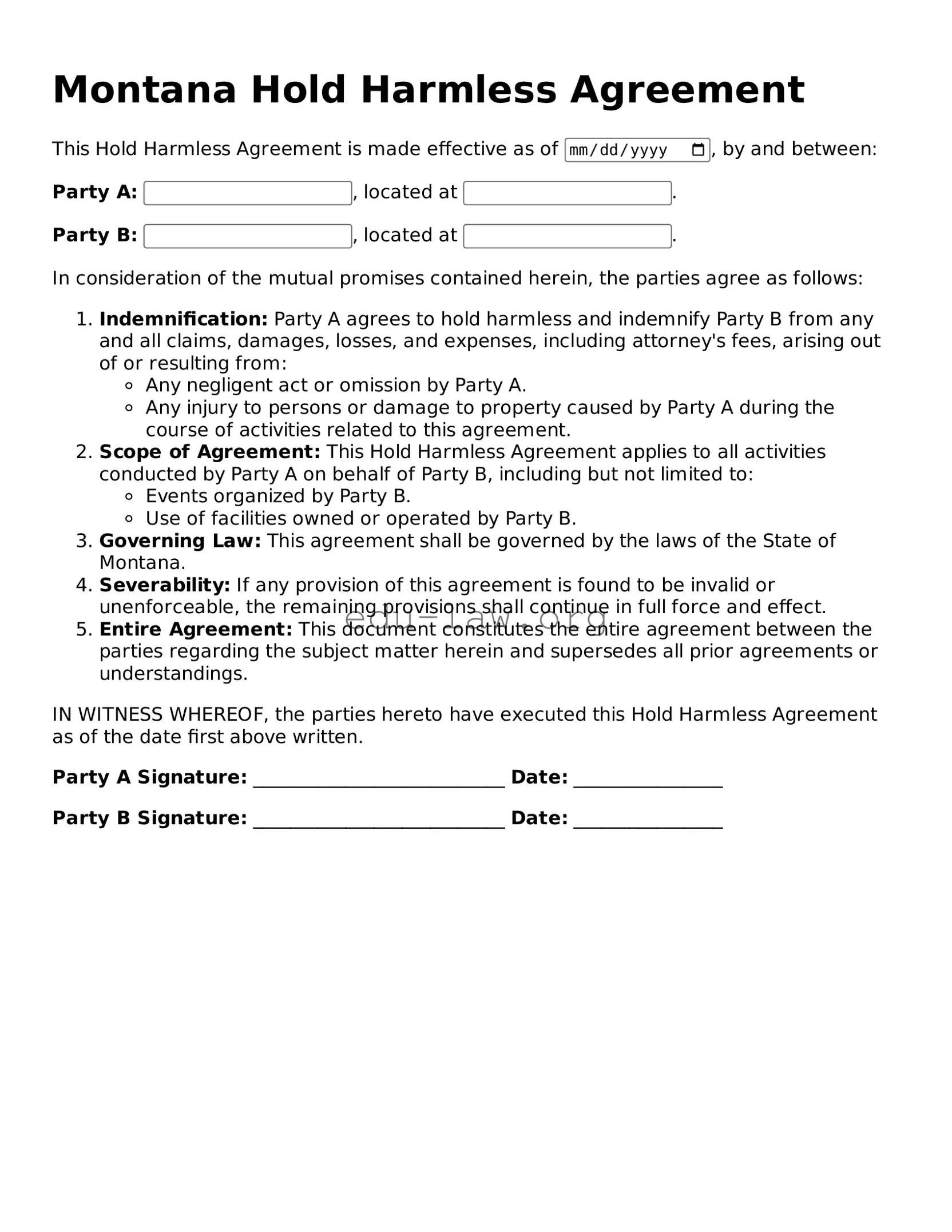
Montana Hold Harmless Agreement
This Hold Harmless Agreement is made effective as of , by and between:
Party A: , located at .
Party B: , located at .
In consideration of the mutual promises contained herein, the parties agree as follows:
IN WITNESS WHEREOF, the parties hereto have executed this Hold Harmless Agreement as of the date first above written.
Party A Signature: ___________________________ Date: ________________
Party B Signature: ___________________________ Date: ________________
| Fact Name | Description |
|---|---|
| Purpose | The Montana Hold Harmless Agreement is designed to protect one party from liability for any injuries or damages that may occur during an event or activity. |
| Governing Law | This agreement is governed by the laws of the State of Montana, ensuring that all provisions comply with state regulations. |
| Parties Involved | Typically, the agreement involves at least two parties: the indemnitor (the party assuming the risk) and the indemnitee (the party being protected). |
| Enforceability | For the agreement to be enforceable, it must be clear, specific, and mutually agreed upon by all parties involved. |
Completing the Montana Hold Harmless Agreement form is straightforward. Follow these steps carefully to ensure all necessary information is accurately provided.
Once the form is filled out and signed, you can proceed to submit it according to the instructions provided by the relevant authority or organization. Ensure that you keep your copy for future reference.
What is a Montana Hold Harmless Agreement?
A Montana Hold Harmless Agreement is a legal document that protects one party from liability for any injuries or damages that may occur during a specific activity or event. It is often used in situations where one party agrees to assume the risk of certain activities, thereby releasing the other party from any legal claims or responsibilities that may arise.
Who typically uses a Hold Harmless Agreement in Montana?
This type of agreement is commonly used by businesses, organizations, and individuals involved in activities such as sports events, rental agreements, and construction projects. It helps to ensure that all parties are aware of their responsibilities and the risks involved.
What are the key components of a Hold Harmless Agreement?
A typical Hold Harmless Agreement includes the names of the parties involved, a description of the activity or event, the specific risks being assumed, and the signatures of all parties. It may also outline any limitations or exclusions related to liability.
Is a Hold Harmless Agreement enforceable in Montana?
Yes, a Hold Harmless Agreement can be enforceable in Montana, provided it is drafted clearly and voluntarily signed by all parties. However, certain conditions may affect its enforceability, such as public policy considerations or gross negligence.
Can a Hold Harmless Agreement protect against all types of liability?
No, a Hold Harmless Agreement cannot protect against all types of liability. For instance, it may not shield a party from liability arising from intentional misconduct or gross negligence. It's essential to understand the limitations of the agreement.
How does one draft a Hold Harmless Agreement in Montana?
To draft a Hold Harmless Agreement in Montana, start by clearly identifying the parties involved and the specific activity. Then, outline the risks being assumed and include a statement releasing one party from liability. It is advisable to consult with a legal professional to ensure compliance with state laws.
Do I need a lawyer to create a Hold Harmless Agreement?
While it is possible to create a Hold Harmless Agreement without a lawyer, seeking legal advice is recommended. A lawyer can help ensure that the agreement is comprehensive, legally sound, and tailored to your specific needs.
What happens if a dispute arises regarding the Hold Harmless Agreement?
If a dispute arises, the parties may need to refer to the agreement to resolve the issue. Depending on the terms of the agreement, mediation or arbitration may be required before pursuing legal action. It's crucial to keep a copy of the signed agreement for reference.
How can I ensure my Hold Harmless Agreement is valid?
To ensure validity, make sure the agreement is written clearly, signed by all parties, and includes all necessary elements. Additionally, it should comply with Montana law. Regularly reviewing and updating the agreement can also help maintain its validity.
Incomplete Information: Failing to provide all required details can lead to issues. Ensure that names, addresses, and dates are filled out completely.
Incorrect Dates: Entering the wrong date can invalidate the agreement. Double-check that all dates match and are accurate.
Not Understanding Terms: Some individuals do not fully grasp the implications of the agreement. It’s crucial to read and understand each section before signing.
Missing Signatures: Omitting signatures can render the document ineffective. Ensure that all necessary parties sign the agreement where required.
Not Initialing Changes: If any modifications are made to the form, failing to initial those changes can lead to confusion later. Always initial any alterations.
Neglecting Witness or Notary Requirements: Some agreements may require a witness or notary public. Check if this is necessary and ensure compliance.
The Montana Hold Harmless Agreement is a legal document that outlines the responsibilities and liabilities of parties involved in an agreement. It is often accompanied by other forms and documents that serve various purposes in legal and business transactions. Below is a list of related documents commonly used alongside the Hold Harmless Agreement.
Understanding these documents and their purposes can help parties navigate the complexities of agreements and liabilities in Montana. Each document plays a crucial role in clarifying responsibilities and protecting interests in various situations.
The first document that shares similarities with the Montana Hold Harmless Agreement is the Indemnity Agreement. Both documents serve to protect one party from legal liability arising from the actions or negligence of another party. In an Indemnity Agreement, one party agrees to compensate the other for any losses or damages incurred. This concept of shifting liability is central to both agreements, making them essential tools in risk management. Just as the Hold Harmless Agreement aims to safeguard one party from claims, the Indemnity Agreement explicitly outlines the responsibilities of the indemnifying party to cover potential costs.
Another comparable document is the Waiver of Liability. This waiver is often used in recreational activities or events where participants acknowledge the risks involved and agree not to hold the organizers responsible for injuries or damages. Like the Hold Harmless Agreement, the Waiver of Liability seeks to limit the legal exposure of one party. Both documents require clear communication of risks and an understanding of the responsibilities being assumed by the participant or the party signing the agreement.
The Release of Liability is also akin to the Hold Harmless Agreement. A Release of Liability is often signed before engaging in potentially hazardous activities, where individuals agree to relinquish their right to sue for injuries sustained. This document, much like the Hold Harmless Agreement, emphasizes the importance of informed consent and mutual understanding. By signing, individuals acknowledge the risks and agree not to pursue legal action against the party providing the activity or service.
The Liability Insurance Policy serves a similar purpose as the Hold Harmless Agreement, albeit through a different mechanism. This policy provides financial protection against claims arising from injuries or damages. While the Hold Harmless Agreement shifts liability between parties, the insurance policy offers a safety net that covers costs should a claim arise. Both documents are crucial in managing risk, but they operate in tandem, with one providing direct liability protection and the other offering financial support.
The Contractual Agreement can also be compared to the Hold Harmless Agreement. In many contracts, there are clauses that address liability and indemnification. These clauses often outline the responsibilities of each party in the event of a dispute or claim. Much like the Hold Harmless Agreement, these provisions aim to clarify expectations and limit exposure to risk. The key difference lies in the broader scope of a Contractual Agreement, which encompasses various aspects of a business relationship beyond just liability concerns.
Finally, the Consent Form is another document that bears similarities to the Hold Harmless Agreement. Consent Forms are commonly used in medical and research settings, where individuals agree to participate in procedures or studies while acknowledging potential risks. Like the Hold Harmless Agreement, these forms emphasize informed consent and the understanding of risks involved. Both documents serve to protect the provider from legal repercussions, reinforcing the importance of transparency and communication in any agreement.
When filling out the Montana Hold Harmless Agreement form, there are specific actions to take and avoid to ensure accuracy and compliance.
Things You Should Do:
Things You Shouldn't Do:
The Montana Hold Harmless Agreement is often misunderstood. Here are ten common misconceptions about this legal document, along with clarifications to help you better understand its purpose and implications.
Understanding these misconceptions can help individuals and organizations make informed decisions about using Hold Harmless Agreements. It is always wise to seek clarity on any legal document before signing.
When dealing with the Montana Hold Harmless Agreement, it's essential to understand its implications and proper usage. Here are key takeaways to consider:
By following these guidelines, you can effectively navigate the complexities of the Montana Hold Harmless Agreement and protect your interests.