When navigating the complexities of employment in Montana, having a well-crafted Employee Handbook is essential for both employers and employees. This document serves as a vital resource, outlining workplace policies, employee rights, and company expectations. It typically includes sections on topics such as workplace conduct, benefits, leave policies, and grievance procedures. Moreover, the handbook can address specific state regulations, ensuring compliance with Montana labor laws. By providing clear guidelines, the Employee Handbook not only fosters a positive work environment but also helps mitigate potential disputes. Understanding the key elements of this form can empower both employers and employees, creating a foundation for a productive and harmonious workplace.
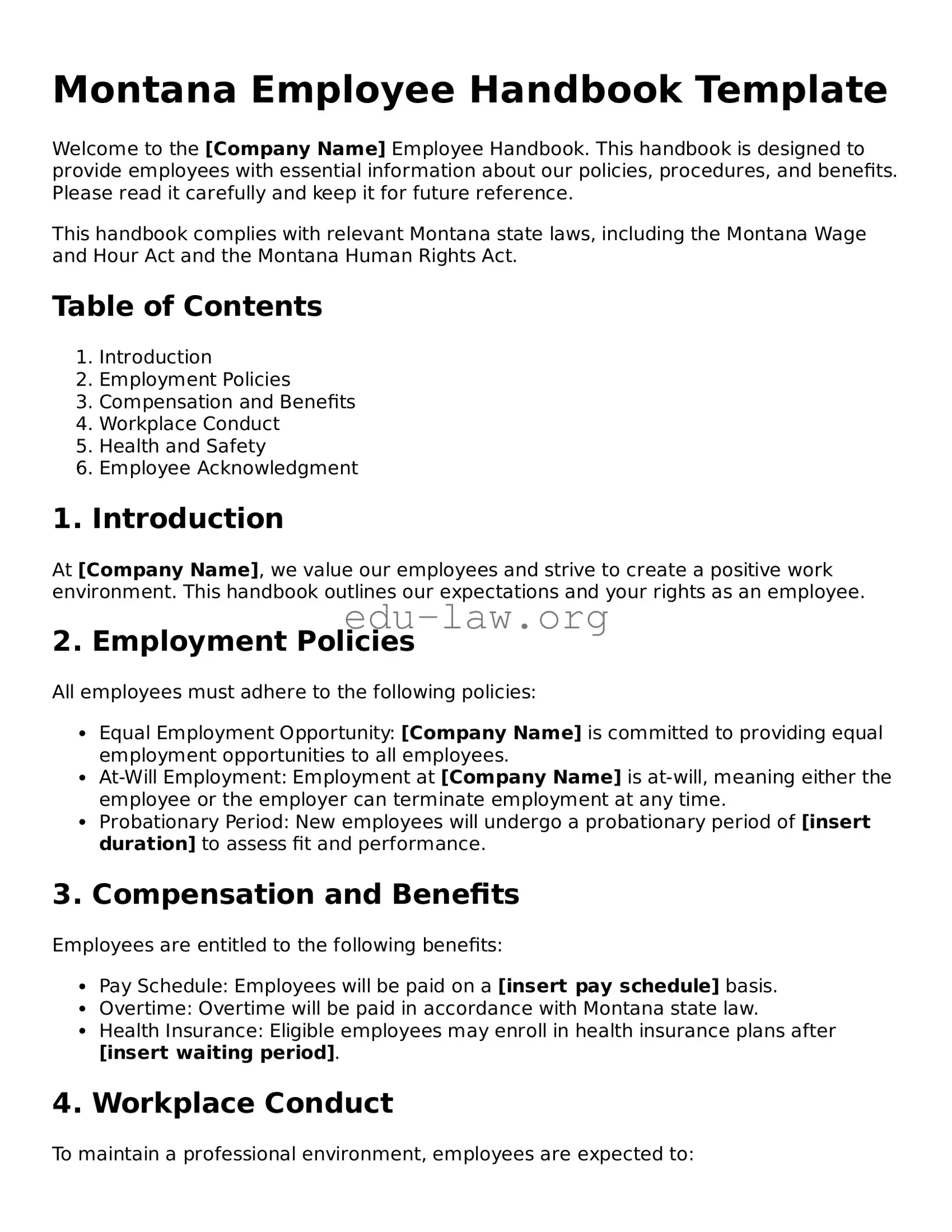
Montana Employee Handbook Template
Welcome to the [Company Name] Employee Handbook. This handbook is designed to provide employees with essential information about our policies, procedures, and benefits. Please read it carefully and keep it for future reference.
This handbook complies with relevant Montana state laws, including the Montana Wage and Hour Act and the Montana Human Rights Act.
Table of Contents
1. Introduction
At [Company Name], we value our employees and strive to create a positive work environment. This handbook outlines our expectations and your rights as an employee.
2. Employment Policies
All employees must adhere to the following policies:
3. Compensation and Benefits
Employees are entitled to the following benefits:
4. Workplace Conduct
To maintain a professional environment, employees are expected to:
5. Health and Safety
The safety and health of our employees is a top priority. Employees should:
6. Employee Acknowledgment
By signing below, you acknowledge that you have received and read the [Company Name] Employee Handbook. You agree to abide by the policies and procedures outlined within.
Employee Name: ___________________________
Employee Signature: ________________________
Date: ____________________________________
| Fact Name | Description |
|---|---|
| Purpose | The Montana Employee Handbook serves as a guide for employees regarding company policies, procedures, and expectations. |
| State Requirement | While not legally mandated, providing an employee handbook is considered a best practice in Montana. |
| Governing Laws | The handbook should comply with Montana labor laws, including the Montana Human Rights Act and wage and hour laws. |
| Content Recommendations | It is advisable to include sections on workplace conduct, anti-discrimination policies, and employee benefits. |
| Review and Updates | Employers should regularly review and update the handbook to reflect changes in laws or company policies. |
| Employee Acknowledgment | Employees should sign an acknowledgment form indicating they have received and understood the handbook. |
| Legal Protection | A well-drafted handbook can help protect employers from legal disputes by clarifying policies and procedures. |
| Accessibility | The handbook should be easily accessible to all employees, whether in print or digital format. |
Filling out the Montana Employee Handbook form is an important step in ensuring that you understand your rights and responsibilities as an employee. This form helps establish clear communication between you and your employer, setting the stage for a positive working relationship. Follow the steps below to complete the form accurately.
What is the Montana Employee Handbook form?
The Montana Employee Handbook form is a document designed to outline the policies, procedures, and expectations of employees within a Montana-based organization. It serves as a guide for both employers and employees, ensuring that everyone is aware of their rights and responsibilities in the workplace.
Why is it important to have an Employee Handbook?
An Employee Handbook is crucial because it establishes clear guidelines for behavior and performance. It helps to prevent misunderstandings and disputes by providing employees with a comprehensive understanding of company policies. Additionally, it can protect the organization from legal issues by demonstrating that the company has communicated its policies effectively.
Who should receive a copy of the Employee Handbook?
Every employee should receive a copy of the Employee Handbook upon hiring. It is important that new hires understand the company's policies from the outset. Additionally, existing employees should receive updates whenever the handbook is revised to ensure that they are informed of any changes in policies or procedures.
How often should the Employee Handbook be updated?
The Employee Handbook should be reviewed and updated regularly, at least once a year, or whenever there are significant changes in laws or company policies. Keeping the handbook current ensures that it reflects the latest legal requirements and organizational practices, which is essential for compliance and clarity.
What should be included in the Employee Handbook?
The Employee Handbook should include sections on company culture, workplace policies, employee benefits, disciplinary procedures, and safety regulations. It should also cover topics such as equal employment opportunity, harassment policies, and leave policies. Including clear, concise language will help employees understand the information presented.
What should employees do if they have questions about the Employee Handbook?
If employees have questions about the Employee Handbook, they should reach out to their direct supervisor or the human resources department. Open communication is encouraged to clarify any uncertainties regarding policies or procedures. It is important that employees feel comfortable seeking guidance to ensure they fully understand their rights and responsibilities.
Inaccurate Personal Information: Many individuals fail to provide correct personal details, such as their full name, address, or Social Security number. This can lead to issues with payroll and benefits.
Missing Signatures: Some people neglect to sign the form altogether or forget to date it. This oversight can render the document invalid and may complicate the employment process.
Not Reviewing the Handbook: Employees often skip reading the entire employee handbook before signing. This can result in misunderstandings regarding company policies and expectations.
Ignoring Policy Changes: Failing to acknowledge or understand recent updates to policies can lead to non-compliance. It is essential to stay informed about any changes that may affect employment.
Providing Incomplete Information: Some individuals might leave sections of the form blank or provide vague responses. This lack of clarity can create confusion and delays in processing.
The Montana Employee Handbook is a crucial document for any organization operating in the state. It outlines company policies, employee rights, and expectations. Along with this handbook, several other forms and documents are commonly used to ensure clarity and compliance in the workplace. Below is a list of these essential documents.
These documents play a significant role in managing employee relations and ensuring compliance with employment laws. Utilizing them effectively can lead to a more organized and transparent workplace environment.
The Montana Employee Handbook is similar to the Employee Manual, which serves a similar purpose in outlining company policies and procedures. Both documents provide essential information about employee rights, responsibilities, and workplace expectations. They typically cover topics such as attendance, dress code, and performance reviews. The Employee Manual often includes more detailed instructions on specific job functions, while the Employee Handbook may focus more on overarching company culture and values.
Another comparable document is the Company Policy Guide. This guide details the specific policies that govern employee behavior and company operations. Like the Employee Handbook, it emphasizes compliance with legal standards and company ethics. However, the Company Policy Guide may be more focused on specific regulations, such as anti-discrimination policies or safety protocols, while the Employee Handbook provides a broader overview.
The Orientation Packet is another document that shares similarities with the Montana Employee Handbook. This packet is typically given to new hires and includes essential information about the company, benefits, and initial training. Both documents aim to help employees acclimate to the workplace. However, the Orientation Packet is often more introductory, while the Employee Handbook serves as a comprehensive reference throughout an employee's tenure.
The Workplace Safety Manual also resembles the Employee Handbook in its goal of ensuring a safe work environment. Both documents outline responsibilities and procedures to follow in case of emergencies. While the Employee Handbook may touch on safety as part of a broader discussion, the Workplace Safety Manual focuses exclusively on safety protocols, hazard communication, and reporting incidents.
Similarly, the Code of Conduct provides guidelines on acceptable behavior within the workplace. Like the Employee Handbook, it seeks to promote a respectful and professional atmosphere. The Code of Conduct is usually more specific about disciplinary actions and ethical standards, while the Employee Handbook offers a more general overview of company values and expectations.
The Benefits Overview Document is another related resource. This document outlines employee benefits, such as health insurance, retirement plans, and leave policies. While the Employee Handbook may include a section on benefits, the Benefits Overview Document typically provides a more detailed explanation of each benefit, eligibility requirements, and enrollment procedures.
The Performance Review Guide is akin to the Employee Handbook as it addresses employee evaluations and feedback processes. Both documents emphasize the importance of performance management and continuous improvement. However, the Performance Review Guide often includes specific criteria for evaluations, while the Employee Handbook may discuss performance in a more general context.
The Employee Grievance Procedure is another document that aligns with the Employee Handbook. It outlines the steps employees should take if they have concerns or complaints about workplace issues. Both documents aim to foster open communication and address conflicts, but the Grievance Procedure provides a more detailed process for resolving disputes.
Additionally, the Training Manual shares similarities with the Employee Handbook. It serves as a resource for employee development and training programs. Both documents emphasize the importance of ongoing learning and professional growth. However, the Training Manual is typically more focused on specific skills and knowledge required for particular roles, while the Employee Handbook covers broader company policies.
Lastly, the Exit Interview Form is related to the Employee Handbook in that it addresses the end of the employment relationship. Both documents can provide insights into employee satisfaction and areas for improvement within the company. However, the Exit Interview Form is specifically designed to gather feedback from departing employees, while the Employee Handbook serves as a guide for current employees throughout their employment.
When filling out the Montana Employee Handbook form, it's important to follow certain guidelines to ensure accuracy and compliance. Here are some key do's and don'ts to keep in mind:
When it comes to the Montana Employee Handbook, there are several misconceptions that can lead to confusion. Understanding the truth behind these myths can help both employers and employees navigate their rights and responsibilities more effectively.
Many believe that only large companies need an employee handbook. However, even small businesses benefit from having clear policies in place. A handbook sets expectations and helps prevent misunderstandings.
Some think that once an employee signs the handbook, it becomes a contract. In reality, most handbooks include a disclaimer stating that they are not contracts. This helps protect the employer from legal claims based on handbook policies.
It's a common misconception that an employee handbook is a one-time task. In fact, handbooks should be regularly reviewed and updated to reflect changes in laws and company policies.
Some believe that every possible policy must be detailed in the handbook. While it’s important to cover key topics, it’s also okay to keep some policies separate or more informal, especially if they are subject to change.
Many think that the handbook is solely for the employer's advantage. In truth, it serves as a resource for employees too, providing them with information about their rights and responsibilities in the workplace.
When filling out and using the Montana Employee Handbook form, keep these key takeaways in mind: