In the state of Montana, the Durable Power of Attorney form serves as a vital legal tool for individuals seeking to designate someone to make decisions on their behalf when they can no longer do so themselves. This form allows a person, known as the principal, to appoint an agent who will have the authority to manage financial matters, healthcare decisions, and other important affairs. One key aspect of this document is its durability; it remains effective even if the principal becomes incapacitated, ensuring that their chosen agent can step in without interruption. The form must be signed by the principal and typically requires witnesses or notarization to validate its authenticity. Understanding the nuances of this form is crucial for anyone looking to safeguard their interests and ensure that their wishes are honored, particularly in times of crisis or illness. As life circumstances change, the ability to modify or revoke the Durable Power of Attorney provides flexibility, making it an essential part of comprehensive estate planning.
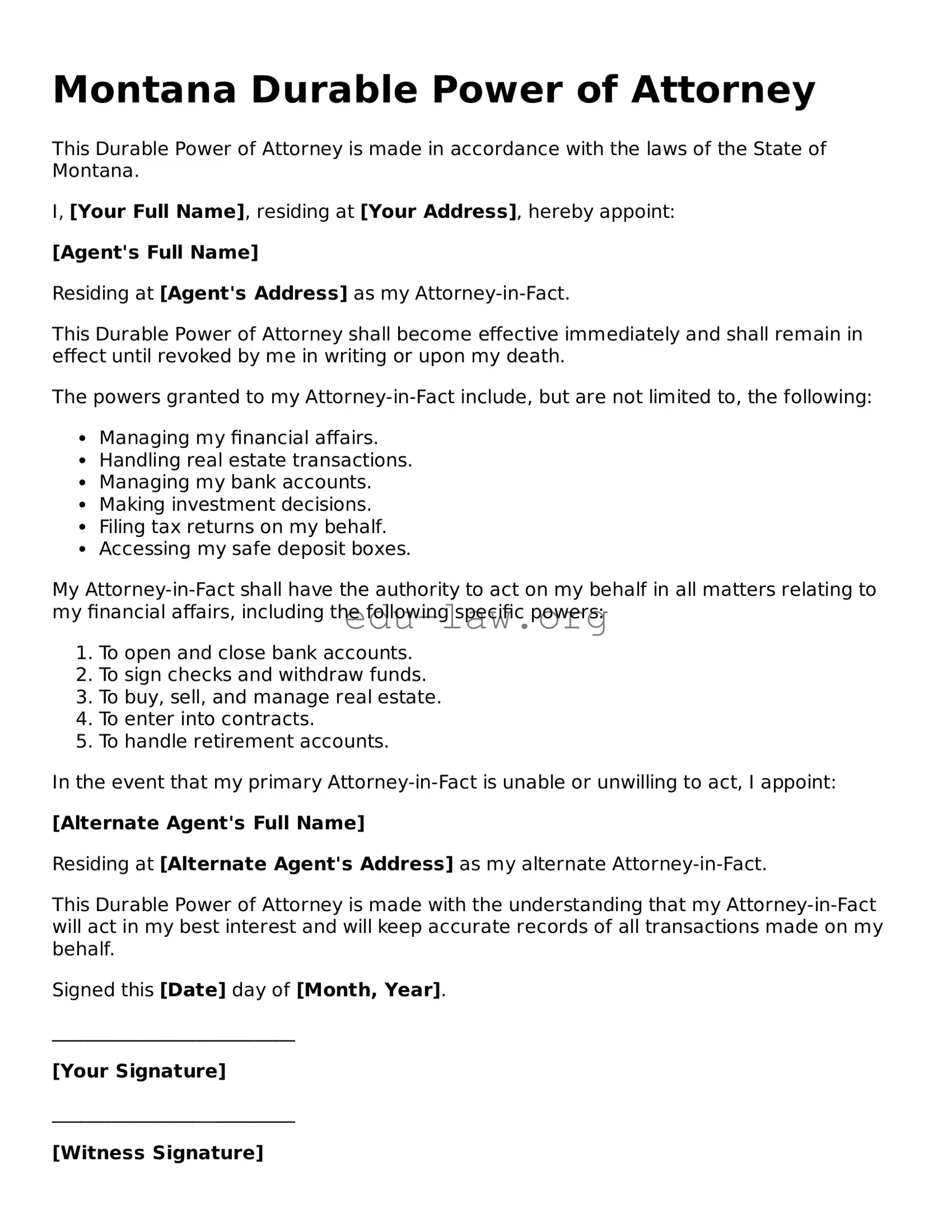
Montana Durable Power of Attorney
This Durable Power of Attorney is made in accordance with the laws of the State of Montana.
I, [Your Full Name], residing at [Your Address], hereby appoint:
[Agent's Full Name]
Residing at [Agent's Address] as my Attorney-in-Fact.
This Durable Power of Attorney shall become effective immediately and shall remain in effect until revoked by me in writing or upon my death.
The powers granted to my Attorney-in-Fact include, but are not limited to, the following:
My Attorney-in-Fact shall have the authority to act on my behalf in all matters relating to my financial affairs, including the following specific powers:
In the event that my primary Attorney-in-Fact is unable or unwilling to act, I appoint:
[Alternate Agent's Full Name]
Residing at [Alternate Agent's Address] as my alternate Attorney-in-Fact.
This Durable Power of Attorney is made with the understanding that my Attorney-in-Fact will act in my best interest and will keep accurate records of all transactions made on my behalf.
Signed this [Date] day of [Month, Year].
__________________________
[Your Signature]
__________________________
[Witness Signature]
[Witness Name]
__________________________
[Notary Public Signature]
[Notary Public Name]
| Fact Name | Description |
|---|---|
| Definition | A Durable Power of Attorney in Montana allows a person to designate someone else to make financial or legal decisions on their behalf, even if they become incapacitated. |
| Governing Law | The Montana Durable Power of Attorney is governed by the Montana Code Annotated, Title 72, Chapter 31. |
| Durability | This form remains effective even if the person who created it becomes unable to make decisions due to illness or injury. |
| Principal and Agent | The person who creates the Durable Power of Attorney is known as the principal, while the person designated to act on their behalf is called the agent. |
| Scope of Authority | The agent can be granted broad or limited powers, depending on what the principal specifies in the document. |
| Signing Requirements | The form must be signed by the principal and witnessed by two individuals or notarized to be valid. |
| Revocation | The principal can revoke the Durable Power of Attorney at any time, as long as they are mentally competent to do so. |
| Agent's Duties | The agent is required to act in the best interest of the principal and must keep accurate records of all transactions made on their behalf. |
| Healthcare Decisions | A separate document, often referred to as a Healthcare Power of Attorney, is typically used for medical decisions, as the Durable Power of Attorney primarily covers financial matters. |
| Legal Advice | While this form can be a powerful tool, seeking legal advice before creating one is advisable to ensure that it meets the principal's needs and complies with state laws. |
To complete the Montana Durable Power of Attorney form, follow the steps outlined below. Ensure that all information is accurate and legible, as this document will be used for important decision-making purposes.
What is a Durable Power of Attorney in Montana?
A Durable Power of Attorney (DPOA) in Montana is a legal document that allows you to appoint someone to make decisions on your behalf if you become unable to do so. This can include financial decisions, medical choices, and other important matters. The term "durable" means that the authority granted continues even if you become incapacitated.
Who can be appointed as an agent in a Durable Power of Attorney?
You can choose any competent adult to serve as your agent, including a family member, friend, or trusted advisor. It’s essential to select someone you trust completely, as they will have significant power over your financial and personal affairs.
How does a Durable Power of Attorney become effective?
A Durable Power of Attorney can become effective immediately upon signing or can be set to activate only when you become incapacitated. If you choose the latter, it’s advisable to include a clear definition of what constitutes incapacity in the document.
Can I revoke a Durable Power of Attorney?
Yes, you can revoke a Durable Power of Attorney at any time, as long as you are competent. To do this, you should create a written revocation and inform your agent and any relevant institutions. It’s important to ensure that your revocation is clear to avoid confusion.
What powers can I grant to my agent?
You have the flexibility to grant a wide range of powers to your agent. This can include managing your bank accounts, selling property, making healthcare decisions, and handling tax matters. You can specify exactly what powers you want to grant or limit them as you see fit.
Is it necessary to have a lawyer to create a Durable Power of Attorney?
While it’s not legally required to have a lawyer draft your Durable Power of Attorney, consulting one can be beneficial. A legal expert can help ensure that the document meets all state requirements and accurately reflects your wishes. This can save you from potential complications down the road.
What happens if I don’t have a Durable Power of Attorney?
If you become incapacitated without a Durable Power of Attorney, your loved ones may need to go through a court process to obtain guardianship or conservatorship. This process can be lengthy, expensive, and emotionally taxing. Having a DPOA in place can help avoid this situation and ensure your preferences are honored.
Failing to specify the powers granted. It’s crucial to clearly outline what authority you are giving to your agent. Vague language can lead to confusion and potential disputes.
Not signing the document in front of a notary. Montana law requires that the Durable Power of Attorney be notarized to be valid. Without this step, the document may not hold up when needed.
Neglecting to update the form. Life changes, such as marriage, divorce, or the death of a designated agent, necessitate updates to the Durable Power of Attorney. Failing to revise the document can create complications.
Choosing an unreliable agent. It’s essential to select someone trustworthy and capable. An unreliable agent can lead to poor decision-making and potential financial loss.
Overlooking witness requirements. While Montana does not require witnesses for a Durable Power of Attorney, having witnesses can add an extra layer of protection and legitimacy to the document.
A Durable Power of Attorney (DPOA) is a crucial document that allows someone to make decisions on your behalf when you are unable to do so. In Montana, there are several other forms and documents that often accompany a DPOA. These documents help clarify roles, responsibilities, and intentions regarding your financial and medical affairs.
These documents work together to ensure that your wishes are respected and that your affairs are managed according to your preferences. It is essential to consider each of these forms carefully and consult with a professional if needed.
The Montana Durable Power of Attorney form is similar to the General Power of Attorney. Both documents allow one person to grant authority to another to make decisions on their behalf. However, the General Power of Attorney can become invalid if the person who created it becomes incapacitated. In contrast, the Durable Power of Attorney remains in effect even if the principal becomes unable to manage their affairs, making it a more reliable choice for long-term planning.
Another similar document is the Medical Power of Attorney. This form specifically allows an individual to appoint someone to make healthcare decisions for them if they are unable to do so. Like the Durable Power of Attorney, the Medical Power of Attorney remains effective during periods of incapacity. This ensures that the appointed person can make critical medical decisions in line with the principal’s wishes.
The Living Will is also comparable to the Durable Power of Attorney. While the Durable Power of Attorney allows someone to manage financial and legal matters, a Living Will focuses on medical treatment preferences. This document outlines what kind of medical care an individual wishes to receive or not receive in case they become terminally ill or incapacitated. Both documents serve to protect the individual’s wishes during difficult times.
A Trust is another related document. A trust allows a person to transfer assets to a trustee, who will manage those assets for the benefit of others. While a Durable Power of Attorney grants decision-making authority, a trust involves the actual management and distribution of property. Both documents are used for planning and can help ensure that a person's wishes are honored when they can no longer make decisions themselves.
Lastly, the Advance Directive is similar to the Durable Power of Attorney in that it combines elements of both a Medical Power of Attorney and a Living Will. An Advance Directive provides instructions for medical care and designates someone to make healthcare decisions. It ensures that an individual's health care preferences are respected and that someone is appointed to advocate for them when they cannot speak for themselves, similar to the Durable Power of Attorney's role in financial matters.
When filling out the Montana Durable Power of Attorney form, it's crucial to follow specific guidelines. Here are ten important dos and don'ts to ensure the document is valid and effective.
The Montana Durable Power of Attorney form is an important legal document that allows someone to make decisions on your behalf if you become unable to do so. However, several misconceptions can lead to confusion. Here are seven common misconceptions:
Understanding these misconceptions can help you make informed decisions about your legal and financial planning. It is always wise to consult with a qualified professional to ensure your documents meet your needs.
Filling out and using the Montana Durable Power of Attorney form is an important step in planning for your future. Here are some key takeaways to keep in mind:
Being informed and proactive can make a significant difference in ensuring your wishes are respected.