In the state of Missouri, a Residential Lease Agreement serves as a crucial document that outlines the terms and conditions between landlords and tenants. This form addresses essential elements such as the duration of the lease, monthly rent amount, and security deposit requirements. Additionally, it specifies the responsibilities of both parties, including maintenance obligations and rules regarding property use. The agreement also includes provisions for termination, renewal options, and procedures for handling disputes. Understanding these key aspects is vital for both landlords and tenants to ensure a smooth rental experience and to protect their rights throughout the leasing period. With clear guidelines established in the agreement, both parties can enter into the rental relationship with confidence and clarity.
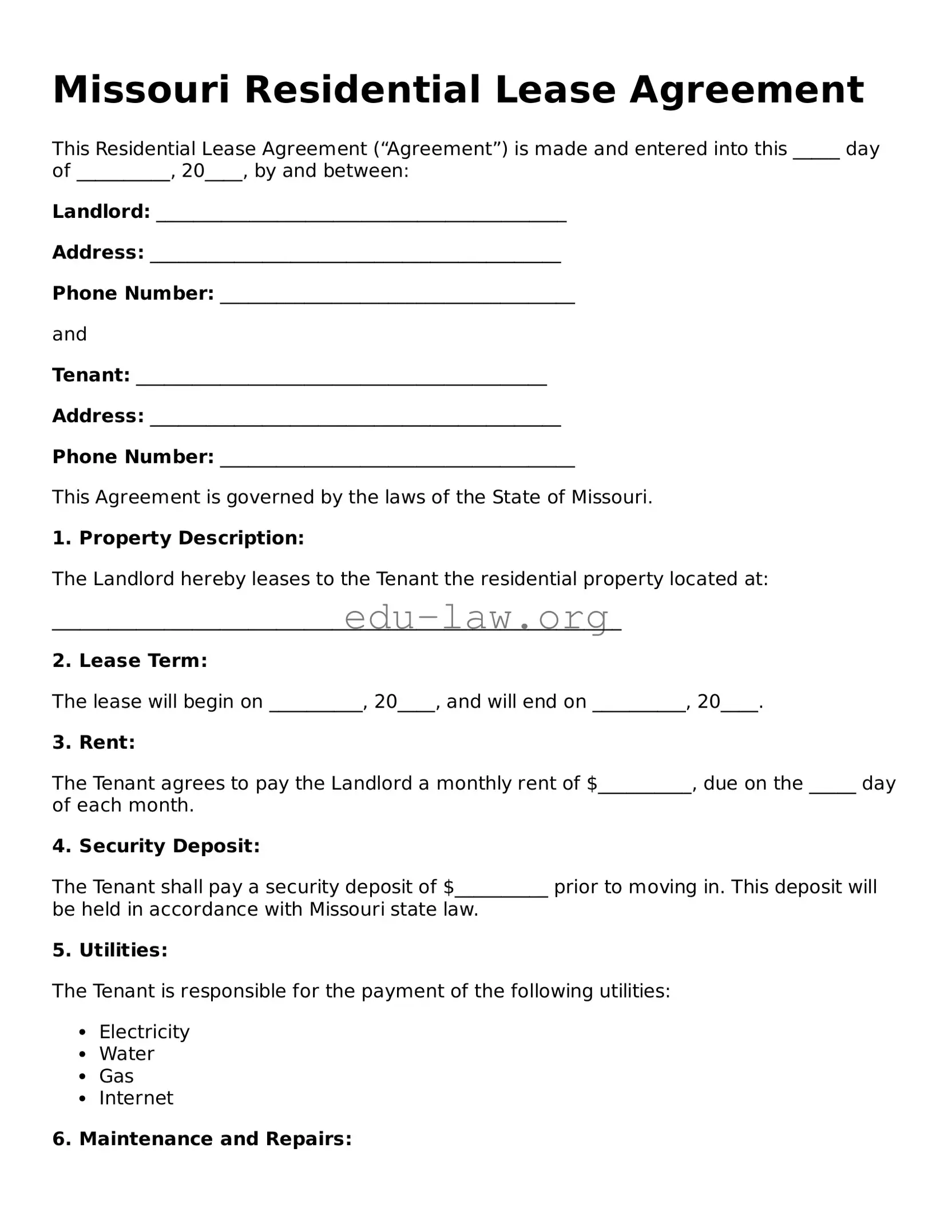
Missouri Residential Lease Agreement
This Residential Lease Agreement (“Agreement”) is made and entered into this _____ day of __________, 20____, by and between:
Landlord: ____________________________________________
Address: ____________________________________________
Phone Number: ______________________________________
and
Tenant: ____________________________________________
Address: ____________________________________________
Phone Number: ______________________________________
This Agreement is governed by the laws of the State of Missouri.
1. Property Description:
The Landlord hereby leases to the Tenant the residential property located at:
_____________________________________________________________
2. Lease Term:
The lease will begin on __________, 20____, and will end on __________, 20____.
3. Rent:
The Tenant agrees to pay the Landlord a monthly rent of $__________, due on the _____ day of each month.
4. Security Deposit:
The Tenant shall pay a security deposit of $__________ prior to moving in. This deposit will be held in accordance with Missouri state law.
5. Utilities:
The Tenant is responsible for the payment of the following utilities:
6. Maintenance and Repairs:
The Tenant agrees to maintain the property in good condition and report any necessary repairs to the Landlord promptly.
7. Termination:
Either party may terminate this Agreement by providing written notice at least _____ days prior to the intended termination date.
8. Governing Law:
This Agreement shall be governed by and construed in accordance with the laws of the State of Missouri.
IN WITNESS WHEREOF, the parties hereto have executed this Residential Lease Agreement as of the day and year first above written.
Landlord Signature: _______________________________ Date: _______________
Tenant Signature: ________________________________ Date: _______________
| Fact Name | Details |
|---|---|
| Governing Law | The Missouri Residential Lease Agreement is governed by Missouri state law, specifically Chapter 441 of the Revised Statutes of Missouri. |
| Parties Involved | The agreement is typically between a landlord and a tenant, both of whom must be clearly identified in the document. |
| Lease Duration | The lease can be for a fixed term, such as one year, or it may be a month-to-month agreement. |
| Security Deposit | Missouri law allows landlords to collect a security deposit, which typically cannot exceed two months' rent. |
| Rent Payment | The lease should specify the amount of rent, due date, and acceptable payment methods. |
| Maintenance Responsibilities | The agreement outlines the responsibilities for maintenance and repairs, clarifying what the landlord and tenant are responsible for. |
| Termination Notice | For month-to-month leases, either party must provide at least 30 days' written notice to terminate the agreement. |
Filling out the Missouri Residential Lease Agreement form is an important step in establishing a rental relationship. It helps ensure that both the landlord and tenant understand their rights and responsibilities. Here's how to complete the form accurately.
Once the form is completed and signed, both parties should keep a copy for their records. This ensures that everyone has access to the agreed terms throughout the lease period.
What is a Missouri Residential Lease Agreement?
A Missouri Residential Lease Agreement is a legal document that outlines the terms and conditions under which a landlord rents property to a tenant. This agreement includes essential details such as the rental amount, duration of the lease, and the responsibilities of both parties. It serves to protect the rights of both the landlord and the tenant, ensuring that everyone understands their obligations and rights during the rental period.
What should be included in the lease agreement?
Key components of a Missouri Residential Lease Agreement include the names of the landlord and tenant, the property address, the lease term (whether it is month-to-month or for a fixed period), the rental amount and payment schedule, security deposit details, and rules regarding maintenance and repairs. Additionally, it may outline policies on pets, smoking, and other important matters that could affect the living environment.
How can a lease be terminated in Missouri?
In Missouri, a lease can typically be terminated in several ways. If the lease is for a fixed term, it generally ends automatically at the conclusion of that term unless renewed. For month-to-month leases, either party can terminate the agreement by providing written notice, usually 30 days in advance. It’s important for both landlords and tenants to review the specific terms of their lease, as there may be additional requirements or conditions for termination outlined in the agreement.
What happens if a tenant violates the lease agreement?
If a tenant violates the lease agreement, the landlord has the right to take certain actions. Common violations include failure to pay rent, damaging the property, or breaking rules regarding pets or noise. Depending on the severity of the violation, the landlord may issue a notice to cure, giving the tenant a chance to fix the issue. If the problem persists, the landlord may begin the eviction process. It is crucial for both parties to communicate openly and address any issues promptly to avoid escalation.
Incomplete Tenant Information: One common mistake is failing to provide complete and accurate information about all tenants. Ensure that full names, contact information, and any additional occupants are listed. This prevents confusion and potential disputes in the future.
Incorrect Lease Dates: Another frequent error involves misrepresenting the lease start and end dates. Double-check these dates to avoid misunderstandings regarding the duration of the lease. An incorrect date can lead to unintended consequences for both the landlord and tenants.
Neglecting to Specify Rent Payment Details: It is crucial to clearly outline the rent amount, payment due date, and acceptable payment methods. Omitting this information can create confusion and lead to missed payments or disputes over late fees.
Ignoring Maintenance Responsibilities: Often, individuals overlook the section detailing maintenance responsibilities. Both landlords and tenants should understand who is responsible for repairs and upkeep. Clearly defining these duties helps prevent conflicts and ensures a well-maintained property.
When entering into a rental agreement in Missouri, several additional documents often accompany the Residential Lease Agreement. These documents help clarify the terms of the lease and protect the interests of both the landlord and the tenant. Below are some commonly used forms.
These forms are essential for ensuring a smooth rental process. They provide clarity and protect the rights of all parties involved in the leasing arrangement.
The Missouri Residential Lease Agreement is similar to the standard Residential Lease Agreement used in many states. Both documents outline the terms of renting a property, including the duration of the lease, rental amount, and responsibilities of both the landlord and tenant. They typically cover issues such as maintenance, security deposits, and rules regarding pets. While the Missouri version may include specific state laws, the fundamental structure and purpose remain consistent across various jurisdictions.
Another comparable document is the Commercial Lease Agreement. This type of agreement is tailored for businesses renting commercial spaces. Similar to residential leases, it details the terms of the rental, including duration and payment obligations. However, it often includes additional clauses related to business operations, zoning laws, and modifications to the property, reflecting the unique needs of commercial tenants.
The Month-to-Month Rental Agreement shares similarities with the Missouri Residential Lease Agreement in that it also governs the rental of residential property. The primary distinction lies in the duration of the lease. A month-to-month agreement allows either party to terminate the lease with short notice, typically 30 days. This flexibility can be beneficial for tenants who may not want a long-term commitment.
A sublease agreement is another document that resembles the Missouri Residential Lease Agreement. This type of agreement occurs when a tenant rents out their leased property to another person, known as the subtenant. Like the residential lease, it outlines the terms of occupancy, including rent amount and duration. However, it must also consider the original lease terms and the landlord's approval, which adds a layer of complexity.
The Lease Option Agreement is similar in that it allows a tenant to lease a property with the option to purchase it later. This document includes terms of the lease as well as conditions under which the tenant can buy the property. It combines elements of both leasing and purchasing, making it unique yet aligned with the structure of a traditional residential lease.
A Rent-to-Own Agreement is closely related to the Lease Option Agreement. It provides tenants the opportunity to rent a property with the intention of buying it after a set period. Like the Missouri Residential Lease Agreement, it outlines the rental terms, but it also specifies how a portion of the rent may be credited toward the purchase price, making it financially advantageous for the tenant.
The Room Rental Agreement is another document that shares similarities with the Missouri Residential Lease Agreement. This agreement is used when a tenant rents out a room in their home to another individual. It covers rental terms, payment schedules, and shared responsibilities. While it may be less formal than a full residential lease, it still provides essential protections for both parties.
A Fixed-Term Lease Agreement is similar to the Missouri Residential Lease Agreement in that it specifies a set rental period, typically lasting from six months to a year. Both documents detail the rights and responsibilities of the landlord and tenant. The fixed-term lease provides stability for both parties, as the rental terms are locked in for the duration of the lease.
The Lease Purchase Agreement is akin to the Lease Option Agreement but is more binding. This document obligates the tenant to purchase the property at the end of the lease term. Like the Missouri Residential Lease Agreement, it outlines rental terms but adds a commitment to buy, which can be beneficial for those looking to transition from renting to homeownership.
Finally, the Tenant Agreement is similar in that it establishes the relationship between the landlord and tenant. This document typically includes basic terms such as rent, duration, and maintenance responsibilities. While it may not be as comprehensive as the Missouri Residential Lease Agreement, it serves to clarify expectations and obligations for both parties in a rental situation.
When filling out the Missouri Residential Lease Agreement form, it’s essential to approach the task with care. This document serves as a binding contract between landlords and tenants, so accuracy and clarity are key. Here’s a helpful list of things to do and avoid:
By following these guidelines, you can help ensure that the lease agreement is clear, fair, and legally sound. A well-prepared lease protects both parties and lays the groundwork for a positive rental experience.
Understanding the Missouri Residential Lease Agreement is essential for both landlords and tenants. However, several misconceptions can lead to confusion and potential disputes. Here are four common misconceptions:
By addressing these misconceptions, both landlords and tenants can foster a more transparent and cooperative rental relationship.
When filling out and using the Missouri Residential Lease Agreement form, there are several important considerations to keep in mind. Here are some key takeaways:
By keeping these points in mind, you can navigate the lease agreement process more effectively and ensure a smoother rental experience.