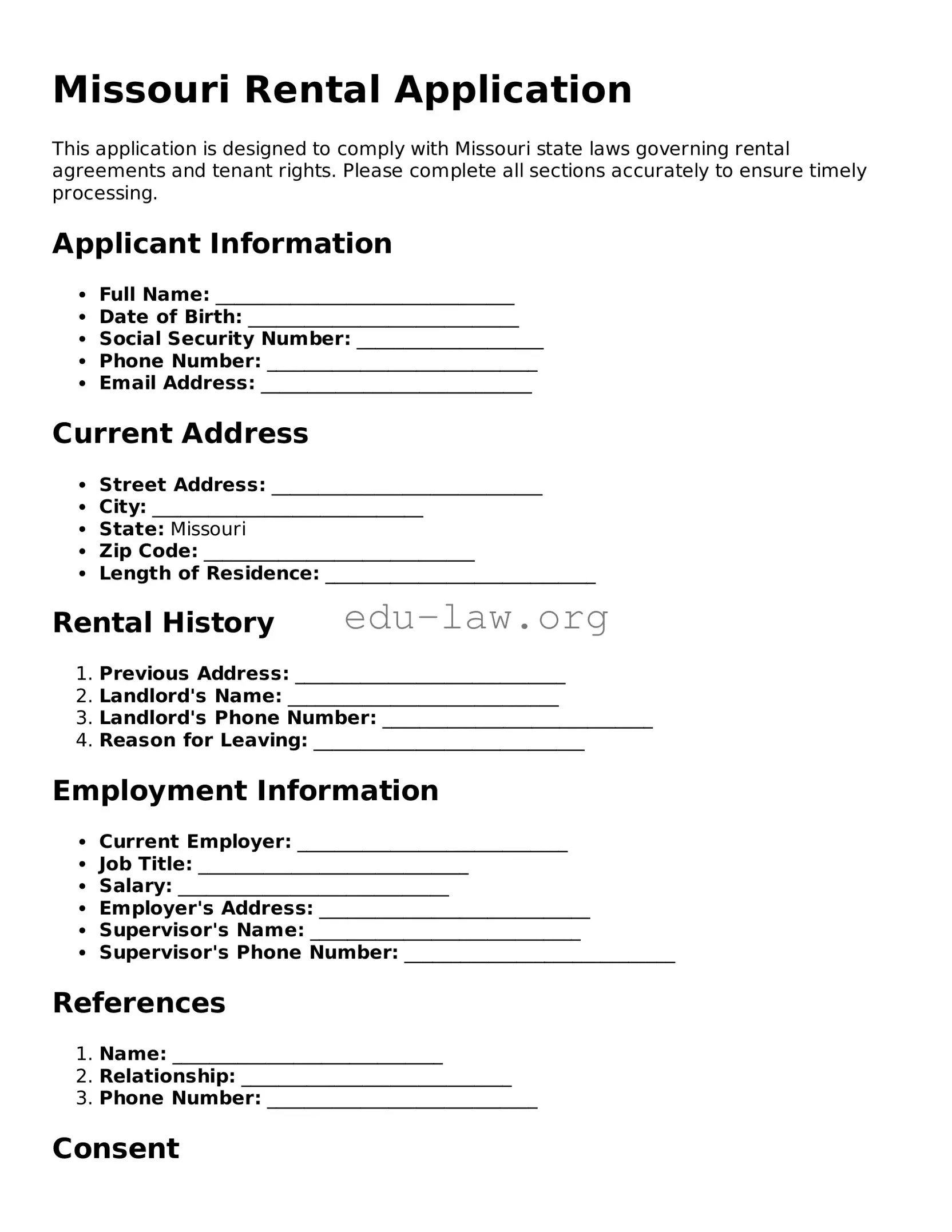
When seeking a new place to live in Missouri, understanding the rental application form is essential for both tenants and landlords. This form serves as a crucial tool in the rental process, providing landlords with necessary information to assess potential tenants. Key components typically include personal details such as the applicant's name, contact information, and social security number. Additionally, the form often requests employment history and income verification to ensure that applicants can meet their rental obligations. References, both personal and professional, may also be required to give landlords a clearer picture of the applicant's reliability. Furthermore, the rental application may include questions about rental history, allowing landlords to gauge past behavior in previous rental situations. By familiarizing yourself with the Missouri rental application form, you can navigate the rental process more effectively, ensuring that you present yourself in the best light possible while also understanding the expectations set forth by landlords.
Missouri Rental Application
This application is designed to comply with Missouri state laws governing rental agreements and tenant rights. Please complete all sections accurately to ensure timely processing.
Applicant Information
Current Address
Rental History
Employment Information
References
Consent
By signing below, I authorize the landlord or their agent to conduct a background check, including but not limited to credit history and rental history.
Applicant Signature: _____________________________
Date: _____________________________
| Fact Name | Description |
|---|---|
| Purpose | The Missouri Rental Application form is used by landlords to screen potential tenants. |
| Information Required | Applicants typically provide personal details, employment history, and rental history. |
| Application Fee | Landlords may charge an application fee to cover the cost of background checks. |
| Background Checks | Landlords often conduct background checks, which may include credit and criminal history. |
| Fair Housing Laws | The application process must comply with federal and state fair housing laws. |
| Governing Law | The Missouri Landlord-Tenant Law governs the rental application process. |
| Signature Requirement | Applicants usually must sign the form to authorize the landlord to conduct checks. |
| Disclosure of Information | Landlords must disclose how the application information will be used. |
| Timeframe for Approval | Landlords should inform applicants of their approval or denial within a reasonable timeframe. |
| Equal Opportunity | Landlords must treat all applicants equally and avoid discrimination. |
After completing the Missouri Rental Application form, you will be ready to submit it to the landlord or property manager. This will help them assess your suitability as a tenant.
What is a Missouri Rental Application form?
The Missouri Rental Application form is a document used by landlords to collect information from potential tenants. This form typically includes personal details, rental history, employment information, and references. It helps landlords assess the suitability of applicants for their rental properties.
What information is typically required on the application?
A standard Missouri Rental Application may request various details. Applicants are usually asked to provide their full name, contact information, social security number, and date of birth. Additionally, information about current and previous residences, income sources, and employment history is often included. Some applications may also ask for references from previous landlords or personal contacts.
Is there a fee associated with submitting a rental application?
Many landlords charge an application fee to cover the costs of background and credit checks. The fee amount can vary widely depending on the landlord or property management company. It's important for applicants to inquire about the fee upfront and understand what it covers before submitting their application.
How does a landlord use the information provided?
Landlords use the information from the rental application to evaluate potential tenants. They may conduct background checks, credit checks, and verify employment and rental history. This process helps landlords determine if an applicant is financially stable and responsible enough to meet rental obligations.
What should I do if I am denied rental based on my application?
If an application is denied, the landlord is generally required to provide a reason for the denial. Applicants have the right to ask for this information. If the denial was based on a credit report, the applicant may receive a copy of the report and can dispute any inaccuracies. Understanding the reason for denial can help applicants address issues for future applications.
Can I appeal a denial decision?
While there is no formal appeal process for rental application denials, applicants can take steps to improve their situation. They may choose to address any concerns raised by the landlord, provide additional references, or offer to pay a higher security deposit. Open communication with the landlord may lead to reconsideration in some cases.
Incomplete Information: One of the most common mistakes is leaving sections blank. Every part of the application is important, and missing information can lead to delays or even rejection.
Incorrect Contact Details: Providing wrong phone numbers or email addresses can create communication issues. Always double-check these details to ensure they are accurate.
Failure to Disclose Income: Applicants sometimes underestimate their income or fail to provide proof. It’s crucial to be transparent about financial status to avoid complications later on.
Not Listing Previous Landlords: Forgetting to include previous rental history can raise red flags. Landlords often want to verify past rental experiences, so this information is essential.
Ignoring Background Check Consent: Some applicants overlook the section that allows for a background check. This consent is often required, and neglecting it can hinder the application process.
Omitting References: Failing to provide personal or professional references can weaken an application. References help landlords assess reliability and character.
Not Reviewing the Application: Submitting the application without a thorough review can lead to errors. Taking a moment to proofread can prevent mistakes that might affect approval.
When applying for a rental property in Missouri, the rental application form is just one piece of the puzzle. Several other documents and forms are commonly used in conjunction with the rental application to streamline the process and ensure that both landlords and tenants have a clear understanding of their rights and responsibilities. Here’s a list of important forms you may encounter:
Understanding these documents can help both tenants and landlords navigate the rental process more effectively. By being prepared with the necessary forms, everyone involved can ensure a smoother transition into the rental agreement.
The Missouri Rental Application form shares similarities with the standard lease agreement. Both documents are essential in the rental process, as they establish the terms and conditions of the rental relationship. While the rental application focuses on gathering information about the prospective tenant, the lease agreement formalizes the arrangement once the tenant is approved. Both documents require personal details, such as the tenant's name and contact information, and often include provisions regarding payment terms and responsibilities.
Another document akin to the Missouri Rental Application is the background check authorization form. This form is often included as part of the rental application process. It allows landlords to obtain a prospective tenant’s credit history and criminal record. Similar to the rental application, the background check authorization form collects sensitive personal information, ensuring that landlords can make informed decisions about potential tenants based on their past behavior and financial responsibility.
The employment verification form also resembles the Missouri Rental Application. Landlords frequently request this document to confirm a tenant's employment status and income level. Like the rental application, it requires the tenant to provide personal information, including the name of their employer and salary details. This information helps landlords assess whether the tenant can afford the rent, thus ensuring a more secure rental agreement.
The tenant screening form is another document that aligns closely with the Missouri Rental Application. This form is designed to evaluate a prospective tenant's suitability based on various criteria, such as credit score, rental history, and employment verification. Both documents serve the same purpose of gathering relevant information to facilitate the landlord's decision-making process and reduce the risk of tenant-related issues in the future.
The pet application form is similar in nature to the Missouri Rental Application, particularly for landlords who allow pets in their rental properties. This document collects information about the tenant's pets, including breed, size, and vaccination history. Like the rental application, it aims to ensure that the tenant's pets will not pose a risk to the property or other tenants, thus helping landlords maintain a safe and harmonious living environment.
The roommate application form is another document that parallels the Missouri Rental Application. In situations where multiple tenants share a rental unit, landlords may require each roommate to complete this form. It gathers similar information as the rental application, such as personal details and rental history, ensuring that all individuals living in the unit meet the landlord’s criteria for tenancy.
The rental history verification form is closely related to the Missouri Rental Application as well. This document is used by landlords to confirm a prospective tenant’s previous rental experiences. It often requires the tenant to provide contact information for past landlords, allowing the new landlord to assess the tenant’s reliability and behavior. Both forms aim to create a comprehensive picture of the tenant's history, which can influence the landlord's decision.
Lastly, the financial disclosure form bears resemblance to the Missouri Rental Application. This document is often used to gain insight into a tenant's financial stability. It typically requests information about income, debts, and financial obligations. Like the rental application, the financial disclosure form helps landlords evaluate whether a tenant can meet their rental obligations, thus minimizing the risk of default.
When filling out the Missouri Rental Application form, it's important to be thorough and accurate. Here are five things you should and shouldn't do:
Taking these steps can help improve your chances of securing the rental you want. Be diligent and thorough in your application process.
When it comes to renting in Missouri, many people have misconceptions about the rental application process. Understanding the facts can help you navigate this important step more smoothly. Here are six common misconceptions:
Many believe that every rental application form is identical. In reality, different landlords and property management companies may have unique requirements and questions on their applications.
Some think that filling out a rental application doesn’t commit them to anything. However, providing false information can lead to consequences, including denial of the application or eviction later on.
While many landlords do require an application fee, not all do. It’s important to ask about this fee before submitting your application.
Although credit scores are important, landlords often consider other factors such as rental history, income, and references. A strong rental history can sometimes outweigh a lower credit score.
Some people think that once they submit their application, it’s set in stone. In many cases, you can update your application if you realize you made an error or if your situation changes.
Not every landlord performs background checks. Some may rely on other methods to assess potential tenants, so it’s wise to inquire about their specific process.
By understanding these misconceptions, you can better prepare yourself for the rental application process in Missouri. Always communicate openly with landlords and ask questions to clarify any uncertainties.
Filling out a Missouri Rental Application form is a crucial step in the rental process. Understanding how to complete this form can make a significant difference in securing a rental property. Here are some key takeaways to keep in mind:
By keeping these points in mind, you can navigate the Missouri Rental Application process more effectively. Good preparation can enhance your chances of securing the rental you desire.