When buying or selling a vehicle in Missouri, having the right documentation is essential to ensure a smooth transaction. One of the key documents involved is the Missouri Motor Vehicle Bill of Sale form. This form serves as a written record of the sale, capturing important details such as the vehicle's make, model, year, and Vehicle Identification Number (VIN). It also includes the sale price, the date of the transaction, and the names and addresses of both the buyer and the seller. By providing a clear account of the agreement, this form helps protect both parties by outlining the terms of the sale. Additionally, it can serve as proof of ownership transfer, which is crucial for registering the vehicle with the state. Understanding the components and significance of the Bill of Sale is vital for anyone involved in a vehicle transaction in Missouri.
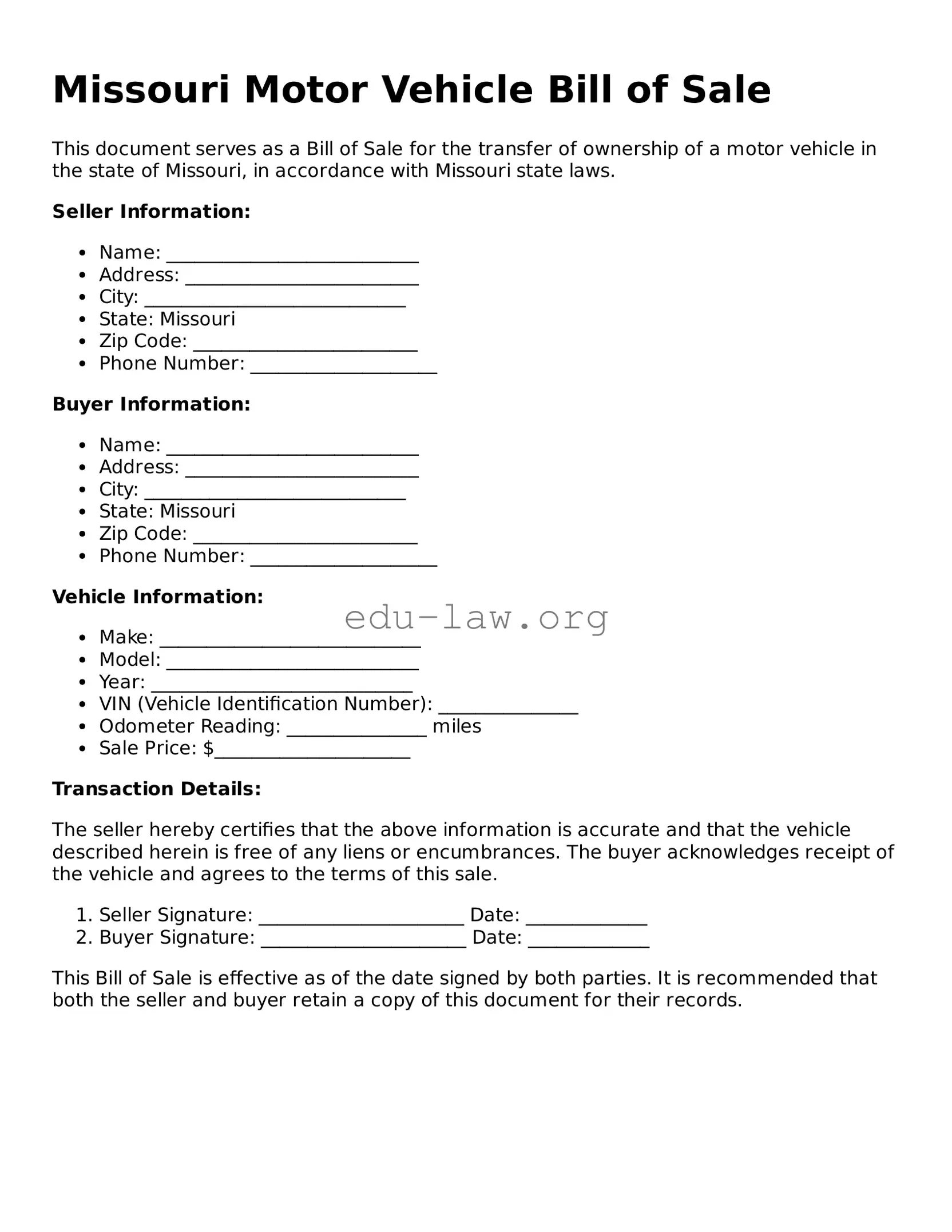
Missouri Motor Vehicle Bill of Sale
This document serves as a Bill of Sale for the transfer of ownership of a motor vehicle in the state of Missouri, in accordance with Missouri state laws.
Seller Information:
Buyer Information:
Vehicle Information:
Transaction Details:
The seller hereby certifies that the above information is accurate and that the vehicle described herein is free of any liens or encumbrances. The buyer acknowledges receipt of the vehicle and agrees to the terms of this sale.
This Bill of Sale is effective as of the date signed by both parties. It is recommended that both the seller and buyer retain a copy of this document for their records.
| Fact Name | Description |
|---|---|
| Purpose | The Missouri Motor Vehicle Bill of Sale form is used to document the sale of a motor vehicle between a buyer and a seller. |
| Governing Law | This form is governed by Missouri Revised Statutes, specifically Chapter 301. |
| Information Required | The form requires details such as the vehicle's make, model, year, VIN, and the sale price. |
| Signatures | Both the seller and buyer must sign the form to validate the transaction. |
| Notarization | While notarization is not required, it is recommended for added legal protection. |
| Usage | This form is essential for transferring ownership and can be used for both private and dealer sales. |
| Record Keeping | It is advisable for both parties to keep a copy of the completed Bill of Sale for their records. |
After obtaining the Missouri Motor Vehicle Bill of Sale form, you will need to fill it out carefully. This document is essential for transferring ownership of a vehicle. Make sure to have all the necessary information on hand before you start.
What is a Missouri Motor Vehicle Bill of Sale?
A Missouri Motor Vehicle Bill of Sale is a legal document that records the sale of a vehicle between a seller and a buyer. It provides proof of the transaction and includes important details about the vehicle, such as its make, model, year, Vehicle Identification Number (VIN), and sale price. This document is essential for registering the vehicle in the buyer's name.
Is a Bill of Sale required in Missouri?
While a Bill of Sale is not legally required for every vehicle transaction in Missouri, it is highly recommended. Having this document protects both the buyer and seller by providing a record of the sale. It can also be useful for tax purposes and when transferring ownership at the Department of Revenue.
What information should be included in the Bill of Sale?
The Bill of Sale should include the following information: the names and addresses of both the buyer and seller, the vehicle's make, model, year, VIN, sale price, and the date of the transaction. Additionally, both parties should sign the document to validate the sale.
Do I need to have the Bill of Sale notarized?
No, notarization is not required for a Bill of Sale in Missouri. However, having the document notarized can provide an extra layer of security and authenticity, which may be beneficial if disputes arise in the future.
Can I use a generic Bill of Sale form for my vehicle sale?
Yes, you can use a generic Bill of Sale form, but it is advisable to use a form specifically designed for Missouri vehicle transactions. This ensures that all necessary information is included and meets state requirements, making the process smoother for both parties.
What should I do with the Bill of Sale after the transaction?
After the sale is complete, both the buyer and seller should keep a copy of the Bill of Sale for their records. The buyer will need it for vehicle registration, while the seller should retain it as proof of the sale in case of any future issues.
Can I sell a vehicle without a title in Missouri?
In Missouri, you cannot legally sell a vehicle without a title. The title serves as proof of ownership. If the title is lost or unavailable, the seller must apply for a duplicate title before completing the sale. A Bill of Sale alone does not suffice for ownership transfer.
How do I register my vehicle after purchasing it with a Bill of Sale?
To register your vehicle after purchasing it with a Bill of Sale, you will need to take the Bill of Sale, the signed title, and any other required documents to your local Department of Revenue office. There, you can complete the registration process and obtain new license plates and a registration card.
Incorrect Vehicle Information: Many people fail to accurately fill in the vehicle details, such as the make, model, year, and VIN (Vehicle Identification Number). This can lead to confusion and complications during registration.
Missing Signatures: A common mistake is not having both the buyer's and seller's signatures on the form. Without these, the bill of sale is not legally binding.
Omitting Sale Price: Leaving out the sale price can create issues. It’s essential to clearly state the amount paid for the vehicle to avoid misunderstandings later.
Not Including Date of Sale: Some forget to write the date of the transaction. This detail is crucial for record-keeping and establishing the timeline of ownership.
Failure to Keep Copies: After completing the form, not keeping a copy for personal records is a mistake. Both parties should retain a copy for their files in case of future disputes.
When completing a vehicle transaction in Missouri, several other forms and documents may be necessary alongside the Motor Vehicle Bill of Sale. Each of these documents serves a specific purpose and helps ensure that the transaction is legally sound.
Having these documents ready can help facilitate a smoother transaction and protect both parties involved in the sale. It is advisable to review each document carefully to ensure compliance with Missouri laws and regulations.
The Vehicle Title Transfer form is similar to the Missouri Motor Vehicle Bill of Sale as it serves to officially transfer ownership of a vehicle from one party to another. This document includes essential details such as the vehicle identification number (VIN), the names of the buyer and seller, and the sale price. Both forms require signatures from both parties to validate the transaction, ensuring that the transfer is recognized by the state.
The Odometer Disclosure Statement is another document that complements the Motor Vehicle Bill of Sale. This form records the vehicle's mileage at the time of sale, providing transparency and protecting against odometer fraud. Like the Bill of Sale, it requires the signatures of both the buyer and seller. This ensures that the buyer is fully informed about the vehicle's condition and history before making a purchase.
The Application for Title is also closely related to the Bill of Sale. After a sale, the buyer must complete this application to obtain a new title in their name. The application typically requires information found in the Bill of Sale, such as the seller's details and the sale price. This document is essential for the buyer to legally register the vehicle and is often submitted alongside the Bill of Sale to the Department of Motor Vehicles (DMV).
The Vehicle Registration form shares similarities with the Motor Vehicle Bill of Sale in that it is necessary for legal ownership and operation of the vehicle on public roads. After purchasing a vehicle, the buyer must register it with the state, which includes providing information from the Bill of Sale. This document serves as proof of ownership and helps ensure that the vehicle is properly taxed and insured.
The Affidavit of Vehicle Ownership can also be compared to the Motor Vehicle Bill of Sale. This document is used when the buyer does not have a title or Bill of Sale, often in cases of lost documents. The affidavit allows the buyer to declare their ownership of the vehicle, providing necessary details such as the VIN and the circumstances of the purchase. It serves as a legal statement to support the buyer's claim to ownership.
The Power of Attorney for Vehicle Transactions is another document that can be linked to the Bill of Sale. This form allows one person to act on behalf of another in the sale or transfer of a vehicle. It may be necessary when the seller cannot be present to sign the Bill of Sale. This document ensures that the transaction can proceed smoothly, even if one party is unavailable.
Lastly, the Vehicle Inspection Report is relevant in conjunction with the Motor Vehicle Bill of Sale. This report is often required by the state to verify that the vehicle meets safety and emissions standards before it can be registered. Buyers may request this report as part of their due diligence, ensuring that they are aware of any potential issues with the vehicle prior to completing the sale.
When filling out the Missouri Motor Vehicle Bill of Sale form, there are important considerations to keep in mind. Here is a list of things you should and shouldn't do:
The Missouri Motor Vehicle Bill of Sale form is an important document for anyone buying or selling a vehicle in the state. However, there are several misconceptions surrounding its use and purpose. Here are four common misunderstandings:
Understanding these misconceptions can help individuals navigate the process of buying or selling a vehicle in Missouri more effectively. Being informed can lead to smoother transactions and fewer complications down the road.
Filling out and using the Missouri Motor Vehicle Bill of Sale form is an important step in the process of buying or selling a vehicle. Here are some key takeaways to keep in mind: