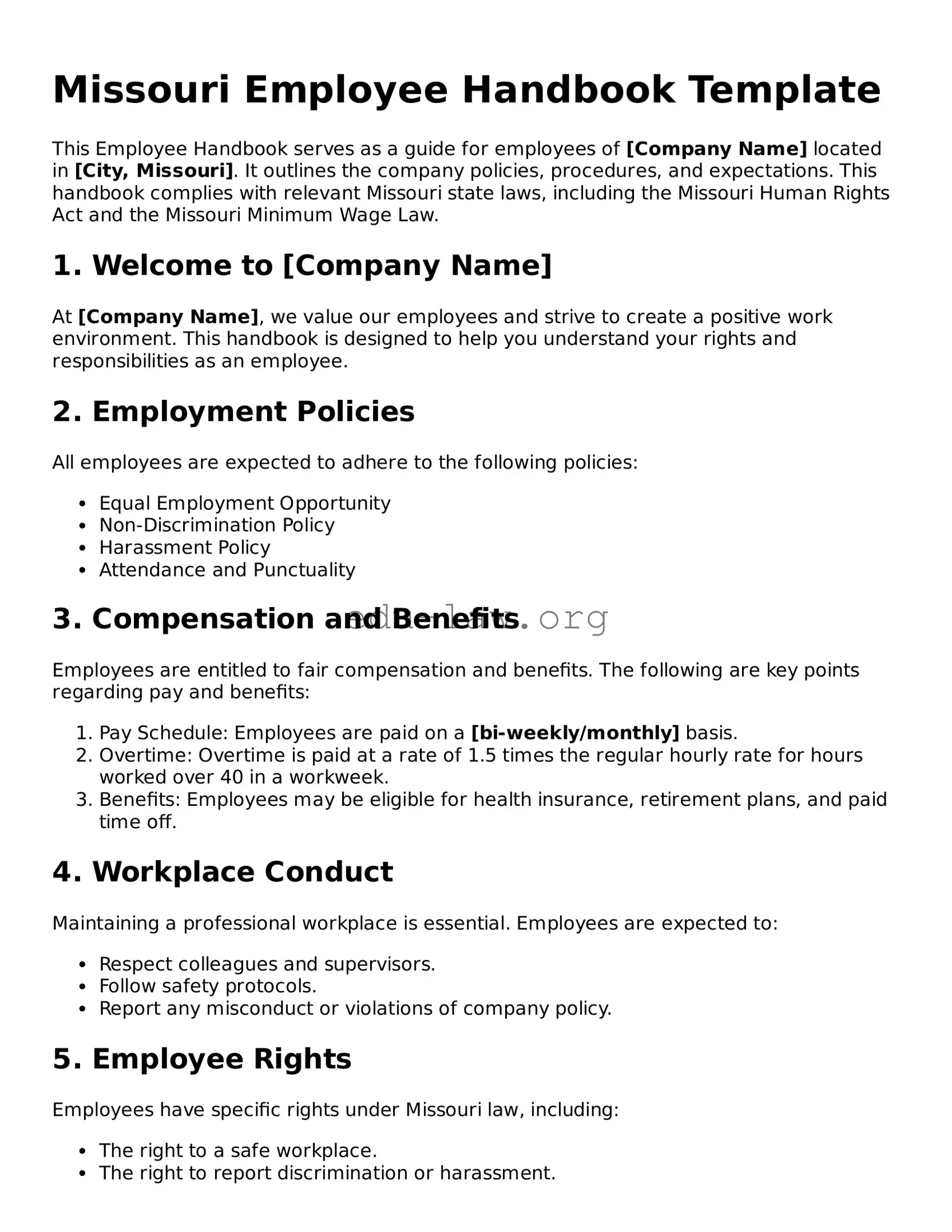
The Missouri Employee Handbook form serves as a vital resource for both employers and employees, establishing clear expectations and guidelines within the workplace. This comprehensive document outlines essential policies, including work hours, leave entitlements, and employee conduct standards. It also addresses important topics such as workplace safety, anti-discrimination policies, and procedures for reporting grievances. By providing a structured framework, the handbook helps ensure that all employees understand their rights and responsibilities, fostering a positive work environment. Employers can customize the handbook to reflect their specific organizational culture and operational needs, making it a flexible tool that aligns with state laws and regulations. Ultimately, the Missouri Employee Handbook form plays a crucial role in promoting transparency and accountability, benefiting both parties involved in the employment relationship.
Missouri Employee Handbook Template
This Employee Handbook serves as a guide for employees of [Company Name] located in [City, Missouri]. It outlines the company policies, procedures, and expectations. This handbook complies with relevant Missouri state laws, including the Missouri Human Rights Act and the Missouri Minimum Wage Law.
1. Welcome to [Company Name]
At [Company Name], we value our employees and strive to create a positive work environment. This handbook is designed to help you understand your rights and responsibilities as an employee.
2. Employment Policies
All employees are expected to adhere to the following policies:
3. Compensation and Benefits
Employees are entitled to fair compensation and benefits. The following are key points regarding pay and benefits:
4. Workplace Conduct
Maintaining a professional workplace is essential. Employees are expected to:
5. Employee Rights
Employees have specific rights under Missouri law, including:
6. Acknowledgment of Receipt
By signing below, you acknowledge that you have received and understood the [Company Name] Employee Handbook.
Employee Name: [Employee Name]
Employee Signature: ________________________ Date: _______________
| Fact Name | Description |
|---|---|
| Purpose | The Missouri Employee Handbook serves as a guide for employees regarding company policies and procedures. |
| Content | It typically includes information on workplace expectations, benefits, and employee rights. |
| Compliance | Employers must ensure that the handbook complies with federal and state laws. |
| Governing Laws | Key laws include the Missouri Human Rights Act and the Fair Labor Standards Act. |
| Updates | Employers should regularly review and update the handbook to reflect changes in laws and company policies. |
| Distribution | Handbooks should be distributed to all employees, often during onboarding. |
| Acknowledgment | Employees may be asked to sign an acknowledgment form to confirm receipt and understanding of the handbook. |
Completing the Missouri Employee Handbook form is a straightforward process. After filling out the form, it is essential to review it for accuracy before submission. This ensures that all information is correct and up to date, facilitating a smooth onboarding experience.
What is the Missouri Employee Handbook form?
The Missouri Employee Handbook form is a document that outlines an employer's policies, procedures, and expectations for employees in the state of Missouri. It serves as a guide for employees to understand their rights and responsibilities within the workplace.
Why is it important to have an Employee Handbook?
An Employee Handbook is crucial for several reasons. It helps set clear expectations for behavior and performance. It also protects the employer by providing a reference for policies that can help defend against potential legal issues. Furthermore, it can enhance workplace culture by promoting transparency and communication.
Who should receive a copy of the Employee Handbook?
Every employee should receive a copy of the Employee Handbook, including new hires. Employers should ensure that all employees acknowledge receipt of the handbook, which can be documented through a signed acknowledgment form. This practice helps ensure that employees are aware of the policies and procedures that govern their employment.
Can the Employee Handbook be updated?
Yes, the Employee Handbook can and should be updated as necessary. Changes in laws, company policies, or workplace practices may require revisions. Employers should communicate any updates to employees promptly and provide them with the latest version of the handbook to ensure everyone is informed.
What should be included in the Employee Handbook?
An effective Employee Handbook should include sections on company policies, workplace conduct, employee benefits, leave policies, disciplinary procedures, and safety guidelines. It should also address equal employment opportunities and anti-discrimination policies to foster a fair workplace environment.
Is it legally required to have an Employee Handbook in Missouri?
How often should the Employee Handbook be reviewed?
The Employee Handbook should be reviewed at least annually. Regular reviews help ensure that the content remains relevant and compliant with current laws. Employers should also consider reviewing the handbook whenever there are significant changes in the law or company policies.
What should an employee do if they have questions about the Employee Handbook?
If an employee has questions about the Employee Handbook, they should first discuss their concerns with their supervisor or human resources representative. Open communication is essential for addressing any uncertainties. Employees should feel empowered to seek clarification on any policies or procedures that may affect their employment.
Failing to read the entire handbook before signing. Many individuals rush through the document without fully understanding the policies and procedures. This can lead to confusion about rights and responsibilities.
Not providing accurate personal information. Errors in names, addresses, or contact details can cause issues later, especially in matters related to payroll or benefits.
Overlooking the acknowledgment section. Some people forget to sign or date the acknowledgment, which confirms that they have received and understood the handbook.
Ignoring the importance of updates. Individuals may not realize that the handbook can change. They should stay informed about any revisions that could affect their employment.
Not asking questions. Employees often hesitate to seek clarification on policies they do not understand. This can lead to misunderstandings and misapplication of the rules.
Assuming the handbook is comprehensive. Some individuals believe the handbook covers every situation. However, it is important to remember that not all scenarios can be addressed in writing.
When creating a comprehensive employee handbook in Missouri, it's beneficial to accompany it with several other important forms and documents. These materials help ensure clarity in workplace policies and compliance with state and federal laws. Below is a list of documents that are often used alongside the Missouri Employee Handbook.
By utilizing these forms alongside the Missouri Employee Handbook, employers can create a structured and supportive work environment. These documents not only clarify expectations but also foster positive communication between employers and employees. Proper documentation is key to a successful workplace, ensuring that everyone is on the same page.
The Missouri Employee Handbook form shares similarities with the Employee Manual, which serves as a comprehensive guide for employees. An Employee Manual typically outlines company policies, procedures, and expectations. It also details employee rights and responsibilities, much like the Employee Handbook. Both documents aim to ensure that employees understand their roles within the organization and the standards they must uphold.
Another document comparable to the Missouri Employee Handbook is the Orientation Guide. This guide is often provided to new hires during their onboarding process. It introduces them to the company culture, mission, and values. Like the Employee Handbook, the Orientation Guide may cover essential policies, but it focuses more on acclimating new employees to their work environment rather than serving as a comprehensive policy reference.
The Policy Manual is another document that aligns closely with the Employee Handbook. This manual outlines specific policies regarding workplace behavior, attendance, and disciplinary procedures. While the Employee Handbook provides a broader overview, the Policy Manual delves into the specifics of each policy. Both documents serve to inform employees of the rules they must follow and the consequences of violating those rules.
Similar to the Employee Handbook is the Benefits Guide, which details the benefits offered by the employer. This guide typically includes information on health insurance, retirement plans, and other employee perks. While the Employee Handbook may mention benefits, the Benefits Guide focuses specifically on the advantages available to employees, ensuring they understand what is offered and how to access those benefits.
The Code of Conduct is another document that bears resemblance to the Employee Handbook. This document outlines the expected behaviors and ethical standards for employees. It serves as a framework for decision-making and conduct within the workplace. Like the Employee Handbook, the Code of Conduct emphasizes the importance of maintaining a professional environment and provides guidance on resolving conflicts.
Finally, the Training Manual can be compared to the Missouri Employee Handbook. This manual outlines the training processes and resources available to employees. It may include information on required training sessions, skill development opportunities, and performance evaluations. While the Employee Handbook provides a general overview of employment policies, the Training Manual focuses on the growth and development aspects of an employee's career within the organization.
When filling out the Missouri Employee Handbook form, it's important to follow certain guidelines to ensure accuracy and compliance. Here are some things to do and avoid:
There are several misconceptions about the Missouri Employee Handbook form that can lead to confusion. Here are eight common misunderstandings:
This is not true. While having an employee handbook is highly recommended, it is not legally required for all employers in Missouri.
Each handbook can be tailored to fit the specific needs of a business. There is no one-size-fits-all template that must be followed.
Policies and laws change over time. Regularly reviewing and updating the handbook is essential to keep it relevant and compliant.
Small businesses can also benefit from having a handbook. It helps establish clear policies and expectations for all employees.
While creativity is encouraged, all policies must comply with federal and state laws. Unlawful policies can lead to legal issues.
While it is a good practice to have employees sign an acknowledgment, it is not a legal requirement. Providing the handbook is sufficient.
They serve a broader purpose, including setting expectations for behavior, outlining company culture, and detailing procedures.
Employees should be encouraged to refer to the handbook as needed. It serves as a valuable resource for understanding company policies.
When filling out the Missouri Employee Handbook form, keep these key takeaways in mind: