In the state of Missouri, the Bill of Sale form serves as a crucial document that facilitates the transfer of ownership for various types of personal property, including vehicles, boats, and other tangible items. This form not only provides a written record of the transaction but also protects both the buyer and the seller by detailing essential information such as the names and addresses of the parties involved, a description of the item being sold, and the purchase price. Additionally, the Bill of Sale may include important disclosures regarding the condition of the item, ensuring that both parties have a clear understanding of the agreement. While it is often associated with vehicle sales, its utility extends to a wide range of personal property transactions, making it an invaluable tool for individuals engaging in private sales. By documenting the sale, this form helps to prevent disputes and provides legal proof of ownership, which can be particularly important in situations involving future resale or potential legal claims. Understanding the nuances of the Missouri Bill of Sale form is essential for anyone looking to navigate the complexities of personal property transactions smoothly and securely.
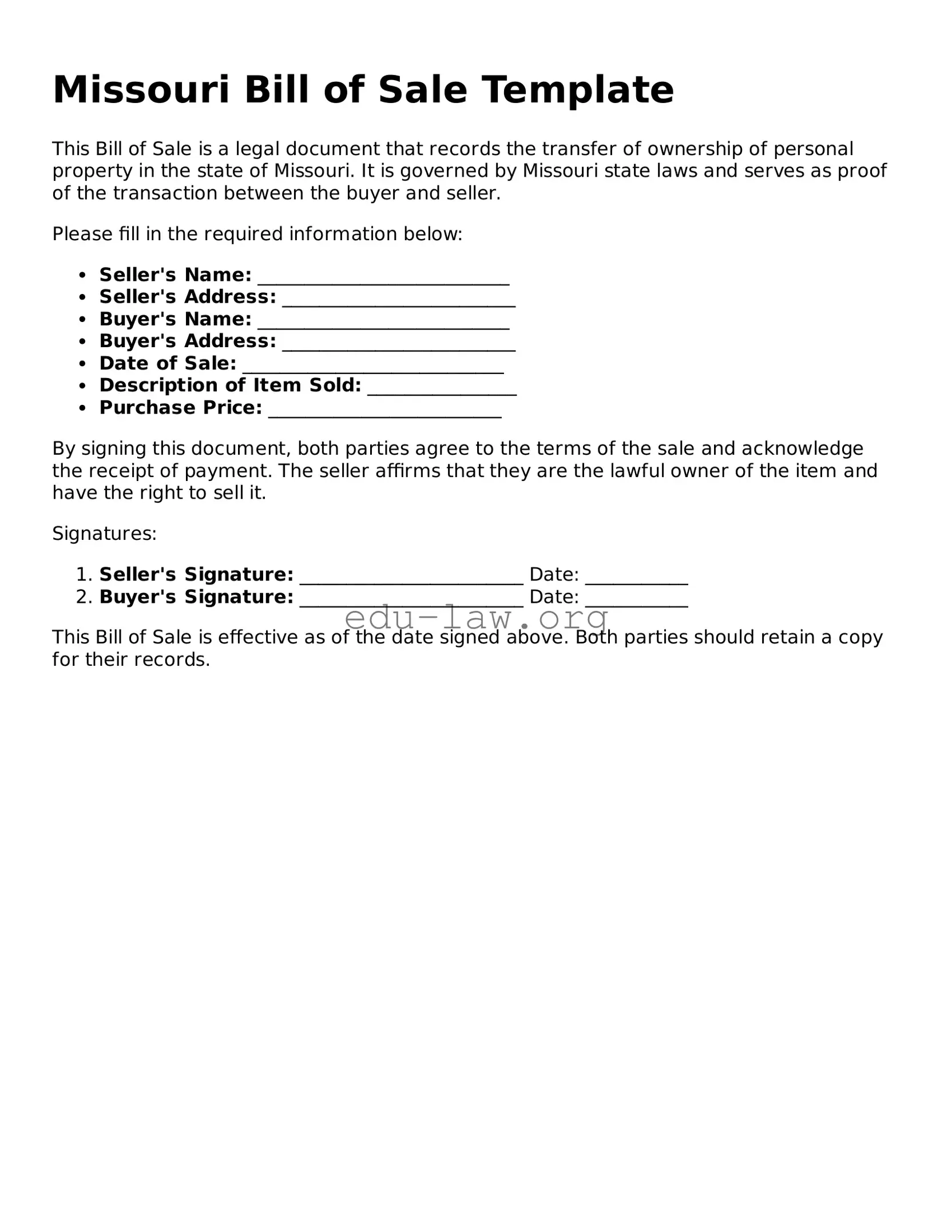
Missouri Bill of Sale Template
This Bill of Sale is a legal document that records the transfer of ownership of personal property in the state of Missouri. It is governed by Missouri state laws and serves as proof of the transaction between the buyer and seller.
Please fill in the required information below:
By signing this document, both parties agree to the terms of the sale and acknowledge the receipt of payment. The seller affirms that they are the lawful owner of the item and have the right to sell it.
Signatures:
This Bill of Sale is effective as of the date signed above. Both parties should retain a copy for their records.
| Fact Name | Description |
|---|---|
| Purpose | The Missouri Bill of Sale form serves as a legal document that records the transfer of ownership of personal property from one party to another. |
| Governing Laws | This form is governed by Missouri state laws, specifically under Chapter 400 of the Missouri Revised Statutes, which pertains to the Uniform Commercial Code. |
| Required Information | Essential details include the names and addresses of both the buyer and seller, a description of the item being sold, and the sale price. |
| Notarization | While notarization is not mandatory, having the Bill of Sale notarized can provide additional legal protection for both parties involved in the transaction. |
| Use Cases | This form is commonly used for the sale of vehicles, boats, and other personal property, ensuring a clear record of the transaction. |
Filling out the Missouri Bill of Sale form is a straightforward process. After completing the form, you will be ready to document the sale of personal property, ensuring both parties have a clear record of the transaction. Follow these steps to fill out the form accurately.
What is a Missouri Bill of Sale?
A Missouri Bill of Sale is a legal document that serves as proof of the transfer of ownership of personal property from one individual to another. This form is particularly important for transactions involving vehicles, boats, and other significant items. It outlines the details of the sale, including the names of the buyer and seller, a description of the item, and the sale price. Having a Bill of Sale protects both parties by providing a record of the transaction.
Is a Bill of Sale required in Missouri?
While a Bill of Sale is not legally required for every type of transaction in Missouri, it is highly recommended, especially for vehicles and other high-value items. In many cases, the Bill of Sale may be necessary for the buyer to register the item or obtain a title. It serves as a safeguard against disputes regarding ownership and can be crucial in proving that the transaction occurred.
What information should be included in a Missouri Bill of Sale?
A comprehensive Missouri Bill of Sale should include several key pieces of information. This includes the full names and addresses of both the buyer and seller, a detailed description of the item being sold (including make, model, year, and VIN for vehicles), the sale price, and the date of the transaction. Additionally, both parties should sign the document to validate the agreement.
Can a Bill of Sale be used for vehicles in Missouri?
Yes, a Bill of Sale can be used for vehicles in Missouri. In fact, it is often required for the registration of a vehicle with the Department of Revenue. When purchasing a vehicle, the seller should provide a Bill of Sale that includes the vehicle's details and the sale price. This document will be essential for the buyer to obtain a title and register the vehicle in their name.
Do I need to have the Bill of Sale notarized?
In Missouri, notarization of a Bill of Sale is not required for it to be legally valid. However, having the document notarized can add an extra layer of protection for both parties. A notary public can verify the identities of the individuals involved and witness the signing of the document, which may be beneficial in case of future disputes.
What should I do if the seller does not provide a Bill of Sale?
If a seller does not provide a Bill of Sale, it is advisable to request one. If they refuse, you may consider not proceeding with the transaction. A Bill of Sale is important for protecting your rights as a buyer. If you have already completed the transaction without a Bill of Sale, you can create one yourself. Both parties should sign it to ensure it is recognized as valid.
Can I use a generic Bill of Sale form for my transaction?
Yes, you can use a generic Bill of Sale form for your transaction, as long as it includes all the necessary information relevant to the sale. However, using a form specifically designed for Missouri can help ensure compliance with state laws and requirements. It is important that the form is clear and comprehensive to avoid any potential issues later on.
What should I do with the Bill of Sale after the transaction?
After the transaction is complete, both the buyer and seller should keep a copy of the Bill of Sale for their records. This document serves as proof of the sale and can be useful in case of any future disputes or questions regarding ownership. The buyer may need to present the Bill of Sale when registering the item or obtaining a title, so keeping it in a safe place is essential.
Incomplete Information: One of the most common mistakes is not filling out all required fields. Make sure to provide complete details about the buyer, seller, and the item being sold.
Incorrect Item Description: Failing to accurately describe the item can lead to confusion. Include details like make, model, year, and condition.
Omitting Signatures: Both the buyer and seller must sign the document. Forgetting to do so can invalidate the sale.
Not Including Date: Leaving out the date of the transaction can create issues later on. Always include the date to establish when the sale took place.
Failure to Notarize (if required): Some transactions may require notarization. Check if your sale needs this step to ensure legal validity.
Incorrect Payment Details: Be clear about the payment method and amount. Miscommunication about payment can lead to disputes.
Ignoring Local Laws: Each state may have specific requirements for a Bill of Sale. Familiarize yourself with Missouri’s regulations to avoid problems.
Not Keeping Copies: After filling out the form, both parties should keep a copy for their records. This helps in case of future disputes.
Using Outdated Forms: Ensure you are using the most current version of the Bill of Sale form. Outdated forms may not comply with current laws.
Neglecting to Review: Before finalizing the document, review all entries for accuracy. A quick check can prevent costly mistakes.
A Bill of Sale is a crucial document that records the transfer of ownership of personal property from one party to another. In Missouri, this form is often accompanied by other documents to ensure a smooth transaction. Below is a list of additional forms and documents commonly used alongside the Missouri Bill of Sale.
Using these additional documents alongside the Missouri Bill of Sale can help ensure a clear and legally sound transaction. Each document plays a vital role in protecting the interests of both the buyer and the seller, making the process smoother and more transparent.
The Vehicle Title Transfer form serves a similar purpose to the Missouri Bill of Sale. It is used when ownership of a vehicle changes hands. This document typically includes details such as the vehicle's make, model, year, and Vehicle Identification Number (VIN). Both forms provide proof of the transaction and help protect the rights of both the buyer and seller. The Vehicle Title Transfer often accompanies the Bill of Sale, as it is required for registering the vehicle under the new owner's name.
The Personal Property Bill of Sale is another document akin to the Missouri Bill of Sale. This form is used for the sale of personal items, such as furniture, electronics, or collectibles. It outlines the specifics of the transaction, including a description of the item, its condition, and the sale price. Like the Missouri Bill of Sale, this document serves as legal evidence that the buyer has purchased the item from the seller, thereby transferring ownership.
A Firearm Bill of Sale is specifically designed for the sale of firearms. It includes details such as the make, model, and serial number of the firearm being sold. This document also often requires the buyer and seller to provide identification information. Similar to the Missouri Bill of Sale, it provides legal protection for both parties and ensures compliance with state and federal laws regarding firearm transactions.
The Boat Bill of Sale functions similarly for transactions involving boats and watercraft. This document captures essential information, including the boat's hull identification number, make, and model. It serves as proof of ownership transfer and is often required for registration purposes. Both the Boat Bill of Sale and the Missouri Bill of Sale protect the interests of both the buyer and seller in the transaction.
The Business Asset Bill of Sale is used when selling business-related assets, such as equipment or inventory. This document details the assets being sold, their condition, and the agreed-upon price. Like the Missouri Bill of Sale, it provides a legal record of the transaction, which can be important for tax purposes and future reference.
The Livestock Bill of Sale is specifically tailored for the sale of livestock. This document outlines the type and number of animals being sold, along with their health status and any relevant identification numbers. It serves a similar purpose as the Missouri Bill of Sale by ensuring that both the buyer and seller have a clear record of the transaction, which is particularly important in agricultural contexts.
The Aircraft Bill of Sale is used when ownership of an aircraft changes hands. This document includes critical information such as the aircraft's registration number, make, model, and year of manufacture. It provides proof of ownership transfer and is often required for registration with aviation authorities. Like the Missouri Bill of Sale, it protects both parties involved in the transaction.
The Real Estate Purchase Agreement is somewhat similar, though it typically involves more complex transactions. This document outlines the terms of sale for real property, including the purchase price, closing date, and any contingencies. While it serves a different purpose than the Missouri Bill of Sale, both documents are essential for transferring ownership and protecting the rights of the parties involved.
The Lease Agreement can also be compared to the Missouri Bill of Sale, albeit in a different context. This document outlines the terms under which one party rents property from another. It includes details such as the duration of the lease, rent amount, and responsibilities of both parties. While it does not transfer ownership, it establishes a legal relationship similar to that of a sale, ensuring both parties understand their rights and obligations.
Finally, the Rental Agreement serves a similar function to the Lease Agreement but is often used for shorter-term rentals. It outlines the terms of renting property, including payment terms and duration. Like the Missouri Bill of Sale, it provides a written record that protects the interests of both the landlord and tenant, ensuring clarity in the rental arrangement.
When filling out the Missouri Bill of Sale form, it is important to follow certain guidelines to ensure the document is accurate and legally binding. Here are five things to keep in mind:
By adhering to these guidelines, you can help ensure that the Bill of Sale is properly completed and serves its intended purpose.
When it comes to the Missouri Bill of Sale form, several misconceptions can lead to confusion. Here are four common misunderstandings:
Many people think the Bill of Sale is only required for selling cars or trucks. In reality, this document can be used for various transactions, including boats, motorcycles, and even personal property like furniture or electronics.
Some believe that a Bill of Sale holds no legal weight. However, when properly completed, it serves as a legal record of the transaction, protecting both the buyer and seller by documenting the details of the sale.
While notarization can add an extra layer of security, it is not always necessary for a Bill of Sale in Missouri. In most cases, both parties simply need to sign the document to make it valid.
Some people think that a Bill of Sale is only necessary for sales involving money. However, even if an item is given as a gift, having a Bill of Sale can clarify ownership and prevent future disputes.
When filling out and using the Missouri Bill of Sale form, it is essential to understand the key components and requirements. Here are some important takeaways: