In Minnesota, the Transfer-on-Death Deed (TOD) form provides a unique way for property owners to ensure their real estate is passed on to their chosen beneficiaries without the need for probate. This simple yet effective tool allows individuals to retain full control of their property during their lifetime while designating a beneficiary who will automatically receive the property upon their death. The form must be properly completed and recorded with the county to be valid, ensuring that the transfer is recognized by law. Importantly, the TOD deed can be revoked or changed at any time, offering flexibility for the property owner as their circumstances or intentions change. This means that individuals can make adjustments to their estate plans without the complexities often associated with traditional wills. Understanding the nuances of the Transfer-on-Death Deed is essential for anyone looking to streamline the transfer of property and minimize potential legal complications for their loved ones in the future.
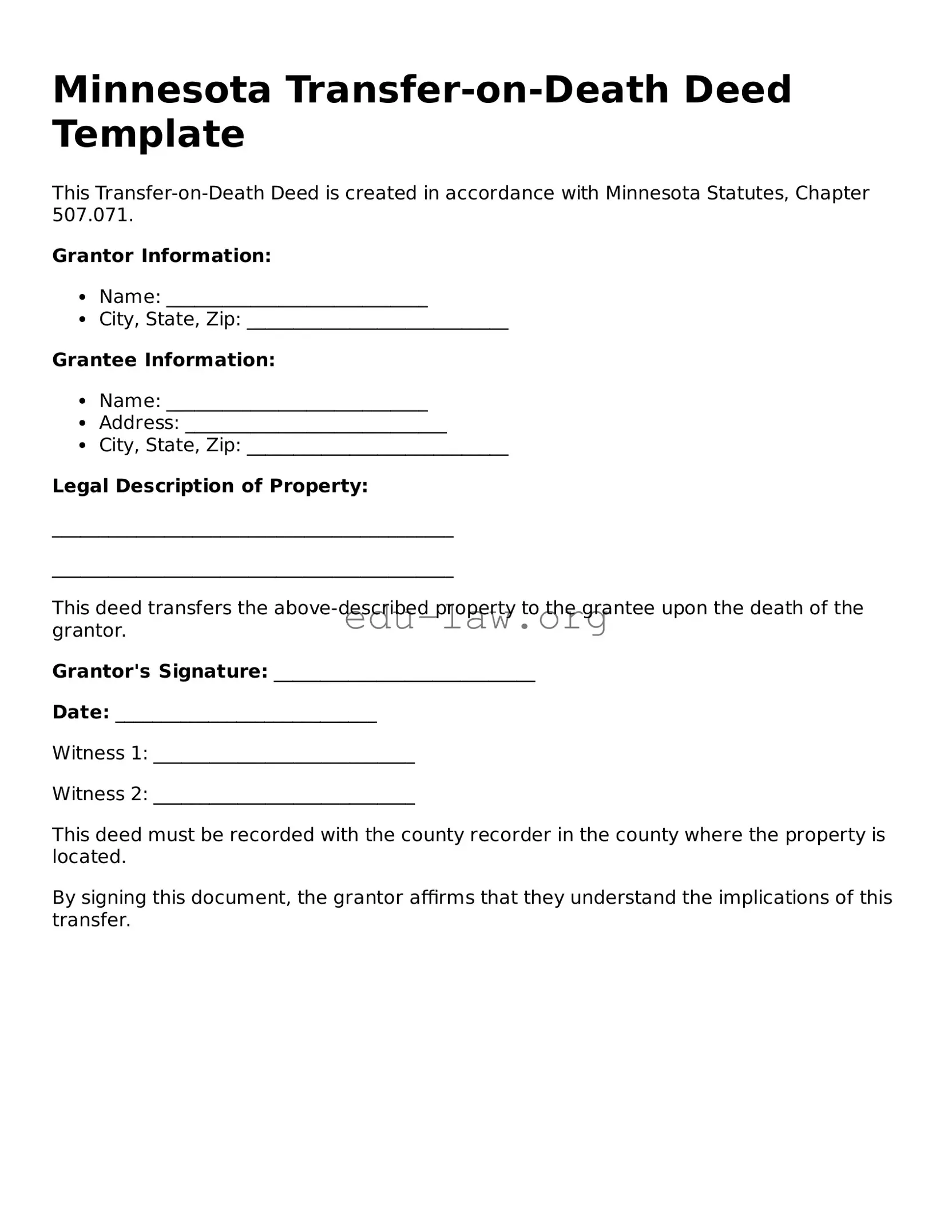
Minnesota Transfer-on-Death Deed Template
This Transfer-on-Death Deed is created in accordance with Minnesota Statutes, Chapter 507.071.
Grantor Information:
Grantee Information:
Legal Description of Property:
___________________________________________
___________________________________________
This deed transfers the above-described property to the grantee upon the death of the grantor.
Grantor's Signature: ____________________________
Date: ____________________________
Witness 1: ____________________________
Witness 2: ____________________________
This deed must be recorded with the county recorder in the county where the property is located.
By signing this document, the grantor affirms that they understand the implications of this transfer.
| Fact Name | Details |
|---|---|
| Purpose | The Minnesota Transfer-on-Death Deed allows property owners to transfer real estate to beneficiaries upon their death without going through probate. |
| Governing Law | This form is governed by Minnesota Statutes, Section 507.071, which outlines the rules and requirements for creating a valid Transfer-on-Death Deed. |
| Requirements | The deed must be signed by the property owner and must be recorded with the county recorder or registrar of titles before the owner's death to be effective. |
| Revocation | The Transfer-on-Death Deed can be revoked by the property owner at any time before their death through a subsequent deed or a written revocation notice. |
After you complete the Minnesota Transfer-on-Death Deed form, you will need to ensure it is properly signed and recorded with your local county recorder's office. This step is crucial for the deed to take effect upon your passing.
What is a Transfer-on-Death Deed in Minnesota?
A Transfer-on-Death Deed (TODD) is a legal document that allows an individual to transfer real estate to a designated beneficiary upon the individual's death. This type of deed helps avoid probate, which can be a lengthy and costly process. In Minnesota, the TODD must be properly executed and recorded with the county recorder's office to be effective. It is important to note that the property remains under the control of the owner during their lifetime, and the owner can revoke or change the deed at any time before their death.
Who can be named as a beneficiary in a Transfer-on-Death Deed?
In Minnesota, any individual or entity can be named as a beneficiary in a Transfer-on-Death Deed. This includes family members, friends, or even organizations. However, it is crucial to ensure that the beneficiary is clearly identified in the deed to avoid any confusion or disputes after the owner's passing. If a beneficiary is a minor, it may be wise to consider appointing a guardian or creating a trust to manage the property until the minor reaches adulthood.
How do I create a Transfer-on-Death Deed in Minnesota?
To create a Transfer-on-Death Deed, you will need to follow several steps. First, you must complete the appropriate form, which includes information about the property, the owner, and the beneficiary. After filling out the form, it must be signed by the owner in the presence of a notary public. Finally, the deed must be recorded with the county recorder's office where the property is located. It is advisable to keep a copy of the recorded deed for your records and to inform the beneficiary about the existence of the deed.
Can I revoke a Transfer-on-Death Deed after it has been recorded?
Yes, you can revoke a Transfer-on-Death Deed at any time before your death. To do so, you must create a new deed that explicitly states the revocation of the previous deed, or you can execute a formal revocation document. This revocation must also be recorded with the county recorder's office to ensure that it is legally recognized. It is important to communicate any changes to your beneficiaries to avoid confusion in the future.
What happens if the beneficiary of a Transfer-on-Death Deed dies before the property owner?
If the beneficiary named in the Transfer-on-Death Deed passes away before the property owner, the deed does not automatically transfer to the beneficiary's heirs. Instead, the property will revert to the owner's estate and will be distributed according to the owner's will or, if there is no will, according to Minnesota's intestacy laws. To prevent this situation, it may be beneficial to name alternate beneficiaries in the deed, ensuring that the property will still transfer as intended even if the primary beneficiary is no longer alive.
Incorrect Property Description: Many people fail to provide a complete and accurate description of the property. This includes not specifying the correct address or legal description, which can lead to confusion or disputes later.
Not Signing in Front of a Notary: Some individuals forget that the Transfer-on-Death Deed must be signed in front of a notary public. Without this step, the deed may not be considered valid.
Failure to Include All Owners: If the property is co-owned, it’s essential to ensure that all owners sign the deed. Omitting a co-owner can create issues regarding the transfer of the property.
Not Recording the Deed: After filling out the form, it’s crucial to record the Transfer-on-Death Deed with the appropriate county office. Failing to do so means that the deed is not legally effective.
Ignoring State-Specific Requirements: Each state may have specific rules regarding Transfer-on-Death Deeds. Not being aware of Minnesota’s particular requirements can lead to mistakes that invalidate the deed.
When considering the Minnesota Transfer-on-Death Deed, it is essential to understand that this document often works in conjunction with several other forms and documents. These additional documents can help ensure a smooth transfer of property and clarify the intentions of the property owner. Below is a list of commonly used forms that complement the Transfer-on-Death Deed.
Understanding these documents can provide clarity and ensure that property transfers are executed as intended. Each form plays a vital role in the estate planning process, helping to minimize complications and protect the interests of all parties involved.
The Minnesota Transfer-on-Death Deed (TOD) form shares similarities with a Last Will and Testament. Both documents serve to transfer property upon the death of the owner. However, while a will requires probate, a TOD deed allows for a direct transfer of property to the named beneficiary, bypassing the probate process entirely. This can streamline the transfer of assets and reduce associated costs and delays.
A Revocable Living Trust is another document akin to the TOD deed. Like the TOD deed, a living trust allows for the transfer of assets without going through probate. Property placed in a living trust can be managed by the grantor during their lifetime and distributed to beneficiaries upon death. This provides a level of control and privacy that a TOD deed does not offer, as the trust remains private and does not become part of public records.
When filling out the Minnesota Transfer-on-Death Deed form, attention to detail is crucial. Here are some essential dos and don'ts to keep in mind:
Following these guidelines can help ensure that the Transfer-on-Death Deed is completed accurately and efficiently, safeguarding your intentions for the property in question.
Understanding the Minnesota Transfer-on-Death Deed form is essential for effective estate planning. However, several misconceptions can lead to confusion. Here is a list of common misunderstandings about this form:
By clarifying these misconceptions, individuals can better navigate their estate planning options and make informed decisions regarding their property.
Filling out and using the Minnesota Transfer-on-Death Deed form can be a straightforward process, but there are important considerations to keep in mind. Here are key takeaways to guide you: