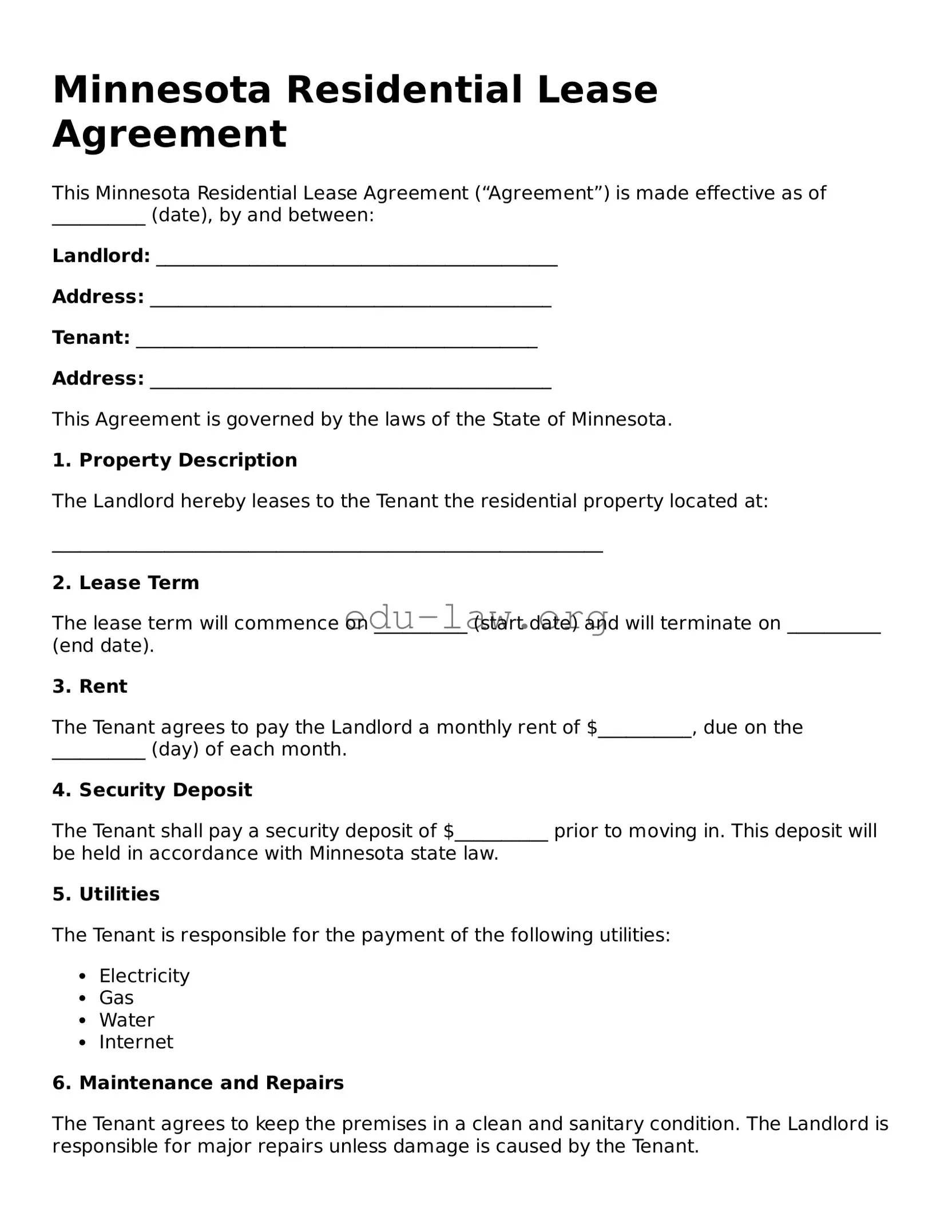
The Minnesota Residential Lease Agreement form serves as a crucial document in the landlord-tenant relationship, outlining the terms and conditions of renting a residential property. This form typically includes essential details such as the names of the parties involved, the rental property's address, and the duration of the lease. It specifies the monthly rent amount, payment due dates, and acceptable methods of payment, ensuring clarity for both parties. Additionally, the agreement addresses security deposits, maintenance responsibilities, and rules regarding pets and smoking, which can significantly impact the living experience. It also outlines procedures for lease termination, renewal options, and consequences for violations, thereby protecting the rights of both landlords and tenants. Understanding this form is vital for anyone entering a rental agreement in Minnesota, as it helps establish expectations and responsibilities from the outset.
Minnesota Residential Lease Agreement
This Minnesota Residential Lease Agreement (“Agreement”) is made effective as of __________ (date), by and between:
Landlord: ___________________________________________
Address: ___________________________________________
Tenant: ___________________________________________
Address: ___________________________________________
This Agreement is governed by the laws of the State of Minnesota.
1. Property Description
The Landlord hereby leases to the Tenant the residential property located at:
___________________________________________________________
2. Lease Term
The lease term will commence on __________ (start date) and will terminate on __________ (end date).
3. Rent
The Tenant agrees to pay the Landlord a monthly rent of $__________, due on the __________ (day) of each month.
4. Security Deposit
The Tenant shall pay a security deposit of $__________ prior to moving in. This deposit will be held in accordance with Minnesota state law.
5. Utilities
The Tenant is responsible for the payment of the following utilities:
6. Maintenance and Repairs
The Tenant agrees to keep the premises in a clean and sanitary condition. The Landlord is responsible for major repairs unless damage is caused by the Tenant.
7. Termination
Either party may terminate this Agreement by providing a written notice of __________ (number of days) days prior to the desired termination date.
8. Governing Law
This Agreement shall be governed by the laws of the State of Minnesota.
9. Signatures
By signing below, both parties agree to the terms outlined in this Agreement.
Landlord Signature: _______________________________ Date: __________
Tenant Signature: _______________________________ Date: __________
| Fact Name | Description |
|---|---|
| Governing Law | The Minnesota Residential Lease Agreement is governed by Minnesota Statutes, Chapter 504B. |
| Duration | Lease terms can vary, typically ranging from month-to-month to one year or longer. |
| Security Deposit | Landlords may require a security deposit, which cannot exceed one month's rent unless specified otherwise. |
| Tenant Rights | Tenants have the right to a habitable living environment and protection from retaliatory eviction. |
| Notice Requirements | Landlords must provide written notice for lease termination, typically requiring 30 days' notice for month-to-month leases. |
Completing the Minnesota Residential Lease Agreement form requires careful attention to detail. Follow the steps below to ensure that all necessary information is accurately provided. This process is crucial for establishing a clear understanding between the landlord and tenant.
After completing the form, ensure that all parties retain a copy for their records. This document serves as a binding agreement and should be stored safely.
What is a Minnesota Residential Lease Agreement?
A Minnesota Residential Lease Agreement is a legal document that outlines the terms and conditions under which a landlord rents property to a tenant. This agreement typically includes details such as the rental amount, duration of the lease, and responsibilities of both parties. It serves to protect the rights of both the landlord and the tenant by clearly defining expectations and obligations.
What key elements should be included in the lease agreement?
Essential elements of a Minnesota Residential Lease Agreement include the names of the landlord and tenant, property address, lease term (fixed-term or month-to-month), rental payment amount, security deposit details, maintenance responsibilities, and rules regarding pets and alterations. Additionally, it should outline the process for terminating the lease and any applicable late fees.
How long is a typical lease term in Minnesota?
Lease terms in Minnesota can vary widely. Commonly, leases are for one year, but they can also be month-to-month or for a shorter duration. The specific term should be clearly stated in the lease agreement, as this will dictate the length of the tenant's commitment to the property.
Can a landlord increase rent during the lease term?
Generally, a landlord cannot increase rent during the lease term unless the lease explicitly allows for it. For month-to-month leases, landlords may increase rent with proper notice, typically 30 days in Minnesota. It is crucial for tenants to review their lease agreements for any clauses related to rent increases.
What is a security deposit, and how is it handled?
A security deposit is a sum of money collected by the landlord to cover potential damages or unpaid rent. In Minnesota, landlords may charge up to one month's rent as a security deposit. The landlord must return the deposit within 21 days after the lease ends, minus any deductions for damages or unpaid obligations, which should be documented and justified.
What rights do tenants have under Minnesota law?
Tenants in Minnesota have several rights, including the right to a habitable living environment, protection against retaliation for exercising their rights, and the right to privacy. Landlords must provide reasonable notice before entering the rental property, usually 24 hours, except in emergencies. Tenants also have the right to request repairs and to be free from discrimination.
What should a tenant do if they want to terminate the lease early?
If a tenant wishes to terminate the lease early, they should first review the lease agreement for any early termination clauses. It may be necessary to provide written notice to the landlord, typically 30 days in advance. In some cases, tenants may be required to pay a penalty or forfeit their security deposit. Communication with the landlord can often lead to a mutually agreeable solution.
Overlooking Important Details: Many individuals fail to read the lease agreement thoroughly. This can lead to missing critical terms, such as the lease duration, rent amount, and security deposit conditions. Always take the time to understand every section before signing.
Incorrect Personal Information: Errors in names, addresses, or contact information can cause confusion later on. It’s essential to ensure that all personal details are accurate and up to date.
Ignoring Lease Terms: Some renters neglect to pay attention to specific terms regarding maintenance responsibilities, pet policies, or subletting rules. Understanding these terms is crucial to avoid disputes down the line.
Failing to Document Condition: Before moving in, tenants should document the condition of the property. Not doing so may lead to disputes over security deposits when the lease ends. Taking photos or writing a detailed report can be very helpful.
Not Asking Questions: If anything is unclear, potential tenants often hesitate to ask questions. It’s vital to seek clarification on any part of the lease that doesn’t make sense. Open communication with the landlord can prevent misunderstandings.
Neglecting Signatures: Some individuals forget to sign the lease or to have all required parties sign it. A lease is not legally binding until all necessary signatures are in place. Double-checking this detail can save a lot of trouble.
When entering into a residential lease agreement in Minnesota, several other forms and documents may be necessary to ensure a smooth rental process. Each document serves a specific purpose and can help protect the rights of both the landlord and the tenant.
These documents play a crucial role in the rental process. They help establish clear expectations and protect the interests of both landlords and tenants. Understanding each form can lead to a more harmonious rental experience.
The Minnesota Residential Lease Agreement shares similarities with the Standard Residential Lease Agreement, which is widely used across the United States. Both documents outline the terms and conditions under which a tenant can occupy a rental property. They typically cover essential elements such as rent amount, duration of the lease, security deposit requirements, and responsibilities for maintenance and repairs. This common framework helps ensure that both landlords and tenants understand their rights and obligations, fostering a smoother rental experience.
Another document that resembles the Minnesota Residential Lease Agreement is the Month-to-Month Rental Agreement. Like the residential lease, this agreement sets forth the terms of rental; however, it allows for more flexibility. Tenants can occupy the property on a month-to-month basis, making it easier for both parties to terminate the agreement with proper notice. This type of arrangement is particularly useful for those who may need temporary housing or who are uncertain about their long-term plans.
The Lease Option Agreement is another document that shares key features with the Minnesota Residential Lease Agreement. This type of agreement not only allows tenants to rent a property but also gives them the option to purchase it after a specified period. Similar to a standard lease, it outlines the rental terms while also detailing the purchase price and conditions under which the tenant can buy the property. This can be an attractive option for tenants who are interested in homeownership but may not be ready to buy immediately.
The Commercial Lease Agreement also has parallels with the Minnesota Residential Lease Agreement, although it is tailored for commercial properties. Both documents specify the lease duration, payment terms, and responsibilities of the parties involved. However, commercial leases often include additional clauses related to zoning laws, business operations, and modifications to the space. Understanding these similarities can help landlords and tenants navigate both residential and commercial leasing processes more effectively.
Additionally, the Sublease Agreement shares characteristics with the Minnesota Residential Lease Agreement. This document allows a current tenant to rent out their leased space to another individual, known as a subtenant. While it maintains many of the same provisions as a standard lease, it also includes specific terms about the relationship between the original tenant and the subtenant. This agreement ensures that all parties understand their rights and responsibilities, even in a subleasing scenario.
The Rental Application is another important document that relates closely to the Minnesota Residential Lease Agreement. While the lease itself formalizes the rental terms, the application serves as a preliminary step where potential tenants provide personal information, employment history, and references. This helps landlords assess the suitability of applicants before entering into a lease agreement, ensuring that both parties are making informed decisions.
Lastly, the Lease Termination Agreement is similar in that it addresses the end of the rental relationship. This document outlines the conditions under which a lease can be terminated, whether by mutual agreement or for specific reasons such as non-payment of rent. It serves to clarify the steps both parties must take when concluding the lease, ensuring a smooth transition and reducing the likelihood of disputes.
When filling out the Minnesota Residential Lease Agreement form, it's essential to approach the task with care and attention. Below is a list of dos and don'ts to guide you through the process effectively.
By following these guidelines, you can ensure that your lease agreement is filled out correctly, paving the way for a smooth rental experience.
There are several misconceptions about the Minnesota Residential Lease Agreement form. Understanding these can help clarify the rights and responsibilities of both landlords and tenants.
Understanding these misconceptions can help both landlords and tenants navigate their rights and responsibilities more effectively.
Understanding the Minnesota Residential Lease Agreement is crucial for both landlords and tenants. Here are some key takeaways to keep in mind:
By keeping these key points in mind, both landlords and tenants can navigate the leasing process more effectively.