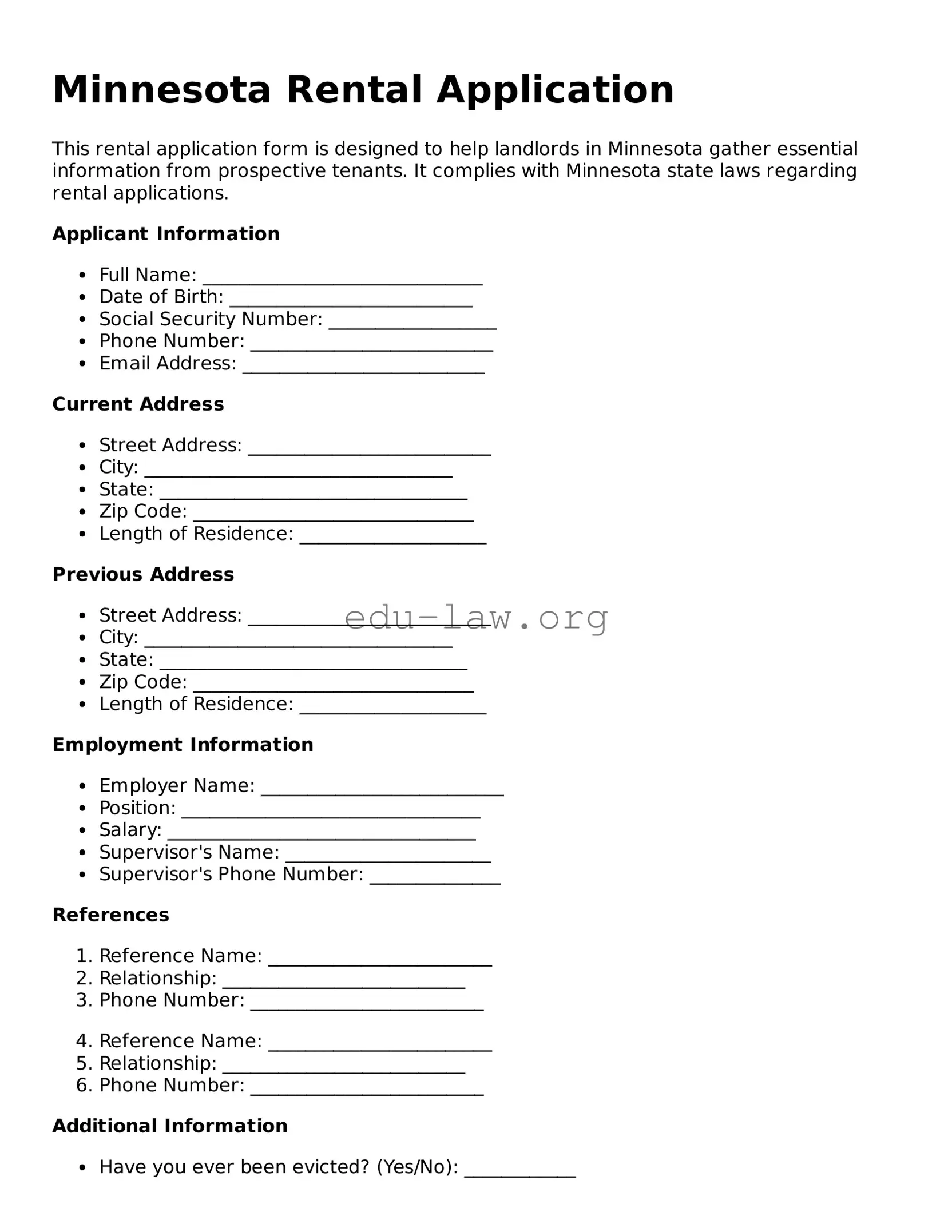
The Minnesota Rental Application form serves as a vital tool for both landlords and prospective tenants, facilitating a smooth and transparent leasing process. This form typically collects essential information about the applicant, including personal details, employment history, and rental history. It may also require references, allowing landlords to assess the reliability and character of potential tenants. Additionally, the application often includes sections for consent to background and credit checks, ensuring that landlords can make informed decisions. By providing a comprehensive overview of an applicant's qualifications, the Minnesota Rental Application form helps establish trust and clarity in the landlord-tenant relationship, ultimately contributing to a positive renting experience for all parties involved.
Minnesota Rental Application
This rental application form is designed to help landlords in Minnesota gather essential information from prospective tenants. It complies with Minnesota state laws regarding rental applications.
Applicant Information
Current Address
Previous Address
Employment Information
References
Additional Information
Consent
By signing below, you authorize the landlord to conduct a background check and verify the information provided in this application.
Signature: ________________________________
Date: ____________________________________
| Fact Name | Description |
|---|---|
| Application Fee | Landlords in Minnesota can charge an application fee to cover the costs of background checks and other related expenses. |
| Disclosure of Information | Landlords must provide applicants with a written notice of their rights regarding the use of their personal information. |
| Fair Housing Compliance | The application form must comply with the Fair Housing Act, ensuring that no discriminatory practices occur during the rental process. |
| Governing Laws | The Minnesota Rental Application form is governed by Minnesota Statutes, Chapter 504B, which outlines landlord-tenant laws. |
Filling out the Minnesota Rental Application form is straightforward. Once completed, you'll be ready to submit it to your prospective landlord or property manager. This is an important step in securing your new home.
What is the purpose of the Minnesota Rental Application form?
The Minnesota Rental Application form is designed to collect essential information from potential tenants. Landlords use this form to evaluate applicants based on their rental history, creditworthiness, and overall suitability for the rental property. It helps landlords make informed decisions and ensures that they choose responsible tenants who are likely to pay rent on time and adhere to lease terms.
What information is typically required on the application?
Applicants are usually required to provide personal information, including their full name, contact details, and social security number. Employment history, income verification, and references from previous landlords may also be requested. Additionally, applicants may need to disclose any criminal history or prior evictions, as this information can influence the landlord's decision.
Is there a fee associated with the Minnesota Rental Application?
Yes, many landlords charge a non-refundable application fee. This fee covers the costs of processing the application, which may include background checks and credit reports. The amount can vary, so it is important for applicants to inquire about the fee upfront. Understanding the fee structure helps applicants budget accordingly and avoid surprises during the application process.
Can a landlord deny an application, and what are the common reasons?
Landlords can deny an application for several reasons. Common grounds for denial include poor credit history, insufficient income, or negative references from previous landlords. Additionally, a history of eviction or criminal activity may lead to rejection. It is essential for applicants to be aware of these factors and to ensure that their application presents them in the best light possible.
Incomplete Information: Many applicants fail to provide all necessary details. This includes missing sections like employment history or references. Omitting this information can delay the application process.
Inaccurate Data: Some people mistakenly enter incorrect phone numbers or addresses. Accuracy is crucial, as landlords need to verify the information provided.
Neglecting to Sign: A common oversight is forgetting to sign the application. Without a signature, the application is not considered valid.
Not Disclosing Pet Ownership: Failing to mention pets can lead to issues later. Many rental agreements have specific pet policies, and honesty is essential.
Ignoring Credit History: Some applicants overlook the importance of their credit history. A poor credit score can affect approval chances, so it’s wise to address any issues beforehand.
Missing Deadlines: Applicants sometimes submit their forms late. Timeliness is key in competitive rental markets, and missing a deadline can result in losing the opportunity.
When renting a property in Minnesota, several forms and documents accompany the rental application to ensure a smooth and legally compliant process. These documents help both landlords and tenants clarify expectations, rights, and responsibilities. Below is a list of commonly used forms alongside the Minnesota Rental Application.
Understanding these forms and documents is crucial for both landlords and tenants. They not only facilitate a clear understanding of the rental relationship but also help protect the rights and responsibilities of all parties involved. Being well-informed can lead to a more positive renting experience.
The Minnesota Rental Application form is similar to the Tenant Screening Application. Both documents serve the purpose of gathering essential information about potential tenants. They typically require personal details such as the applicant's name, contact information, and employment history. Additionally, both forms often include questions about rental history and references. The Tenant Screening Application may also request consent for background checks, similar to what is often included in the Minnesota Rental Application.
Another document comparable to the Minnesota Rental Application is the Lease Application. While the Rental Application focuses on assessing a tenant's qualifications, the Lease Application is usually filled out once a tenant has been approved. It formalizes the agreement between the landlord and tenant. Both documents collect information about the tenant’s financial status, rental history, and personal references, ensuring that landlords have a comprehensive understanding of the tenant's background.
The Rental History Verification form also shares similarities with the Minnesota Rental Application. This document is used by landlords to confirm the accuracy of the information provided by the applicant. Both forms typically require the applicant to list previous landlords and their contact information. The Rental History Verification form, however, is specifically designed for landlords to reach out to past landlords to verify rental payments and behavior, while the Rental Application gathers this information from the applicant directly.
Lastly, the Employment Verification form is another document that aligns closely with the Minnesota Rental Application. This form is used to confirm an applicant's employment status and income, which are critical factors in determining their ability to pay rent. Both documents require similar information, such as the applicant's employer details and income level. While the Rental Application collects this information upfront, the Employment Verification form is typically used later in the screening process to ensure the applicant's financial stability.
When filling out the Minnesota Rental Application form, there are several important considerations to keep in mind. Below is a list of recommended actions and those to avoid.
Things to Do:
Things to Avoid:
Understanding the Minnesota Rental Application form is essential for both tenants and landlords. However, several misconceptions can lead to confusion. Here are seven common misconceptions:
By addressing these misconceptions, both tenants and landlords can navigate the rental application process more effectively.
When filling out and using the Minnesota Rental Application form, there are several important points to keep in mind. Understanding these can help streamline the process and ensure all necessary information is provided.
Taking the time to carefully fill out the Minnesota Rental Application form can significantly improve your chances of securing a rental property. Each detail matters in this competitive housing market.