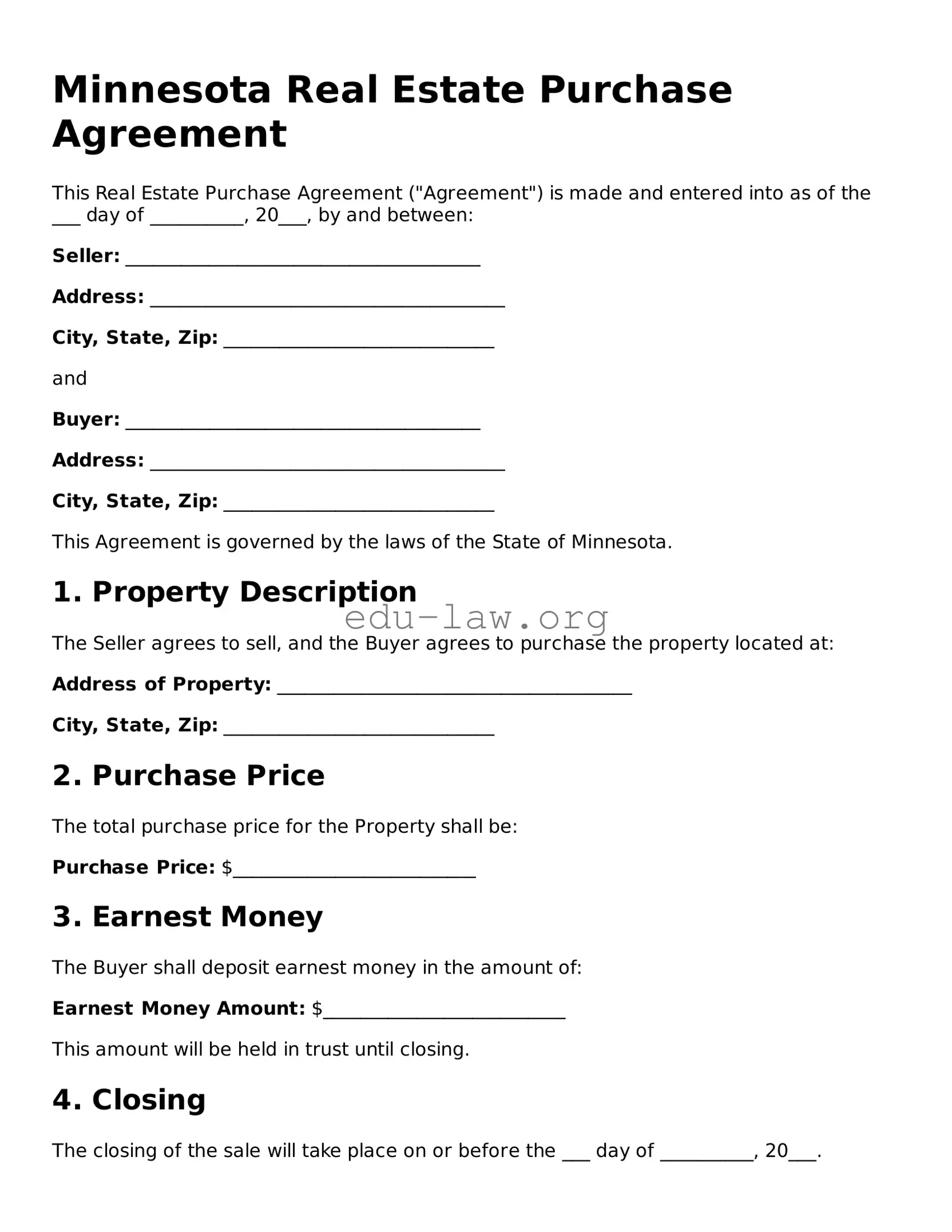
The Minnesota Real Estate Purchase Agreement form serves as a critical document in real estate transactions, outlining the terms and conditions under which a property is bought or sold. This form includes essential details such as the purchase price, property description, and the closing date, ensuring that both parties have a clear understanding of their obligations. Additionally, it addresses contingencies that may affect the sale, such as financing and inspections, providing a framework for how these situations will be handled. The agreement also specifies any earnest money deposits, which demonstrate the buyer's commitment to the transaction. By clearly stating the rights and responsibilities of both the buyer and seller, this form helps to facilitate a smoother transaction process, minimizing potential disputes and misunderstandings. Understanding the components of this agreement is vital for anyone involved in buying or selling real estate in Minnesota.
Minnesota Real Estate Purchase Agreement
This Real Estate Purchase Agreement ("Agreement") is made and entered into as of the ___ day of __________, 20___, by and between:
Seller: ______________________________________
Address: ______________________________________
City, State, Zip: _____________________________
and
Buyer: ______________________________________
Address: ______________________________________
City, State, Zip: _____________________________
This Agreement is governed by the laws of the State of Minnesota.
1. Property Description
The Seller agrees to sell, and the Buyer agrees to purchase the property located at:
Address of Property: ______________________________________
City, State, Zip: _____________________________
2. Purchase Price
The total purchase price for the Property shall be:
Purchase Price: $__________________________
3. Earnest Money
The Buyer shall deposit earnest money in the amount of:
Earnest Money Amount: $__________________________
This amount will be held in trust until closing.
4. Closing
The closing of the sale will take place on or before the ___ day of __________, 20___.
5. Contingencies
This Agreement is contingent upon:
6. Additional Terms
Additional terms and conditions include:
7. Signatures
By signing below, both parties agree to the terms and conditions set forth in this Agreement.
Seller's Signature: _______________________________ Date: _______________
Buyer's Signature: _______________________________ Date: _______________
This document represents the entire agreement between the parties and supersedes any prior agreements or negotiations.
| Fact Name | Description |
|---|---|
| Governing Law | The Minnesota Real Estate Purchase Agreement is governed by Minnesota state law. |
| Parties Involved | The agreement typically involves a buyer and a seller, both of whom must be legally competent individuals or entities. |
| Property Description | A detailed description of the property being sold is required, including the address and legal description. |
| Purchase Price | The agreement must specify the total purchase price, including any earnest money deposit. |
| Contingencies | Common contingencies include financing, inspection, and appraisal conditions that must be satisfied for the sale to proceed. |
| Closing Date | The document should outline the proposed closing date, which is when the property transfer occurs. |
| Disclosures | Sellers are required to disclose known issues with the property, such as structural problems or environmental hazards. |
| Default Terms | The agreement includes terms regarding what happens if either party defaults on the contract. |
| Signatures | All parties must sign the agreement for it to be legally binding, indicating their acceptance of the terms. |
After you have gathered the necessary information, you are ready to fill out the Minnesota Real Estate Purchase Agreement form. This document is crucial for formalizing the terms of a real estate transaction. Follow these steps carefully to ensure accuracy and completeness.
Once the form is filled out correctly, it should be shared with all parties involved. Each party should retain a copy for their records. Be prepared to discuss any terms or conditions that may need clarification before proceeding with the transaction.
What is a Minnesota Real Estate Purchase Agreement?
The Minnesota Real Estate Purchase Agreement is a legal document used when buying or selling property in Minnesota. This agreement outlines the terms and conditions of the sale, including the purchase price, closing date, and any contingencies. It serves as a binding contract between the buyer and the seller, ensuring that both parties are clear about their obligations and rights throughout the transaction.
What key elements should be included in the agreement?
A comprehensive Minnesota Real Estate Purchase Agreement should include several essential elements. These include the names of the buyer and seller, a detailed description of the property, the purchase price, earnest money deposit details, and any contingencies (like financing or inspections). Additionally, it should specify the closing date and any included fixtures or personal property. Clear terms help prevent misunderstandings later on.
Is it necessary to have a real estate agent to complete the agreement?
While it is not mandatory to work with a real estate agent when completing a Minnesota Real Estate Purchase Agreement, having one can be beneficial. Agents are experienced in navigating the complexities of real estate transactions. They can provide valuable insights, help you understand the agreement's terms, and ensure that all necessary details are included. If you choose to go without an agent, be sure to thoroughly research and understand the agreement.
What happens if one party wants to back out of the agreement?
If one party wishes to back out of the Minnesota Real Estate Purchase Agreement, the consequences depend on the terms outlined in the contract. Typically, if a buyer withdraws without a valid reason, they may lose their earnest money deposit. Sellers may also face penalties if they back out without just cause. It’s crucial to understand the contingencies in the agreement, as they can provide grounds for canceling the contract without penalties.
Can the agreement be modified after it is signed?
Yes, the Minnesota Real Estate Purchase Agreement can be modified after it is signed, but both parties must agree to the changes. Any modifications should be documented in writing and signed by both the buyer and seller. Verbal agreements are not legally binding, so it’s important to keep everything in writing to avoid future disputes.
What are contingencies, and why are they important?
Contingencies are conditions that must be met for the sale to proceed. Common contingencies include financing, home inspections, and appraisal requirements. They protect both the buyer and seller by allowing either party to back out if specific conditions are not satisfied. Including contingencies in the agreement can provide peace of mind, ensuring that buyers are not obligated to proceed with a purchase if significant issues arise.
Where can I find a Minnesota Real Estate Purchase Agreement template?
You can find a Minnesota Real Estate Purchase Agreement template through various online legal resources, real estate websites, or by consulting a local real estate agent. It’s important to use a template that complies with Minnesota laws and regulations. Additionally, consider having a legal professional review the agreement before signing to ensure that it meets your needs and protects your interests.
Incomplete Information: One of the most common mistakes is failing to provide all necessary details. Buyers and sellers should ensure that names, addresses, and property descriptions are fully and accurately filled out. Missing information can lead to delays or disputes later in the process.
Ignoring Contingencies: Contingencies are essential for protecting both parties. Many people overlook including important contingencies, such as financing or inspection clauses. These clauses allow buyers to back out of the agreement under specific conditions, providing necessary safeguards.
Misunderstanding Earnest Money: Earnest money serves as a good faith deposit. However, some buyers fail to specify the amount or the terms for its return. Clarifying these details can prevent misunderstandings and ensure both parties are on the same page.
Neglecting to Review Deadlines: Timelines for various actions, such as inspections and closing dates, are critical. Failing to pay attention to these deadlines can result in missed opportunities or contractual breaches. Both parties should be vigilant about adhering to these timelines.
Not Seeking Professional Help: Many individuals attempt to fill out the form without consulting a real estate agent or attorney. This can lead to errors that could have been avoided with professional guidance. It is often beneficial to have an expert review the agreement to ensure compliance with local laws and regulations.
When engaging in a real estate transaction in Minnesota, several forms and documents often accompany the Minnesota Real Estate Purchase Agreement. Each of these documents serves a specific purpose, helping to ensure a smooth and legally sound process. Here’s a brief overview of some commonly used forms:
Understanding these documents can greatly enhance your experience in a real estate transaction. Each plays a vital role in protecting the interests of both buyers and sellers, ensuring that everyone is on the same page throughout the process.
The Minnesota Real Estate Purchase Agreement form bears similarities to the Residential Purchase Agreement commonly used in various states. Both documents outline the terms and conditions under which a buyer agrees to purchase a property from a seller. They typically include details such as the purchase price, closing date, and contingencies, ensuring that both parties have a clear understanding of their obligations and rights throughout the transaction process.
Another document that aligns closely with the Minnesota Real Estate Purchase Agreement is the Commercial Purchase Agreement. This form is utilized in commercial real estate transactions and shares many structural components with residential agreements. Both documents detail the specifics of the property being sold, the financial terms, and the responsibilities of each party, although the commercial version may include additional clauses related to zoning and business operations.
The Lease Purchase Agreement is also similar, particularly in its structure and purpose. This document allows a tenant to rent a property with the option to purchase it at a later date. Like the Real Estate Purchase Agreement, it outlines the terms of the sale, including the purchase price and timeline, while also addressing the rental terms and conditions during the lease period.
The Option to Purchase Agreement is another related document. This agreement grants a potential buyer the right to purchase a property within a specified timeframe, often at a predetermined price. Similar to the Minnesota Real Estate Purchase Agreement, it includes essential details about the property and the terms of the sale, but it focuses primarily on the buyer's option rather than an outright purchase.
Additionally, the Seller’s Disclosure Statement is a document that complements the Real Estate Purchase Agreement. While it does not serve as a purchase agreement itself, it provides critical information about the property's condition and any known issues. This transparency is vital for buyers and is often referenced within the purchase agreement to ensure that both parties are aware of any potential risks associated with the property.
The Counteroffer form is also relevant, as it often follows the initial Real Estate Purchase Agreement. When a seller wishes to modify the terms proposed by a buyer, they can issue a counteroffer. This document shares similarities in format and function, as it outlines revised terms and conditions while maintaining the core elements of the original agreement.
The Buyer’s Agency Agreement is another document that can be compared to the Minnesota Real Estate Purchase Agreement. This form establishes a relationship between a buyer and a real estate agent, detailing the agent's responsibilities and the buyer's obligations. While it does not directly pertain to the purchase of a property, it sets the stage for the buyer's representation in negotiations and transactions, including the eventual purchase agreement.
Lastly, the Real Estate Listing Agreement is similar in that it involves the sale of property, albeit from the seller's perspective. This document outlines the terms under which a property is listed for sale, including the commission structure for real estate agents. While it does not serve as a purchase agreement, it plays a crucial role in the overall transaction process, leading to the drafting of the Minnesota Real Estate Purchase Agreement once a buyer is found.
When filling out the Minnesota Real Estate Purchase Agreement form, it’s important to approach the process with care. Here are some key things to do and avoid:
The Minnesota Real Estate Purchase Agreement is a crucial document in any real estate transaction. However, several misconceptions surround this form, which can lead to confusion for buyers and sellers alike. Here are six common misunderstandings:
Many people believe that all real estate purchase agreements are identical. In reality, each agreement can vary significantly based on the specific terms negotiated between the parties involved. Customization is key to addressing the unique aspects of each transaction.
Some assume that once both parties sign the purchase agreement, the deal is set in stone. However, contingencies often exist within the agreement, allowing either party to back out under certain conditions, such as financing or inspection issues.
It is a common belief that only licensed real estate agents can complete the Minnesota Real Estate Purchase Agreement. In fact, buyers and sellers can fill out the form themselves, though having professional guidance can help ensure that all necessary details are included and understood.
Many people think that a signed agreement is unchangeable. However, amendments can be made if both parties agree to the changes. This flexibility can be vital as circumstances evolve during the transaction process.
While the price is a significant element, the purchase agreement encompasses much more. It outlines important details such as closing dates, contingencies, and any included fixtures or appliances, making it a comprehensive document.
Some individuals believe that a quick glance at the purchase agreement suffices. In reality, taking the time to read and understand the entire document is essential. This ensures that all parties are aware of their rights and obligations, reducing the risk of misunderstandings later on.
When filling out and using the Minnesota Real Estate Purchase Agreement form, there are several important aspects to consider. Understanding these can help ensure a smooth transaction process. Here are key takeaways:
By keeping these takeaways in mind, individuals can navigate the process of filling out and using the Minnesota Real Estate Purchase Agreement more effectively.