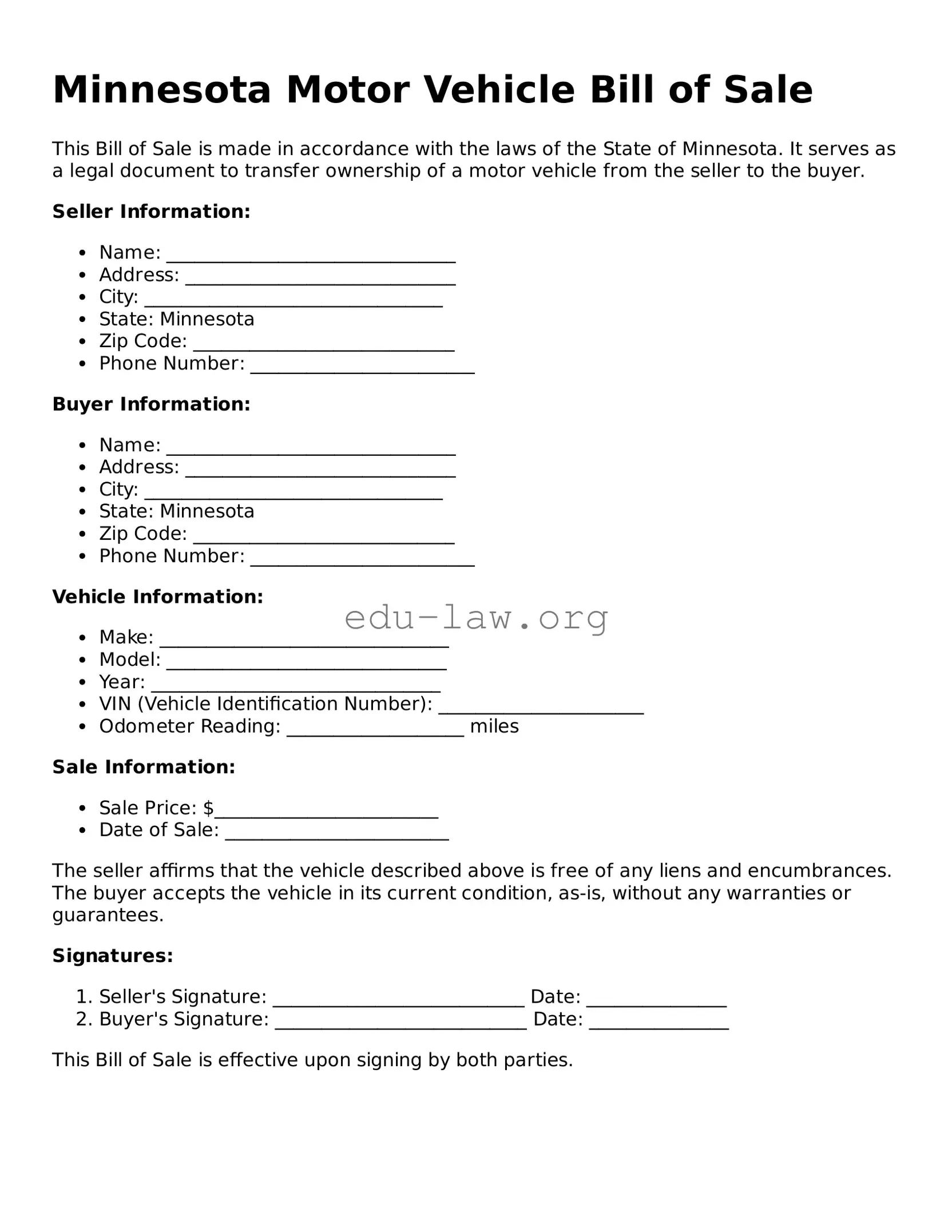
When buying or selling a vehicle in Minnesota, the Motor Vehicle Bill of Sale form plays a crucial role in ensuring a smooth transaction. This document serves as a written record of the sale, detailing essential information about the vehicle, such as its make, model, year, and Vehicle Identification Number (VIN). It also includes the names and addresses of both the buyer and seller, along with the sale price. This form not only helps protect the interests of both parties involved but also provides proof of ownership transfer, which is necessary for registration purposes. In addition, the Bill of Sale may include important disclosures regarding the vehicle's condition and any warranties or guarantees, offering peace of mind to the buyer. Whether you are a seasoned seller or a first-time buyer, understanding the components and significance of the Minnesota Motor Vehicle Bill of Sale form is vital for navigating the complexities of vehicle transactions in the state.
Minnesota Motor Vehicle Bill of Sale
This Bill of Sale is made in accordance with the laws of the State of Minnesota. It serves as a legal document to transfer ownership of a motor vehicle from the seller to the buyer.
Seller Information:
Buyer Information:
Vehicle Information:
Sale Information:
The seller affirms that the vehicle described above is free of any liens and encumbrances. The buyer accepts the vehicle in its current condition, as-is, without any warranties or guarantees.
Signatures:
This Bill of Sale is effective upon signing by both parties.
| Fact Name | Description |
|---|---|
| Purpose | The Minnesota Motor Vehicle Bill of Sale form is used to document the sale of a motor vehicle between a buyer and a seller. |
| Required Information | This form must include details such as the vehicle identification number (VIN), make, model, year, and the sale price. |
| Governing Laws | The sale of motor vehicles in Minnesota is governed by Minnesota Statutes Chapter 168. |
| Signature Requirement | Both the buyer and seller must sign the Bill of Sale to make it legally binding. |
After you complete the Minnesota Motor Vehicle Bill of Sale form, you can use it to document the sale of a vehicle. This form is important for both the buyer and the seller, as it provides proof of the transaction. Follow these steps to fill out the form correctly.
What is a Minnesota Motor Vehicle Bill of Sale?
The Minnesota Motor Vehicle Bill of Sale is a legal document that serves as proof of the sale and transfer of ownership of a motor vehicle between a seller and a buyer. This form includes important information such as the vehicle's identification number (VIN), make, model, year, and the sale price. It is essential for both parties to complete this form to ensure a smooth transfer of ownership and to protect their rights in the transaction.
Is the Bill of Sale required for vehicle registration in Minnesota?
Yes, in Minnesota, a Bill of Sale is typically required when registering a vehicle that has been purchased from a private seller. The document serves as proof of ownership and is necessary for the buyer to obtain a new title and register the vehicle with the Minnesota Department of Public Safety. It is advisable to keep a copy of the Bill of Sale for personal records as well.
Can I create my own Bill of Sale for a vehicle in Minnesota?
What should I do if the seller refuses to provide a Bill of Sale?
If a seller refuses to provide a Bill of Sale, it is advisable to reconsider the transaction. A Bill of Sale protects both the buyer and the seller by documenting the sale. Without this document, the buyer may face difficulties in registering the vehicle or proving ownership in the future. It is important to communicate the necessity of this document and, if necessary, seek legal advice before proceeding with the purchase.
Failing to provide complete information about the vehicle. This includes details such as the make, model, year, and VIN (Vehicle Identification Number). Incomplete information can lead to confusion and potential legal issues down the line.
Not including the purchase price. It’s essential to state the agreed-upon amount for the sale. Omitting this detail can raise questions about the transaction's legitimacy.
Forgetting to sign the document. Both the buyer and seller must sign the Bill of Sale. Without signatures, the document lacks legal validity, which can complicate ownership transfer.
Neglecting to date the form. Including the date of the transaction is crucial. It establishes when the sale occurred and can affect the timing of any taxes or registrations.
Using incorrect or outdated forms. Always ensure you are using the most current version of the Minnesota Motor Vehicle Bill of Sale. Using an outdated form can lead to unnecessary complications.
Not keeping a copy for personal records. After filling out the form, both parties should retain a copy. This serves as proof of the transaction and can be vital for future reference.
Overlooking additional requirements. Depending on the situation, there may be other documents or information needed, such as a lien release if applicable. Failing to provide these can delay the registration process.
The Minnesota Motor Vehicle Bill of Sale is an essential document for anyone buying or selling a vehicle in Minnesota. However, several other forms and documents may accompany this transaction to ensure a smooth and legally sound process. Below is a list of these documents, each serving a specific purpose in the vehicle transfer process.
Each of these documents plays a vital role in the vehicle sale process. Understanding their importance can help both buyers and sellers navigate the complexities of vehicle ownership transfer in Minnesota. Proper documentation not only protects the interests of both parties but also ensures compliance with state regulations.
The Minnesota Motor Vehicle Bill of Sale form shares similarities with the general Bill of Sale document. Both forms serve as a written record of the transfer of ownership from one party to another. They typically include essential details such as the names and addresses of the buyer and seller, a description of the item being sold, and the sale price. This document is often used for various types of transactions beyond vehicles, making it a versatile tool for proving ownership transfer.
Another document similar to the Minnesota Motor Vehicle Bill of Sale is the Boat Bill of Sale. Like the motor vehicle version, this form is used to document the sale of a watercraft. It includes information about the boat, such as its make, model, and hull identification number. Both documents aim to protect the interests of the buyer and seller by providing a clear record of the transaction and ensuring that ownership is legally recognized.
The Motorcycle Bill of Sale also mirrors the Motor Vehicle Bill of Sale in its purpose and structure. This form is specifically designed for the sale of motorcycles and includes pertinent details about the bike, such as its engine number and VIN. Both documents serve to confirm the transfer of ownership and are often required for registration purposes with state authorities.
The RV Bill of Sale is another document that operates similarly to the Motor Vehicle Bill of Sale. It is used for recreational vehicles and includes details such as the RV's make, model, and identification number. Both forms help facilitate the legal transfer of ownership and can be used to establish proof of purchase for registration and insurance purposes.
The Trailer Bill of Sale shares characteristics with the Minnesota Motor Vehicle Bill of Sale as well. This document is specifically for the sale of trailers and includes similar information regarding the buyer, seller, and the trailer's specifications. Both forms serve to protect the interests of both parties in the transaction and provide a record that can be referenced in the future.
A Mobile Home Bill of Sale is also comparable to the Motor Vehicle Bill of Sale. This document is used to transfer ownership of mobile homes and includes details such as the home’s serial number and description. Both documents aim to ensure that ownership is legally transferred and can be critical for registration and financing purposes.
The Airplane Bill of Sale operates in a similar manner, documenting the sale of an aircraft. This form includes specific information about the airplane, such as its registration number and model. Both the Airplane Bill of Sale and the Motor Vehicle Bill of Sale serve to formalize the transfer of ownership and provide necessary documentation for regulatory compliance.
Finally, the Equipment Bill of Sale is another document that resembles the Minnesota Motor Vehicle Bill of Sale. This form is used for the sale of various types of equipment, including machinery and tools. It includes details about the equipment, such as its condition and serial number. Both documents serve the purpose of ensuring a clear record of the sale and protecting the rights of both the buyer and seller.
When filling out the Minnesota Motor Vehicle Bill of Sale form, it is important to follow certain guidelines to ensure accuracy and compliance. Here is a list of things you should and shouldn't do:
By adhering to these guidelines, you can help ensure a smooth transaction and avoid potential complications.
Understanding the Minnesota Motor Vehicle Bill of Sale form is crucial for both buyers and sellers. However, several misconceptions can lead to confusion. Here are four common misconceptions:
Clarifying these misconceptions can help ensure a smoother transaction for both buyers and sellers in Minnesota.
When filling out and using the Minnesota Motor Vehicle Bill of Sale form, keep these key takeaways in mind: