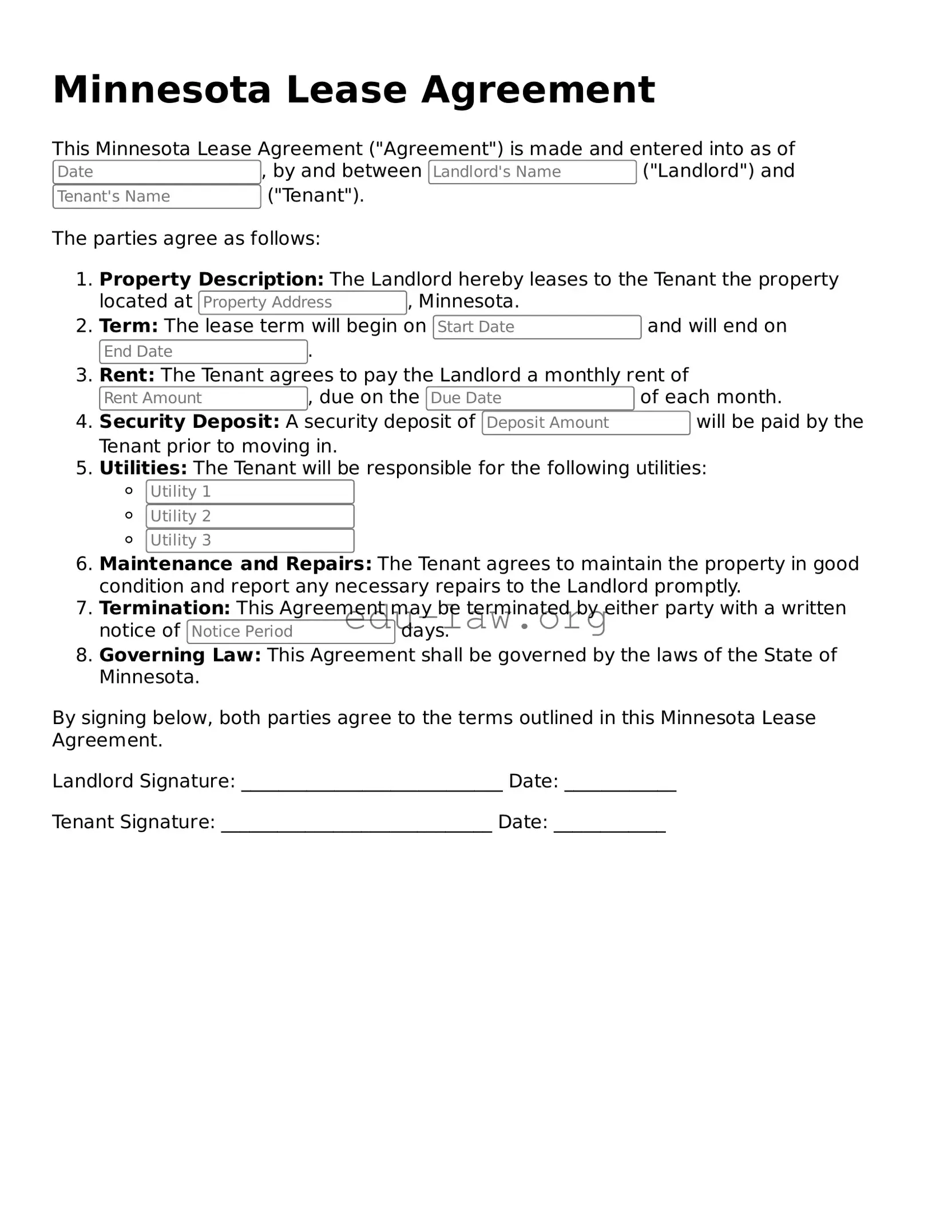
The Minnesota Lease Agreement form is a crucial document that outlines the terms and conditions between landlords and tenants in the state of Minnesota. This legally binding contract covers essential aspects such as the rental amount, payment schedule, and duration of the lease. It specifies the responsibilities of both parties, including maintenance obligations and rules regarding property use. The agreement also addresses security deposits, late fees, and procedures for terminating the lease. By clearly defining these elements, the Minnesota Lease Agreement helps prevent misunderstandings and disputes, ensuring a smoother rental experience for everyone involved. Understanding this form is vital for both landlords and tenants to protect their rights and obligations throughout the lease term.
Minnesota Lease Agreement
This Minnesota Lease Agreement ("Agreement") is made and entered into as of , by and between ("Landlord") and ("Tenant").
The parties agree as follows:
By signing below, both parties agree to the terms outlined in this Minnesota Lease Agreement.
Landlord Signature: ____________________________ Date: ____________
Tenant Signature: _____________________________ Date: ____________
| Fact Name | Description |
|---|---|
| Governing Law | The Minnesota Lease Agreement is governed by the laws of the State of Minnesota. |
| Types of Leases | This form can be used for residential leases, commercial leases, and agricultural leases. |
| Duration | The lease term can be fixed (e.g., one year) or month-to-month, depending on the agreement between the parties. |
| Security Deposit | Landlords may require a security deposit, which is typically limited to one month's rent in Minnesota. |
| Tenant Rights | Tenants have specific rights under Minnesota law, including the right to a habitable living environment and protection against unlawful eviction. |
Completing the Minnesota Lease Agreement form is a straightforward process that requires careful attention to detail. Each section of the form must be filled out accurately to ensure that both the landlord and tenant understand their rights and obligations. Follow these steps to complete the form correctly.
What is a Minnesota Lease Agreement form?
A Minnesota Lease Agreement form is a legal document that outlines the terms and conditions between a landlord and tenant for renting residential property in Minnesota. This document specifies the rental amount, duration of the lease, responsibilities of both parties, and other important details related to the tenancy.
What should be included in a Minnesota Lease Agreement?
The lease agreement should include essential details such as the names of the landlord and tenant, property address, lease term, rent amount, payment due dates, security deposit information, maintenance responsibilities, and rules regarding pets or smoking. It’s also important to include any specific clauses that may apply, such as termination rights or renewal options.
Is a written lease agreement required in Minnesota?
While a verbal agreement can be legally binding, it is highly recommended to have a written lease agreement in Minnesota. A written document provides clarity and protects both parties by clearly outlining the terms and conditions of the rental arrangement.
How long is a typical lease term in Minnesota?
Lease terms in Minnesota can vary widely. They typically range from six months to one year. However, month-to-month leases are also common. The duration should be clearly stated in the lease agreement to avoid any misunderstandings.
What happens if a tenant wants to break the lease early?
If a tenant wishes to break the lease early, they should review the lease agreement for any specific terms related to early termination. Generally, the tenant may be responsible for paying rent until a new tenant is found or until the lease term ends. Open communication with the landlord is crucial in these situations.
Can a landlord increase rent during a lease term?
In Minnesota, a landlord cannot increase rent during the lease term unless the lease agreement specifically allows for it. Any rent increase must be communicated in writing and comply with local laws regarding notice periods. Always check your lease for any provisions related to rent increases.
What are the rights of tenants under Minnesota law?
Tenants in Minnesota have several rights, including the right to a habitable living environment, the right to privacy, and protection against retaliatory eviction. It is important for tenants to understand their rights and responsibilities as outlined in the lease agreement and under state law.
Incomplete Tenant Information: Many people forget to fill out all the required tenant details. This includes not just names but also contact information. Leaving this information blank can lead to confusion later.
Incorrect Dates: Entering the wrong lease start and end dates is a common mistake. Always double-check these dates to ensure they align with the intended rental period.
Neglecting to Specify Rent Amount: Some individuals fail to clearly state the rent amount. It’s essential to include not only the monthly rent but also any additional fees or deposits to avoid misunderstandings.
Overlooking Maintenance Responsibilities: Failing to outline who is responsible for maintenance can lead to disputes. Clearly define the responsibilities of both the landlord and tenant regarding repairs and upkeep.
Ignoring State-Specific Regulations: Each state has unique laws governing lease agreements. Not adhering to Minnesota’s specific requirements can invalidate parts of the lease. Familiarize yourself with local regulations before finalizing the document.
When entering into a rental arrangement in Minnesota, the Lease Agreement form is a crucial document that outlines the terms and conditions between landlords and tenants. However, several other forms and documents often accompany this agreement to ensure clarity and protect the rights of both parties. Below is a list of these essential documents.
By utilizing these documents alongside the Minnesota Lease Agreement, both landlords and tenants can navigate their rental relationship with greater confidence and security. Each form plays a vital role in ensuring that all parties understand their rights and responsibilities, ultimately fostering a smoother leasing experience.
The Minnesota Rental Application is a document that allows landlords to screen potential tenants. Like the Lease Agreement, it outlines the terms of occupancy and the responsibilities of both parties. The application collects essential information, such as employment history and credit scores, to help landlords make informed decisions about prospective tenants. Both documents aim to establish a clear understanding of expectations and obligations, ensuring a smooth rental experience.
The Minnesota Security Deposit Receipt serves a similar purpose by addressing financial responsibilities. This document is provided to tenants when they pay a security deposit, detailing the amount received and the conditions under which it may be withheld. Much like the Lease Agreement, it protects both the landlord's and tenant's interests, ensuring transparency in financial transactions related to the rental property.
The Minnesota Notice to Quit is another related document that can be issued when a tenant fails to comply with the terms of the Lease Agreement. This notice serves as a formal request for the tenant to vacate the premises, often due to non-payment of rent or lease violations. Both the Notice to Quit and the Lease Agreement establish the framework for tenant rights and responsibilities, highlighting the importance of adherence to agreed-upon terms.
The Minnesota Lease Termination Letter is used when either party decides to end the lease before its expiration. This document outlines the reasons for termination and provides notice to the other party. Similar to the Lease Agreement, it emphasizes the need for clear communication and adherence to the terms set forth, ensuring that both landlords and tenants understand their rights during the termination process.
The Minnesota Rent Receipt is another document that complements the Lease Agreement by providing proof of rent payments. It records the date, amount, and method of payment, which can be crucial for both landlords and tenants in case of disputes. This receipt reinforces the financial obligations established in the Lease Agreement and helps maintain a clear record of transactions.
The Minnesota Tenant Rights Handbook outlines the rights and responsibilities of tenants, serving as a guide to understanding the Lease Agreement. It covers various topics, such as habitability, privacy, and eviction procedures. By providing this information, the handbook empowers tenants to understand their rights under the law, enhancing their ability to navigate their lease agreements effectively.
The Minnesota Eviction Notice is issued when a landlord seeks to remove a tenant from the property due to lease violations. This document details the reasons for eviction and the timeframe in which the tenant must vacate. Both the Eviction Notice and the Lease Agreement are grounded in the legal framework governing rental relationships, ensuring that both parties are aware of their rights and obligations.
Finally, the Minnesota Lease Renewal Agreement is a document that allows landlords and tenants to extend their existing lease. It typically includes updated terms and conditions, reflecting any changes in rent or responsibilities. Like the original Lease Agreement, it aims to clarify expectations and maintain a harmonious rental relationship, ensuring that both parties are on the same page moving forward.
When filling out the Minnesota Lease Agreement form, attention to detail is crucial. Here are some important dos and don'ts to consider:
Following these guidelines can help protect your rights and ensure a smoother rental experience.
Understanding the Minnesota Lease Agreement form can be tricky. Many people hold misconceptions that can lead to confusion or mistakes. Here’s a list of ten common misconceptions about this important document:
By clarifying these misconceptions, tenants and landlords can better navigate their rights and responsibilities under the Minnesota Lease Agreement form.
When filling out and using the Minnesota Lease Agreement form, consider the following key takeaways:
Taking these steps can help ensure a smooth leasing process and protect the rights of both landlords and tenants.