The Minnesota Land Purchase Agreement form serves as a crucial document in real estate transactions, providing a structured framework for buyers and sellers to outline their intentions regarding the sale of property. This form typically includes essential details such as the legal description of the property, purchase price, and payment terms, ensuring that both parties have a clear understanding of their obligations. Additionally, it addresses contingencies, such as financing and inspections, which can significantly impact the transaction. The agreement also outlines the closing process, including the timeline and responsibilities of each party, thereby facilitating a smooth transfer of ownership. By clearly delineating the rights and responsibilities involved, the Minnesota Land Purchase Agreement form helps to protect the interests of both buyers and sellers, minimizing the potential for disputes and misunderstandings. Understanding the components of this form is vital for anyone looking to navigate the complexities of property transactions in Minnesota.
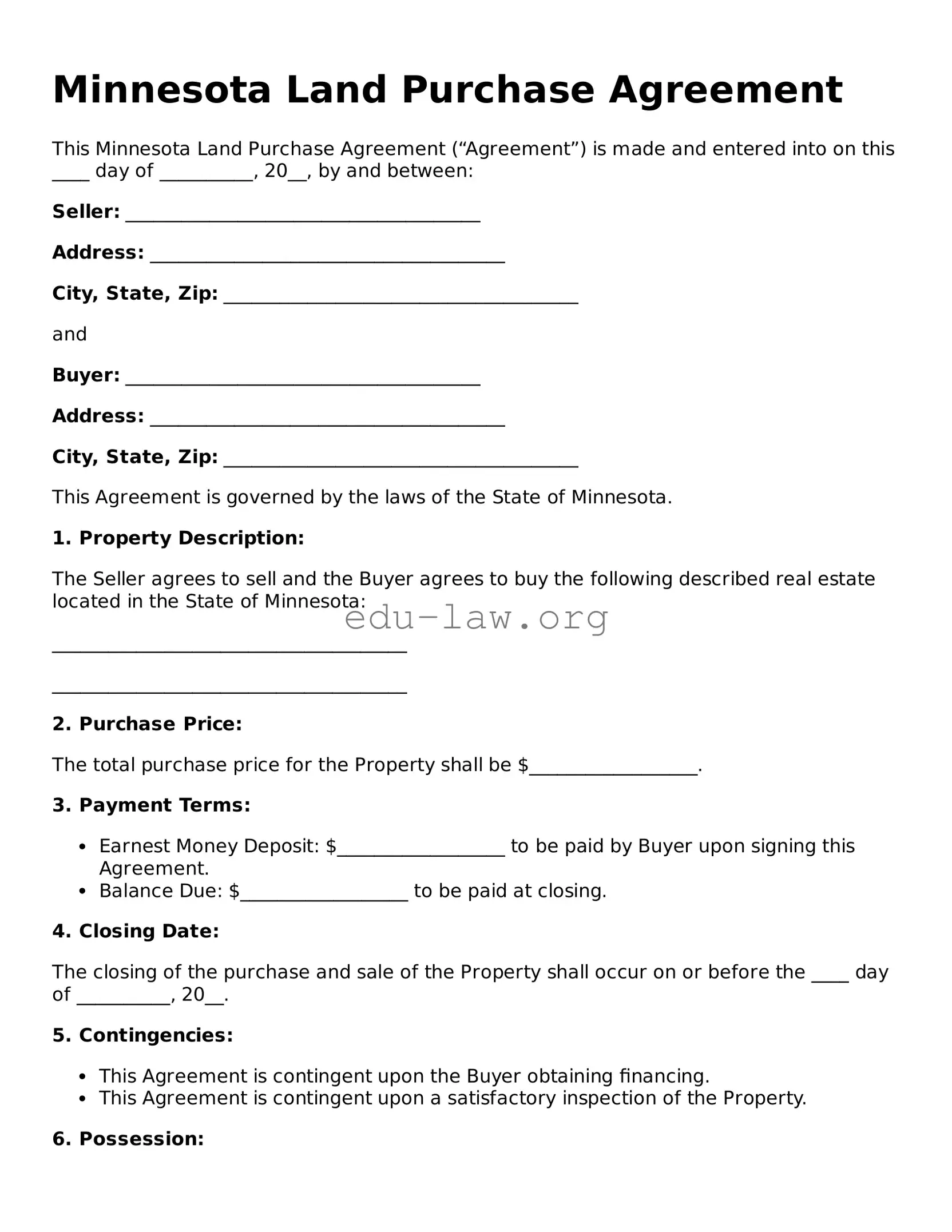
Minnesota Land Purchase Agreement
This Minnesota Land Purchase Agreement (“Agreement”) is made and entered into on this ____ day of __________, 20__, by and between:
Seller: ______________________________________
Address: ______________________________________
City, State, Zip: ______________________________________
and
Buyer: ______________________________________
Address: ______________________________________
City, State, Zip: ______________________________________
This Agreement is governed by the laws of the State of Minnesota.
1. Property Description:
The Seller agrees to sell and the Buyer agrees to buy the following described real estate located in the State of Minnesota:
______________________________________
______________________________________
2. Purchase Price:
The total purchase price for the Property shall be $__________________.
3. Payment Terms:
4. Closing Date:
The closing of the purchase and sale of the Property shall occur on or before the ____ day of __________, 20__.
5. Contingencies:
6. Possession:
The Buyer shall take possession of the Property on the closing date unless otherwise agreed in writing.
7. Signatures:
By signing below, both parties agree to the terms and conditions outlined in this Agreement.
Seller Signature: ___________________________ Date: ____________
Buyer Signature: ___________________________ Date: ____________
This Agreement represents the entire understanding between the parties regarding the sale of the Property. Any modifications must be in writing and signed by both parties.
| Fact Name | Description |
|---|---|
| Governing Law | The Minnesota Land Purchase Agreement is governed by Minnesota state law, specifically the statutes related to real estate transactions. |
| Parties Involved | This agreement typically involves a buyer and a seller, both of whom must be clearly identified in the document. |
| Property Description | A detailed description of the property being sold is required, including its legal description and physical address. |
| Purchase Price | The form must specify the agreed-upon purchase price, along with any deposit amounts and payment terms. |
| Contingencies | Buyers may include contingencies, such as financing or inspection conditions, which must be clearly outlined. |
| Closing Date | The agreement should state the anticipated closing date, marking when the ownership will officially transfer. |
| Signatures | Both parties must sign the agreement for it to be legally binding, indicating their acceptance of the terms. |
Once you have the Minnesota Land Purchase Agreement form in hand, it’s time to get started. Filling out this form accurately is essential for ensuring a smooth transaction. Follow these steps to complete the form effectively.
After completing the form, review it carefully to ensure all information is accurate and complete. Once verified, both parties should retain copies for their records, and you can proceed with the next steps in the purchasing process.
What is a Minnesota Land Purchase Agreement?
A Minnesota Land Purchase Agreement is a legal document that outlines the terms and conditions under which a buyer agrees to purchase land from a seller. This agreement serves to protect both parties by clearly defining the responsibilities and expectations involved in the transaction.
What information is typically included in the agreement?
The agreement usually includes details such as the purchase price, property description, closing date, and any contingencies that must be met before the sale is finalized. It may also outline any disclosures related to the property's condition or zoning regulations.
Do I need a lawyer to create a Land Purchase Agreement?
While it's not legally required to have a lawyer, consulting with one can be beneficial. A lawyer can help ensure that the agreement complies with Minnesota laws and that your interests are protected throughout the transaction.
Can I use a template for the Land Purchase Agreement?
Yes, using a template can be a good starting point. However, it’s important to customize the template to fit your specific situation and to ensure that all necessary details are included. This helps avoid potential legal issues down the line.
What happens if one party does not fulfill their obligations?
If one party fails to meet their obligations as outlined in the agreement, the other party may have legal recourse. This could involve seeking damages or enforcing the terms of the agreement through the courts. It’s crucial to understand your rights in such situations.
Is there a specific format required for the agreement?
While there is no strict format mandated by law, the agreement should be in writing and signed by both parties to be enforceable. Clear language and organization will help avoid misunderstandings.
How can I ensure the agreement is legally binding?
To ensure the agreement is legally binding, both parties must sign it, and it should include all essential terms. Consider having the document notarized for added legal weight, especially if it involves a significant transaction.
What should I do after signing the agreement?
After signing, both parties should keep a copy of the agreement for their records. It’s also important to follow through on any agreed-upon actions, such as securing financing or completing inspections, to ensure a smooth closing process.
Failing to include all parties' names. Every buyer and seller must be clearly identified.
Not specifying the property address. The exact location of the property should be detailed to avoid confusion.
Overlooking the purchase price. Clearly state the agreed amount to ensure both parties are on the same page.
Neglecting to include earnest money details. Specify the amount and conditions regarding the earnest money deposit.
Missing deadlines. Ensure all dates for contingencies, inspections, and closing are clearly outlined.
Failing to address contingencies. Include any conditions that must be met for the sale to proceed.
Not providing accurate legal descriptions. Use the correct legal description of the property as it appears in public records.
Ignoring local laws and regulations. Ensure compliance with Minnesota's real estate laws to avoid legal issues.
Not having signatures from all parties. Every individual involved in the agreement must sign to validate the contract.
The Minnesota Land Purchase Agreement form is a crucial document for anyone involved in buying or selling real estate in Minnesota. However, several other forms and documents are commonly used alongside it to ensure a smooth transaction. Below is a list of these important documents.
Understanding these documents can significantly aid in navigating the complexities of a real estate transaction in Minnesota. Each document plays a vital role in protecting the interests of both buyers and sellers.
The Minnesota Land Purchase Agreement form shares similarities with a Residential Purchase Agreement. Both documents outline the terms and conditions under which a buyer agrees to purchase residential property from a seller. They typically include details such as the purchase price, financing arrangements, and contingencies that must be met before the sale can proceed. Each agreement serves to protect the interests of both parties, ensuring clarity in the transaction process.
Another document similar to the Minnesota Land Purchase Agreement is the Commercial Purchase Agreement. This form is used for the purchase of commercial real estate, such as office buildings or retail spaces. Like the Land Purchase Agreement, it details the terms of the sale, including price and conditions. However, it may also address zoning regulations and business-related contingencies, reflecting the unique aspects of commercial transactions.
The Option to Purchase Agreement is another related document. This agreement grants a potential buyer the right to purchase a property within a specified timeframe. It outlines the purchase price and any conditions that must be met. Similar to the Land Purchase Agreement, it serves to formalize the intent of both parties but allows for a delay in the actual purchase decision.
A Lease Purchase Agreement is also comparable. This document allows a tenant to lease a property with the option to buy it later. It combines elements of both leasing and purchasing. The terms, including the purchase price and lease duration, are clearly defined, similar to how they are in the Land Purchase Agreement, providing a structured approach to the transaction.
The Real Estate Sales Contract serves a similar purpose as the Minnesota Land Purchase Agreement. It is a legally binding document that outlines the sale of real property. This contract includes essential details such as the sale price, property description, and closing date. Both documents aim to clarify the responsibilities and rights of the buyer and seller throughout the transaction.
The Purchase and Sale Agreement is another document that aligns closely with the Land Purchase Agreement. This agreement is used in various real estate transactions and details the terms under which a buyer agrees to purchase property. It includes information on financing, inspections, and closing procedures, similar to the provisions found in the Minnesota Land Purchase Agreement.
The Deed of Trust is also relevant in the context of property transactions. While it serves a different function, it often accompanies purchase agreements. This document secures a loan by placing a lien on the property. Like the Land Purchase Agreement, it involves the buyer and lender, ensuring that the terms of financing are clear and enforceable.
Lastly, the Quitclaim Deed is a document that can be associated with property transfers. While it does not serve as a purchase agreement, it allows for the transfer of property ownership without warranties. It can be used in conjunction with a Land Purchase Agreement when the seller wants to transfer title quickly. Both documents facilitate the change of ownership but differ in the level of protection they provide to the buyer.
When filling out the Minnesota Land Purchase Agreement form, it is important to approach the task with care and attention. Here are some helpful guidelines to consider:
By following these guidelines, you can help ensure that your Land Purchase Agreement is completed correctly and efficiently. Your attention to detail is crucial in this important transaction.
Understanding the Minnesota Land Purchase Agreement form can be challenging. Many people hold misconceptions about this important document. Here are nine common misconceptions along with clarifications.
By clarifying these misconceptions, individuals can better navigate the process of land purchasing in Minnesota. Understanding the form's purpose and requirements is crucial for a smooth transaction.
When filling out and using the Minnesota Land Purchase Agreement form, there are several important aspects to keep in mind. Below are key takeaways to help you navigate the process effectively.
By keeping these key points in mind, both buyers and sellers can navigate the Minnesota Land Purchase Agreement process more smoothly and with greater confidence.