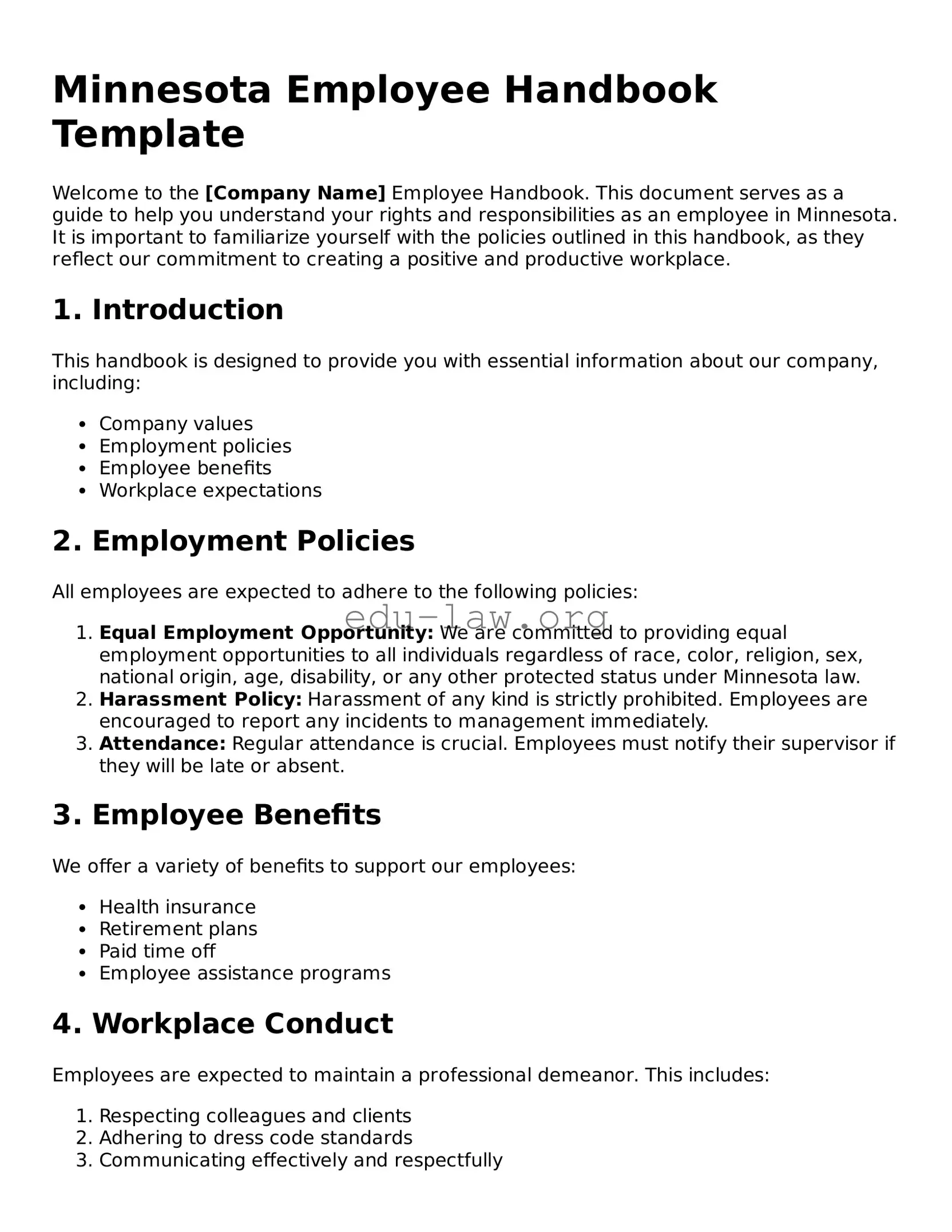
The Minnesota Employee Handbook form serves as a vital resource for both employers and employees, outlining essential workplace policies and expectations. This document typically includes sections that address various topics such as employee rights, workplace conduct, benefits, and procedures for reporting grievances. By clearly defining the company's values and operational guidelines, the handbook fosters a positive work environment and helps to ensure compliance with state and federal laws. Additionally, it often details the organization's approach to issues like harassment, discrimination, and disciplinary actions, providing employees with a clear understanding of their rights and responsibilities. Employers are encouraged to regularly update the handbook to reflect changes in laws or organizational policies, thereby maintaining its relevance and effectiveness. The form not only serves as a legal safeguard for businesses but also empowers employees by equipping them with the knowledge necessary to navigate their workplace confidently.
Minnesota Employee Handbook Template
Welcome to the [Company Name] Employee Handbook. This document serves as a guide to help you understand your rights and responsibilities as an employee in Minnesota. It is important to familiarize yourself with the policies outlined in this handbook, as they reflect our commitment to creating a positive and productive workplace.
1. Introduction
This handbook is designed to provide you with essential information about our company, including:
2. Employment Policies
All employees are expected to adhere to the following policies:
3. Employee Benefits
We offer a variety of benefits to support our employees:
4. Workplace Conduct
Employees are expected to maintain a professional demeanor. This includes:
5. Acknowledgment of Receipt
By signing below, you acknowledge that you have received and read the [Company Name] Employee Handbook.
Employee Name: [Employee Name]
Signature: [Signature]
Date: [Date]
For any questions or clarifications regarding this handbook, please reach out to your supervisor or the HR department.
6. Contact Information
For further assistance, please contact:
HR Department: [HR Contact Information]
Company Address: [Company Address]
Phone Number: [Phone Number]
Email: [Email Address]
| Fact Name | Details |
|---|---|
| Purpose | The Minnesota Employee Handbook serves as a guide for employees regarding company policies and procedures. |
| Governing Law | This handbook is governed by Minnesota Statutes, Chapter 181, which outlines employment regulations. |
| Content Requirements | It should include sections on workplace conduct, benefits, and employee rights. |
| Distribution | Employers are encouraged to provide a copy to each employee upon hire. |
| Updates | The handbook should be reviewed and updated regularly to reflect changes in laws or company policies. |
| Legal Compliance | Employers must ensure that the handbook complies with federal and state labor laws. |
| Employee Acknowledgment | Employees should sign an acknowledgment form indicating they have received and understood the handbook. |
| Non-Discrimination Policy | A clear non-discrimination policy should be included to promote a fair workplace. |
Filling out the Minnesota Employee Handbook form is an important step in ensuring that employees understand their rights and responsibilities. Once you have the form ready, you can proceed to fill it out with the necessary information. Here’s how to do it effectively.
What is the Minnesota Employee Handbook form?
The Minnesota Employee Handbook form is a document designed to outline the policies, procedures, and expectations of an employer in Minnesota. It serves as a guide for employees, detailing important information such as workplace rules, benefits, and employee rights. This handbook helps ensure that both employers and employees understand their responsibilities and the company’s culture.
Why is it important to have an Employee Handbook?
An Employee Handbook is crucial for establishing clear communication between the employer and employees. It sets forth the company's expectations regarding behavior, performance, and compliance with laws. Having a well-structured handbook can help prevent misunderstandings and disputes, providing a reference point for both parties. It also serves to protect the employer by documenting policies that can be enforced consistently.
Who should create the Employee Handbook?
How often should the Employee Handbook be updated?
What should be included in the Employee Handbook?
Incomplete Information: Many individuals fail to fill out all required fields. This can lead to delays in processing or even rejection of the form. It’s essential to ensure that every section is addressed thoroughly.
Incorrect Personal Details: Mistakes in personal information, such as name spelling, address, or contact numbers, can create confusion. Double-checking this information before submission can prevent future issues.
Failure to Read Policies: Some employees skip the review of the handbook policies. Understanding these policies is crucial, as they outline important rights and responsibilities. Take the time to read through them carefully.
Not Keeping a Copy: After submission, individuals often forget to keep a copy of the filled-out form. Retaining a copy is important for personal records and can be useful if any discrepancies arise later.
When creating an employee handbook in Minnesota, it's essential to consider additional forms and documents that can complement it. These documents help clarify policies, ensure compliance, and enhance communication between employers and employees. Below is a list of key documents often used alongside the Minnesota Employee Handbook.
Incorporating these documents into your HR practices not only enhances clarity but also fosters a positive work environment. By ensuring that employees have access to comprehensive resources, you can promote transparency and engagement within your organization.
The Minnesota Employee Handbook form shares similarities with the Company Policy Manual. Both documents serve as essential resources for employees, outlining the organization's expectations and procedures. While the Employee Handbook focuses on employee rights and responsibilities, the Company Policy Manual often delves deeper into specific policies, such as dress codes and workplace behavior. Together, they provide a comprehensive overview of the work environment and help employees understand the rules that govern their employment.
Another document that aligns closely with the Minnesota Employee Handbook is the Employee Orientation Guide. This guide is often provided to new hires during their onboarding process. Like the handbook, it covers essential topics such as company culture, benefits, and job expectations. The orientation guide is typically more condensed, offering a quick reference for new employees to help them acclimate to their new roles.
The Job Description document is also similar to the Employee Handbook. While the handbook outlines general policies applicable to all employees, the job description provides specific details about individual roles. It includes information about responsibilities, required qualifications, and performance expectations. Together, these documents ensure that employees have a clear understanding of their position within the company.
The Employee Code of Conduct is another document that complements the Minnesota Employee Handbook. This code outlines acceptable behaviors and ethical standards that employees are expected to uphold. While the handbook provides a broader overview of policies, the code of conduct focuses specifically on behavior, helping to foster a respectful and professional workplace.
The Benefits Guide is yet another important document that aligns with the Employee Handbook. This guide provides detailed information about the benefits offered by the employer, such as health insurance, retirement plans, and paid time off. While the handbook may reference these benefits, the Benefits Guide offers in-depth explanations, making it easier for employees to understand their options and make informed decisions.
The Performance Review Policy document shares a connection with the Employee Handbook as well. This policy outlines the procedures and criteria for evaluating employee performance. While the handbook may touch on performance expectations, the Performance Review Policy provides a structured approach to assessments, ensuring transparency and fairness in the evaluation process.
Similar to the Employee Handbook, the Workplace Safety Manual addresses essential protocols for maintaining a safe work environment. This manual provides guidelines on emergency procedures, reporting accidents, and safety training. Both documents emphasize the importance of employee well-being and outline the responsibilities of both the employer and the employees in creating a safe workplace.
The Anti-Harassment Policy is another document that closely mirrors the Employee Handbook. This policy specifically addresses issues related to harassment and discrimination in the workplace. While the handbook may include a section on harassment, the Anti-Harassment Policy goes into greater detail about reporting procedures, investigation processes, and the consequences of violating the policy, ensuring that employees feel protected and informed.
The Attendance Policy is also similar to the Minnesota Employee Handbook. This policy outlines the expectations regarding employee attendance, punctuality, and procedures for requesting time off. While the handbook may provide a general overview of attendance expectations, the Attendance Policy offers specific guidelines that help employees understand their obligations and the importance of maintaining consistent attendance.
Lastly, the Termination Policy document aligns with the Employee Handbook by outlining the procedures and expectations surrounding employee termination. This policy clarifies the grounds for termination, the process involved, and the rights of the employee. While the handbook addresses general employment practices, the Termination Policy provides a clear framework that helps both employees and employers navigate the complexities of ending an employment relationship.
When filling out the Minnesota Employee Handbook form, it is essential to adhere to specific guidelines to ensure accuracy and compliance. Below is a list of things you should and shouldn't do:
Understanding the Minnesota Employee Handbook is essential for both employers and employees. However, several misconceptions can lead to confusion regarding its purpose and requirements. Here are five common misconceptions:
Addressing these misconceptions can foster a better understanding of the employee handbook's role within the workplace, ultimately benefiting both employees and employers.
When filling out and using the Minnesota Employee Handbook form, there are several important points to keep in mind. These takeaways will help ensure that the handbook is effective and compliant with state regulations.
By keeping these key takeaways in mind, you can create a Minnesota Employee Handbook that serves as a valuable resource for both employees and management.