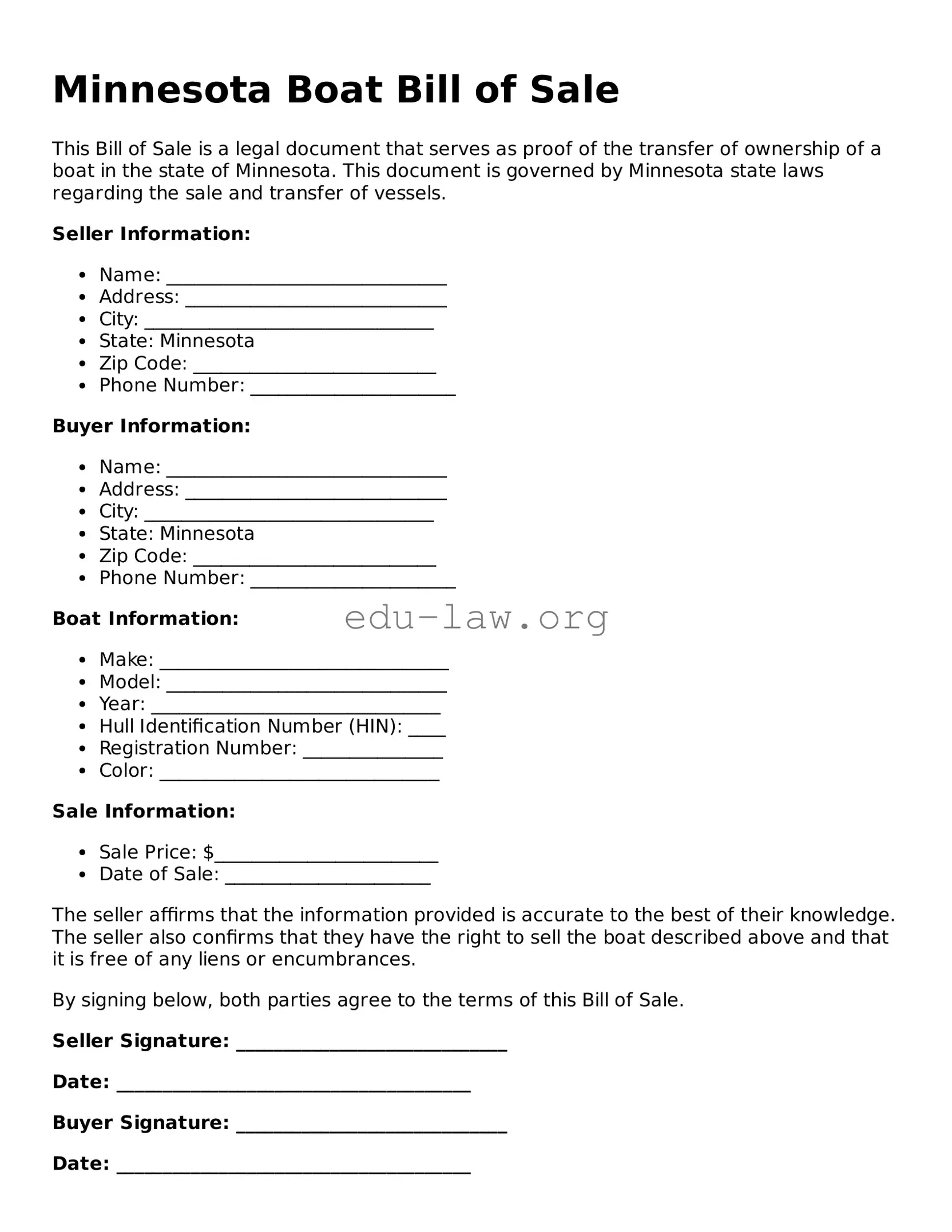
When it comes to buying or selling a boat in Minnesota, having the right documentation is crucial to ensure a smooth transaction. The Minnesota Boat Bill of Sale form serves as an essential legal record that captures important details about the sale, such as the names and addresses of both the seller and buyer, the boat's identification number, and a description of the vessel. This form not only protects the interests of both parties but also aids in the transfer of ownership and registration with the state. It typically includes information regarding the sale price and any warranties or representations made by the seller. Additionally, this document can be vital in resolving any disputes that may arise after the sale. Understanding the significance of the Boat Bill of Sale form can help both buyers and sellers navigate the process with confidence, ensuring compliance with state regulations and promoting a transparent transaction.
Minnesota Boat Bill of Sale
This Bill of Sale is a legal document that serves as proof of the transfer of ownership of a boat in the state of Minnesota. This document is governed by Minnesota state laws regarding the sale and transfer of vessels.
Seller Information:
Buyer Information:
Boat Information:
Sale Information:
The seller affirms that the information provided is accurate to the best of their knowledge. The seller also confirms that they have the right to sell the boat described above and that it is free of any liens or encumbrances.
By signing below, both parties agree to the terms of this Bill of Sale.
Seller Signature: _____________________________
Date: ______________________________________
Buyer Signature: _____________________________
Date: ______________________________________
This document should be kept for your records. It is recommended to register the sale with the appropriate Minnesota authorities.
| Fact Name | Description |
|---|---|
| Purpose | The Minnesota Boat Bill of Sale form is used to document the sale and transfer of ownership of a boat in Minnesota. |
| Governing Law | This form is governed by Minnesota Statutes, Chapter 86B, which covers boating regulations. |
| Parties Involved | The form requires information from both the seller and the buyer, ensuring clarity in the transaction. |
| Boat Information | Details about the boat, such as the make, model, year, and hull identification number, must be included. |
| Purchase Price | The agreed-upon purchase price of the boat should be clearly stated on the form. |
| Date of Sale | The date when the sale occurs is important and must be documented on the form. |
| Signatures | Both the seller and buyer need to sign the form to validate the transaction. |
| Record Keeping | It is advisable for both parties to keep a copy of the completed Bill of Sale for their records. |
After gathering the necessary information, you are ready to fill out the Minnesota Boat Bill of Sale form. This document will help ensure that the transaction is clear and legally recognized. Follow these steps to complete the form accurately.
Once the form is completed, make sure both parties retain a copy for their records. This will help avoid any misunderstandings in the future.
What is a Minnesota Boat Bill of Sale?
A Minnesota Boat Bill of Sale is a legal document that records the transfer of ownership of a boat from one party to another. It serves as proof of the sale and includes important details about the transaction, such as the buyer and seller's information, the boat's description, and the sale price.
Is a Bill of Sale required to sell a boat in Minnesota?
While a Bill of Sale is not legally required in Minnesota, it is highly recommended. This document protects both the buyer and seller by providing a written record of the transaction. It can also be useful for registration and tax purposes.
What information should be included in the Bill of Sale?
The Bill of Sale should include the following information: the names and addresses of the buyer and seller, the boat's make, model, year, and hull identification number (HIN), the sale price, and the date of the transaction. Both parties should sign the document to validate the sale.
Can I create my own Bill of Sale for a boat?
Yes, you can create your own Bill of Sale for a boat. There are many templates available online that you can use as a guide. Ensure that all necessary information is included, and both parties sign the document for it to be valid.
Do I need to have the Bill of Sale notarized?
No, notarization is not required for a Bill of Sale in Minnesota. However, having it notarized can add an extra layer of security and legitimacy to the document, which may be beneficial in case of disputes.
What if the boat is financed or has a lien?
If the boat is financed or has a lien, you must ensure that the lien is satisfied before the sale. The seller should provide documentation showing that the lien has been released. The Bill of Sale should also mention any existing liens to inform the buyer.
How do I register the boat after the sale?
To register the boat after the sale, the buyer must take the completed Bill of Sale, along with other required documents, to their local Department of Natural Resources (DNR) office. This includes proof of ownership and payment of any applicable registration fees.
What if the boat is sold "as-is"?
If the boat is sold "as-is," it means the buyer accepts the boat in its current condition without any warranties from the seller. This should be clearly stated in the Bill of Sale to avoid misunderstandings later on.
How long should I keep a copy of the Bill of Sale?
It is advisable for both the buyer and seller to keep a copy of the Bill of Sale for at least several years. This can help resolve any future disputes regarding ownership or condition of the boat.
What if I lose the Bill of Sale?
If you lose the Bill of Sale, you can create a new one, but both parties must agree to the terms again. It’s best to keep multiple copies in safe locations to prevent loss in the future.
Incomplete Information: One of the most common mistakes is failing to provide all required details. This includes the names and addresses of both the buyer and the seller, as well as the boat's identification number. Missing even one piece of information can create problems later.
Incorrect Dates: People often overlook the importance of accurate dates. When filling out the form, it’s essential to ensure that the sale date is correct. An incorrect date can lead to confusion regarding ownership and liability.
Not Signing the Document: A signature may seem like a minor detail, but it’s crucial. Both the buyer and seller must sign the form for it to be valid. Forgetting to sign can render the document useless in legal terms.
Failure to Keep Copies: After completing the form, some individuals neglect to make copies. Keeping a copy for personal records is vital. This ensures that both parties have proof of the transaction and can refer back to it if needed.
When buying or selling a boat in Minnesota, the Boat Bill of Sale form is a crucial document. However, several other forms and documents may also be necessary to ensure a smooth transaction. Below is a list of commonly used documents that can complement the Boat Bill of Sale.
Having these documents ready can streamline the buying or selling process, ensuring that all legal requirements are met. This preparation can save time and avoid potential complications down the road.
The Minnesota Boat Bill of Sale form shares similarities with the Vehicle Bill of Sale. Both documents serve as proof of the transfer of ownership from one party to another. They typically include essential information such as the buyer's and seller's names, addresses, and signatures, along with details about the item being sold, like make, model, and identification numbers. Just as with a boat sale, a vehicle sale requires a clear record to avoid disputes and ensure that the transaction is legally recognized.
Another document akin to the Boat Bill of Sale is the Motorcycle Bill of Sale. This form is used to document the sale of a motorcycle, capturing similar details such as the vehicle's identification number, make, model, and year. Both forms protect the interests of the buyer and seller by providing a written record of the transaction. This is crucial for future reference, especially when registering the vehicle or transferring titles.
The Snowmobile Bill of Sale is yet another document that resembles the Boat Bill of Sale. Snowmobiles, like boats, are recreational vehicles that require proper documentation during a sale. This form includes information about the snowmobile's specifications and the parties involved in the transaction. Just as with boats, having a Bill of Sale helps ensure that ownership is clearly established, which is vital for registration and potential legal issues down the line.
Similarly, the ATV (All-Terrain Vehicle) Bill of Sale serves a purpose comparable to the Boat Bill of Sale. This document is essential for transferring ownership of ATVs, which are also considered recreational vehicles. It contains pertinent details about the ATV and the parties involved in the sale. Both forms aim to provide a transparent record of the transaction, which can be crucial for registration and potential disputes.
The Trailer Bill of Sale is another document that shares characteristics with the Boat Bill of Sale. Trailers often require a formal sale process, especially if they are used for transporting boats or other vehicles. This document includes the trailer's specifications, along with the buyer's and seller's information. Just as with boats, having a Bill of Sale for trailers helps establish ownership and can be important for registration purposes.
The Home Sale Agreement also bears some similarities, particularly in its function of documenting the transfer of ownership. While it pertains to real estate rather than vehicles, it still requires detailed information about the parties involved and the property being sold. Both agreements aim to protect the rights of the parties by providing a clear record of the transaction, which can help mitigate disputes in the future.
Lastly, the Personal Property Bill of Sale is a general document that can be used for various types of personal items, including boats. This form captures the essential details of the transaction, such as the description of the item and the parties' information. Like the Boat Bill of Sale, it serves as a legal record of the transfer, ensuring that both the buyer and seller have proof of the transaction.
When filling out the Minnesota Boat Bill of Sale form, it's important to follow certain guidelines to ensure the process goes smoothly. Here’s a list of things you should and shouldn’t do:
Following these tips will help ensure that your boat sale is completed without any hiccups. Good luck!
Many people have misunderstandings about the Minnesota Boat Bill of Sale form. Here are some common misconceptions:
Filling out and using the Minnesota Boat Bill of Sale form is an important step in the process of buying or selling a boat. Here are key takeaways to keep in mind: