The Minnesota Bill of Sale form serves as a crucial document for anyone involved in the sale or transfer of personal property within the state. This form provides a written record of the transaction, detailing essential information such as the names and addresses of both the buyer and seller, a description of the item being sold, and the purchase price. Additionally, it often includes terms regarding warranties or the lack thereof, ensuring both parties understand their rights and obligations. By using this form, individuals can protect themselves against future disputes and misunderstandings, making it an essential tool for both casual and formal transactions. Whether you are selling a vehicle, equipment, or other valuable items, having a properly completed Bill of Sale can provide peace of mind and legal protection.
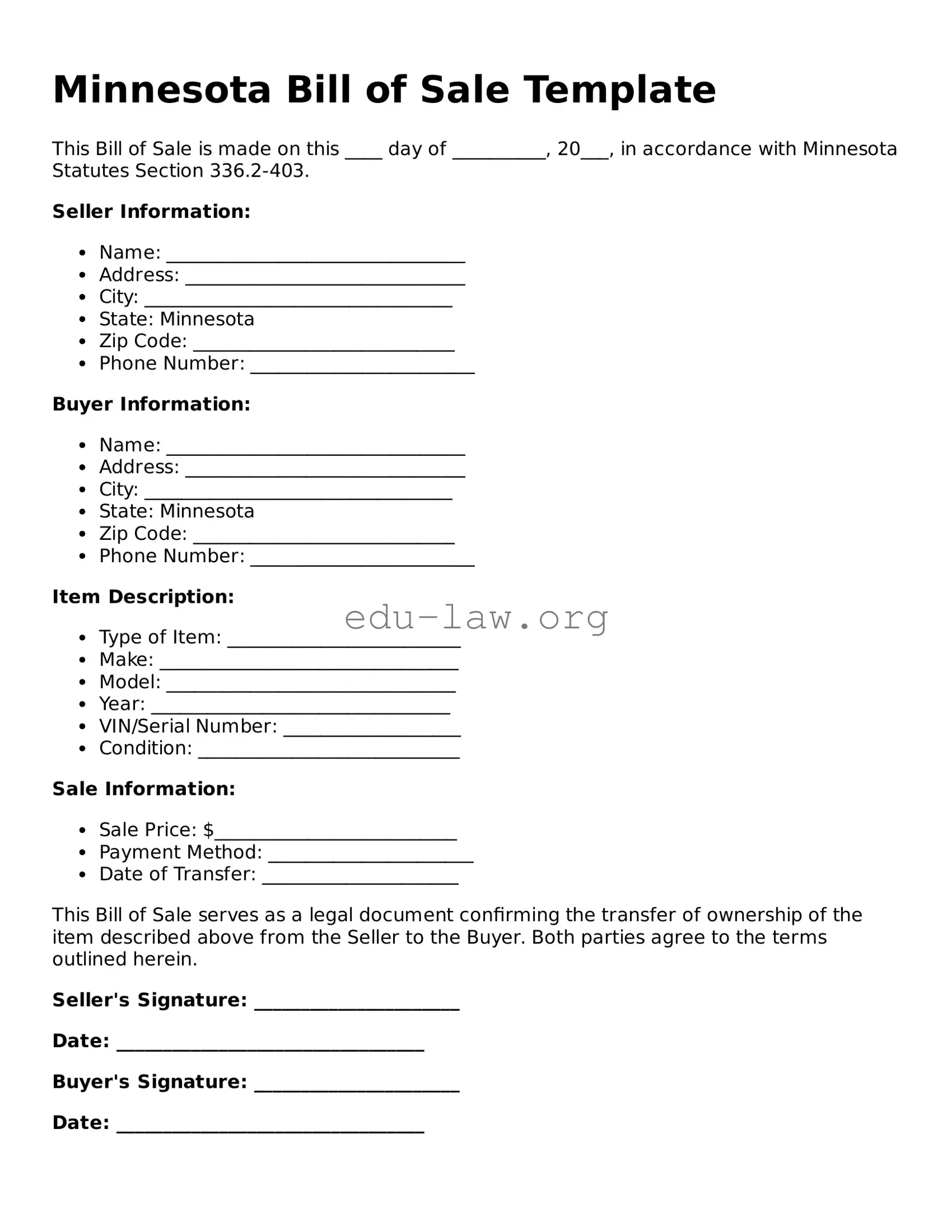
Minnesota Bill of Sale Template
This Bill of Sale is made on this ____ day of __________, 20___, in accordance with Minnesota Statutes Section 336.2-403.
Seller Information:
Buyer Information:
Item Description:
Sale Information:
This Bill of Sale serves as a legal document confirming the transfer of ownership of the item described above from the Seller to the Buyer. Both parties agree to the terms outlined herein.
Seller's Signature: ______________________
Date: _________________________________
Buyer's Signature: ______________________
Date: _________________________________
| Fact Name | Description |
|---|---|
| Definition | A Bill of Sale is a legal document that transfers ownership of personal property from one person to another. |
| Governing Law | The Minnesota Bill of Sale is governed by Minnesota Statutes, Chapter 336, which covers the Uniform Commercial Code. |
| Types of Property | This form can be used for various types of personal property, including vehicles, boats, and equipment. |
| Notarization | While notarization is not required for all Bill of Sale forms in Minnesota, it is recommended for added legal protection. |
| Transfer of Title | For vehicles, the Bill of Sale is often used in conjunction with the title transfer process to the new owner. |
| Purchase Price | The form typically includes the purchase price, which serves as proof of the transaction. |
| As-Is Condition | Buyers should be aware that many Bills of Sale include a clause stating the property is sold "as-is," limiting seller liability. |
| Signatures Required | Both the seller and buyer must sign the Bill of Sale for it to be valid, indicating their agreement to the terms. |
| Record Keeping | It is advisable for both parties to keep a copy of the Bill of Sale for their records, as it serves as proof of ownership. |
When preparing to complete the Minnesota Bill of Sale form, it's important to gather all necessary information and documents beforehand. This ensures a smooth process and helps avoid any potential errors. Once the form is filled out, it will serve as a record of the transaction between the buyer and seller, providing both parties with a clear understanding of the agreement.
What is a Minnesota Bill of Sale?
A Minnesota Bill of Sale is a legal document that records the transfer of ownership of personal property from one person to another. It serves as proof that a sale has occurred and outlines the details of the transaction, including the buyer and seller's information, a description of the item being sold, and the sale price. This document can be important for both parties in case of disputes or for future reference.
When do I need a Bill of Sale in Minnesota?
You typically need a Bill of Sale when you are buying or selling personal property, such as vehicles, boats, or other valuable items. While it may not be legally required for all transactions, having a Bill of Sale is highly recommended. It helps protect both the buyer and seller by providing a record of the transaction and can be useful for registration or titling purposes.
What information should be included in a Minnesota Bill of Sale?
A comprehensive Bill of Sale should include the following information: the full names and addresses of both the buyer and seller, a detailed description of the item being sold (including make, model, year, and VIN for vehicles), the sale price, and the date of the transaction. It’s also a good idea to include any warranties or conditions related to the sale.
Is a Bill of Sale required for vehicle sales in Minnesota?
Yes, a Bill of Sale is required for vehicle sales in Minnesota. It serves as proof of the transaction and is necessary for the buyer to register the vehicle in their name. The Minnesota Department of Public Safety recommends using a Bill of Sale to ensure that all pertinent information is documented and to protect both parties involved in the sale.
Do I need to have the Bill of Sale notarized?
In Minnesota, notarization of a Bill of Sale is not required, but it can add an extra layer of security to the document. Having the Bill of Sale notarized can help verify the identities of both parties and confirm that they willingly entered into the agreement. If you choose to have it notarized, make sure to sign the document in front of the notary.
Can I create my own Bill of Sale in Minnesota?
Yes, you can create your own Bill of Sale in Minnesota. There are no specific forms mandated by the state, but it is important to ensure that all necessary information is included. You can find templates online or draft one from scratch. Just make sure it is clear, complete, and accurately reflects the terms of the sale to avoid any misunderstandings later on.
Failing to provide accurate information about the buyer and seller. Ensure that names, addresses, and contact details are correct.
Not including a clear description of the item being sold. Details such as make, model, year, and condition are essential for clarity.
Leaving out the purchase price. This figure must be clearly stated to avoid disputes later.
Neglecting to sign the document. Both parties must sign the Bill of Sale for it to be valid.
Using incorrect dates. Ensure that the date of the transaction is accurate and clearly written.
Not keeping a copy of the Bill of Sale. Both the buyer and seller should retain a copy for their records.
When completing a transaction that involves the Minnesota Bill of Sale form, several other documents may be necessary to ensure a smooth process. Each of these documents serves a specific purpose, providing additional information or legal protections for both the buyer and the seller. Below is a list of commonly used forms and documents that often accompany the Bill of Sale.
Utilizing these documents alongside the Minnesota Bill of Sale can help facilitate a successful transaction while protecting the interests of both parties involved. Proper documentation minimizes the risk of misunderstandings and provides clarity throughout the sale process.
The Minnesota Bill of Sale form is similar to the Vehicle Bill of Sale. This document is specifically designed for the transfer of ownership of a vehicle from one party to another. It includes essential details such as the vehicle identification number (VIN), make, model, and year. Like the general Bill of Sale, it serves as proof of the transaction and can be used for registration purposes with the Department of Motor Vehicles (DMV).
Another document akin to the Minnesota Bill of Sale is the Personal Property Bill of Sale. This form is used for the sale of personal items, ranging from furniture to electronics. It outlines the buyer and seller's information and includes a description of the item being sold. Both documents provide a record of the transaction and help protect the rights of both parties involved.
The Real Estate Purchase Agreement shares similarities with the Bill of Sale in that it facilitates the transfer of property ownership. This document outlines the terms of the sale, including the purchase price, property description, and closing date. While the Bill of Sale typically applies to personal property, the Real Estate Purchase Agreement is specific to real property transactions.
In addition, the Equipment Bill of Sale serves a similar purpose for the sale of business or industrial equipment. It details the equipment's specifications, condition, and sale price. Both documents act as a formal record of the transaction, ensuring that both the buyer and seller have a clear understanding of the terms involved.
The Boat Bill of Sale is another document that mirrors the Minnesota Bill of Sale. It is used for the transfer of ownership of a boat or watercraft. This document includes information about the boat, such as its hull identification number (HIN), make, model, and year. Like the general Bill of Sale, it provides proof of ownership and is often required for registration with state authorities.
The Firearm Bill of Sale is also similar, as it documents the transfer of ownership of firearms. This document includes details about the firearm, such as its make, model, and serial number. Both the Firearm Bill of Sale and the Minnesota Bill of Sale serve as legal proof of the transaction, ensuring compliance with applicable laws.
The Lease Agreement is another document that bears similarities to the Bill of Sale. While it does not transfer ownership, it outlines the terms under which one party can use another's property. Both documents detail the rights and responsibilities of the involved parties, providing a clear understanding of the transaction.
The Gift Bill of Sale is also noteworthy. Although it typically does not involve a monetary exchange, this document records the transfer of ownership of an item as a gift. It ensures that both parties acknowledge the transfer, similar to how a standard Bill of Sale functions in a sale transaction.
Finally, the Promissory Note can be seen as related to the Bill of Sale when a buyer finances a purchase. This document outlines the terms of repayment for a loan used to buy an item. While it does not serve as a direct transfer of ownership, it complements the Bill of Sale by detailing the financial agreement between the buyer and seller.
When filling out the Minnesota Bill of Sale form, there are several important practices to follow. Adhering to these guidelines can help ensure the document is valid and serves its intended purpose.
Many people have misunderstandings about the Minnesota Bill of Sale form. Here are seven common misconceptions:
While many associate the Bill of Sale with vehicle transactions, it is also used for other items, such as furniture, electronics, and even livestock.
Notarization is not required for a Bill of Sale in Minnesota. However, having it notarized can add an extra layer of security and validation.
A Bill of Sale does not guarantee that the item is free from defects or issues. It simply documents the transaction between the buyer and seller.
Even for low-value items, having a Bill of Sale can protect both parties by providing proof of the transaction.
A verbal agreement is not sufficient. A written Bill of Sale is necessary to provide clear evidence of the sale.
While it is a useful record of the transaction, the enforceability of a Bill of Sale may depend on the circumstances surrounding the sale and local laws.
Buyers should also keep a copy of the Bill of Sale. It serves as proof of ownership and can be important for future reference.
Understanding these misconceptions can help ensure smoother transactions and protect the interests of both buyers and sellers.
Filling out and using the Minnesota Bill of Sale form involves several important considerations. Here are some key takeaways to keep in mind:
Understanding these points can help ensure a smooth transaction when using the Minnesota Bill of Sale form.