When renting a home in Michigan, having a clear and comprehensive Residential Lease Agreement is essential for both landlords and tenants. This document outlines the rights and responsibilities of each party, ensuring that everyone is on the same page. Key elements include the lease term, which specifies how long the rental agreement will last, and the rent amount, detailing when and how payments should be made. The form also addresses security deposits, which protect landlords against potential damages, and maintenance responsibilities, clarifying who is responsible for repairs. Additionally, it covers rules regarding pets, subleasing, and termination conditions, making it easier to navigate any disputes that may arise. Understanding these aspects helps create a positive rental experience, fostering a good relationship between landlords and tenants.
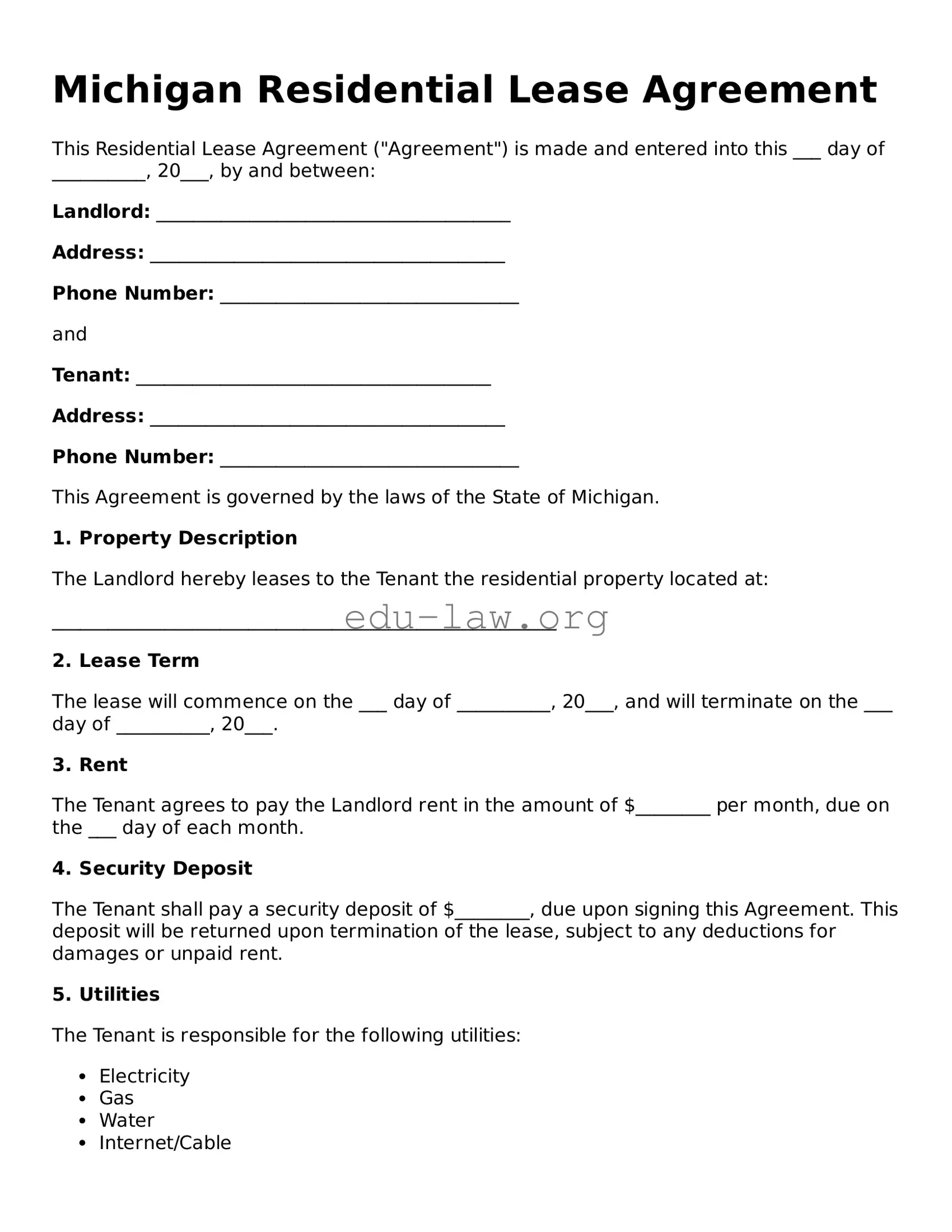
Michigan Residential Lease Agreement
This Residential Lease Agreement ("Agreement") is made and entered into this ___ day of __________, 20___, by and between:
Landlord: ______________________________________
Address: ______________________________________
Phone Number: ________________________________
and
Tenant: ______________________________________
Address: ______________________________________
Phone Number: ________________________________
This Agreement is governed by the laws of the State of Michigan.
1. Property Description
The Landlord hereby leases to the Tenant the residential property located at:
______________________________________________________
2. Lease Term
The lease will commence on the ___ day of __________, 20___, and will terminate on the ___ day of __________, 20___.
3. Rent
The Tenant agrees to pay the Landlord rent in the amount of $________ per month, due on the ___ day of each month.
4. Security Deposit
The Tenant shall pay a security deposit of $________, due upon signing this Agreement. This deposit will be returned upon termination of the lease, subject to any deductions for damages or unpaid rent.
5. Utilities
The Tenant is responsible for the following utilities:
6. Maintenance and Repairs
The Tenant agrees to keep the premises clean and in good condition. The Landlord will be responsible for major repairs unless damage is caused by the Tenant's negligence.
7. Pets
Pets are allowed / not allowed (circle one). If allowed, the Tenant agrees to pay a non-refundable pet deposit of $________.
8. Termination
Either party may terminate this Agreement by providing written notice at least ___ days prior to the intended termination date.
9. Governing Law
This Agreement shall be governed by the laws of the State of Michigan.
10. Signatures
By signing below, both parties agree to the terms of this Residential Lease Agreement.
Landlord Signature: ___________________________ Date: ____________
Tenant Signature: ____________________________ Date: ____________
| Fact Name | Description |
|---|---|
| Governing Law | The Michigan Residential Lease Agreement is governed by the Michigan Compiled Laws, particularly Act 348 of 1972. |
| Parties Involved | The agreement is between a landlord and a tenant. Both parties must be clearly identified in the lease. |
| Lease Duration | The lease can be for a fixed term or month-to-month. The duration must be specified in the agreement. |
| Security Deposit | Michigan law allows landlords to collect a security deposit, typically not exceeding one and a half months' rent. |
| Rent Payment | The lease must state the amount of rent due, payment methods, and due dates. |
| Maintenance Responsibilities | Responsibilities for maintenance and repairs should be outlined in the lease to avoid disputes. |
| Termination Notice | Both parties must provide written notice for termination. The notice period depends on the lease type. |
Filling out the Michigan Residential Lease Agreement form is an important step in securing a rental property. This form outlines the terms and conditions of the lease between the landlord and tenant. Follow these steps to ensure that you complete the form accurately and efficiently.
After completing the form, make sure to keep a copy for your records. Both parties should retain a signed copy for reference throughout the lease term.
What is a Michigan Residential Lease Agreement?
A Michigan Residential Lease Agreement is a legal document that outlines the terms and conditions between a landlord and tenant for renting residential property. This agreement specifies the duration of the lease, rental payment amounts, security deposits, maintenance responsibilities, and other essential rules. It protects the rights of both parties and ensures clarity in the rental arrangement.
What are the key components of a Michigan Residential Lease Agreement?
Key components of a Michigan Residential Lease Agreement include the names of the landlord and tenant, property address, lease duration, monthly rent amount, security deposit details, and maintenance responsibilities. Additionally, it may cover rules regarding pets, smoking, and alterations to the property. Each section is crucial for establishing expectations and responsibilities throughout the lease term.
How can a tenant terminate a Michigan Residential Lease Agreement?
To terminate a Michigan Residential Lease Agreement, a tenant typically must provide written notice to the landlord. The notice period often depends on the lease type; for month-to-month leases, a 30-day notice is standard. For fixed-term leases, termination may only occur at the end of the lease term unless otherwise stated in the agreement. It’s important to review the lease for specific termination clauses to ensure compliance.
What happens if a tenant violates the lease terms?
If a tenant violates the lease terms, the landlord may take several actions depending on the severity of the violation. Common responses include issuing a warning, demanding compliance, or initiating eviction proceedings. The lease should outline the process for addressing violations, including any grace periods or remedies available to the tenant. Understanding these terms can help both parties navigate potential disputes effectively.
Incomplete Information: One common mistake is failing to provide all required information. This includes missing names, addresses, or contact details of both the landlord and tenant. Ensure that every section is filled out completely to avoid confusion later.
Incorrect Dates: Another frequent error involves entering the wrong dates. This can include the lease start and end dates or the date the agreement is signed. Double-check all dates to ensure they align with your intended rental period.
Neglecting to Specify Terms: Some people overlook the importance of clearly defining terms such as rent amount, payment due dates, and security deposit details. Ambiguities in these areas can lead to disputes down the line. Be specific and clear in your descriptions.
Forgetting Signatures: A lease agreement is not valid without the necessary signatures. Failing to sign or having only one party sign can render the document unenforceable. Ensure that both the landlord and tenant sign and date the agreement before moving forward.
When entering into a rental agreement in Michigan, several additional forms and documents may be required or recommended to ensure clarity and compliance with local laws. These documents help protect both the landlord and the tenant, outlining specific terms and conditions related to the lease. Below is a list of common forms that are often used alongside the Michigan Residential Lease Agreement.
Having these documents in place can help facilitate a smooth landlord-tenant relationship and ensure that both parties understand their rights and obligations. Proper documentation can also mitigate potential disputes and provide a clear reference point throughout the lease term.
The Michigan Residential Lease Agreement is similar to a Commercial Lease Agreement. Both documents outline the terms under which a property is rented, including duration, rent amount, and responsibilities of both parties. However, while a residential lease typically pertains to living spaces, a commercial lease is designed for business premises. The complexities of commercial leases often include additional clauses related to business operations, zoning regulations, and maintenance responsibilities that differ from residential agreements.
Another document that shares similarities is the Month-to-Month Rental Agreement. Like the Residential Lease Agreement, this document establishes the terms of rental. However, a Month-to-Month Rental Agreement allows for greater flexibility, as it can be terminated with short notice by either party. This type of agreement is beneficial for tenants who may need to relocate quickly, while landlords can also adjust terms more frequently.
A sublease agreement is also comparable to the Michigan Residential Lease Agreement. This document allows a tenant to rent out their leased space to another individual. It requires the original tenant to remain responsible for the lease terms while also establishing a new relationship with the subtenant. The original lease terms often dictate whether subleasing is permitted and under what conditions.
The Lease Option Agreement shares similarities with the Residential Lease Agreement as well. This document gives the tenant the option to purchase the property after a specified period. It combines elements of leasing and purchasing, allowing tenants to live in the property while considering a future purchase. This agreement typically includes specific terms regarding the purchase price and timeframe for exercising the option.
A Roommate Agreement is another document that resembles the Residential Lease Agreement. This agreement is used when multiple tenants share a rental unit. It outlines each roommate's responsibilities, including rent payment, utility sharing, and common area maintenance. While it may not be a formal lease, it serves to clarify expectations among roommates, similar to how a lease clarifies terms between landlord and tenant.
The Rental Application form is also related to the Residential Lease Agreement. This document is typically completed by prospective tenants to provide landlords with information about their rental history, income, and background. While it does not establish the terms of the rental, it is an essential preliminary step that influences the eventual lease agreement. The information gathered helps landlords make informed decisions about potential tenants.
The Eviction Notice is another document that connects to the Residential Lease Agreement. If a tenant fails to comply with the lease terms, such as non-payment of rent, the landlord may issue an eviction notice. This document formally notifies the tenant of the breach and outlines the steps necessary to remedy the situation or vacate the property. It serves as a legal precursor to further action, such as filing for eviction in court.
Lastly, a Lease Renewal Agreement is similar in that it extends the terms of the original Residential Lease Agreement. This document is used when both parties agree to continue the lease for an additional term, often under the same conditions. It can also include modifications to the original lease terms, such as changes in rent or duration, reflecting the evolving needs of both the landlord and tenant.
When filling out the Michigan Residential Lease Agreement form, it’s essential to approach the task carefully. Here’s a helpful list of things to do and avoid:
Following these guidelines can help ensure that your lease agreement is clear, complete, and legally sound.
There are several misconceptions about the Michigan Residential Lease Agreement form that can lead to confusion for both landlords and tenants. Here are five common misunderstandings:
Many people believe that all lease agreements follow the same format and contain the same terms. In reality, each lease can be tailored to fit the specific needs of the landlord and tenant. It's important to read each agreement carefully.
Some tenants think that a verbal agreement is enough to secure their rental. However, having a written lease is crucial. It provides a clear record of the terms and can help prevent misunderstandings.
Many assume that landlords can alter the lease terms whenever they want. In truth, any changes to the lease must be agreed upon by both parties and documented in writing.
Some tenants believe that once they pay a security deposit, they will never see that money again. However, security deposits can be refunded, provided the property is returned in good condition and the lease terms are met.
It’s a common myth that tenants must handle all repairs. In Michigan, landlords are generally responsible for maintaining the property and ensuring it is safe and habitable.
When dealing with the Michigan Residential Lease Agreement form, it is essential to understand several key points. Here are the main takeaways:
By keeping these points in mind, both landlords and tenants can navigate the leasing process more effectively.