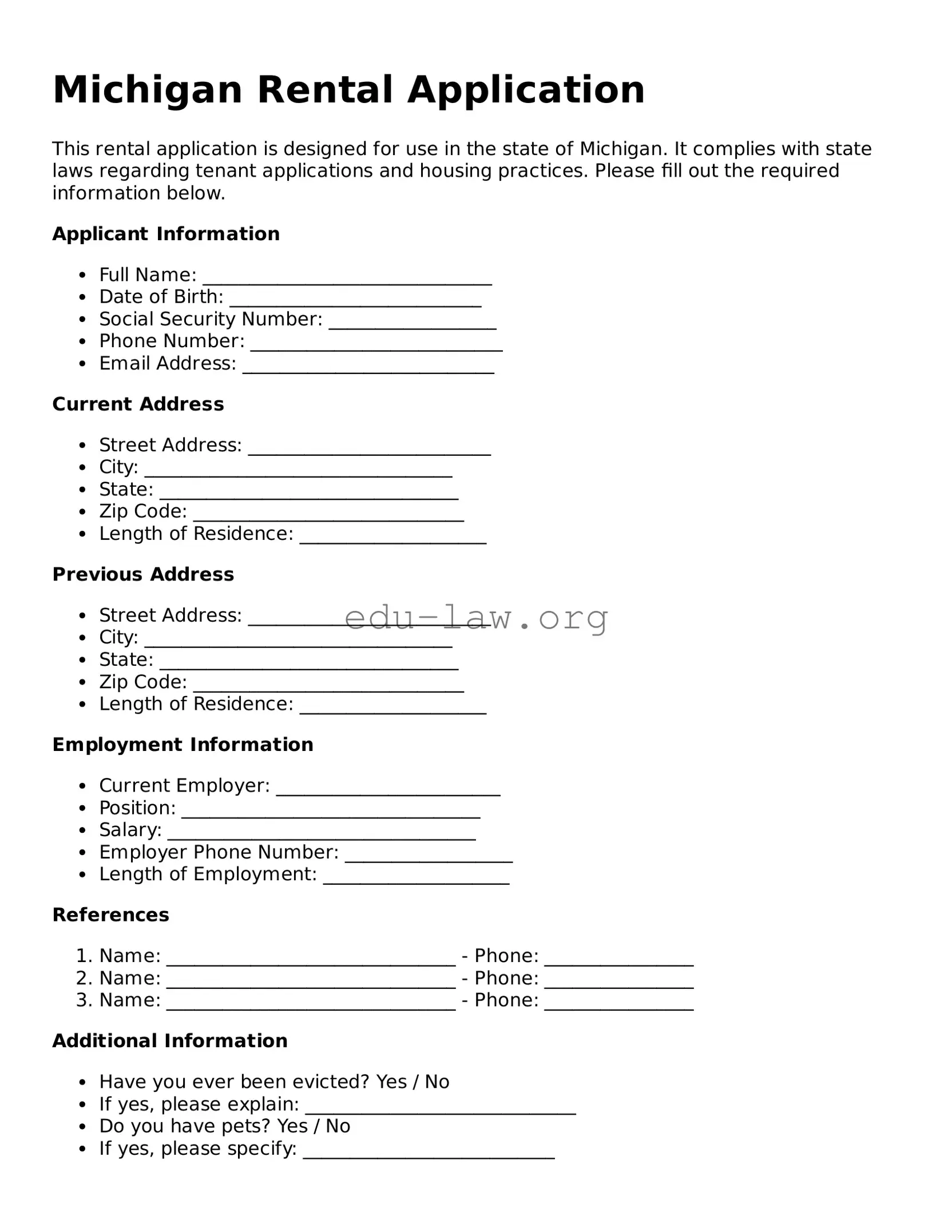
When seeking a rental property in Michigan, potential tenants encounter a crucial step: completing the rental application form. This form serves as a vital tool for both landlords and prospective renters, facilitating the screening process. It typically requires personal information, including the applicant's name, contact details, and social security number. Additionally, applicants must provide employment history and income verification to demonstrate their ability to pay rent. A section for rental history is also included, allowing landlords to assess previous tenancy experiences. Furthermore, the form often contains questions about credit history and criminal background, which help landlords evaluate the reliability and suitability of the applicant. By understanding the components of the Michigan Rental Application form, renters can prepare effectively and landlords can make informed decisions, ultimately fostering a smoother rental experience for all parties involved.
Michigan Rental Application
This rental application is designed for use in the state of Michigan. It complies with state laws regarding tenant applications and housing practices. Please fill out the required information below.
Applicant Information
Current Address
Previous Address
Employment Information
References
Additional Information
By signing below, you certify that the information provided is accurate to the best of your knowledge.
Applicant Signature: ____________________________
Date: ________________________________________
| Fact Name | Details |
|---|---|
| Purpose | The Michigan Rental Application form is used by landlords to screen potential tenants. |
| Legal Requirement | There are no state-mandated forms, but landlords must comply with fair housing laws. |
| Information Collected | The application typically requests personal information, rental history, and employment details. |
| Application Fee | Landlords may charge an application fee, but it must be reasonable and non-refundable. |
| Fair Housing Compliance | Landlords must adhere to the Fair Housing Act, which prohibits discrimination based on protected classes. |
| Background Checks | Landlords often conduct background checks, including credit history and criminal records. |
| Tenant Rights | Applicants have the right to know if their application is denied and the reason for denial. |
| Privacy Protection | Landlords must protect applicants' personal information and handle it confidentially. |
| State-Specific Regulations | Michigan law requires landlords to provide a written notice if they reject an application. |
Completing the Michigan Rental Application form is an essential step in securing a rental property. After filling out the application, you will typically submit it to the landlord or property manager, who will review your information to determine your eligibility as a tenant. It's important to ensure that all information is accurate and complete to facilitate a smooth application process.
What is a Michigan Rental Application form?
The Michigan Rental Application form is a document used by landlords and property managers to collect information from prospective tenants. This form typically includes personal details, rental history, employment information, and references. It helps landlords assess whether a potential tenant is a suitable fit for their rental property.
What information is typically required on the application?
Generally, the application will ask for your full name, contact information, social security number, and date of birth. You may also need to provide details about your employment, income, rental history, and references. Some applications might request consent for a background check or credit report.
Is there a fee associated with the rental application?
Many landlords charge a non-refundable application fee to cover the costs of processing the application. This fee can vary widely, so it’s important to ask the landlord or property manager about the amount and what it covers before submitting your application.
How long does it take to process a rental application?
The processing time for a rental application can differ based on the landlord or property management company. Typically, it can take anywhere from a few hours to several days. Factors that can affect this timeline include the thoroughness of the background checks and the responsiveness of your references.
What happens if my application is denied?
If your application is denied, the landlord is generally required to provide a reason. Common reasons for denial include insufficient income, poor rental history, or negative background check results. You have the right to ask for clarification and, in some cases, may be able to appeal the decision.
Can I apply for multiple rental properties using the same application?
Usually, each rental property will require its own application. This is because landlords want to evaluate each prospective tenant based on their specific criteria and the unique circumstances of the property. However, some property management companies may allow you to apply for multiple units with one application, so it’s best to check their policy.
Do I need to provide documentation with my application?
Yes, most landlords will ask for supporting documentation along with your application. This may include proof of income, such as pay stubs or bank statements, a copy of your ID, and sometimes references from previous landlords or employers. Providing complete documentation can help speed up the application process.
What should I do if I have a poor rental history?
If you have a poor rental history, it’s important to be honest on your application. You might also consider including a letter of explanation outlining any extenuating circumstances that contributed to your rental issues. Additionally, having a co-signer or providing a larger security deposit may help strengthen your application.
Can I withdraw my application after submitting it?
Yes, you can usually withdraw your application after submission. However, if you have paid an application fee, it may not be refundable. It’s best to communicate your decision to the landlord or property manager as soon as possible to avoid any misunderstandings.
Failing to provide complete personal information. Applicants often skip sections or leave fields blank, which can lead to delays or rejections.
Not disclosing all income sources. Some applicants only list their primary job, neglecting to include additional income, such as side jobs or rental income.
Overlooking previous rental history. It is essential to provide accurate information about past residences. Missing this can raise red flags for landlords.
Providing inaccurate references. Listing friends or family instead of professional references can undermine credibility.
Neglecting to review credit history. Applicants should check their credit reports for errors that could negatively impact their application.
Ignoring the application fee. Some applicants forget to include the required fee, which can result in an incomplete application.
Failing to sign and date the application. An unsigned application may not be considered valid by landlords.
Not being honest about past evictions. Omitting this information can lead to immediate disqualification if discovered later.
Rushing through the application. Taking the time to carefully fill out the form can prevent mistakes and improve the chances of approval.
When applying for a rental property in Michigan, the Rental Application form is often accompanied by several other important documents. Each of these forms serves a specific purpose and helps landlords assess potential tenants more effectively. Here is a list of commonly used documents alongside the Michigan Rental Application form:
Each of these documents plays a crucial role in the rental application process. By providing comprehensive information, applicants can improve their chances of securing a rental property while landlords can make informed decisions about potential tenants.
The Michigan Rental Application form shares similarities with the standard Lease Agreement. Both documents are essential in the rental process, serving to outline the terms and conditions of the rental arrangement. While the Rental Application focuses on gathering information about potential tenants, the Lease Agreement formalizes the relationship between the landlord and tenant, detailing rent amounts, duration of the lease, and responsibilities of both parties. Each document plays a critical role in ensuring a clear understanding of expectations and obligations.
Another document akin to the Michigan Rental Application is the Tenant Screening Report. This report is often generated after a rental application is submitted and includes background checks, credit history, and rental history. Like the Rental Application, it aims to provide landlords with a comprehensive view of a prospective tenant’s reliability. Both documents work together to help landlords make informed decisions about who to rent to.
The Employment Verification form is also similar to the Michigan Rental Application. This document is used to confirm a tenant's employment status and income, which is crucial for landlords assessing a tenant's ability to pay rent. While the Rental Application collects this information directly from the tenant, the Employment Verification form serves as an independent source to validate the claims made in the application.
The Background Check Authorization form parallels the Rental Application in that it seeks permission from the tenant to conduct background checks. Both documents are vital for landlords to ensure safety and security in their rental properties. While the Rental Application collects personal information, the Background Check Authorization form specifically focuses on obtaining consent for further investigation into the tenant's history.
The Guarantor Agreement is another document that relates closely to the Michigan Rental Application. This agreement is often required when a tenant does not meet certain financial criteria, such as income or credit score. Similar to the Rental Application, it requires detailed information about the guarantor, who agrees to take on financial responsibility if the tenant defaults on payments. Both documents are instrumental in providing landlords with additional security in their rental arrangements.
The Move-In Checklist is also comparable to the Michigan Rental Application. While the Rental Application assesses the tenant's qualifications, the Move-In Checklist is used after acceptance to document the condition of the rental unit before the tenant moves in. Both documents aim to protect the interests of landlords and tenants by establishing clear expectations regarding the property’s condition and any potential damages.
Lastly, the Rental Agreement Addendum is similar to the Michigan Rental Application in that it can modify or clarify terms set forth in the original Lease Agreement. While the Rental Application collects essential tenant information, the Addendum can address specific circumstances, such as pet policies or maintenance responsibilities. Both documents are crucial for creating a comprehensive understanding of the rental terms and ensuring all parties are on the same page.
When filling out the Michigan Rental Application form, it’s important to follow certain guidelines to ensure your application is complete and increases your chances of approval. Here are six essential do's and don'ts to consider:
By adhering to these guidelines, applicants can present themselves in the best possible light and streamline the rental application process.
Many people have misunderstandings about the Michigan Rental Application form. Here are ten common misconceptions, along with clarifications to help you navigate the process more effectively.
This is not true. Each landlord or property management company may have their own specific application form, which can vary in terms of information requested and requirements.
While many landlords charge an application fee, not all do. Some may waive the fee, especially if you are a strong candidate.
Landlords often look at various factors, including rental history, income, and references, not just credit scores.
In some cases, you may be able to update or correct information if you contact the landlord or property manager promptly.
Landlords have the right to deny applications based on their criteria. Acceptance is not guaranteed.
Groups, such as families or roommates, can also apply together, and they may be required to fill out separate applications.
While landlords should protect your personal information, they may share it with credit agencies or other relevant parties during the screening process.
Submitting false information can lead to immediate denial of your application or eviction later on. Honesty is crucial.
Applications can also be required for short-term rentals or vacation properties, depending on the landlord's policies.
Submitting an application does not bind you to rent the property. You can withdraw your application before signing a lease.
Understanding these misconceptions can help you approach the rental application process with more confidence and clarity.
When navigating the Michigan Rental Application form, there are several important aspects to consider. Understanding these key takeaways can streamline the process and help ensure that you present yourself as a strong candidate for your desired rental property.
By keeping these key points in mind, prospective tenants can enhance their chances of securing a rental property in Michigan. A well-prepared application not only reflects your seriousness but also demonstrates your respect for the landlord's time and requirements.