When embarking on a commercial venture in Michigan, one of the most critical steps is securing a suitable space through a Commercial Lease Agreement. This document serves as the foundation for the landlord-tenant relationship, outlining the terms under which a business can occupy and utilize a property. Key aspects of the agreement include the duration of the lease, the amount of rent, and the specific responsibilities of both parties. Additionally, it addresses provisions for maintenance, utilities, and modifications to the premises, ensuring clarity on who is accountable for what. The agreement also typically includes terms related to security deposits, renewal options, and conditions for termination, which are essential for protecting the interests of both landlords and tenants. Understanding these elements is vital for anyone looking to navigate the commercial real estate landscape in Michigan successfully.
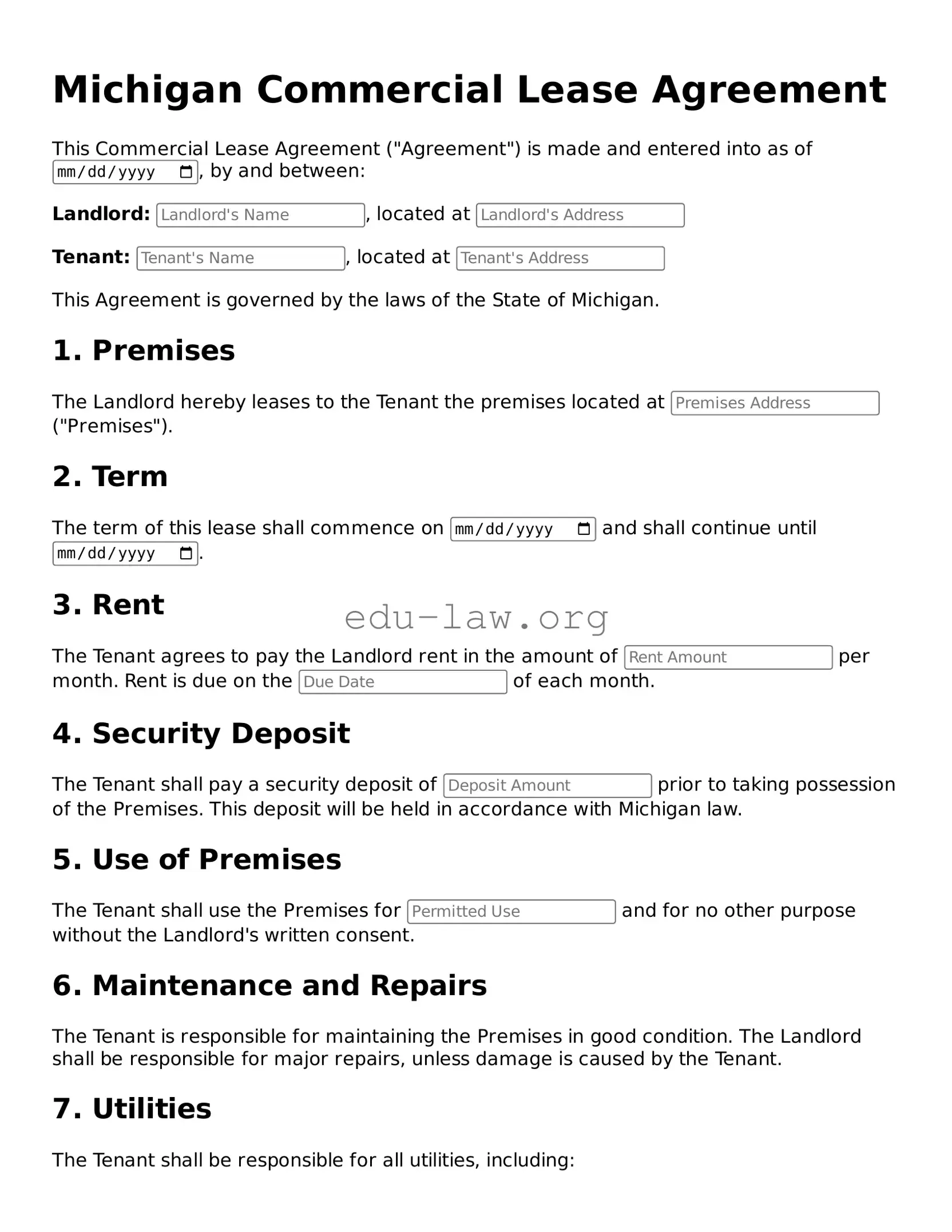
Michigan Commercial Lease Agreement
This Commercial Lease Agreement ("Agreement") is made and entered into as of , by and between:
Landlord: , located at
Tenant: , located at
This Agreement is governed by the laws of the State of Michigan.
1. Premises
The Landlord hereby leases to the Tenant the premises located at ("Premises").
2. Term
The term of this lease shall commence on and shall continue until .
3. Rent
The Tenant agrees to pay the Landlord rent in the amount of per month. Rent is due on the of each month.
4. Security Deposit
The Tenant shall pay a security deposit of prior to taking possession of the Premises. This deposit will be held in accordance with Michigan law.
5. Use of Premises
The Tenant shall use the Premises for and for no other purpose without the Landlord's written consent.
6. Maintenance and Repairs
The Tenant is responsible for maintaining the Premises in good condition. The Landlord shall be responsible for major repairs, unless damage is caused by the Tenant.
7. Utilities
The Tenant shall be responsible for all utilities, including:
8. Alterations
The Tenant shall not make any alterations to the Premises without the Landlord's prior written consent.
9. Termination
Either party may terminate this Agreement by providing days' written notice to the other party.
10. Governing Law
This Agreement shall be governed by and construed in accordance with the laws of the State of Michigan.
IN WITNESS WHEREOF, the parties hereto have executed this Commercial Lease Agreement as of the date first above written.
Landlord Signature: _______________________ Date: ___________
Tenant Signature: ________________________ Date: ___________
| Fact Name | Description |
|---|---|
| Governing Law | The Michigan Commercial Lease Agreement is governed by the laws of the State of Michigan. |
| Parties Involved | The agreement involves at least two parties: the landlord (lessor) and the tenant (lessee). |
| Lease Duration | The lease can specify a fixed term, which can range from months to several years, depending on the agreement. |
| Rent Payment Terms | Details regarding the amount of rent, payment schedule, and acceptable payment methods must be clearly outlined. |
| Security Deposit | The agreement may require a security deposit, which typically protects the landlord against damages or unpaid rent. |
| Maintenance Responsibilities | Responsibilities for property maintenance and repairs should be defined, indicating whether the landlord or tenant is responsible. |
| Termination Clauses | Conditions under which the lease can be terminated by either party must be included, ensuring clarity on notice periods. |
Filling out the Michigan Commercial Lease Agreement form is a straightforward process that requires attention to detail. Each section of the form must be completed accurately to ensure that both parties understand their rights and obligations. Follow these steps carefully to ensure a smooth completion.
Once you have completed the form, review it carefully to ensure all information is accurate and complete. Both parties should keep a signed copy for their records. This step helps avoid misunderstandings in the future.
What is a Michigan Commercial Lease Agreement?
A Michigan Commercial Lease Agreement is a legal document that outlines the terms and conditions under which a landlord rents commercial property to a tenant. It specifies the rights and responsibilities of both parties, including rent payments, maintenance obligations, and lease duration.
Who typically uses a Commercial Lease Agreement?
This agreement is commonly used by business owners seeking to lease space for their operations. Landlords who own commercial properties, such as retail spaces, office buildings, or warehouses, also utilize this document to formalize the rental arrangement.
What are the essential components of a Commercial Lease Agreement?
Key components include the names of the parties involved, the property address, lease term, rent amount, payment schedule, security deposit details, maintenance responsibilities, and terms for renewal or termination. It may also cover permitted uses of the property and restrictions on alterations.
How long does a typical commercial lease last?
The duration of a commercial lease can vary significantly. Common terms range from one to five years, but longer leases are not unusual. The specific length should be negotiated between the landlord and tenant based on their needs.
Can a tenant make changes to the leased property?
Generally, tenants must obtain the landlord's permission before making any alterations to the property. The lease agreement should outline what types of changes are allowed and the process for obtaining approval.
What happens if a tenant fails to pay rent?
If a tenant fails to pay rent, the landlord has the right to take action based on the lease terms. This may include charging late fees, initiating eviction proceedings, or seeking legal remedies to recover unpaid rent. The lease should specify the consequences of non-payment.
Is a security deposit required?
Most commercial leases require a security deposit. This deposit serves as a financial safeguard for the landlord against potential damages or unpaid rent. The amount and terms for returning the deposit should be clearly outlined in the lease agreement.
Can a lease be terminated early?
Early termination of a lease is possible but typically requires mutual agreement between the landlord and tenant. The lease may include specific provisions for early termination, including any penalties or notice requirements that must be followed.
What should a tenant do before signing a lease?
Before signing a lease, tenants should carefully review the terms and conditions. Consulting with a legal expert can provide clarity on obligations and rights. It is also wise to conduct due diligence on the property and the landlord’s reputation.
Are there any local regulations affecting commercial leases in Michigan?
Yes, local regulations may impact commercial leases in Michigan. These can include zoning laws, building codes, and health regulations. It is essential for both landlords and tenants to be aware of these local laws to ensure compliance.
Incomplete Tenant Information: Many individuals fail to provide all necessary details about the tenant, such as full legal names and contact information. This can lead to confusion and complications down the line.
Incorrect Property Description: A common mistake is not accurately describing the leased property. This includes omitting the correct address or failing to specify the exact space being rented, which can cause disputes later.
Missing Lease Terms: Some individuals overlook critical lease terms, such as the duration of the lease, renewal options, and rent payment schedules. These omissions can create misunderstandings between landlords and tenants.
Neglecting to Specify Maintenance Responsibilities: Not clearly outlining who is responsible for property maintenance can lead to disagreements. Both parties should understand their obligations to avoid potential conflicts.
Ignoring Local Laws and Regulations: Failing to consider local laws that may impact the lease can result in legal issues. It is essential to ensure that the lease complies with all applicable regulations in Michigan.
When entering into a commercial lease agreement in Michigan, it is essential to be aware of various supporting documents that may accompany the lease. These documents help clarify terms, outline responsibilities, and protect the interests of both the landlord and tenant. Below is a list of commonly used forms and documents that may be necessary during this process.
Understanding these documents can facilitate a smoother leasing process and help both landlords and tenants navigate their responsibilities effectively. It is advisable to review each document carefully and seek legal guidance if necessary to ensure that all parties' rights and obligations are clearly defined.
The Michigan Commercial Lease Agreement is similar to a Residential Lease Agreement, though the two serve different types of properties. A Residential Lease Agreement outlines the terms under which a landlord allows a tenant to occupy a residential property, such as an apartment or house. Both documents specify the duration of the lease, the rental amount, and the responsibilities of both parties. However, the Commercial Lease Agreement typically includes clauses that address business-related considerations, such as zoning laws and business operations, which are not usually present in residential leases.
Another document that bears resemblance to the Michigan Commercial Lease Agreement is the Sublease Agreement. A Sublease Agreement allows a tenant to lease a portion or all of the rented space to another party. Similar to a commercial lease, it outlines the terms of occupancy, rent, and responsibilities of the original tenant and subtenant. Both agreements require the landlord's approval for the sublease, ensuring that the original tenant remains accountable for the lease terms.
The Michigan Commercial Lease Agreement also shares similarities with a Letter of Intent (LOI). An LOI is often used in commercial real estate transactions to outline the basic terms of a lease before a formal agreement is drafted. Both documents address key points such as rental rates, lease duration, and property use. However, while the LOI serves as a preliminary outline, the Commercial Lease Agreement is a binding contract that formalizes the relationship between landlord and tenant.
A Purchase and Sale Agreement is another document that is comparable to the Michigan Commercial Lease Agreement. This agreement outlines the terms under which one party agrees to buy property from another. Both documents require detailed descriptions of the property, terms of payment, and conditions of the agreement. However, the primary difference lies in the intent; the Commercial Lease Agreement is focused on leasing a property for business use, while the Purchase and Sale Agreement involves the transfer of ownership.
Finally, the Michigan Commercial Lease Agreement is similar to a Property Management Agreement. This document outlines the responsibilities of a property management company in managing a commercial property on behalf of the owner. Both agreements detail obligations regarding maintenance, rent collection, and tenant relations. However, while the Commercial Lease Agreement focuses on the relationship between landlord and tenant, the Property Management Agreement centers on the relationship between the property owner and the management company.
When filling out the Michigan Commercial Lease Agreement form, it’s important to be careful and thorough. Here are some key points to consider:
By following these guidelines, you can help ensure that the lease agreement is filled out correctly and protects your interests.
Understanding the Michigan Commercial Lease Agreement form can be challenging. Here are nine common misconceptions that people often have about this important document:
Many believe that all commercial leases follow a standard template. In reality, each lease can be tailored to fit the specific needs of the landlord and tenant.
Some think that only the landlord's signature is necessary for the lease to be valid. However, both parties must sign to create a binding agreement.
While verbal agreements may seem convenient, they are not legally enforceable in most cases. A written lease provides clarity and protection for both parties.
While many terms can be negotiated, some aspects, like local laws and regulations, may be non-negotiable. Understanding these limits is crucial.
Some tenants believe that security deposits are not required. In Michigan, landlords often require them to cover potential damages or unpaid rent.
Many assume that once signed, a lease lasts indefinitely. Most commercial leases have a specific term and must be renewed or renegotiated after expiration.
Some think that the lease only addresses rent payments. In fact, it typically includes details about maintenance, utilities, and other responsibilities.
Many overlook the importance of termination clauses. These clauses outline how either party can end the lease and protect their interests.
Some believe they can navigate the lease process without professional help. Consulting a legal expert can prevent misunderstandings and costly mistakes.
Filling out and using the Michigan Commercial Lease Agreement form can be a straightforward process if you keep a few essential points in mind. Here are some key takeaways to ensure you navigate this form effectively:
By keeping these points in mind, you can fill out the Michigan Commercial Lease Agreement form with confidence and clarity. This proactive approach can lead to a smoother leasing experience for both parties involved.