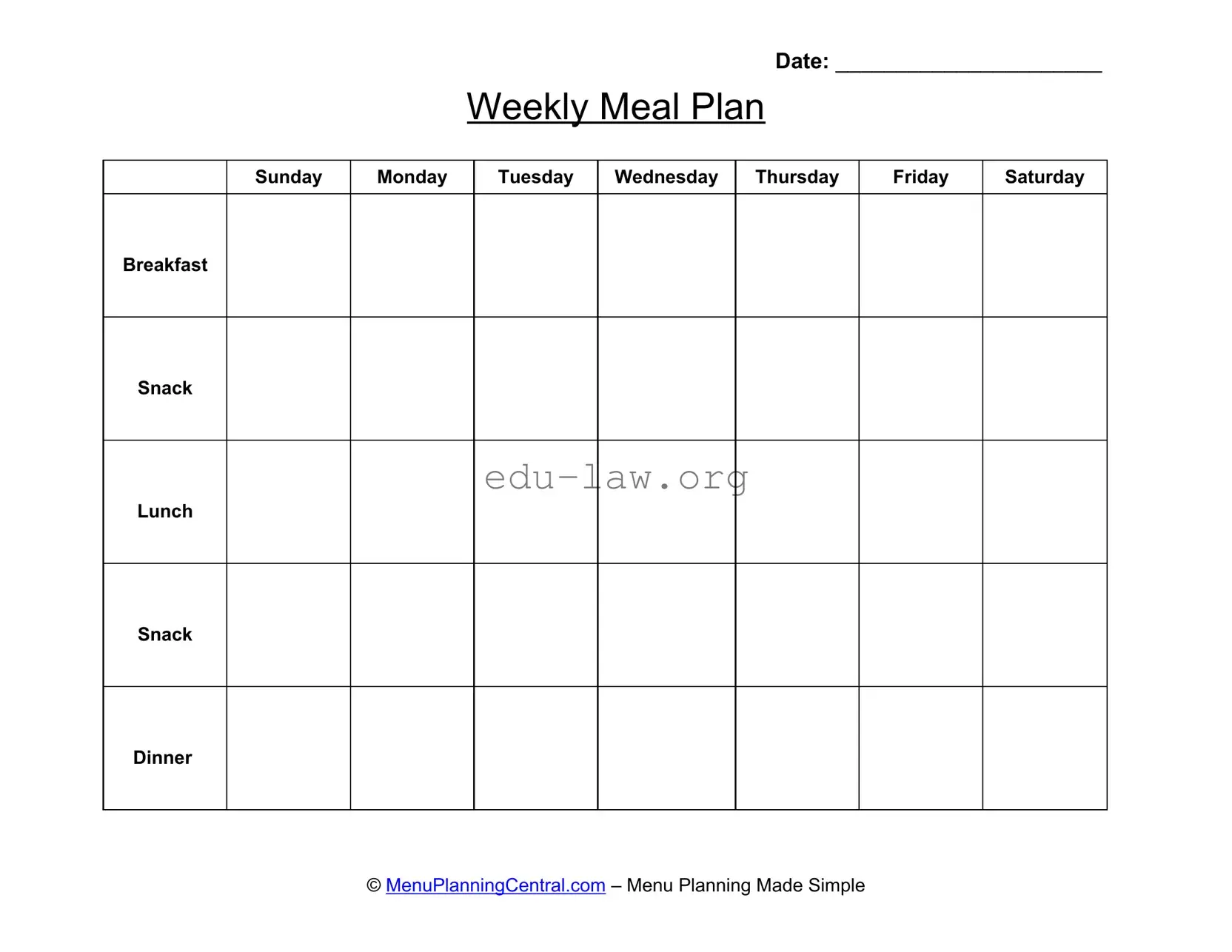
The Menu Planner form serves as a helpful tool for organizing weekly meals, ensuring that individuals and families can plan their dining experiences with ease. This form includes sections for each day of the week, allowing users to outline their breakfast, lunch, dinner, and snack options. By filling in the designated spaces for Sunday through Saturday, users can visualize their meal choices and make informed decisions about nutrition and variety. The form emphasizes simplicity in meal planning, making it accessible for everyone, regardless of cooking experience. With a clear layout, it promotes thoughtful preparation and encourages a balanced diet. Whether for busy families or individuals looking to streamline their cooking routine, the Menu Planner form offers a straightforward approach to meal organization.
Date: ______________________
Weekly Meal Plan
Sunday
Monday
Tuesday
Wednesday
Thursday
Friday
Saturday
Breakfast
Snack
Lunch
Snack
Dinner
©MenuPlanningCentral.com – Menu Planning Made Simple
| Fact Name | Details |
|---|---|
| Date | The form requires users to enter the specific date for which the meal plan is being created. |
| Weekly Meal Plan | The form is designed to facilitate the planning of meals over a week, from Sunday to Saturday. |
| Daily Sections | Each day of the week has designated spaces for breakfast, snacks, lunch, and dinner. |
| Meal Categories | The form categorizes meals into breakfast, snacks, lunch, and dinner, promoting balanced meal planning. |
| Flexibility | Users can customize their meal plans according to dietary preferences and nutritional needs. |
| Visual Organization | The layout of the form allows for easy visualization of the weekly meal plan at a glance. |
| Menu Planning Made Simple | This phrase emphasizes the goal of the form: to simplify the meal planning process for users. |
| State-Specific Forms | Some states may have specific versions of the form governed by local health and nutrition laws. |
| Governing Laws | In states where specific meal planning forms are required, laws may include regulations on nutrition standards and dietary guidelines. |
Once you have the Menu Planner form in front of you, you can begin organizing your meals for the week. This structured approach will help you ensure that your dietary needs are met while also making meal preparation more efficient. Follow the steps below to complete the form accurately.
Once you have filled out each section for the week, you will have a comprehensive meal plan ready to guide your cooking and grocery shopping.
What is the Menu Planner form used for?
The Menu Planner form is designed to help individuals and families organize their weekly meals. By filling out this form, you can plan your breakfasts, lunches, dinners, and snacks for each day of the week. This helps streamline grocery shopping and ensures that meals are balanced and nutritious.
How do I fill out the Menu Planner form?
To fill out the Menu Planner form, start by writing the date at the top. Then, for each day of the week, fill in the meals for breakfast, lunch, dinner, and snacks. Consider your dietary preferences and any special occasions during the week. This organized approach can make meal preparation easier and more efficient.
Can I customize the Menu Planner form?
Yes, the Menu Planner form is flexible and can be customized to fit your needs. You can add additional sections if you want to include snacks or beverages. Feel free to adjust the layout to better suit your family’s meal planning habits.
Is the Menu Planner form suitable for special diets?
Absolutely. The Menu Planner form can be adapted for various dietary needs, including vegetarian, vegan, gluten-free, or any other specific requirements. By planning your meals in advance, you can ensure that all dietary restrictions are met while still enjoying a variety of foods.
How can the Menu Planner form help with grocery shopping?
Using the Menu Planner form can significantly simplify your grocery shopping. Once you have planned your meals for the week, you can create a shopping list based on the ingredients needed for those meals. This not only saves time but also helps reduce food waste by ensuring you buy only what you need.
Can I use the Menu Planner form for meal prep?
Yes, the Menu Planner form is an excellent tool for meal prep. By planning your meals in advance, you can set aside time to prepare multiple meals at once. This can save you time during the week and make it easier to stick to your meal plan.
Where can I find the Menu Planner form?
The Menu Planner form is typically available through various online resources, including meal planning websites and printable form repositories. You may also find it in local community centers or libraries. Ensure that you have the most updated version for the best results.
Neglecting the Date: Many individuals forget to fill in the date at the top of the form. This can lead to confusion about when the meal plan is applicable.
Skipping Meals: Some users fail to plan for every meal, leaving blank spaces for breakfast, lunch, or dinner. Each meal should be accounted for to ensure balanced nutrition throughout the week.
Inconsistent Meal Choices: People often repeat the same meals without considering variety. This can lead to boredom and a lack of nutritional balance.
Overlooking Snacks: Snacks are an important part of a meal plan, yet many forget to include them. Planning for snacks helps maintain energy levels throughout the day.
Ignoring Dietary Restrictions: Failing to take into account any dietary restrictions or allergies can pose health risks. Always consider personal needs when planning meals.
Not Considering Preparation Time: Some individuals do not factor in how long it takes to prepare certain meals. This can lead to frustration and last-minute changes.
Inadequate Ingredient List: A common mistake is not writing down all necessary ingredients. Without a complete list, grocery shopping becomes challenging.
Failing to Plan for Leftovers: Some people forget to include meals that utilize leftovers. This can waste food and resources.
Not Reviewing the Plan: After completing the form, individuals often skip the review process. A quick check can help catch any errors or omissions before the week begins.
The Menu Planner form serves as a valuable tool for organizing meals throughout the week. However, several other documents complement this form, enhancing the meal planning process and ensuring a smooth operation. Below is a list of commonly used forms and documents that work well alongside the Menu Planner form.
Using these documents in conjunction with the Menu Planner form can lead to a more organized and efficient meal planning experience. They provide structure and clarity, making it easier to enjoy home-cooked meals while accommodating individual preferences and dietary needs.
The Menu Planner form shares similarities with the Meal Preparation Checklist. Both documents serve as tools to organize meals effectively. The Meal Preparation Checklist typically outlines ingredients, cooking times, and necessary equipment for each meal. Like the Menu Planner, it encourages individuals to think ahead about their meals, ensuring that all necessary components are ready and available. This proactive approach helps streamline the cooking process and reduces last-minute stress.
Another document that resembles the Menu Planner is the Grocery List. A Grocery List is essential for ensuring that all ingredients are purchased before meal preparation begins. Similar to the Menu Planner, it is organized by meal and includes sections for breakfast, lunch, dinner, and snacks. This alignment allows users to correlate their meal planning with shopping needs, making the process more efficient and cost-effective.
The Weekly Meal Schedule is another comparable document. It outlines meals for each day of the week, similar to the Menu Planner's daily breakdown. While the Menu Planner focuses on specific meals, the Weekly Meal Schedule emphasizes the timing and frequency of meals. Both documents help individuals maintain a balanced diet and ensure that they are consuming a variety of foods throughout the week.
Additionally, the Recipe Organizer shares common features with the Menu Planner. A Recipe Organizer categorizes different recipes by meal type, allowing users to select meals based on their preferences or dietary restrictions. Like the Menu Planner, it provides a structured approach to meal selection, ensuring that users can easily find and prepare dishes that fit their planned meals.
Lastly, the Nutrition Tracker is akin to the Menu Planner in its goal of promoting healthy eating habits. While the Menu Planner focuses on meal organization, the Nutrition Tracker monitors the nutritional content of meals consumed. Both documents encourage individuals to be mindful of their food choices, helping them to achieve their health goals through careful planning and awareness.
When filling out the Menu Planner form, it's important to keep a few key points in mind. Here’s a list of things you should and shouldn't do:
By following these guidelines, you can create a well-organized and effective meal plan that meets everyone's needs.
Understanding the Menu Planner form is essential for effective meal planning. However, several misconceptions often arise. Here are eight common misunderstandings:
By addressing these misconceptions, you can make the most out of your Menu Planner form and enjoy a more organized approach to meal preparation.
Using the Menu Planner form can streamline your meal preparation and help you stay organized throughout the week. Here are some key takeaways to keep in mind:
By utilizing the Menu Planner effectively, you can make meal preparation simpler and more enjoyable. Start planning today!