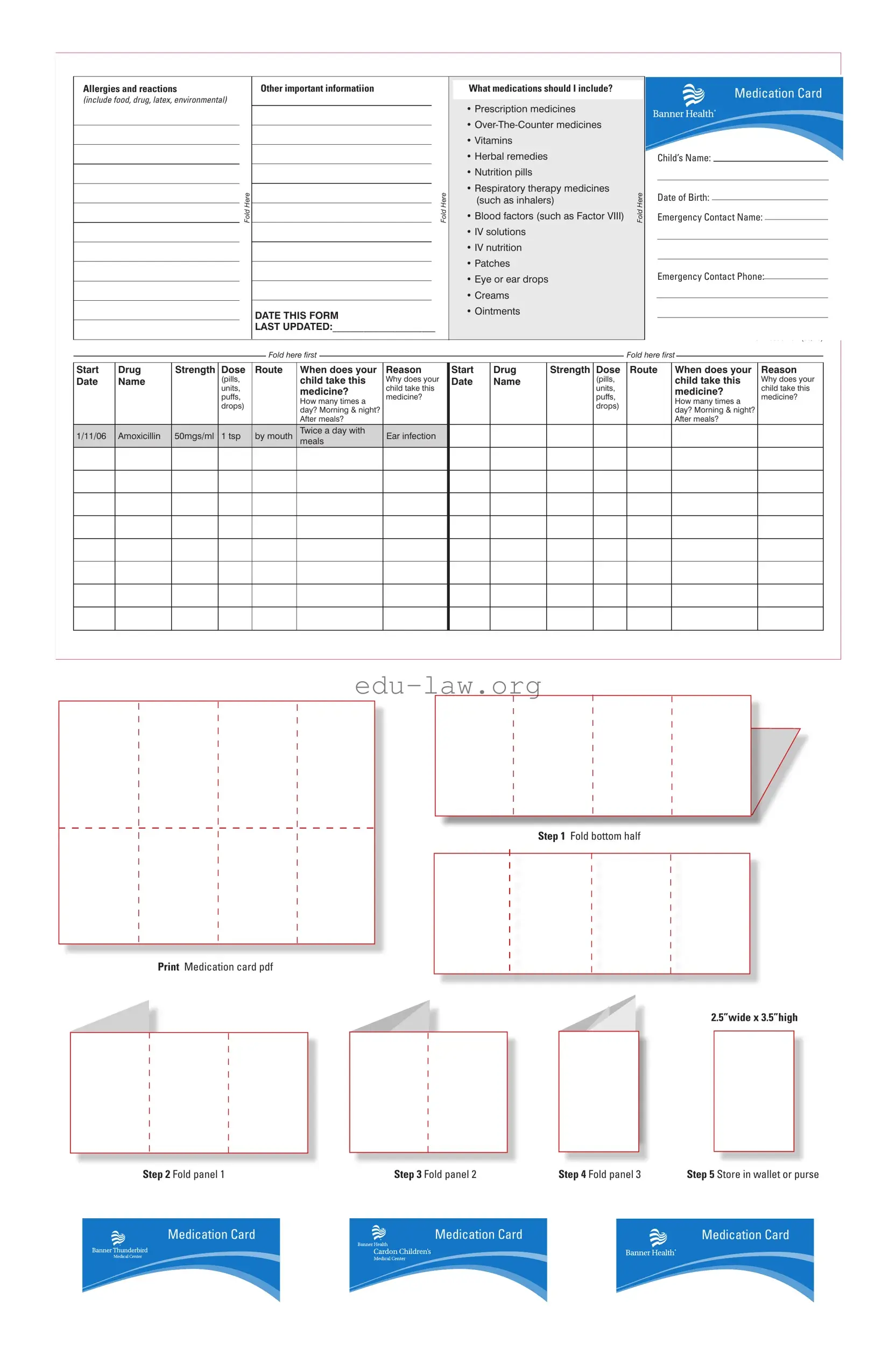
The Medication List For Wallet form serves as a vital tool for individuals and families to maintain an organized record of medications and health-related information. This compact form is designed to fit conveniently into a wallet, making it easily accessible in case of emergencies. It includes sections for listing allergies and reactions, ensuring that crucial information about food, drug, latex, and environmental sensitivities is readily available to healthcare providers. Additionally, the form prompts users to document all relevant medications, including prescription drugs, over-the-counter options, vitamins, herbal remedies, and even respiratory therapy medicines. The section labeled 'Other Important Information' allows for the inclusion of any additional health details that may be pertinent. A dedicated area for the wallet medication card captures essential identification data, such as the child’s name, date of birth, and emergency contact information. Regular updates to this form are encouraged, with a designated space to note when it was last revised, ensuring that the information remains current and reliable. The structured format guides users through the process of recording medication details, including dosage, frequency, and reasons for use, making it an invaluable resource for managing health effectively.
ALLERGIES AND REACTIONS:
Allergies and reactions
(include food, drug, latex, environmental) (include food, drug, latex, environmental)
Fold Here
OTHER IMPORTANT INFORMATION:
Other important informatiion
Fold Here
DATE THIS FORM
LAST UPDATED:_______________________
WHAT MEDICATIONS SHOULD I INCLUDE?
What medications should I include?
• Prescription medicines
•
• Vitamins
• Herbal remedies
• Nutrition pills
• Respiratory therapy medicines
(such as inhalers) |
Here |
• Blood factors (such as Factor VIII) |
Fold |
|
|
• IV solutions |
|
• IV nutrition |
|
• Patches |
|
• Eye or ear drops |
|
• Creams |
|
• Ointments |
|
WALLET MEDICATION CARD
Medication Card
Child’s Name:
Date of Birth:
Emergency Contact Name:
Child’s Name:
Date of Birth:
Emergency Contact Phone:
Emergency Contact Name:
Emergency Contact Phone:
CHP.0396 Rev. (03/10)
FOLD HERE FIRST
FOLD HERE FIRST
Start |
Drug |
Strength |
Dose |
Route |
When does your |
Reason |
Start |
Drug |
Strength |
Dose |
Route |
When does your |
Reason |
|||||
Date |
Name |
|
(pills, |
|
child take this |
Why does your |
Date |
Name |
|
(pills, |
|
child take this |
Why does your |
|||||
|
|
|
units, |
|
medicine? |
child take this |
|
|
|
units, |
|
medicine? |
child take this |
|||||
|
|
|
puffs, |
|
medicine? |
|
|
|
puffs, |
|
medicine? |
|||||||
|
|
|
|
How many times a |
|
|
|
|
How many times a |
|||||||||
|
|
|
drops) |
|
|
|
|
|
|
|
drops) |
|
|
|
|
|||
|
|
|
|
day? Morning & night? |
|
|
|
|
|
|
|
day? Morning & night? |
|
|
|
|||
|
|
|
|
|
|
|
|
|
|
|
|
|
|
|
|
|||
|
|
|
|
|
After meals? |
|
|
|
|
|
|
|
|
After meals? |
|
|
|
|
1/11/06 |
Amoxicillin |
50mgs/ml |
1 tsp |
by mouth |
Twice a day with |
Ear infection |
|
|
|
|
|
|
|
|
|
|
||
meals |
|
|
|
|
|
|
|
|
|
|
||||||||
|
|
|
|
|
|
|
|
|
|
|
|
|
|
|
|
|
|
|
|
|
|
|
|
|
|
|
|
|
|
|
|
|
|
|
|
|
|
|
|
|
|
|
|
|
|
|
|
|
|
|
|
|
|
|
|
|
|
|
|
|
|
|
|
|
|
|
|
|
|
|
|
|
|
|
|
|
|
|
|
|
|
|
|
|
|
|
|
|
|
|
|
|
|
|
|
|
|
|
|
|
|
|
|
|
|
|
|
|
|
|
|
|
|
|
|
|
|
|
|
|
|
|
|
|
|
|
|
|
|
|
|
|
|
|
|
|
|
|
|
|
|
|
|
|
|
|
|
|
|
|
|
|
|
|
|
|
|
|
|
|
|
|
|
|
|
|
|
|
|
|
|
|
|
|
|
|
|
|
|
|
|
|
|
|
|
|
|
|
|
|
|
|
|
|
|
|
|
|
|
|
|
|
|
|
|
|
|
|
|
|
|
|
|
|
|
|
|
|
|
|
|
|
|
|
|
|
|
|
|
|
|
|
|
|
|
|
|
|
|
|
|
|
|
|
|
|
|
|
|
|
|
|
|
|
|
|
|
|
|
|
|
|
|
|
|
Step 1 Fold bottom half
Print Medication card pdf
2.5”wide x 3.5”high
Step 2 Fold panel 1 |
Step 3 Fold panel 2 |
Step 4 Fold panel 3 |
Step 5 Store in wallet or purse |
Medication Card |
Medication Card |
Medication Card |
| Fact Name | Description |
|---|---|
| Purpose | The Medication List For Wallet form is designed to help individuals keep track of their medications, allergies, and emergency contact information in a compact format. |
| Contents | This form includes sections for allergies, important information, and a detailed list of medications, including prescriptions, over-the-counter drugs, and supplements. |
| Emergency Use | In case of an emergency, this form provides vital information to healthcare professionals, ensuring that they have access to a patient’s medication history and allergies. |
| Update Frequency | It is recommended to update the form regularly, especially after any changes in medication or health status, to keep the information current and accurate. |
| State-Specific Laws | While there are no specific governing laws for the Medication List For Wallet form, it is important to follow general healthcare privacy regulations, such as HIPAA, when sharing this information. |
Follow these steps to accurately fill out the Medication List For Wallet form. Ensure all information is correct and up-to-date. Once completed, you can keep this card in your wallet for easy access.
Next, fill out the required sections on the card. Include any allergies, reactions, and important information. List all medications, including prescription and over-the-counter drugs, vitamins, and any other relevant treatments.
What is the purpose of the Medication List For Wallet form?
The Medication List For Wallet form is designed to help individuals keep track of their medications and important health information. This handy tool allows you to have essential details about your prescriptions, over-the-counter medicines, and any allergies at your fingertips. It can be crucial during medical emergencies when quick access to this information is needed.
What types of medications should I include on the form?
You should include all medications that you or your child are currently taking. This includes prescription medicines, over-the-counter medications, vitamins, herbal remedies, nutrition pills, and respiratory therapy medicines like inhalers. Additionally, consider adding blood factors, IV solutions, IV nutrition, patches, eye or ear drops, creams, and ointments. The more comprehensive your list, the better prepared you will be in case of an emergency.
How do I fill out the Medication List For Wallet form?
To fill out the form, start by entering the child's name and date of birth at the top. Then, list each medication under the specified categories. Include the drug name, strength, dosage, route of administration, and the reason for taking it. Be sure to indicate how often the medication is taken, such as morning and night or after meals. Accurate and complete information is essential for effective communication with healthcare providers.
What should I do if my medications change?
If your medications change, it's important to update the Medication List For Wallet form immediately. Cross out any outdated information and replace it with the new details. Regular updates ensure that you have the most current information available, which can be vital in emergencies. Make it a habit to review the form periodically, especially after doctor visits or medication changes.
Where should I keep the completed Medication List For Wallet form?
The completed form should be stored in a wallet or purse, where it can be easily accessed when needed. Consider keeping a copy in a safe place at home as well. This ensures that caregivers, family members, or emergency responders can quickly find the information if required.
Can I use the form for multiple family members?
Yes, you can use the form for multiple family members. However, it’s best to keep separate forms for each individual to avoid confusion. Each form should clearly indicate the name and relevant details of the person it pertains to. This way, everyone’s medical information is organized and easily accessible.
How often should I update the Medication List For Wallet form?
You should update the form whenever there are changes to your medications, allergies, or health conditions. Additionally, consider reviewing it at least once a year to ensure all information remains accurate. Keeping the form current is crucial for your health and safety.
When filling out the Medication List For Wallet form, it's easy to make mistakes. Here are four common errors to watch out for:
Omitting Allergies and Reactions: Many people forget to include allergies and reactions. This information is crucial for medical professionals in case of an emergency. Be sure to list all allergies, including food, drugs, latex, and environmental factors.
Not Updating the Form: It's important to regularly update the form. If medications change or new allergies develop, the form should reflect these changes. An outdated form can lead to serious health risks.
Missing Essential Medications: Some individuals may leave out important medications. This includes prescription medicines, over-the-counter drugs, vitamins, and any other treatments like inhalers or creams. Make sure to include everything the child takes.
Incorrect Dosage Information: Providing incorrect dosage details can be dangerous. Double-check the drug strength, dose, and frequency to ensure accuracy. This helps caregivers administer the right amount at the right time.
By avoiding these mistakes, you can create a more effective and safe Medication List For Wallet form.
When it comes to managing medications, having a comprehensive set of documents can greatly enhance safety and communication. Along with the Medication List for Wallet form, several other documents can help ensure that individuals and caregivers have all necessary information at their fingertips. Here’s a list of some essential forms and documents that often accompany the Medication List.
Having these documents organized and readily available can make a significant difference in the management of medications and healthcare. They provide essential information that can enhance communication between patients, caregivers, and healthcare providers, ultimately leading to better health outcomes.
The Medication List for Wallet form shares similarities with the Personal Health Record (PHR). A PHR is a comprehensive document that individuals maintain to track their health information. Like the Medication List, it includes sections for allergies, medications, and other important health details. Both documents serve as quick references for healthcare providers, ensuring that they have access to critical information in emergencies or routine visits. The PHR, however, often encompasses a broader scope of health data, including medical history and immunizations.
Another document akin to the Medication List is the Medication Administration Record (MAR). The MAR is typically used in healthcare settings to track the administration of medications to patients. It includes details such as the medication name, dosage, administration route, and timing. Similar to the Medication List, the MAR emphasizes the importance of accurate medication tracking but is more focused on the actual administration process rather than personal record-keeping.
The Allergy Action Plan is also comparable to the Medication List for Wallet form. This document specifically outlines an individual's allergies and the steps to take in case of an allergic reaction. It includes information on allergens, symptoms, and emergency contacts. Like the Medication List, it serves as a critical tool for caregivers and healthcare professionals, providing essential information to manage allergies effectively.
The Emergency Medical Information Card resembles the Medication List in that it provides vital health information in a compact format. This card typically includes emergency contacts, medical conditions, and medications. Both documents aim to facilitate communication between patients and healthcare providers during emergencies, ensuring that essential information is readily available.
The Chronic Care Management Plan is another document that shares similarities with the Medication List. This plan outlines the management of chronic conditions and includes medication details, treatment goals, and follow-up care. Like the Medication List, it emphasizes the importance of medication adherence and monitoring, although it often encompasses a broader treatment strategy for managing chronic illnesses.
The Medication Reconciliation Form is also similar to the Medication List for Wallet. This form is used during transitions of care, such as hospital admissions or discharges, to ensure that a patient’s medication list is accurate and up-to-date. Both documents focus on the importance of maintaining an accurate medication list, but the Medication Reconciliation Form is specifically designed to prevent medication errors during healthcare transitions.
The Health Summary Document is another related form. This document provides a snapshot of an individual's health status, including medications, allergies, and significant medical history. Similar to the Medication List, it is designed for quick reference by healthcare providers, ensuring that critical information is easily accessible during medical encounters.
The Prescription Medication List is closely aligned with the Medication List for Wallet as well. This list specifically catalogs prescription medications, including dosages and prescribing information. Both documents serve the purpose of keeping track of medications, but the Prescription Medication List is often more detailed regarding the specifics of each prescription, while the Wallet form is designed for portability and quick access.
The Patient Information Sheet is another document that bears resemblance to the Medication List. This sheet typically includes personal details, medical history, and a list of medications. Like the Medication List, it is intended to provide healthcare providers with essential information at a glance, facilitating better patient care and communication.
Lastly, the Health Insurance Portability and Accountability Act (HIPAA) Authorization Form can be compared to the Medication List. While the HIPAA form focuses on the authorization to share health information, it often includes medication details as part of the patient’s health profile. Both documents play a role in ensuring that healthcare providers have access to necessary health information, although their primary purposes differ significantly.
When filling out the Medication List For Wallet form, consider the following guidelines to ensure accuracy and completeness.
Here are five common misconceptions about the Medication List For Wallet form:
When filling out and using the Medication List For Wallet form, consider the following key takeaways: