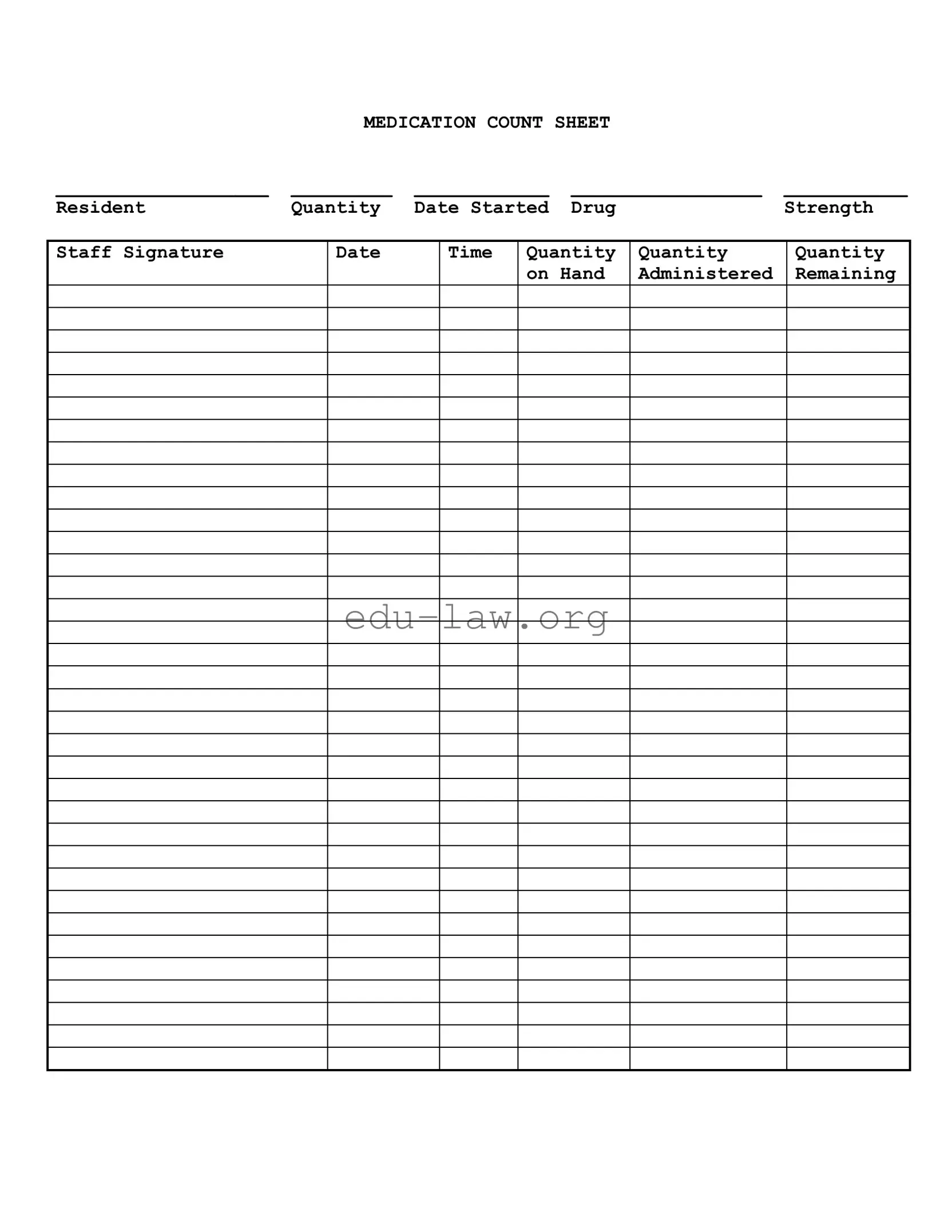
The Medication Count Sheet serves as a crucial document in the management of medication for residents in various care facilities. This form tracks essential information regarding the administration and inventory of medications, ensuring accountability and safety. It includes fields for the resident's name, the quantity of medication, the date the medication was started, the drug's strength, and staff signatures for verification. Additionally, the form captures the date and time of medication administration, along with the quantities administered and remaining. By meticulously recording this information, healthcare providers can maintain accurate medication counts, prevent errors, and ensure that residents receive their prescribed treatments in a timely manner.

|
MEDICATION COUNT SHEET |
|
||
___________________ |
_________ |
____________ |
_________________ |
___________ |
Resident |
Quantity |
Date Started |
Drug |
Strength |
Staff Signature
Date
Time
Quantity |
Quantity |
Quantity |
on Hand |
Administered |
Remaining |
|
|
|
| Fact Name | Details |
|---|---|
| Purpose | The Medication Count Sheet is used to track the administration and inventory of medications for residents. |
| Resident Information | Each sheet includes a section for the resident's name to ensure accurate record-keeping. |
| Drug Details | It records the drug name, strength, and quantity to maintain proper medication management. |
| Administration Tracking | Staff members must document the date, time, and quantity administered for each medication. |
| Remaining Inventory | The sheet tracks the quantity remaining on hand after administration, ensuring accountability. |
| Staff Accountability | Staff signatures are required to confirm that the medication was administered as documented. |
| State Regulations | In many states, including California, the use of a Medication Count Sheet is governed by health and safety codes. |
| Record Retention | These records should be kept for a specified duration as required by state laws to ensure compliance. |
Completing the Medication Count Sheet is an essential step in ensuring accurate tracking of medication for residents. This process requires attention to detail and a clear understanding of the information being recorded. Following the steps below will guide you through filling out the form correctly.
What is the purpose of the Medication Count Sheet?
The Medication Count Sheet is a vital tool used in healthcare settings to track the administration of medications to residents. It helps ensure that the correct dosage is given at the right times, thereby enhancing patient safety. By documenting the quantity of medication on hand, the amount administered, and the remaining stock, healthcare staff can maintain accurate records and prevent medication errors.
How should the Medication Count Sheet be filled out?
To fill out the Medication Count Sheet, staff should start by entering the resident's name and the specific medication details, including the drug name, strength, and the date the medication was started. Each time medication is administered, the staff member must record the quantity given, the time of administration, and their signature. It is crucial to update the quantity on hand to reflect the new stock level after administration. This process ensures that everyone involved in the care of the resident has access to accurate information.
Why is it important to document the quantity of medication remaining?
Documenting the quantity of medication remaining is essential for several reasons. First, it helps prevent medication shortages and ensures that residents receive their prescribed treatments without interruption. Second, it aids in identifying discrepancies or potential theft of medications. Finally, maintaining an accurate count supports compliance with regulatory standards and enhances overall accountability within the healthcare team.
What should be done if there is a discrepancy in the medication count?
If a discrepancy is found in the medication count, it is crucial to take immediate action. Staff should double-check the records to confirm whether an error occurred during documentation. If the discrepancy persists, it should be reported to a supervisor or the designated medication management team. Investigating the cause of the discrepancy is essential to ensure that it does not compromise patient safety or lead to further issues.
Who is responsible for maintaining the Medication Count Sheet?
All healthcare staff involved in administering medications share the responsibility for maintaining the Medication Count Sheet. This includes nurses, pharmacists, and any other authorized personnel. Each individual must ensure that their entries are accurate and up to date. Regular audits may also be conducted to verify compliance and accuracy, reinforcing the importance of teamwork in medication management.
Incomplete Information: Failing to fill out all required fields, such as the resident's name or drug strength, can lead to confusion and errors in medication management.
Incorrect Dates: Writing down the wrong date started or the date of administration can complicate tracking and accountability.
Miscounting Quantities: Errors in recording the quantity on hand, administered, or remaining can result in medication shortages or overdoses.
Signature Issues: Omitting the staff signature or failing to ensure it is legible can create challenges in verifying who administered the medication.
Inconsistent Time Entries: Not recording the time of administration accurately may lead to misunderstandings about when medications were given.
Failure to Update: Not updating the sheet after each administration can lead to discrepancies in the medication count.
Neglecting to Double-Check: Skipping the review process before submitting the form can allow unnoticed mistakes to persist.
The Medication Count Sheet is an essential tool for tracking medication administration in healthcare settings. However, it is often used alongside other important documents to ensure proper medication management and compliance with regulations. Below are five forms and documents that frequently accompany the Medication Count Sheet.
Using these forms in conjunction with the Medication Count Sheet helps maintain a high standard of care and accountability in medication management. Together, they provide a comprehensive approach to ensuring the safety and well-being of residents.
The Medication Administration Record (MAR) serves a similar purpose to the Medication Count Sheet. Both documents track the administration of medications to residents. The MAR provides a comprehensive overview of each medication, including the dosage, frequency, and specific times of administration. It also includes sections for staff signatures, ensuring accountability in the medication administration process. Like the Medication Count Sheet, the MAR is essential for maintaining accurate records of what has been given and what remains, thereby promoting patient safety and compliance with medical protocols.
The Inventory Control Log is another document that parallels the Medication Count Sheet. This log is used to monitor the stock levels of medications within a facility. It records the quantities received, dispensed, and remaining, similar to the Medication Count Sheet's focus on tracking the quantity on hand. Both documents aim to prevent medication shortages and ensure that residents receive their prescribed treatments without interruption. The Inventory Control Log typically includes details about the date of transactions and the staff responsible, reinforcing the importance of accountability in medication management.
The Prescription Order Form shares similarities with the Medication Count Sheet in that both documents are crucial for ensuring that residents receive the correct medications. The Prescription Order Form details the specific medications prescribed by a physician, including dosages and administration instructions. While the Medication Count Sheet tracks the administration and remaining quantities of these medications, the Prescription Order Form initiates the process by outlining the prescribed treatment plan. Together, they create a comprehensive record of medication management from prescription to administration.
The Controlled Substance Log is particularly relevant in facilities that handle narcotics and other controlled medications. This log meticulously tracks the receipt, administration, and disposal of controlled substances. Similar to the Medication Count Sheet, it emphasizes accountability and accuracy, ensuring that every dose is accounted for. Both documents require signatures from staff members, reinforcing the importance of proper documentation in medication management and compliance with regulatory standards.
The Patient Medication Profile is another document that complements the Medication Count Sheet. This profile provides a detailed overview of a resident's medication history, including current medications, allergies, and any adverse reactions. While the Medication Count Sheet focuses on the quantities and administration of medications, the Patient Medication Profile offers a broader context for understanding a resident's treatment plan. Together, they help healthcare providers make informed decisions about medication management and patient care.
Finally, the Incident Report Form can also be considered similar to the Medication Count Sheet in terms of its role in ensuring safety and accountability. While the Medication Count Sheet tracks the administration of medications, the Incident Report Form documents any discrepancies or adverse events related to medication administration. Both forms require thorough record-keeping and staff signatures, underscoring the importance of transparency and accountability in healthcare settings. Together, they contribute to a culture of safety and continuous improvement in medication management practices.
When filling out the Medication Count Sheet form, it is important to follow certain guidelines to ensure accuracy and compliance. Below is a list of things you should and shouldn't do.
Understanding the Medication Count Sheet form is essential for ensuring proper medication management. However, several misconceptions can lead to confusion. Here are six common misunderstandings:
By addressing these misconceptions, staff can improve their understanding and use of the Medication Count Sheet, ultimately enhancing patient safety and care.
When using the Medication Count Sheet form, it’s important to keep a few key points in mind to ensure accurate and effective medication management.