When it comes to the health and well-being of children, parents and guardians often find themselves navigating a maze of medical decisions. One essential tool in this journey is the Medical Consent for Minor form. This document serves as a critical bridge between caregivers and healthcare providers, ensuring that minors receive the necessary medical attention without unnecessary delays. It outlines the authority granted to medical professionals to treat a child in the absence of a parent or guardian, which can be vital in emergencies. Additionally, the form typically includes sections for specifying the types of treatment covered, such as routine check-ups, vaccinations, or even more specialized care. Importantly, it also allows parents to provide information about any allergies or pre-existing conditions, ensuring that medical staff have the context they need to provide safe and effective treatment. By understanding the key components and significance of this form, caregivers can feel more empowered and prepared when it comes to their child's healthcare needs.
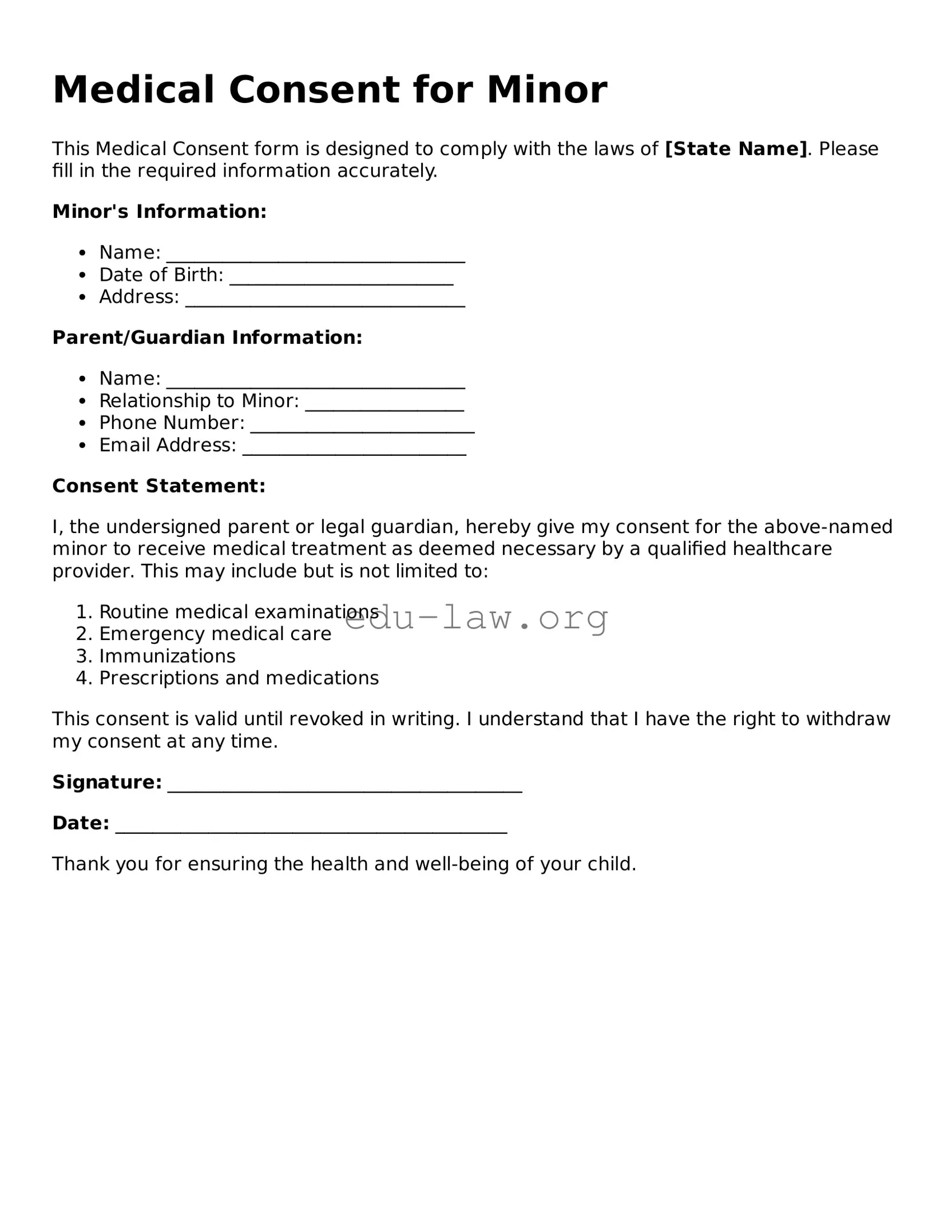
Medical Consent for Minor
This Medical Consent form is designed to comply with the laws of [State Name]. Please fill in the required information accurately.
Minor's Information:
Parent/Guardian Information:
Consent Statement:
I, the undersigned parent or legal guardian, hereby give my consent for the above-named minor to receive medical treatment as deemed necessary by a qualified healthcare provider. This may include but is not limited to:
This consent is valid until revoked in writing. I understand that I have the right to withdraw my consent at any time.
Signature: ______________________________________
Date: __________________________________________
Thank you for ensuring the health and well-being of your child.
| Fact Name | Description | Governing Law |
|---|---|---|
| Purpose | The Medical Consent for Minor form allows a parent or guardian to give permission for medical treatment for a minor child. | Varies by state |
| Age Requirement | Typically, the form is used for minors under the age of 18, though some states may have different age thresholds. | State-specific laws |
| Emergency Situations | In emergencies, medical providers may treat minors without consent if it is not feasible to obtain it. | Common law principles |
| Revocation | Parents or guardians can revoke consent at any time, but this must be communicated clearly to the healthcare provider. | State-specific laws |
| Documentation | It is important to keep a copy of the signed consent form for medical records and future reference. | State-specific laws |
Completing the Medical Consent for Minor form is an important step in ensuring that a child receives the necessary medical care when a parent or guardian is not present. This form authorizes healthcare providers to treat a minor in the absence of a parent or legal guardian. Follow these steps carefully to ensure that the form is filled out correctly.
What is a Medical Consent for Minor form?
A Medical Consent for Minor form is a legal document that allows a parent or guardian to grant permission for medical treatment for a child under the age of 18. This form is essential in situations where immediate medical care is needed, and the parent or guardian cannot be present to provide consent.
Who should complete the Medical Consent for Minor form?
The form should be completed by a parent or legal guardian of the minor. If the parent is unavailable, another adult who has been designated by the parent may also complete the form, provided they have the legal authority to do so.
When is a Medical Consent for Minor form necessary?
This form is necessary in various situations, including but not limited to, emergency medical care, routine medical check-ups, and any procedure that may require consent. It is particularly important when a child is traveling without their parents or guardians.
What information is typically required on the form?
The form usually requires the child's full name, date of birth, and medical history. Additionally, it includes the parent or guardian's contact information, the name of the physician or medical facility, and specific details about the type of treatment or procedures that may be authorized.
Is the Medical Consent for Minor form valid in all states?
While the Medical Consent for Minor form is widely recognized across the United States, specific requirements can vary by state. It’s important to check local laws to ensure that the form meets all necessary legal standards and requirements in your state.
Can the Medical Consent for Minor form be revoked?
Yes, a parent or guardian can revoke the Medical Consent for Minor form at any time. To do this effectively, it’s best to provide written notice to the healthcare provider and keep a copy for personal records. This ensures that everyone involved is aware of the change in consent status.
How long is the Medical Consent for Minor form valid?
The validity of the form can vary depending on the specific language included in it. Generally, the consent remains in effect until the child turns 18 or until the parent or guardian revokes it. Always check the form for any specified expiration dates or conditions.
Failing to provide complete information about the minor's medical history. This can lead to complications during treatment.
Not signing the form in the appropriate place. A missing signature can render the consent invalid.
Using outdated contact information for the parent or guardian. Emergency contacts should always be current.
Not specifying the duration of the consent. It's important to indicate whether the consent is for a single visit or an extended period.
Overlooking the need for witnesses or notarization when required. Some situations may require additional verification.
Neglecting to include any specific medical conditions or allergies. This information is crucial for safe treatment.
Assuming that verbal consent is sufficient. Always ensure that written consent is obtained for legal protection.
When dealing with the Medical Consent for Minor form, several other documents often accompany it to ensure comprehensive care and legal protection. Each of these forms serves a unique purpose, providing clarity and support in medical situations involving minors.
Having these documents prepared can facilitate smoother communication and decision-making in medical situations involving minors. Each form plays a crucial role in ensuring that the rights and health of the child are prioritized.
The Medical Power of Attorney is a document that allows an individual to designate someone else to make medical decisions on their behalf. Like the Medical Consent for Minor form, it is essential for situations where the individual may be unable to communicate their wishes, such as during a medical emergency. Both documents ensure that the person’s healthcare preferences are respected, although the Medical Power of Attorney is typically used for adults rather than minors. This distinction highlights the importance of having a trusted person in charge of medical decisions, especially when the patient cannot advocate for themselves.
The Advance Healthcare Directive serves a similar purpose by allowing individuals to outline their healthcare preferences in advance. This document can include specific instructions about treatment options and designate a healthcare proxy, similar to the Medical Power of Attorney. Both documents aim to provide clarity and guidance to healthcare providers and family members, ensuring that the individual’s wishes are honored. The key difference lies in the timing; the Advance Healthcare Directive is often prepared by adults for future scenarios, while the Medical Consent for Minor form is used by parents or guardians for immediate medical decisions regarding their children.
The Release of Medical Information form is another related document. This form allows parents or guardians to authorize the sharing of their child’s medical information with specific individuals, such as other healthcare providers or family members. Like the Medical Consent for Minor form, it emphasizes the importance of consent in healthcare settings. Both documents ensure that sensitive information is handled appropriately, although the Release of Medical Information focuses more on privacy and information sharing, while the Medical Consent for Minor form centers on granting permission for treatment.
The Treatment Authorization form is often utilized in various healthcare settings, especially in schools or camps. This document allows parents or guardians to give permission for specific medical treatments or procedures for their children. It is similar to the Medical Consent for Minor form in that it seeks to ensure that minors receive necessary medical care. Both forms require parental consent and serve as a safeguard to ensure that healthcare providers can act in the best interest of the child when immediate decisions are needed.
The Minor's Health History form is another document that shares similarities with the Medical Consent for Minor form. This form collects important medical information about a child, including past illnesses, allergies, and medications. While it does not grant permission for treatment, it complements the Medical Consent for Minor form by providing healthcare providers with essential background information. Both documents work together to ensure that a child receives appropriate and safe medical care, highlighting the importance of informed consent and comprehensive medical history in pediatric healthcare.
When filling out the Medical Consent for Minor form, it is crucial to approach the task with care. Here are six important dos and don’ts to consider:
By adhering to these guidelines, you can help ensure that the medical consent process is handled appropriately and responsibly.
Understanding medical consent for minors is crucial for parents and guardians. However, several misconceptions exist that can lead to confusion. Here are eight common misconceptions:
Many believe that minors have no capacity to consent to medical treatment. In reality, some states allow minors to consent to certain types of medical care, particularly in areas like reproductive health or mental health services.
While parental consent is typically necessary, there are exceptions. For instance, in emergencies where a delay could harm the minor, healthcare providers may proceed without consent.
This is misleading. Medical consent forms can vary significantly by state and by the type of medical treatment being provided. It is essential to use the correct form for the specific situation.
Although verbal consent may be acceptable in some situations, many healthcare providers require written consent to ensure clarity and legality. This protects both the provider and the patient.
Not every relative can give consent. Generally, only parents or legal guardians have the authority to provide medical consent for a minor, unless otherwise specified by law.
This is incorrect. A parent or guardian can revoke consent at any time, provided that the revocation is communicated to the healthcare provider before treatment occurs.
This misconception undermines the rights of minors. In many cases, minors can express their preferences and opinions about their treatment, and healthcare providers must consider these views.
In fact, properly executed medical consent forms are legally binding documents. They provide legal protection for both the healthcare provider and the minor's family.
Clarifying these misconceptions can help ensure that minors receive appropriate medical care while respecting their rights and the responsibilities of their guardians.
When it comes to the health and well-being of a minor, having a Medical Consent for Minor form is essential. This document allows parents or guardians to authorize medical treatment for their child when they are unable to provide consent themselves. Here are some key takeaways to consider:
Being prepared with a properly filled Medical Consent for Minor form can help ensure that your child receives timely and appropriate medical care when needed. It is a proactive step in safeguarding their health and well-being.