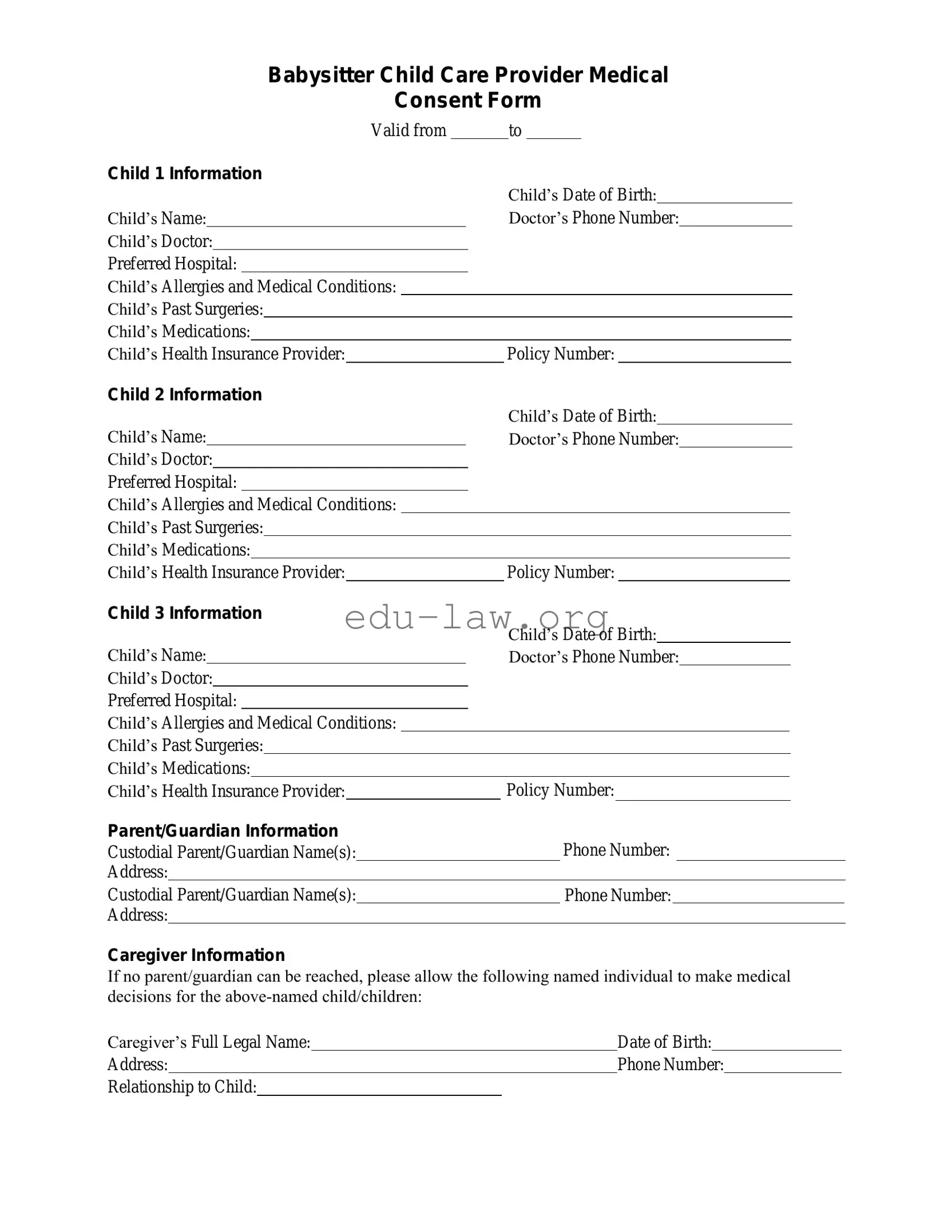
When it comes to ensuring the safety and well-being of your children while in the care of a babysitter, having a Medical Consent Babysitter form is essential. This document serves as a comprehensive guide for caregivers, detailing critical information about your child's health. It includes sections for multiple children, allowing parents to provide specific details such as each child's date of birth, allergies, medical conditions, and any past surgeries. Additionally, the form captures vital contact information for your child's doctor and preferred hospital, ensuring that caregivers have immediate access to necessary medical resources. In the event of an emergency, the form empowers designated individuals to make medical decisions on behalf of your child, granting them authority to share personal health information with emergency personnel and authorize the use of life-saving medical devices. This proactive approach not only streamlines communication during urgent situations but also gives parents peace of mind knowing that their children will receive appropriate care when they cannot be reached. With designated spaces for both parent and caregiver signatures, this form underscores the importance of collaboration in safeguarding your child's health.
|
|
|
|
|
|
|
|
Babysitter Child Care Provider Medical |
|
||||||||||||||||||||
|
|
|
|
|
|
|
|
|
|
Consent Form |
|
||||||||||||||||||
|
|
|
|
|
|
|
|
|
|
Valid from |
|
|
|
to |
|
|
|
||||||||||||
Child 1 Information |
|
|
|
|
|
|
|
|
|
|
|
|
|
||||||||||||||||
|
|
|
|
|
|
|
|
|
|
|
|
|
|
|
|
|
|
Child’s Date of Birth: |
|
|
|||||||||
Child’s Name: |
|
|
Doctor’s Phone Number: |
|
|||||||||||||||||||||||||
|
|
|
|
|
|
|
|
|
|
|
|
|
|
|
|
|
|||||||||||||
Child’s Doctor: |
|
|
|
|
|
|
|
|
|
|
|
|
|
|
|
||||||||||||||
Preferred Hospital: |
|
|
|
|
|
|
|
|
|
|
|
|
|
|
|
||||||||||||||
Child’s Allergies and Medical Conditions: |
|
|
|
|
|
|
|
|
|
|
|
|
|
|
|||||||||||||||
Child’s Past Surgeries: |
|
|
|
|
|
|
|
|
|
|
|
|
|
|
|||||||||||||||
Child’s Medications: |
|
|
|
|
|
|
|
|
|
|
|
|
|
|
|||||||||||||||
Child’s Health Insurance Provider: |
|
|
Policy Number: |
|
|
||||||||||||||||||||||||
Child 2 Information |
|
|
|
|
|
|
|
|
|
|
|
|
|
||||||||||||||||
|
|
|
|
|
|
|
|
|
|
|
|
|
|
|
|
|
|
Child’s Date of Birth: |
|
|
|||||||||
Child’s Name: |
|
|
|
|
|
|
|
Doctor’s Phone Number: |
|
||||||||||||||||||||
Child’s Doctor: |
|
|
|
|
|
|
|
|
|
|
|
|
|
|
|
||||||||||||||
|
|
|
|
|
|
|
|
|
|
|
|
|
|||||||||||||||||
Preferred Hospital: |
|
|
|
|
|
|
|
|
|
|
|
|
|
|
|
||||||||||||||
Child’s Allergies and Medical Conditions: |
|
|
|
|
|
|
|
|
|
|
|
|
|
|
|||||||||||||||
Child’s Past Surgeries: |
|
|
|
|
|
|
|
|
|
|
|
|
|
|
|||||||||||||||
Child’s Medications: |
|
|
|
|
|
|
|
|
|
|
|
|
|
|
|||||||||||||||
Child’s Health Insurance Provider: |
|
|
Policy Number: |
|
|
||||||||||||||||||||||||
Child 3 Information |
|
|
|
|
|
|
|
|
|
|
|
|
|
||||||||||||||||
|
|
|
|
|
|
|
|
|
|
|
|
|
|
|
|
|
|
Child’s Date of Birth: |
|
|
|||||||||
Child’s Name: |
|
|
Doctor’s Phone Number: |
|
|||||||||||||||||||||||||
|
|
|
|
|
|
|
|
|
|
|
|
|
|
|
|
|
|
|
|
|
|
|
|
|
|||||
Child’s Doctor: |
|
|
|
|
|
|
|
|
|
|
|
|
|
|
|
||||||||||||||
|
|
|
|
|
|
|
|
|
|
|
|
|
|||||||||||||||||
Preferred Hospital: |
|
|
|
|
|
|
|
|
|
|
|
|
|
|
|
||||||||||||||
Child’s Allergies and Medical Conditions: |
|
|
|
|
|
|
|
|
|
|
|
|
|
|
|||||||||||||||
Child’s Past Surgeries: |
|
|
|
|
|
|
|
|
|
|
|
|
|
||||||||||||||||
Child’s Medications: |
|
|
|
|
|
|
|
|
|
|
|
|
|
|
|
||||||||||||||
Child’s Health Insurance Provider: |
|
|
Policy Number: |
|
|||||||||||||||||||||||||
Parent/Guardian Information |
|
|
|
|
|
|
|
|
|
|
|
|
|
||||||||||||||||
Custodial Parent/Guardian Name(s): |
|
|
|
|
Phone Number: |
|
|||||||||||||||||||||||
Address: |
|
|
|
|
|
|
|
|
|
|
|
|
|
|
|
||||||||||||||
Custodial Parent/Guardian Name(s): |
|
|
|
|
Phone Number: |
|
|||||||||||||||||||||||
Address: |
|
|
|
|
|
|
|
|
|
|
|
|
|
|
|
||||||||||||||
Caregiver Information
If no parent/guardian can be reached, please allow the following named individual to make medical decisions for the
Caregiver’s Full Legal Name: |
|
|
Date of Birth: |
|
|||
Address: |
|
|
Phone Number: |
||||
|
|
|
|
|
|
|
|
Relationship to Child: |
|
|
|
|
|
||

Minor Medical Consent |
|
In case of an emergency, I grant permission to |
to make medical decisions |
for my child/children until one parent/guardian can be reached. Medical decisions I authorize the above named individual to make include:
□ Sharing personal information about my child/children with emergency personnel. □ Authorizing use of
□ Authorizing use of an ambulance for transport. □ Other:
Parent/Guardian Name: |
|
Signature: |
|
Date: |
|
|
Witness Name: |
|
Signature: |
|
Date: |
|
|
Parent/Guardian Name: |
|
Signature: |
|
Date: |
|
|
Witness Name: |
|
Signature: |
|
Date: |
|
|
In case of an emergency, I agree to make medical decisions for the above named child/children until one parent/guardian can be reached.
Caregiver Name: |
|
Signature: |
Date: |
|
Witness: |
||
|
|
|
|
|
|
|
|
Witness Name: |
|
|
Signature: |
Date: |
|
|
|
|
|
|
|
|
|
|
|
| Fact Name | Description |
|---|---|
| Purpose | The Medical Consent Babysitter form allows caregivers to make medical decisions for children in emergencies when parents or guardians are unavailable. |
| Child Information | The form collects essential details for up to three children, including their names, dates of birth, and medical information. |
| Emergency Contacts | Parents or guardians must provide contact information, ensuring that caregivers can reach them in case of an emergency. |
| Caregiver Authority | The form designates a caregiver who can make medical decisions if the parents or guardians cannot be contacted. |
| Medical Decisions | Caregivers are authorized to make specific medical decisions, such as sharing information with emergency personnel and authorizing ambulance transport. |
| Signatures Required | Both parents or guardians and the designated caregiver must sign the form to validate the consent provided. |
| Health Insurance | The form requires information about the child's health insurance provider and policy number for medical treatment purposes. |
| Allergies and Conditions | It is crucial to list any allergies, medical conditions, and past surgeries for each child to ensure their safety during emergencies. |
| State-Specific Forms | Some states may have specific requirements or forms, governed by local laws regarding medical consent for minors. |
| Validity Period | The form should specify a validity period, indicating the timeframe during which the consent is active. |
Filling out the Medical Consent Babysitter form is an essential step in ensuring your child's safety while in the care of a babysitter. This form provides critical medical information and authorizations that can be crucial in emergencies. Here’s how to complete it accurately.
Once completed, keep a copy of the form for your records and provide the original to the babysitter. This ensures that all necessary information is readily available in case of an emergency, allowing for prompt and appropriate medical care for your child.
What is the purpose of the Medical Consent Babysitter form?
This form provides essential medical information about your child to a babysitter or caregiver. It allows them to make informed decisions in case of an emergency. By filling out the form, you ensure that the caregiver knows your child's medical history, allergies, and emergency contacts. This can be crucial in providing timely care when needed.
What information do I need to include for each child?
You should provide detailed information for each child you are leaving in the caregiver's care. This includes the child's name, date of birth, doctor's contact information, preferred hospital, any allergies or medical conditions, past surgeries, medications, and health insurance details. The more information you provide, the better prepared the caregiver will be in an emergency.
Who can make medical decisions if I cannot be reached?
The form allows you to designate a caregiver who can make medical decisions on your behalf if you are unavailable. You will need to include their full legal name, date of birth, address, phone number, and relationship to the child. This ensures that someone you trust can act quickly if needed.
What permissions does the caregiver have in case of an emergency?
The form includes a section where you grant permission for the caregiver to make specific medical decisions. This may include sharing your child's information with emergency personnel, authorizing the use of life-saving medical devices, and calling for an ambulance. You can also specify any other permissions you feel are necessary.
Do I need to sign the form, and what about witnesses?
Yes, you must sign the form to make it valid. Both parents or guardians should sign, if applicable. Additionally, having witnesses sign can add an extra layer of validation. This helps ensure that the information is taken seriously and can be relied upon in an emergency situation.
Incomplete Child Information: Many people forget to fill out all sections for each child. Missing details like the child’s date of birth or doctor’s phone number can lead to delays in emergency situations.
Neglecting Allergies and Medical Conditions: Failing to list a child’s allergies or medical conditions can have serious consequences. This information is crucial for caregivers and medical personnel to provide appropriate care.
Not Updating Health Insurance Information: Some individuals use outdated health insurance details. Ensure that the policy number and provider are current, as this information is essential for treatment and billing.
Missing Signatures: A common mistake is forgetting to sign the form. Both parents or guardians need to provide their signatures to validate the consent. Without these, the form may not be considered legally binding.
Ignoring Emergency Contact Details: It is vital to include accurate contact information for caregivers. If a parent or guardian cannot be reached, having a reliable person listed ensures that medical decisions can be made promptly.
The Medical Consent Babysitter form is an essential document for parents entrusting their children to a caregiver. However, several other forms and documents can enhance safety and clarity regarding a child's care. Below are four commonly used forms that complement the Medical Consent Babysitter form.
Utilizing these forms alongside the Medical Consent Babysitter form can significantly enhance the safety and well-being of children in care. Parents can ensure that caregivers are well-informed and prepared to handle any situation that may arise.
The Medical Consent Babysitter form shares similarities with the Medical Power of Attorney document. Both forms grant authority to another individual to make medical decisions on behalf of a child. In the case of the Medical Power of Attorney, this authority is typically more formal and can extend beyond emergencies, allowing the appointed individual to make decisions regarding ongoing medical treatment. However, the Medical Consent Babysitter form is more specific to temporary care situations, such as babysitting or short-term childcare arrangements.
Another related document is the Authorization for Treatment form. This form is often used in medical settings to give healthcare providers permission to treat a patient. Like the Medical Consent Babysitter form, it includes essential information about the patient, such as allergies and medical conditions. However, the Authorization for Treatment form is primarily focused on medical facilities and practitioners, while the Medical Consent Babysitter form is tailored for non-medical caregivers.
The Child Medical Information form also bears resemblance to the Medical Consent Babysitter form. Both documents collect critical health information about a child, including medical history, allergies, and emergency contacts. However, the Child Medical Information form is often used in schools or daycare settings to ensure that staff are aware of a child’s health needs, while the Medical Consent Babysitter form is specifically designed for babysitters or temporary caregivers.
The Emergency Medical Information form is another document that aligns closely with the Medical Consent Babysitter form. Both forms aim to provide essential medical information in case of emergencies. The Emergency Medical Information form is often kept on file at schools or daycare centers, while the Medical Consent Babysitter form is intended for immediate use by caregivers during short-term childcare situations.
The Release of Liability form is similar in that it also involves consent regarding a child’s care. While the Medical Consent Babysitter form focuses on medical decisions and health information, the Release of Liability form typically protects the caregiver from legal claims related to accidents or injuries that may occur during care. Both documents require signatures from parents or guardians to be valid.
The Consent to Treat a Minor form is another comparable document. This form allows a parent or guardian to authorize medical treatment for their child in their absence. Like the Medical Consent Babysitter form, it is often used in emergency situations. However, the Consent to Treat a Minor form is more focused on medical treatment specifics, while the Medical Consent Babysitter form encompasses a broader range of caregiving scenarios.
The Child Care Authorization form also shares characteristics with the Medical Consent Babysitter form. Both documents are designed to grant authority to caregivers regarding the care of a child. The Child Care Authorization form often includes permissions for activities beyond medical decisions, such as travel or participation in extracurricular activities, whereas the Medical Consent Babysitter form is specifically concerned with medical emergencies.
The Health Care Proxy form is another document that bears similarities. It allows a designated individual to make healthcare decisions on behalf of another person, usually an adult. While the Medical Consent Babysitter form is tailored for children and focuses on immediate care situations, both documents emphasize the importance of having someone authorized to make critical decisions when the primary caregiver is unavailable.
Finally, the Child Custody Agreement may also be considered similar, as it outlines the rights and responsibilities of guardians regarding a child’s care. While the Medical Consent Babysitter form is more focused on temporary medical decisions, the Child Custody Agreement establishes long-term arrangements for a child’s upbringing. Both documents require clear communication and consent from all parties involved to ensure the child's best interests are met.
When filling out the Medical Consent Babysitter form, it's important to be thorough and accurate. Here are some key do's and don'ts to keep in mind:
Understanding the Medical Consent Babysitter form is crucial for parents and caregivers. However, several misconceptions can lead to confusion. Here are six common misconceptions:
By addressing these misconceptions, parents can better prepare for the care of their children when they are away.
Filling out the Medical Consent Babysitter form is a crucial step in ensuring your child's safety while in the care of a babysitter. Here are some key takeaways to keep in mind:
By following these takeaways, you can help guarantee that your children receive the care they need in case of an emergency while in the care of a babysitter.