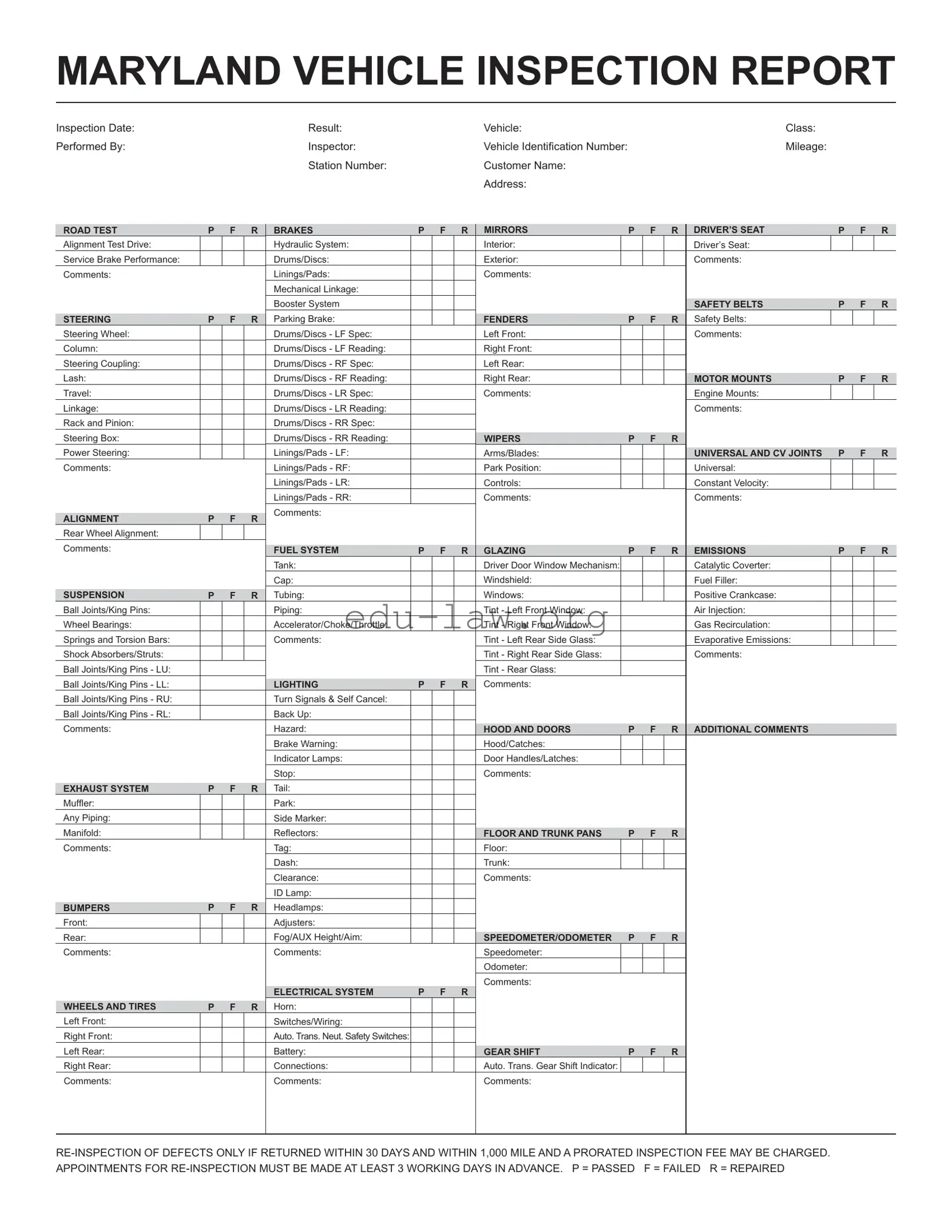
The Maryland Vehicle Inspection Report is an essential document that plays a crucial role in ensuring vehicle safety and compliance with state regulations. This comprehensive form captures vital information, including the inspection date, vehicle identification number, and the inspector's details. Each inspection covers a wide range of components, from the brakes and steering to the suspension and emissions systems. During the inspection, various tests are performed, and each component is marked as passed, failed, or repaired, giving a clear picture of the vehicle's condition. Additional sections address critical safety features, such as safety belts and lighting, while also documenting comments and concerns noted by the inspector. The report not only serves as a record of the inspection but also guides vehicle owners in understanding the necessary repairs and maintenance required to keep their vehicles in optimal condition. With a focus on safety and compliance, the Maryland Vehicle Inspection Report is a key tool for both inspectors and vehicle owners alike.

MARYLAND VEHICLE INSPECTION REPORT
Inspection Date: |
|
|
|
Result: |
|
|
|
Vehicle: |
|
|
|
|
|
Class: |
|
|
|
|
||||||
Performed By: |
|
|
|
Inspector: |
|
|
|
Vehicle Identification Number: |
|
|
|
|
|
Mileage: |
|
|
|
|
||||||
|
|
|
|
|
|
Station Number: |
|
|
|
Customer Name: |
|
|
|
|
|
|
|
|
|
|
||||
|
|
|
|
|
|
|
|
|
|
|
Address: |
|
|
|
|
|
|
|
|
|
|
|||
|
|
|
|
|
|
|
|
|
|
|
|
|
|
|
|
|
|
|
|
|
|
|||
ROAD TEST |
P |
F |
R |
BRAKES |
P |
F |
R |
MIRRORS |
P |
F |
R |
DRIVER’S SEAT |
P |
F |
R |
|
||||||||
Alignment Test Drive: |
|
|
|
Hydraulic System: |
|
|
|
Interior: |
|
|
|
|
Driver’s Seat: |
|
|
|
|
|||||||
Service Brake Performance: |
|
|
|
Drums/Discs: |
|
|
|
Exterior: |
|
|
|
|
Comments: |
|
|
|
|
|
||||||
Comments: |
|
|
|
|
|
Linings/Pads: |
|
|
|
Comments: |
|
|
|
|
|
|
|
|
|
|
|
|||
|
|
|
|
|
|
Mechanical Linkage: |
|
|
|
|
|
|
|
|
|
|
|
|
|
|
|
|
|
|
|
|
|
|
|
|
Booster System |
|
|
|
|
|
|
|
|
|
|
|
|
|
|
|
|
||
|
|
|
|
|
|
|
|
|
|
|
|
|
|
|
|
SAFETY BELTS |
P |
F |
R |
|
||||
STEERING |
P |
F |
R |
Parking Brake: |
|
|
|
FENDERS |
|
P |
F |
R |
Safety Belts: |
|
|
|
|
|||||||
Steering Wheel: |
|
|
|
Drums/Discs - LF Spec: |
|
|
|
Left Front: |
|
|
|
|
Comments: |
|
|
|
|
|
|
|||||
Column: |
|
|
|
Drums/Discs - LF Reading: |
|
|
|
Right Front: |
|
|
|
|
|
|
|
|
|
|
|
|||||
Steering Coupling: |
|
|
|
Drums/Discs - RF Spec: |
|
|
|
Left Rear: |
|
|
|
|
|
|
|
|
|
|
|
|||||
Lash: |
|
|
|
Drums/Discs - RF Reading: |
|
|
|
Right Rear: |
|
|
|
|
|
|
|
|
|
|
|
|||||
|
|
|
|
|
|
|
|
|
|
MOTOR MOUNTS |
P |
F |
R |
|
||||||||||
Travel: |
|
|
|
Drums/Discs - LR Spec: |
|
|
|
Comments: |
|
|
|
|
Engine Mounts: |
|
|
|
|
|||||||
Linkage: |
|
|
|
Drums/Discs - LR Reading: |
|
|
|
|
|
|
|
|
|
|
Comments: |
|
|
|
|
|
|
|||
Rack and Pinion: |
|
|
|
Drums/Discs - RR Spec: |
|
|
|
|
|
|
|
|
|
|
|
|
|
|
|
|
|
|||
Steering Box: |
|
|
|
Drums/Discs - RR Reading: |
|
|
|
|
|
|
|
|
|
|
|
|
|
|
|
|||||
|
|
|
|
|
|
WIPERS |
P |
F |
R |
|
|
|
|
|
|
|
||||||||
Power Steering: |
|
|
|
Linings/Pads - LF: |
|
|
|
Arms/Blades: |
|
|
|
|
UNIVERSAL AND CV JOINTS |
P |
F |
R |
|
|||||||
Comments: |
|
|
|
|
|
Linings/Pads - RF: |
|
|
|
Park Position: |
|
|
|
|
Universal: |
|
|
|
|
|||||
|
|
|
|
|
|
Linings/Pads - LR: |
|
|
|
Controls: |
|
|
|
|
Constant Velocity: |
|
|
|
|
|||||
|
|
|
|
|
|
Linings/Pads - RR: |
|
|
|
Comments: |
|
|
|
|
Comments: |
|
|
|
|
|
|
|||
|
|
|
|
|
|
Comments: |
|
|
|
|
|
|
|
|
|
|
|
|
|
|
|
|
|
|
ALIGNMENT |
P |
F |
R |
|
|
|
|
|
|
|
|
|
|
|
|
|
|
|
|
|
|
|
||
Rear Wheel Alignment: |
|
|
|
|
|
|
|
|
|
|
|
|
|
|
|
|
|
|
|
|
|
|
||
Comments: |
|
|
|
|
|
|
|
|
|
|
|
|
|
|
|
|
|
|
|
|
|
|
||
|
|
|
|
|
FUEL SYSTEM |
P |
F |
R |
GLAZING |
|
P |
F |
R |
EMISSIONS |
|
|
P |
F |
R |
|
||||
|
|
|
|
|
|
Tank: |
|
|
|
Driver Door Window Mechanism: |
|
|
|
|
Catalytic Coverter: |
|
|
|
|
|||||
|
|
|
|
|
|
Cap: |
|
|
|
Windshield: |
|
|
|
|
Fuel Filler: |
|
|
|
|
|||||
|
|
|
|
|
|
|
|
|
|
|
Windows: |
|
|
|
|
|
|
|
|
|
|
|
||
SUSPENSION |
P |
F |
R |
Tubing: |
|
|
|
|
|
|
|
Positive Crankcase: |
|
|
|
|
||||||||
Ball Joints/King Pins: |
|
|
|
Piping: |
|
|
|
Tint - Left Front Window: |
|
|
|
|
Air Injection: |
|
|
|
|
|||||||
Wheel Bearings: |
|
|
|
Accelerator/Choke/Throttle: |
|
|
|
Tint - Right Front Window: |
|
|
|
|
Gas Recirculation: |
|
|
|
|
|||||||
Springs and Torsion Bars: |
|
|
|
Comments: |
|
|
|
|
Tint - Left Rear Side Glass: |
|
|
|
|
Evaporative Emissions: |
|
|
|
|
||||||
Shock Absorbers/Struts: |
|
|
|
|
|
|
|
|
Tint - Right Rear Side Glass: |
|
|
|
|
Comments: |
|
|
|
|
|
|
||||
Ball Joints/King Pins - LU: |
|
|
|
|
|
|
|
|
Tint - Rear Glass: |
|
|
|
|
|
|
|
|
|
|
|
||||
Ball Joints/King Pins - LL: |
|
|
|
|
|
|
|
|
Comments: |
|
|
|
|
|
|
|
|
|
|
|
|
|||
|
|
|
LIGHTING |
P |
F |
R |
|
|
|
|
|
|
|
|
|
|
|
|||||||
Ball Joints/King Pins - RU: |
|
|
|
Turn Signals & Self Cancel: |
|
|
|
|
|
|
|
|
|
|
|
|
|
|
|
|
|
|||
Ball Joints/King Pins - RL: |
|
|
|
Back Up: |
|
|
|
|
|
|
|
|
|
|
|
|
|
|
|
|
|
|||
Comments: |
|
|
|
|
|
Hazard: |
|
|
|
|
|
|
|
|
|
|
|
|
|
|
|
|||
|
|
|
|
|
|
|
|
HOOD AND DOORS |
P |
F |
R |
ADDITIONAL COMMENTS |
|
|
|
|
||||||||
|
|
|
|
|
|
Brake Warning: |
|
|
|
Hood/Catches: |
|
|
|
|
|
|
|
|
|
|
|
|||
|
|
|
|
|
|
Indicator Lamps: |
|
|
|
Door Handles/Latches: |
|
|
|
|
|
|
|
|
|
|
|
|||
|
|
|
|
|
|
Stop: |
|
|
|
Comments: |
|
|
|
|
|
|
|
|
|
|
|
|||
|
|
|
|
|
|
Tail: |
|
|
|
|
|
|
|
|
|
|
|
|
|
|
|
|
|
|
EXHAUST SYSTEM |
P |
F |
R |
|
|
|
|
|
|
|
|
|
|
|
|
|
|
|
|
|
||||
Muffler: |
|
|
|
Park: |
|
|
|
|
|
|
|
|
|
|
|
|
|
|
|
|
|
|||
Any Piping: |
|
|
|
Side Marker: |
|
|
|
|
|
|
|
|
|
|
|
|
|
|
|
|
|
|||
Manifold: |
|
|
|
Reflectors: |
|
|
|
|
|
|
|
|
|
|
|
|
|
|
|
|||||
|
|
|
|
|
|
FLOOR AND |
TRUNK PANS |
P |
F |
R |
|
|
|
|
|
|
|
|||||||
Comments: |
|
|
|
|
|
Tag: |
|
|
|
Floor: |
|
|
|
|
|
|
|
|
|
|
|
|||
|
|
|
|
|
|
Dash: |
|
|
|
Trunk: |
|
|
|
|
|
|
|
|
|
|
|
|||
|
|
|
|
|
|
Clearance: |
|
|
|
Comments: |
|
|
|
|
|
|
|
|
|
|
|
|||
|
|
|
|
|
|
ID Lamp: |
|
|
|
|
|
|
|
|
|
|
|
|
|
|
|
|
|
|
|
|
|
|
|
|
Headlamps: |
|
|
|
|
|
|
|
|
|
|
|
|
|
|
|
|
|
|
BUMPERS |
P |
F |
R |
|
|
|
|
|
|
|
|
|
|
|
|
|
|
|
|
|
||||
Front: |
|
|
|
Adjusters: |
|
|
|
|
|
|
|
|
|
|
|
|
|
|
|
|
|
|||
Rear: |
|
|
|
Fog/AUX Height/Aim: |
|
|
|
|
|
|
|
|
|
|
|
|
|
|
|
|||||
|
|
|
|
|
|
SPEEDOMETER/ODOMETER |
P |
F |
R |
|
|
|
|
|
|
|
||||||||
Comments: |
|
|
|
|
|
Comments: |
|
|
|
|
Speedometer: |
|
|
|
|
|
|
|
|
|
|
|
||
|
|
|
|
|
|
|
|
|
|
|
Odometer: |
|
|
|
|
|
|
|
|
|
|
|
||
|
|
|
|
|
|
|
|
|
|
|
Comments: |
|
|
|
|
|
|
|
|
|
|
|
||
|
|
|
|
|
|
ELECTRICAL |
SYSTEM |
P |
F |
R |
|
|
|
|
|
|
|
|
|
|
|
|
|
|
WHEELS AND TIRES |
P |
F |
R |
Horn: |
|
|
|
|
|
|
|
|
|
|
|
|
|
|
|
|
|
|||
Left Front: |
|
|
|
Switches/Wiring: |
|
|
|
|
|
|
|
|
|
|
|
|
|
|
|
|
|
|||
Right Front: |
|
|
|
Auto. Trans. Neut. Safety Switches: |
|
|
|
|
|
|
|
|
|
|
|
|
|
|
|
|
|
|||
Left Rear: |
|
|
|
Battery: |
|
|
|
|
|
|
|
|
|
|
|
|
|
|
|
|||||
|
|
|
|
|
|
GEAR SHIFT |
|
P |
F |
R |
|
|
|
|
|
|
|
|||||||
Right Rear: |
|
|
|
Connections: |
|
|
|
Auto. Trans. Gear Shift Indicator: |
|
|
|
|
|
|
|
|
|
|
|
|||||
Comments: |
|
|
|
|
Comments: |
|
|
|
|
Comments: |
|
|
|
|
|
|
|
|
|
|
|
|||
|
|
|
|
|
|
|
|
|
|
|
|
|
|
|
|
|
|
|
|
|
|
|
|
|
|
|
|
|
|
|
|
|
|
|
|
|
|
|
|
|
|
|
|
|
|
|
|
|
|
| Fact Name | Description |
|---|---|
| Inspection Date | The date on which the vehicle inspection is performed is recorded on the form. |
| Vehicle Identification | Details such as the Vehicle Identification Number (VIN) and mileage are included for accurate identification. |
| Inspection Results | The form indicates whether each component passed, failed, or was repaired during the inspection. |
| Governing Law | This form is governed by Maryland's Vehicle Safety Inspection laws, specifically COMAR 11.14.01. |
| Inspector Information | The name of the inspector and the station number are required for accountability. |
| Safety Components | Key safety components such as brakes, steering, and safety belts are evaluated for compliance. |
| Re-Inspection Policy | If defects are found, re-inspection must occur within 30 days and within 1,000 miles. |
| Comments Section | Inspectors can provide comments on various vehicle components to explain their findings. |
| Appointment Requirement | Appointments for re-inspection must be scheduled at least 3 working days in advance. |
| Electrical System Check | The inspection includes checks for essential electrical components such as the horn and battery connections. |
Completing the Maryland Vehicle Inspection Report is a straightforward process that ensures your vehicle meets safety and emissions standards. Once you have gathered the necessary information, you can proceed with filling out the form. Follow the steps outlined below to ensure accuracy and completeness.
After completing the form, review it for any missing information. Ensure that all necessary signatures are obtained. Once finalized, the report will be submitted to the appropriate authorities, and you will receive a copy for your records. This process helps maintain vehicle safety and compliance with state regulations.
What is the Maryland Vehicle Inspection Report?
The Maryland Vehicle Inspection Report is a document that records the results of a vehicle safety inspection. This report includes details about various components of the vehicle, such as brakes, lights, and emissions. It helps ensure that vehicles on the road meet safety standards and are in good working condition.
What information is included in the report?
The report contains several key pieces of information. It lists the inspection date, vehicle identification number (VIN), mileage, and the inspector's name. It also includes a series of checks on various vehicle systems, such as brakes, lights, and steering. Each component is marked as Passed (P), Failed (F), or Repaired (R). Additionally, there is space for comments about the vehicle's condition.
How can I schedule a re-inspection?
If your vehicle fails the inspection, you can schedule a re-inspection. You must return the vehicle within 30 days and within 1,000 miles of the initial inspection. To schedule this re-inspection, you should call the inspection station at least three working days in advance. A prorated inspection fee may apply for the re-inspection.
What does it mean if a component has failed?
If a component of your vehicle has failed the inspection, it means that it does not meet safety standards. For example, if the brakes fail, the vehicle may not be safe to drive. You will need to have the failed components repaired before the vehicle can pass the inspection. The report will provide details on which parts need attention.
How long is the inspection report valid?
The inspection report is typically valid for a specific period, usually until the next inspection is due. If repairs are made and the vehicle passes re-inspection, the report will indicate that the vehicle is safe for operation. However, if no repairs are made and the vehicle continues to fail, it may not be legal to drive until it passes inspection.
Inaccurate Vehicle Information: One common mistake is providing incorrect or incomplete vehicle details. This includes the Vehicle Identification Number (VIN), mileage, and class. Ensure all information matches the vehicle's documentation.
Neglecting Comments Section: Failing to utilize the comments sections can lead to misunderstandings. Inspectors should provide clear notes about any issues found during the inspection. This helps in future assessments and repairs.
Improper Check Marking: Many individuals mistakenly mark the checkboxes incorrectly. It’s crucial to clearly indicate whether each component has passed, failed, or been repaired. Misleading marks can create confusion about the vehicle's status.
Missing Signature: Forgetting to sign the report can invalidate the inspection. Both the inspector and the customer should sign to confirm that the inspection has been completed and understood.
The Maryland Vehicle Inspection Report is a crucial document for vehicle safety assessments. However, several other forms and documents are often used in conjunction with it to ensure thorough compliance and record-keeping. Below is a list of these related documents, each serving a specific purpose in the inspection process.
These documents complement the Maryland Vehicle Inspection Report, ensuring that all aspects of vehicle safety and compliance are thoroughly addressed. Proper documentation streamlines the inspection process and promotes accountability.
The Maryland Vehicle Inspection Report shares similarities with the Vehicle Safety Inspection Report, often used in various states. Both documents assess the safety and operational status of a vehicle, ensuring it meets regulatory standards. They typically cover essential components such as brakes, lights, and steering systems. The format is structured to allow inspectors to indicate whether each component has passed or failed inspection, making it easy for vehicle owners to understand the vehicle's condition and any necessary repairs.
Another related document is the Pre-Trip Inspection Checklist used by commercial drivers. This checklist ensures that all critical vehicle systems are functioning correctly before departure. Like the Maryland Inspection Report, it includes sections for brakes, lights, and tires. The pre-trip checklist is vital for safety and compliance, helping drivers identify issues that could lead to accidents or violations during operation.
The Annual Vehicle Inspection Report is also comparable. This report is commonly required for commercial vehicles and focuses on the overall safety and mechanical integrity of the vehicle. It shares a similar structure, detailing various components and their operational status. The emphasis on thorough inspections helps maintain safety standards on the road, much like the Maryland report aims to do for personal vehicles.
The Motorcycle Safety Inspection Report parallels the Maryland Inspection Report in its purpose to ensure that motorcycles are safe for operation. It assesses critical elements such as brakes, lights, and tires, similar to the vehicle inspection report. The motorcycle version often includes specific safety features unique to two-wheeled vehicles, ensuring that riders can operate their motorcycles safely.
The State Emissions Inspection Report aligns closely with the emissions section of the Maryland Vehicle Inspection Report. This document focuses specifically on a vehicle's emissions system to ensure compliance with environmental regulations. Both reports utilize similar methods to test and report on the vehicle's emissions, making it clear whether the vehicle meets state standards.
The DOT Vehicle Inspection Report is another document with similar objectives. Used primarily for commercial vehicles, it assesses compliance with Department of Transportation regulations. The report covers safety systems, mechanical integrity, and operational readiness, much like the Maryland report. It plays a crucial role in ensuring that commercial vehicles are safe for public roads.
The Used Car Inspection Report is often provided by mechanics when a vehicle is sold. This report details the condition of various vehicle components, similar to the Maryland Inspection Report. It helps potential buyers understand the vehicle's state and any repairs needed, thereby influencing purchasing decisions. Both reports aim to provide transparency about vehicle safety and reliability.
The Vehicle Maintenance Record also shares similarities with the Maryland Inspection Report. While it focuses more on the history of repairs and maintenance, it often includes inspection results as part of the vehicle’s overall health. Both documents serve as important records for vehicle owners, helping them track the vehicle's condition over time.
The Safety Recall Notice is another relevant document, although it serves a different purpose. This notice informs vehicle owners of any safety-related defects that require immediate attention. While not an inspection report, it complements the Maryland Inspection Report by ensuring that owners are aware of potential safety issues that may not have been caught during a routine inspection.
Finally, the Carfax Vehicle History Report provides information about a vehicle's past, including accidents, service records, and title issues. While it does not serve as an inspection report, it can offer insights into potential problems that may need to be addressed during an inspection. Both documents aim to provide a comprehensive understanding of a vehicle's condition, helping owners make informed decisions regarding repairs and maintenance.
When filling out the Maryland Vehicle Inspection Report form, attention to detail is crucial. Here are some dos and don'ts to consider:
Here are some common misconceptions about the Maryland Vehicle Inspection Report form:
Always ensure that the Maryland Vehicle Inspection Report is filled out completely. Missing information can lead to delays or complications.
Be mindful of the inspection date. It is crucial for keeping track of when your vehicle was last inspected and for scheduling future inspections.
Understand the meaning of the inspection results: P for passed, F for failed, and R for repaired. This will help you assess the condition of your vehicle accurately.
Take note of the comments section. Inspectors often provide valuable insights that can help you understand any issues with your vehicle.
Keep a copy of the report for your records. This document serves as proof of inspection and can be useful for future reference or if you decide to sell your vehicle.
If your vehicle fails inspection, remember that you have 30 days to return for a re-inspection. Make sure to schedule this appointment at least 3 working days in advance.