Maternity leave is an important time for new parents to bond with their child and recover from childbirth. To ensure a smooth transition into this period, many employers require a Maternity Leave Letter of Intent. This form serves as a formal notification to your employer about your plans to take maternity leave. It typically includes key details such as the expected start date of your leave, the duration of your absence, and your anticipated return date. Providing this information helps employers prepare for your absence and make necessary arrangements to cover your responsibilities. Additionally, the letter may outline any specific needs you have during your leave, such as flexible work options or communication preferences. By submitting this letter, you not only comply with company policies but also help maintain a positive relationship with your employer during this significant time in your life.
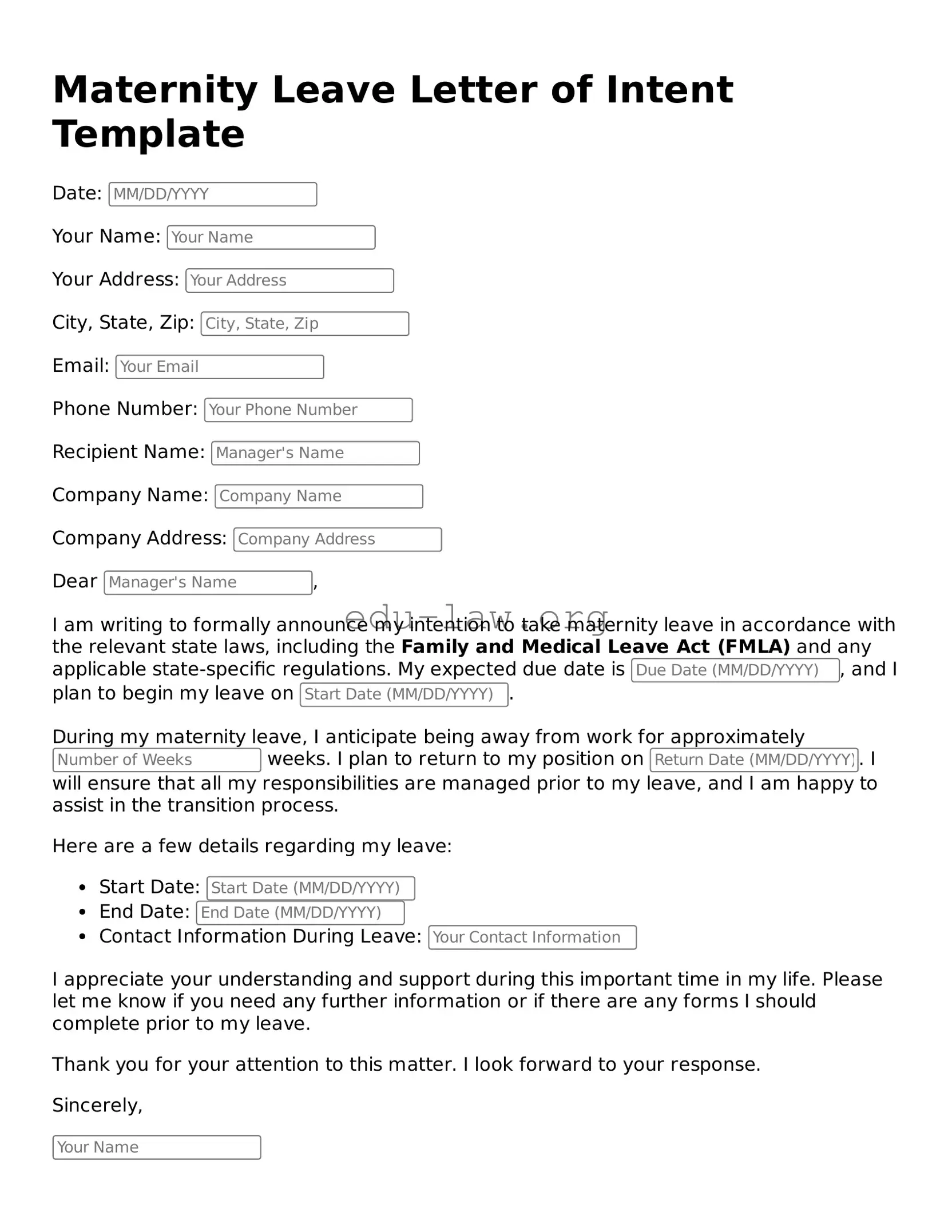
Maternity Leave Letter of Intent Template
Date:
Your Name:
Your Address:
City, State, Zip:
Email:
Phone Number:
Recipient Name:
Company Name:
Company Address:
Dear ,
I am writing to formally announce my intention to take maternity leave in accordance with the relevant state laws, including the Family and Medical Leave Act (FMLA) and any applicable state-specific regulations. My expected due date is , and I plan to begin my leave on .
During my maternity leave, I anticipate being away from work for approximately weeks. I plan to return to my position on . I will ensure that all my responsibilities are managed prior to my leave, and I am happy to assist in the transition process.
Here are a few details regarding my leave:
I appreciate your understanding and support during this important time in my life. Please let me know if you need any further information or if there are any forms I should complete prior to my leave.
Thank you for your attention to this matter. I look forward to your response.
Sincerely,
| Fact Name | Description |
|---|---|
| Purpose | The Maternity Leave Letter of Intent form is used to formally notify an employer of an employee's intention to take maternity leave. |
| Submission Timeline | Employees should submit the form at least 30 days before the expected leave date, if possible. |
| State-Specific Laws | In California, the form is governed by the California Family Rights Act (CFRA). In New York, it follows the New York State Paid Family Leave Law. |
| Confidentiality | The information provided in the form is confidential and should be handled according to company policies and applicable laws. |
After obtaining the Maternity Leave Letter of Intent form, you will need to fill it out accurately to ensure a smooth process for your maternity leave request. Follow these steps carefully to complete the form.
Once you have completed the form, submit it to your HR department or direct supervisor as per your company’s policy. They will review your request and provide you with further instructions regarding your maternity leave process.
What is a Maternity Leave Letter of Intent form?
The Maternity Leave Letter of Intent form is a document that employees submit to notify their employer of their intention to take maternity leave. This form serves as a formal request and outlines the expected duration of the leave, as well as the anticipated return date. It helps both the employee and employer plan for the temporary absence and ensure that all necessary arrangements are made in advance.
When should I submit the Maternity Leave Letter of Intent?
It is advisable to submit the Maternity Leave Letter of Intent as early as possible, ideally at least 30 days before your expected leave date. This allows your employer sufficient time to prepare for your absence and make any necessary adjustments to workloads or staffing. However, if circumstances change unexpectedly, communicate with your employer as soon as possible.
What information should be included in the form?
The Maternity Leave Letter of Intent should include your name, position, and department, as well as the expected start date of your leave and the anticipated return date. It may also be helpful to mention any plans for transitioning your responsibilities during your absence. Be sure to express your willingness to discuss any arrangements that may need to be made.
Is the Maternity Leave Letter of Intent legally required?
While the Maternity Leave Letter of Intent may not be legally required, it is a best practice to submit one. Many employers have policies that encourage or require formal notification for maternity leave. Submitting the letter helps ensure that you are following your workplace's procedures and can help protect your rights under applicable laws, such as the Family and Medical Leave Act (FMLA).
What if my maternity leave dates change?
If your maternity leave dates change, it is important to notify your employer as soon as possible. You can do this by submitting an updated Maternity Leave Letter of Intent or by discussing the changes directly with your supervisor or human resources department. Keeping open lines of communication is key to managing any adjustments to your leave plan.
Can I take maternity leave if I have not been with my employer for a full year?
Eligibility for maternity leave may depend on your employer's policies and the specific laws in your state. Under the FMLA, employees must have worked for their employer for at least 12 months to qualify for protected leave. However, some employers may offer maternity leave benefits that are more generous than the minimum requirements. Check your company's policies to understand your options.
What happens if I do not submit the Maternity Leave Letter of Intent?
Failing to submit the Maternity Leave Letter of Intent could lead to misunderstandings regarding your leave and may complicate your employer's ability to manage your absence. It may also affect your eligibility for maternity leave benefits. To avoid potential issues, it is best to follow the proper procedures and submit the form in a timely manner.
Will my job be protected during my maternity leave?
Under the FMLA, eligible employees are entitled to take up to 12 weeks of unpaid leave for maternity reasons without fear of losing their job. Employers are required to reinstate employees to their original position or an equivalent one upon their return. However, it is essential to understand your company's specific policies, as they may offer additional protections or benefits.
What should I do if I have further questions about the Maternity Leave Letter of Intent?
If you have further questions regarding the Maternity Leave Letter of Intent, consider reaching out to your human resources department or your supervisor. They can provide you with information specific to your workplace and guide you through the process. Additionally, consulting your employee handbook may offer clarity on your rights and responsibilities related to maternity leave.
Failing to provide accurate personal information. Ensure that your name, contact details, and employee identification number are correct.
Not specifying the expected start and end dates of the maternity leave. Clearly state when you plan to begin your leave and when you expect to return.
Neglecting to mention the type of leave requested. Indicate whether you are applying for paid or unpaid leave, as this can affect your benefits.
Omitting necessary documentation. Include any required medical certificates or forms that support your request for maternity leave.
Not following the company’s submission guidelines. Adhere to any specific instructions regarding how and where to submit the form.
Submitting the form late. Aim to submit your Letter of Intent well in advance of your expected leave to allow for processing time.
When preparing for maternity leave, several forms and documents complement the Maternity Leave Letter of Intent. These documents help ensure a smooth transition and provide necessary information to both the employee and employer. Here’s a brief overview of some commonly used documents.
Having these documents on hand can facilitate a more organized and informed approach to maternity leave. It’s essential to review each document carefully and consult with HR for any specific questions or clarifications.
The Maternity Leave Letter of Intent form shares similarities with the Family Leave Request form. Both documents serve to formally notify an employer of an employee's need for time away from work due to personal circumstances. The Family Leave Request form typically covers a broader range of situations, such as caring for a sick family member or addressing personal health issues. However, like the Maternity Leave Letter of Intent, it requires specific details regarding the duration of leave and the reason for the request.
Another document comparable to the Maternity Leave Letter of Intent is the Medical Leave Request form. This form is used when an employee needs to take time off for medical reasons, including pregnancy-related health issues. Both forms necessitate a clear explanation of the leave duration and may require medical documentation. While the Maternity Leave Letter is focused on childbirth, the Medical Leave Request can apply to various health concerns.
The Parental Leave Request form is also similar. This document is used by employees seeking time off to care for a new child, whether through birth or adoption. Like the Maternity Leave Letter of Intent, it outlines the expected duration of leave and the employee's intention to return to work. Both forms emphasize the importance of planning and communication with the employer regarding the employee's absence.
The Sick Leave Request form bears a resemblance as well. Employees use this form to request time off due to illness or injury. While the Sick Leave Request is typically for short-term absences, it shares the need for a clear reason for the leave and may require documentation. The Maternity Leave Letter of Intent, while often longer in duration, follows a similar structure in requesting time away from work.
The Leave of Absence Request form is another related document. This form can be used for various reasons, including personal issues, education, or family matters. It serves a broader purpose than the Maternity Leave Letter of Intent but similarly requires the employee to specify the reason for their leave and the anticipated return date. Both forms aim to ensure that the employer is informed and can plan for the employee's absence.
Finally, the Flexible Work Arrangement Request form is comparable in that it addresses the need for adjustments in work schedules. While not specifically about leave, it can relate to an employee’s desire for modified hours or remote work due to parenting responsibilities. Both forms require communication about the employee's needs and how those needs will be met while still fulfilling job responsibilities.
When filling out the Maternity Leave Letter of Intent form, it is important to approach the task with care and attention to detail. Here are some key dos and don'ts to consider:
Understanding the Maternity Leave Letter of Intent form is crucial for expectant parents. However, several misconceptions can lead to confusion. Below is a list of ten common misconceptions, along with clarifications for each.
Being informed about these misconceptions can help individuals navigate the maternity leave process more effectively.
When filling out and using the Maternity Leave Letter of Intent form, it is important to keep several key points in mind: