The Massage Health History form serves as a crucial tool for both clients and practitioners in the massage therapy field. It collects essential information about a client's medical history, current health status, and specific preferences regarding their massage experience. By asking about past and present medical conditions, such as arthritis, high blood pressure, and any recent injuries or surgeries, the form helps identify potential risks and tailor the session to the individual's needs. Clients are also prompted to share details about their stress levels, areas of tension, and any medications they may be taking. This information is vital for ensuring a safe and effective massage. Additionally, the form addresses the client's comfort preferences, including their sensitivity to touch and desired pressure levels. Finally, it includes important disclaimers about the nature of massage therapy and emphasizes the need for open communication during the session. Overall, this comprehensive form not only safeguards the client's well-being but also enhances the quality of care provided by the massage therapist.

Massage Client Health History Form
Client Information and Release Form
Name ____________________________________________________ Birth Date ____________________
Address ________________________________________________________________________________
City __________________________________________ State ________ Zip ________________________
Phone Number(s) ___________________ Home __________________ Work __________________ Cell
Referred By ________________________Is this your first massage?________________________________
General Medical History
Check the box if you have or have had recent problems with any of the following:
□ Arthritis |
□ High Blood Pressure |
□ Sinus / Allergies |
□ Bursitis |
□ Low Blood Pressure |
□ Hematomas |
□ Back Pain |
□ Poor Circulation |
□ Phlebitis |
□ Neck Pain |
□ Anemia |
□ Vericose Veins |
□ Arms / Hands (Pain) |
□ Stroke |
□ Cancer |
□ Hips / Legs / Feet (Pain) |
□ Chest Pain |
□ Skin Conditions |
□ Headaches |
□ Seizures / Convulsions |
□ Pregnant? ____# of months |
□ Swollen Joints |
□ Heart Conditions |
□ Menstrual Pain |
□ Fibromyalgia |
□ Constipation |
□ Warts |
|
|
□ Athlete’s Feet |
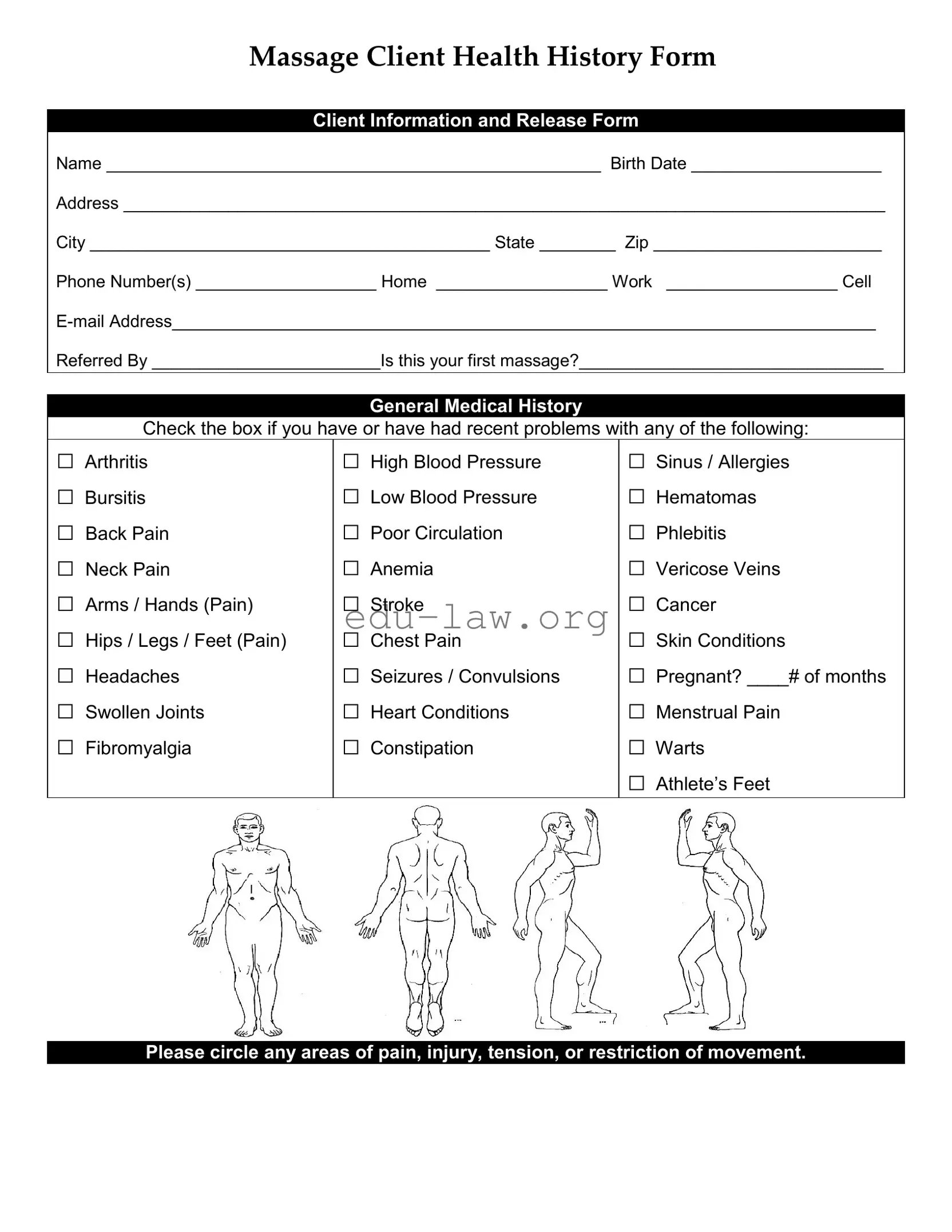
Please circle any areas of pain, injury, tension, or restriction of movement.

Have you recently suffered an acute injury? _____________________________________________
Have you had any recent surgery? ____________________________________________________
Do you have any other medical conditions that I should be aware of? _________________________
Where do you carry your stress and tension? ____________________________________________
Do you wear contacts? _____________________________________________________________
Do you have any problem areas / injuries? ______________________________________________
Do you take any prescription medications? ______________________________________________
Do you have any allergies? Yes or No, and if yes what are you allergic to? _____________________
Describe exercise activities that you do. Include Frequency. ________________________________
Are you very sensitive to touch / pressure in any areas? ____________________________________
What type of pressure do you like? ____________________________________________________
What is your goal in the session today? _________________________________________________
Please list any additional comments regarding your health and well being if needed. _____________
________________________________________________________________________________
Your answers to these questions will be discussed with you prior to your session. Thank You.
Please take a moment to carefully read the following information and sign where indicated.
I understand that the massage I receive is provided for the basic purpose of relaxation, stress reduction, and relief of muscular tension. If I experience any pain or discomfort during this session, I will immediately inform the practitioner so that the pressure and / or strokes may be adjusted to my level of comfort.
I further understand that massage should not be considered as a substitute for medical examination, diagnosis, or treatment and that I should see a physician, chiropractor, or other qualified medical specialist for any mental or physical ailment that I am aware of.
I understand that massage practitioners are not qualified to perform spinal or skeletal adjustments, diagnosis, prescribe, or treat any physical or mental illness, and that nothing said in the course of the session(s) given should be considered as such. Further, no comments or gestures that are sexual in nature will be tolerated by the massage therapist. In the event that I violate this policy, my session will be immediately terminated.
Because massage is contraindicated under certain medical conditions, I affirm that I have stated all my known medical conditions, and answered all questions honestly. I agree to keep the practitioner updated as to any changes in my medical profile, and understand that there shall not be liability on the practitioner’s part should I forget to do so.
Signature______________________________________________________Date _____________________
Consent for minors is required prior to treatment.
Signature of Guardian____________________________________________ Date _____________________
Printed name of Guardian __________________________________________________________________
Phone number the Guardian can be reached in case of emergency __________________________________
| Fact Name | Details |
|---|---|
| Purpose of Form | The Massage Health History form is designed to gather essential information about a client's medical history and current health status to ensure a safe and effective massage experience. |
| Client Information | Clients are required to provide personal details, including their name, birth date, address, and contact information, which helps in maintaining accurate records and communication. |
| Medical History | Clients must check any relevant medical conditions, such as arthritis or high blood pressure, which informs the practitioner of any potential risks during the massage. |
| Injury and Surgery Disclosure | Clients are asked if they have suffered any recent injuries or surgeries, allowing practitioners to tailor their approach based on the client's current physical state. |
| Medication and Allergies | Clients must disclose any prescription medications and allergies, ensuring the practitioner is aware of any possible contraindications during the session. |
| Pressure Sensitivity | Clients are encouraged to indicate areas of sensitivity and preferred pressure levels, promoting comfort and satisfaction during the massage. |
| Session Goals | The form asks clients to specify their goals for the session, which helps the practitioner focus on the client's needs and expectations. |
| Legal Disclaimer | The form includes a disclaimer stating that massage therapy is not a substitute for medical treatment, emphasizing the importance of consulting a healthcare provider for medical issues. |
| Consent for Minors | For clients under 18, a guardian's consent is required, ensuring that a responsible adult is involved in the decision-making process regarding the minor's treatment. |
| State-Specific Regulations | Different states may have specific laws governing massage therapy practices. Practitioners must comply with these regulations, which can include client confidentiality and informed consent requirements. |
Completing the Massage Health History form is essential for ensuring a safe and effective massage experience. The information you provide helps the practitioner understand your health status and any specific needs you may have. Follow the steps below to fill out the form accurately.
What is the purpose of the Massage Health History form?
The Massage Health History form is designed to gather important information about your health and wellness before receiving a massage. This information helps the massage therapist understand any medical conditions, areas of pain, or sensitivities you may have, ensuring a safe and effective session tailored to your needs.
Why is it important to disclose my medical history?
Disclosing your medical history is crucial for your safety. Certain medical conditions can affect how massage is administered. By sharing this information, the therapist can adjust techniques and pressure to avoid any potential complications and enhance your overall experience.
What should I do if I have a recent injury or surgery?
If you have experienced a recent injury or surgery, it is essential to inform the therapist on the form. This allows them to take extra precautions and modify the massage to avoid aggravating the affected area, ensuring your comfort and safety during the session.
How do I know if I should avoid massage therapy?
There are specific medical conditions that may contraindicate massage therapy. If you are unsure, it is best to consult with your healthcare provider. Common conditions that may require caution include severe heart conditions, recent surgeries, or any infectious diseases. Always communicate openly about your health history.
What if I have allergies or sensitivities?
It is important to note any allergies or sensitivities you may have on the form. This includes allergies to specific oils, lotions, or any other products used during the massage. By informing the therapist, they can take the necessary steps to ensure your comfort and avoid any allergic reactions.
How can I express my preferences for pressure during the massage?
The form provides a section for you to describe your preferred pressure during the session. Whether you prefer light, moderate, or deep pressure, sharing this information allows the therapist to tailor the massage to your comfort level, enhancing your overall experience.
What should I do if I feel discomfort during the session?
If you experience any pain or discomfort during the massage, it is vital to communicate this to the therapist immediately. They can adjust the pressure or techniques to ensure you remain comfortable throughout the session. Your comfort and well-being are the top priority.
Can I update my health information after filling out the form?
Yes, you should keep the therapist informed of any changes in your health status. If you develop a new condition or if any of your medical history changes, it is essential to communicate this to ensure your safety and the effectiveness of the massage therapy.
Is consent required for minors receiving massage therapy?
Yes, consent from a guardian is necessary for minors before they can receive massage therapy. This ensures that the guardian is aware of the treatment and agrees to the terms outlined in the health history form, promoting a safe and responsible approach to the therapy.
Inadequate Personal Information: Failing to provide complete personal details, such as your full name, address, or phone number, can lead to communication issues. Ensure all fields are filled out accurately to avoid any confusion.
Neglecting Medical History: Omitting relevant medical history can pose risks during your massage. It’s crucial to disclose any past or present health issues, including chronic conditions, surgeries, or injuries.
Not Mentioning Allergies: Forgetting to list allergies, especially to lotions or oils, can lead to adverse reactions. Always indicate any allergies to ensure a safe experience.
Ignoring Pain Areas: Failing to circle areas of pain or discomfort can result in an ineffective session. Clearly indicate where you feel tension or pain to allow the practitioner to tailor the massage to your needs.
Skipping Medication Information: Not disclosing prescription medications can be a significant oversight. Medications can affect how your body responds to massage, so it’s important to share this information.
Underestimating Sensitivity: If you are sensitive to touch in certain areas, it’s essential to communicate this. Not mentioning sensitivity can lead to discomfort during the session.
Failure to State Goals: Not articulating your goals for the massage can result in a session that doesn’t meet your expectations. Clearly state what you hope to achieve, whether it’s relaxation, pain relief, or stress reduction.
The Massage Health History form is an essential document that helps practitioners understand their clients' health backgrounds and tailor treatments accordingly. Alongside this form, several other documents are commonly used to ensure a comprehensive approach to client care. Here are five such forms and documents that often accompany the Massage Health History form:
These documents collectively enhance the safety and effectiveness of massage therapy by ensuring that both the practitioner and client are well-informed and in agreement about the treatment process. Together, they facilitate a professional and respectful environment that prioritizes the well-being of clients.
The Massage Health History form shares similarities with a Patient Intake Form commonly used in various healthcare settings. Both documents collect essential personal information, including name, contact details, and medical history. The Patient Intake Form also asks about allergies, current medications, and any past surgeries, just as the Massage Health History form does. This information is crucial for practitioners to ensure safe and effective care tailored to each individual's needs.
Another document that resembles the Massage Health History form is the Physical Therapy Evaluation Form. Like the Massage Health History form, it gathers detailed medical history, including any existing conditions and areas of pain. The Physical Therapy Evaluation Form often includes sections for the patient to describe their goals for therapy, which parallels the goal-setting aspect of the massage form. Both documents aim to create a comprehensive understanding of the client's health to inform treatment strategies.
The Medical History Questionnaire is yet another document that aligns with the Massage Health History form. This questionnaire serves a similar purpose by documenting a patient's health background, including chronic illnesses and recent injuries. Both forms emphasize the importance of honest and thorough responses to ensure that practitioners can provide appropriate care. Additionally, they both highlight the need for clients to communicate any changes in their health status.
Finally, the Informed Consent Form often accompanies medical or therapeutic services, including massage therapy. While its primary purpose is to obtain consent for treatment, it also provides a space for clients to disclose pertinent medical information. This aligns with the Massage Health History form's function of ensuring that the practitioner is aware of any conditions that may affect the session. Both documents emphasize the importance of transparency and informed decision-making in the therapeutic relationship.
When filling out the Massage Health History form, it’s important to approach it thoughtfully. Here are four essential do's and don'ts to keep in mind:
By following these guidelines, you can help ensure a positive and beneficial experience during your massage session.
Here are nine common misconceptions about the Massage Health History form, along with clarifications to help you better understand its purpose and importance:
Understanding these misconceptions can help you approach your massage experience with clarity and confidence. Open communication with your therapist is key to achieving the best results.
Filling out the Massage Health History form is an important step for both you and your massage therapist. Here are some key takeaways to keep in mind:
Taking the time to fill out this form thoughtfully will enhance your massage experience and promote your well-being.