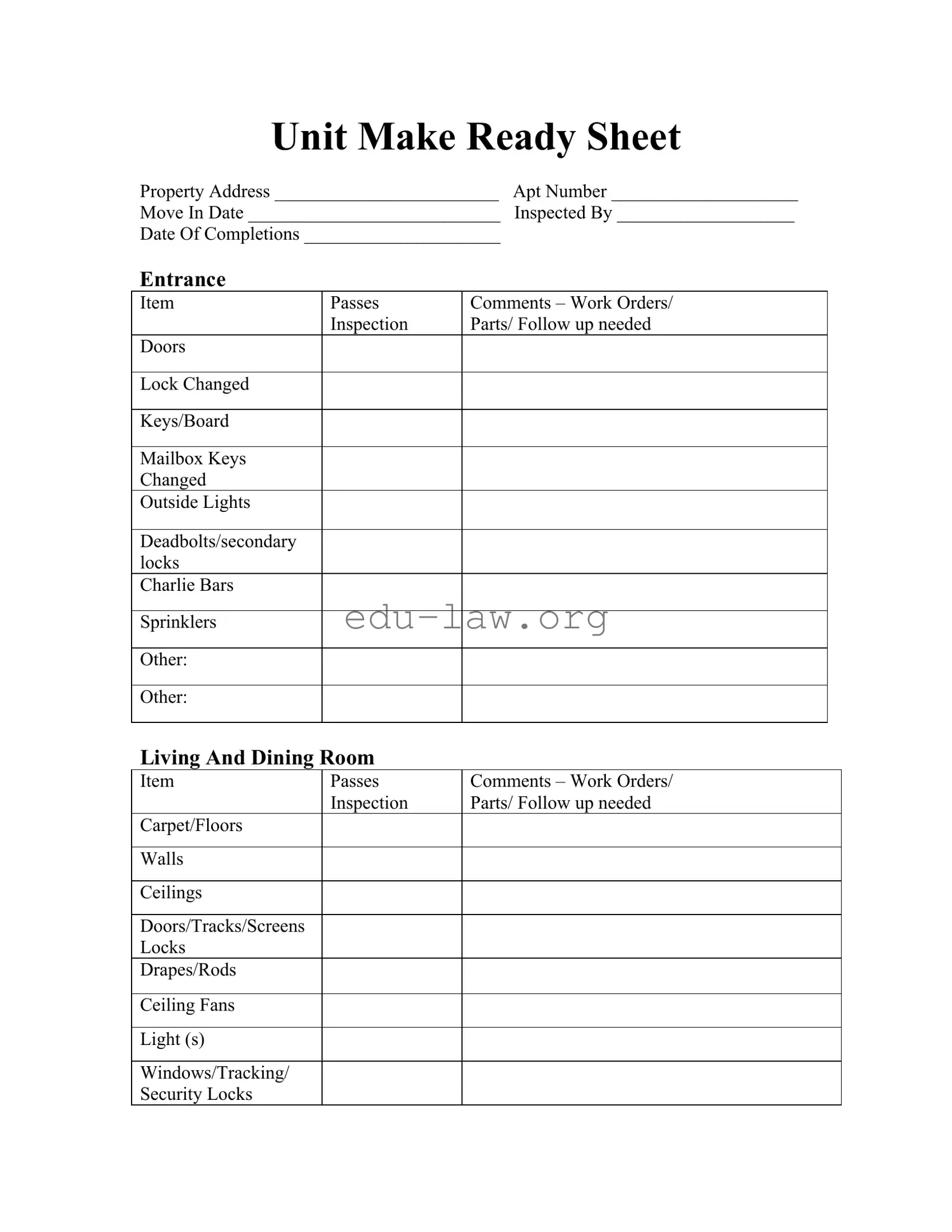
The Make Ready Checklist form serves as a comprehensive tool for property managers and maintenance teams to ensure that rental units are in optimal condition before new tenants move in. This checklist covers various aspects of the unit, including essential areas such as the entrance, living and dining room, kitchen, bedrooms, hallways, and bathrooms. Each section prompts the inspector to evaluate specific items, noting whether they pass inspection or require further work. For instance, the entrance section addresses locks, doors, and outside lights, while the kitchen section includes appliances, plumbing, and cabinetry. Comments can be added to indicate necessary work orders or follow-up actions. This structured approach helps maintain property standards and enhances tenant satisfaction by ensuring that all critical components of the unit are functioning properly and meet safety regulations. By systematically assessing each area, the form facilitates effective communication among property staff and streamlines the preparation process for new occupants.
Unit Make Ready Sheet
Property Address ________________________ Apt Number ____________________
Move In Date ___________________________ Inspected By ___________________
Date Of Completions _____________________
Entrance
Item |
Passes |
Comments – Work Orders/ |
|
Inspection |
Parts/ Follow up needed |
Doors |
|
|
|
|
|
Lock Changed |
|
|
|
|
|
Keys/Board |
|
|
|
|
|
Mailbox Keys |
|
|
Changed |
|
|
Outside Lights |
|
|
|
|
|
Deadbolts/secondary |
|
|
locks |
|
|
Charlie Bars |
|
|
|
|
|
Sprinklers |
|
|
|
|
|
Other: |
|
|
|
|
|
Other: |
|
|
|
|
|
Living And Dining Room
Item |
Passes |
Comments – Work Orders/ |
|
Inspection |
Parts/ Follow up needed |
Carpet/Floors |
|
|
|
|
|
Walls |
|
|
|
|
|
Ceilings |
|
|
|
|
|
Doors/Tracks/Screens |
|
|
Locks |
|
|
Drapes/Rods |
|
|
|
|
|
Ceiling Fans |
|
|
|
|
|
Light (s) |
|
|
|
|
|
Windows/Tracking/ |
|
|
Security Locks |
|
|
Patio/Balcony/Door
Item |
Passes |
Comments – Work Orders/ |
|
Inspection |
Parts/ Follow up needed |
Railings/Fence |
|
|
|
|
|
Floor |
|
|
|
|
|
Outside Lights |
|
|
|
|
|
Entrance Door |
|
|
Painted/Exterior |
|
|
Outside Closets |
|
|
|
|
|
Patio Door/Screen |
|
|
|
|
|
Other: |
|
|
|
|
|
Kitchen
Item |
Passes |
Comments – Work Orders/ |
|
Inspection |
Parts/ Follow up needed |
Stove/Drawer |
|
|
|
|
|
Burners |
|
|
|
|
|
Drip Pan |
|
|
Oven Door |
|
|
|
|
|
Racks |
|
|
|
|
|
Oven Liner |
|
|
Refrigerator/Rack/ |
|
|
Condensate Plate |
|
|
Light |
|
|
|
|
|
Crisper |
|
|
Thermostat |
|
|
|
|
|
Racks |
|
|
|
|
|
Dishwasher/Operating/ |
|
|
Leaking |
|
|
Basket |
|
|
|
|
|
Racks |
|
|
|
|
|
Wheels |
|
|
Sink/Stopper/Leaking |
|
|
Washer |
|
|
|
|
|
|
|
|
|
|
|
Seats |
|
|
Sprayer |
|
|
Strainer |
|
|
|
|
|
Aerator |
|
|
|
|
|
Disposal/Leaking |
|
|
Kitchen Continued
Item |
Passes |
Comments – Work Orders/ |
|
Inspection |
Parts/ Follow up needed |
Moisture Anywhere |
|
|
|
|
|
Range/Hood/Filter/Fan |
|
|
|
|
|
Walls |
|
|
|
|
|
Ceilings |
|
|
|
|
|
Floor/Tile |
|
|
|
|
|
Cabinets/Counter |
|
|
|
|
|
Lighting/Outlets/ |
|
|
Switchplates/GFI’s |
|
|
HVAC Vents |
|
|
|
|
|
Windows/Screens/ |
|
|
Locks/Pins |
|
|
Drawers |
|
|
|
|
|
Other: |
|
|
|
|
|
Other: |
|
|
|
|
|
Bedroom 1
Item |
Passes |
Comments – Work Orders/ |
|
Inspection |
Parts/ Follow up needed |
Walls |
|
|
|
|
|
Ceilings |
|
|
|
|
|
Carpets/Floors |
|
|
|
|
|
Doors/Stops |
|
|
|
|
|
Windows/Locks/ |
|
|
Screens/Pins |
|
|
Drapes/Rods |
|
|
|
|
|
Lighting/Outlets |
|
|
|
|
|
Closets/Doors |
|
|
|
|
|
A/C / Vents |
|
|
|
|
|
Other: |
|
|
|
|
|
Other: |
|
|
|
|
|
Bedroom 2
Item |
Passes |
Comments – Work Orders/ |
|
Inspection |
Parts/ Follow up needed |
Walls |
|
|
|
|
|
Ceilings |
|
|
|
|
|
Carpets/Floors |
|
|
|
|
|
Doors/Stops |
|
|
|
|
|
Windows/Locks/ |
|
|
Screens/Pins |
|
|
Drapes/Rods |
|
|
|
|
|
Lighting/Outlets |
|
|
|
|
|
Closets/Doors |
|
|
|
|
|
A/C / Vents |
|
|
|
|
|
Other: |
|
|
|
|
|
Other: |
|
|
|
|
|
Bedroom 3
Item |
Passes |
Comments – Work Orders/ |
|
Inspection |
Parts/ Follow up needed |
Walls |
|
|
|
|
|
Ceilings |
|
|
|
|
|
Carpets/Floors |
|
|
|
|
|
Doors/Stops |
|
|
|
|
|
Windows/Locks/ |
|
|
Screens/Pins |
|
|
Drapes/Rods |
|
|
|
|
|
Lighting/Outlets |
|
|
|
|
|
Closets/Doors |
|
|
|
|
|
A/C / Vents |
|
|
|
|
|
Other: |
|
|
|
|
|
Other: |
|
|
|
|
|
Hallways
Item |
Passes |
Comments – Work Orders/ |
|
Inspection |
Parts/ Follow up needed |
|
|
|
Air Handler |
|
|
|
|
|
Air Filter/Sticker |
|
|
|
|
|
Fire Extinguisher |
|
|
|
|
|
Smoke Alarm |
|
|
|
|
|
Ceilings |
|
|
|
|
|
Walls |
|
|
|
|
|
Carpet/Floors |
|
|
|
|
|
Closet/Doors |
|
|
|
|
|
Lighting/Outlets |
|
|
|
|
|
Other: |
|
|
|
|
|
Other: |
|
|
|
|
|
Bathroom 1
Item |
Passes |
Comments – Work Orders/ |
|
Inspection |
Parts/ Follow up needed |
|
|
|
Walls |
|
|
|
|
|
Ceiling |
|
|
Floor/Tiles |
|
|
|
|
|
Bath Tile/Grout |
|
|
|
|
|
Shower/Tub |
|
|
|
|
|
Toilette/Seat |
|
|
|
|
|
Check Plumbing/ |
|
|
Stopper |
|
|
|
|
|
Vent Fan |
|
|
|
|
|
Cabinet/Counter |
|
|
|
|
|
Sink |
|
|
|
|
|
Doors/Stops |
|
|
|
|
|
Lighting/Outlets/GFI’s |
|
|
|
|
|
Med Cab/Mirrors |
|
|
|
|
|
Towel Bars/Shower |
|
|
Rods |
|
|
|
|
|
Heater |
|
|
Mold/Mildew |
|
|
|
|
|
Fans |
|
|
|
|
|
Leaks |
|
|
|
|
|
Other |
|
|
|
|
|
Bathroom 2
Item |
Passes |
Comments – Work Orders/ |
|
Inspection |
Parts/ Follow up needed |
|
|
|
Walls |
|
|
|
|
|
Ceiling |
|
|
|
|
|
Floor/Tiles |
|
|
|
|
|
Bath Tile/Grout |
|
|
|
|
|
Shower/Tub |
|
|
|
|
|
Toilette/Seat |
|
|
|
|
|
Check Plumbing/ |
|
|
Stopper |
|
|
|
|
|
Vent Fan |
|
|
|
|
|
Cabinet/Counter |
|
|
Sink |
|
|
|
|
|
Doors/Stops |
|
|
|
|
|
Lighting/Outlets/GFI’s |
|
|
|
|
|
Med Cab/Mirrors |
|
|
|
|
|
Towel Bars/Shower |
|
|
Rods |
|
|
|
|
|
Heater |
|
|
|
|
|
Mold/Mildew |
|
|
|
|
|
Fans |
|
|
|
|
|
Leaks |
|
|
|
|
|
Other |
|
|
|
|
|
| Fact Name | Description |
|---|---|
| Purpose | The Make Ready Checklist is used to ensure that a rental unit is prepared for a new tenant. It covers various aspects of the property, including inspections and necessary repairs. |
| Inspection Items | The form includes a comprehensive list of items to inspect in different areas of the unit, such as the kitchen, bedrooms, and bathrooms, ensuring nothing is overlooked. |
| Completion Tracking | It allows for tracking the completion of tasks through comments and work orders, facilitating communication between maintenance staff and property management. |
| State-Specific Forms | Some states may require specific forms or adherence to local laws regarding rental property conditions. For example, California's Civil Code § 1941 outlines the landlord's duty to maintain habitable premises. |
| Documentation | Properly completed checklists serve as documentation for compliance with housing regulations and can protect property owners in case of disputes with tenants. |
Completing the Make Ready Checklist form is essential for ensuring that a property is ready for new tenants. This process involves inspecting various aspects of the unit and documenting any necessary repairs or follow-ups. Follow the steps below to accurately fill out the form.
Next, move through each section of the checklist. For every item listed, mark whether it Passes or requires comments regarding Work Orders/Inspection Parts/Follow-up needed.
After completing all sections, review the form for accuracy. Ensure that all comments and necessary follow-ups are clearly noted. This will help maintain the property and provide a smooth transition for new tenants.
What is the purpose of the Make Ready Checklist form?
The Make Ready Checklist form serves as a comprehensive guide for property managers and maintenance teams to ensure that a rental unit is in optimal condition before new tenants move in. It helps to identify any necessary repairs or cleaning tasks that need to be completed, ensuring that the unit is safe, functional, and welcoming for the incoming residents.
What items are typically inspected on the checklist?
The checklist covers various areas of the unit, including the entrance, living and dining room, kitchen, bedrooms, hallways, and bathrooms. Specific items include doors, windows, appliances, plumbing fixtures, and lighting. Each section prompts the inspector to note whether items pass inspection and to provide comments on any needed work orders or follow-ups.
How can the checklist help in maintaining property standards?
By using the Make Ready Checklist, property managers can systematically address maintenance issues and ensure that all units meet established standards before new tenants arrive. This proactive approach can enhance tenant satisfaction, reduce turnover, and ultimately protect the property’s value.
Who is responsible for completing the Make Ready Checklist?
What should be done if an item fails inspection?
If an item fails inspection, it should be documented in the comments section of the checklist. The property manager should then create a work order to address the issue, assigning it to the appropriate maintenance personnel. Follow-up inspections may be necessary to ensure that all repairs have been completed satisfactorily.
Can tenants view the Make Ready Checklist?
How often should the checklist be updated?
Is there a specific timeline for completing the checklist?
What happens if maintenance issues are overlooked?
Neglecting to Fill in All Required Information: It’s essential to complete every section of the checklist. Leaving out the property address, apartment number, or move-in date can lead to confusion later on.
Skipping Inspections: Each item listed should be inspected thoroughly. Missing items can result in unresolved issues that affect the tenant's experience.
Not Providing Comments: Comments are crucial for clarity. If an item doesn’t pass inspection, detailing the necessary work orders or follow-up needed helps ensure the issues are addressed.
Overlooking Safety Features: Items like smoke alarms and fire extinguishers must be checked. Failing to ensure these are functional can pose serious risks to tenants.
Ignoring Maintenance Issues: If there are signs of leaks or mold, they should be noted. Ignoring these problems can lead to bigger issues down the line.
Inconsistent Use of Terminology: Using different terms for the same items can create confusion. Consistency helps everyone understand what is being referred to.
Failing to Document Follow-Up Actions: If a work order is needed, it should be clearly stated. This ensures that all necessary repairs are tracked and completed.
Not Checking for Accessibility: Ensure that all areas, including hallways and entrances, are accessible. This is vital for tenants with mobility challenges.
Rushing the Process: Taking time to carefully inspect each area can prevent future problems. A rushed checklist may overlook critical issues.
The Make Ready Checklist form is an essential tool used to ensure that a property is prepared for new tenants. It outlines various inspection points across different areas of a unit, helping to identify any necessary repairs or maintenance. Alongside this checklist, several other forms and documents are commonly utilized to streamline the process of preparing a rental unit. Here’s a brief overview of those documents:
Using these documents in conjunction with the Make Ready Checklist helps create a comprehensive system for managing rental properties. Each form plays a vital role in ensuring that both landlords and tenants have a clear understanding of their rights and responsibilities, contributing to a smoother rental experience.
The Move-In Inspection Checklist serves a similar purpose to the Make Ready Checklist. It is used to assess the condition of a rental unit before a new tenant moves in. This document allows property managers to document any existing issues, ensuring that both the landlord and tenant are aware of the unit's condition. This helps prevent disputes over security deposits later on. The checklist typically includes sections for each room in the apartment, much like the Make Ready Checklist, and provides space for comments regarding repairs or maintenance needed.
The Property Condition Report is another document that shares similarities with the Make Ready Checklist. This report is often used during the leasing process to provide a detailed account of the unit's condition at the time of a tenant's move-in. It includes information about the state of appliances, fixtures, and overall cleanliness. Both documents serve to protect the interests of both landlords and tenants by clearly outlining the condition of the property, which can be referenced in case of disputes.
The Inspection Report is commonly utilized by property management companies to evaluate the condition of a rental unit at various points throughout the lease term. This document often mirrors the structure of the Make Ready Checklist, detailing specific areas of the property and noting any issues that require attention. Regular inspections help ensure that maintenance is conducted timely, and they can be crucial for maintaining the property’s value over time.
The Maintenance Request Form is similar in that it allows tenants to report issues that need to be addressed. While the Make Ready Checklist focuses on preparing a unit for a new tenant, the Maintenance Request Form is used during a tenant's occupancy. Both documents emphasize the importance of keeping the property in good condition, although they serve different stages of the rental process.
The Lease Agreement often includes a section that outlines the condition of the property upon move-in, which is closely related to the Make Ready Checklist. This section may reference the checklist itself, providing a legal basis for the condition of the unit. By documenting the state of the property in the lease, landlords can ensure that tenants are aware of their responsibilities regarding maintenance and care.
The Turnover Inspection Report is used when a tenant vacates a unit, similar to the Make Ready Checklist used for move-ins. This report assesses the condition of the unit after a tenant leaves and identifies any necessary repairs or cleaning required before the next tenant moves in. Both documents are essential for maintaining property standards and ensuring that any damages are documented and addressed appropriately.
The Tenant Move-Out Checklist is another document that aligns with the Make Ready Checklist. It provides tenants with a guide to help them prepare the unit for their departure. This checklist often includes tasks such as cleaning, repairs, and reminders about returning keys. By following this checklist, tenants can help ensure a smooth transition and protect their security deposit.
The Property Inspection Log is a record that tracks all inspections conducted on a rental property. Similar to the Make Ready Checklist, it documents findings and necessary repairs. This log can be invaluable for property managers to maintain an ongoing record of the property's condition and ensure compliance with safety and maintenance standards.
Lastly, the Move-Out Inspection Checklist is comparable to the Make Ready Checklist in that it focuses on the condition of the property but from the perspective of a departing tenant. This checklist allows property managers to evaluate the unit's state after a tenant leaves, ensuring that any damages are noted and addressed. Both documents aim to protect the interests of landlords and tenants by clearly documenting the condition of the property at critical points in the rental process.
When filling out the Make Ready Checklist form, it's important to follow certain guidelines to ensure accuracy and clarity. Here are seven things you should and shouldn't do:
Here are seven common misconceptions about the Make Ready Checklist form:
Here are some key takeaways for filling out and using the Make Ready Checklist form: