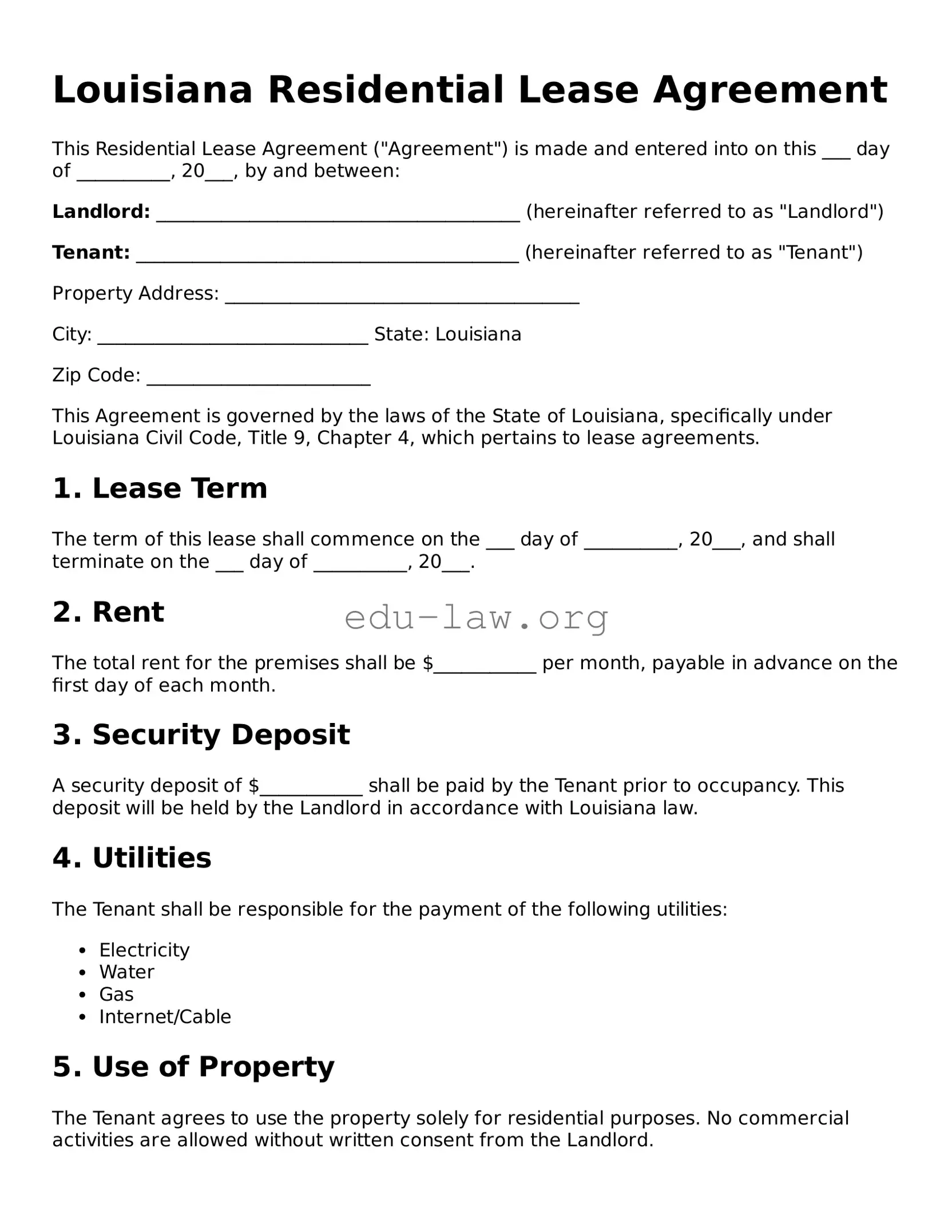
The Louisiana Residential Lease Agreement is a crucial document for both landlords and tenants, outlining the terms and conditions of renting a residential property in the state. This form typically includes key details such as the names of the parties involved, the property address, and the duration of the lease. Rent amount and payment terms are clearly specified, along with security deposit requirements and maintenance responsibilities. Additionally, the agreement addresses rules regarding pets, utilities, and the process for terminating the lease. By establishing these guidelines, the Residential Lease Agreement aims to protect the rights of both parties and ensure a clear understanding of their obligations. Understanding this form is essential for anyone entering into a rental arrangement in Louisiana, as it helps prevent disputes and fosters a positive landlord-tenant relationship.
Louisiana Residential Lease Agreement
This Residential Lease Agreement ("Agreement") is made and entered into on this ___ day of __________, 20___, by and between:
Landlord: _______________________________________ (hereinafter referred to as "Landlord")
Tenant: _________________________________________ (hereinafter referred to as "Tenant")
Property Address: ______________________________________
City: _____________________________ State: Louisiana
Zip Code: ________________________
This Agreement is governed by the laws of the State of Louisiana, specifically under Louisiana Civil Code, Title 9, Chapter 4, which pertains to lease agreements.
1. Lease Term
The term of this lease shall commence on the ___ day of __________, 20___, and shall terminate on the ___ day of __________, 20___.
2. Rent
The total rent for the premises shall be $___________ per month, payable in advance on the first day of each month.
3. Security Deposit
A security deposit of $___________ shall be paid by the Tenant prior to occupancy. This deposit will be held by the Landlord in accordance with Louisiana law.
4. Utilities
The Tenant shall be responsible for the payment of the following utilities:
5. Use of Property
The Tenant agrees to use the property solely for residential purposes. No commercial activities are allowed without written consent from the Landlord.
6. Maintenance and Repairs
The Tenant shall maintain the property in a clean and sanitary condition. Any necessary repairs must be reported to the Landlord promptly.
7. Termination
Either party may terminate this Agreement by providing written notice at least ___ days prior to the intended termination date.
8. Governing Law
This Agreement shall be governed by and construed in accordance with the laws of the State of Louisiana.
IN WITNESS WHEREOF, the parties have executed this Residential Lease Agreement as of the date first above written.
Landlord Signature: ____________________________ Date: ___________
Tenant Signature: _____________________________ Date: ___________
| Fact Name | Description |
|---|---|
| Governing Law | The Louisiana Residential Lease Agreement is governed by Louisiana Civil Code, particularly Articles 2668 to 2721. |
| Parties Involved | The agreement involves a landlord and a tenant, both of whom must be clearly identified. |
| Property Description | A detailed description of the rental property must be included, specifying the address and any relevant features. |
| Lease Term | The lease term should be clearly stated, whether it's for a fixed period or month-to-month. |
| Rent Amount | The total rent amount and payment due dates must be specified in the agreement. |
| Security Deposit | The agreement must outline the amount of the security deposit and conditions for its return. |
| Maintenance Responsibilities | Responsibilities for maintenance and repairs should be clearly defined for both parties. |
| Pet Policy | The lease should state whether pets are allowed and any associated fees or restrictions. |
| Termination Conditions | Conditions under which the lease may be terminated should be clearly outlined. |
| Signatures | Both the landlord and tenant must sign the agreement for it to be legally binding. |
Filling out the Louisiana Residential Lease Agreement form is a straightforward process that requires attention to detail. Once completed, this form serves as a binding contract between the landlord and tenant, outlining the terms of the rental arrangement.
What is a Louisiana Residential Lease Agreement?
A Louisiana Residential Lease Agreement is a legal document that outlines the terms and conditions under which a landlord rents property to a tenant. This agreement covers important details such as the rental amount, duration of the lease, and responsibilities of both parties. It serves to protect the rights of both the landlord and the tenant throughout the rental period.
What should be included in a Louisiana Residential Lease Agreement?
The agreement should include several key elements. These include the names of the landlord and tenant, the property address, rental amount, payment due dates, lease duration, and security deposit details. Additionally, it should outline rules regarding maintenance, repairs, and any restrictions on the property. Clear terms about late fees and the process for terminating the lease are also essential.
How long does a typical lease last in Louisiana?
In Louisiana, a residential lease can vary in length, but it is commonly set for one year. However, leases can also be month-to-month or for a shorter duration, depending on the agreement between the landlord and tenant. It’s important to specify the lease term in the document to avoid confusion.
Can a landlord increase the rent during the lease term?
Generally, a landlord cannot increase the rent during the lease term unless the lease specifically allows for it. If the lease is month-to-month, the landlord may raise the rent by providing proper notice, usually 30 days in advance. Always check the lease terms for any specific clauses regarding rent increases.
What happens if a tenant wants to break the lease early?
If a tenant wishes to break the lease early, they may be subject to penalties as outlined in the agreement. Often, the tenant must provide written notice and may need to pay a fee or continue paying rent until a new tenant is found. It’s important for tenants to read their lease carefully and understand the consequences of breaking the agreement.
Is a security deposit required in Louisiana?
Yes, a security deposit is typically required in Louisiana. This deposit is meant to cover potential damages or unpaid rent. The amount can vary, but it usually cannot exceed one month's rent. The landlord must return the deposit within a specific timeframe after the lease ends, minus any deductions for damages or unpaid rent.
What should tenants do if there is a dispute with the landlord?
If a dispute arises, tenants should first try to resolve the issue directly with the landlord. Clear communication can often lead to a solution. If that fails, tenants may seek assistance from local housing authorities or legal aid organizations. In some cases, mediation or small claims court may be necessary to settle the disagreement.
Not reading the entire lease carefully: Many people skim through the lease agreement, missing important details that could affect their rights and responsibilities.
Failing to include all necessary information: Omitting details like the tenant's full name, the rental property address, or the lease term can lead to confusion later.
Ignoring the lease start and end dates: Clearly specifying when the lease begins and ends is crucial. Without these dates, disputes may arise.
Not documenting the security deposit: It’s essential to note the amount of the security deposit and the conditions for its return to avoid misunderstandings.
Overlooking maintenance responsibilities: The lease should clearly outline who is responsible for maintenance and repairs. Failing to do so can lead to disputes between landlords and tenants.
Neglecting to specify pet policies: If pets are allowed or prohibited, this must be explicitly stated in the lease to prevent future conflicts.
Not understanding the consequences of breaking the lease: Tenants should be aware of the penalties or fees associated with breaking the lease early.
Forgetting to include the landlord's contact information: Providing a way for tenants to reach the landlord for urgent matters is essential for effective communication.
Not discussing lease modifications: If any changes or amendments are made after the lease is signed, they should be documented in writing to ensure clarity.
When entering into a rental agreement in Louisiana, several additional documents may be necessary to ensure clarity and protection for both landlords and tenants. These documents help outline the rights and responsibilities of each party, providing a comprehensive understanding of the leasing arrangement. Below is a list of commonly used forms that complement the Louisiana Residential Lease Agreement.
Utilizing these documents alongside the Louisiana Residential Lease Agreement helps create a smoother rental experience. They provide clarity, set expectations, and protect the interests of both landlords and tenants. Understanding these forms can make the leasing process more manageable and less stressful for everyone involved.
The Louisiana Commercial Lease Agreement serves a similar purpose to the Residential Lease Agreement but is tailored for commercial properties. This document outlines the terms under which a business can rent space for operations. It includes specifics such as rent amount, lease duration, and responsibilities for maintenance. Both agreements establish a legal framework for the landlord-tenant relationship, ensuring that both parties understand their rights and obligations.
The Louisiana Rental Application is another document related to leasing agreements. This form is used by landlords to screen potential tenants before entering into a lease. It collects personal information, rental history, and financial details. While the Residential Lease Agreement formalizes the rental terms, the Rental Application helps landlords make informed decisions about prospective tenants.
The Louisiana Lease Renewal Agreement is similar in that it extends the terms of an existing lease. This document is used when both parties agree to continue the rental relationship beyond the original lease term. It typically includes updated terms or conditions and requires signatures from both the landlord and tenant. Like the Residential Lease Agreement, it serves to clarify expectations and responsibilities for the continued rental period.
The Louisiana Sublease Agreement allows a tenant to rent out their leased property to another individual. This document outlines the terms under which the subtenant will occupy the space. It is similar to the Residential Lease Agreement in that it specifies rent, duration, and responsibilities but involves an additional party. Both agreements require clear communication about expectations and obligations.
The Louisiana Month-to-Month Lease Agreement provides flexibility for both landlords and tenants. This type of lease does not have a fixed term and can be terminated with short notice. Like the Residential Lease Agreement, it outlines rent and responsibilities, but it allows for more fluid arrangements. This document is useful for those who may not want a long-term commitment.
The Louisiana Lease Termination Notice is a formal document that either party can use to end a lease agreement. It specifies the intent to terminate and provides a timeline for vacating the property. This document is similar to the Residential Lease Agreement in that it addresses the end of the rental relationship, ensuring both parties are aware of their rights and obligations regarding the termination process.
The Louisiana Rent Receipt is a document that provides proof of payment for rent. It is often issued by landlords after receiving rent payments. While not a lease agreement, it is related as it confirms compliance with the terms outlined in the Residential Lease Agreement. Both documents contribute to the financial record-keeping necessary for the rental relationship.
The Louisiana Security Deposit Agreement outlines the terms regarding the security deposit collected by the landlord. It specifies the amount, conditions for its return, and any deductions that may apply. This document is similar to the Residential Lease Agreement in that it protects both the landlord's and tenant's interests by clarifying financial responsibilities and expectations.
The Louisiana Lease Option Agreement allows a tenant the option to purchase the property at a later date. This document includes terms for both renting and the potential purchase. Similar to the Residential Lease Agreement, it outlines rent and responsibilities but also incorporates the future purchase option, providing tenants with an opportunity to invest in the property.
The Louisiana Eviction Notice is a document used by landlords to formally notify tenants of lease violations. It specifies the reason for eviction and the time frame for the tenant to remedy the situation or vacate the property. While it is not a lease agreement, it is related to the Residential Lease Agreement as it enforces the terms of the lease and protects the landlord's rights.
When filling out the Louisiana Residential Lease Agreement form, it's essential to be mindful of certain practices. Here’s a list of things you should and shouldn't do:
Understanding the Louisiana Residential Lease Agreement form is crucial for both landlords and tenants. However, several misconceptions exist about this document. Here are ten common misconceptions:
Each lease agreement can vary based on specific terms and conditions. The Louisiana Residential Lease Agreement has unique provisions that reflect state laws.
While verbal agreements may seem valid, they are difficult to enforce. A written lease is essential for clarity and legal protection.
Breaking a lease can lead to financial penalties. Tenants should understand the terms regarding early termination.
Landlords must provide notice before entering the rental property, except in emergencies. This protects tenant privacy rights.
Security deposits can be refunded if the property is left in good condition. Landlords must follow state laws regarding deductions.
Landlords are generally responsible for maintaining the property and addressing necessary repairs. Tenants should report issues promptly.
A signed lease is a binding contract. Both parties must sign to enforce the terms outlined in the agreement.
Landlords must follow the lease terms regarding rent increases. Typically, notice is required before any increase takes effect.
Whether pets are allowed depends on the lease terms. Tenants should verify the pet policy before signing.
Lease agreements can be for various durations, including month-to-month arrangements. The length should be specified in the lease.
When filling out and using the Louisiana Residential Lease Agreement form, keep the following key takeaways in mind: