The Louisiana Real Estate Purchase Agreement is a crucial document in the home buying process, serving as a legally binding contract between buyers and sellers. This form outlines essential details such as the purchase price, property description, and terms of sale, ensuring that both parties have a clear understanding of their obligations. It includes provisions for earnest money deposits, financing contingencies, and inspection rights, all designed to protect the interests of both the buyer and seller. Additionally, the agreement addresses potential issues like repairs and closing costs, helping to facilitate a smooth transaction. By clearly defining the terms and conditions, this form plays a vital role in preventing misunderstandings and disputes, ultimately guiding both parties through the complexities of real estate transactions in Louisiana.
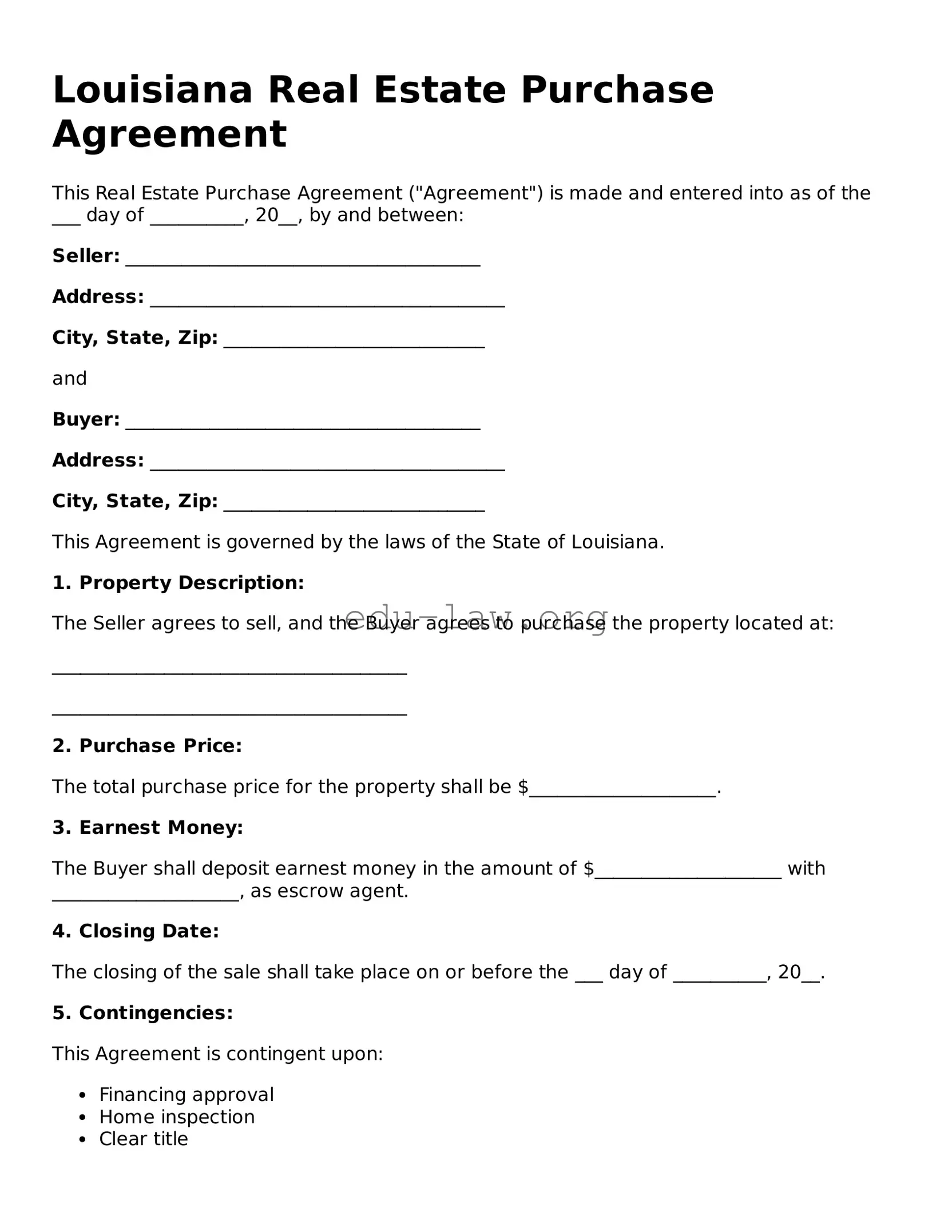
Louisiana Real Estate Purchase Agreement
This Real Estate Purchase Agreement ("Agreement") is made and entered into as of the ___ day of __________, 20__, by and between:
Seller: ______________________________________
Address: ______________________________________
City, State, Zip: ____________________________
and
Buyer: ______________________________________
Address: ______________________________________
City, State, Zip: ____________________________
This Agreement is governed by the laws of the State of Louisiana.
1. Property Description:
The Seller agrees to sell, and the Buyer agrees to purchase the property located at:
______________________________________
______________________________________
2. Purchase Price:
The total purchase price for the property shall be $____________________.
3. Earnest Money:
The Buyer shall deposit earnest money in the amount of $____________________ with ____________________, as escrow agent.
4. Closing Date:
The closing of the sale shall take place on or before the ___ day of __________, 20__.
5. Contingencies:
This Agreement is contingent upon:
6. Disclosures:
The Seller shall provide all required disclosures as mandated by Louisiana state law.
7. Signatures:
IN WITNESS WHEREOF, the parties hereto have executed this Agreement as of the date first above written.
Seller's Signature: ___________________________
Date: ___________________________
Buyer's Signature: ___________________________
Date: ___________________________
| Fact Name | Details |
|---|---|
| Governing Law | The Louisiana Real Estate Purchase Agreement is governed by Louisiana state law. |
| Purpose | This form outlines the terms and conditions of a real estate transaction in Louisiana. |
| Parties Involved | The agreement typically includes a buyer and a seller, each identified clearly. |
| Property Description | A detailed description of the property being sold is required, including address and legal description. |
| Purchase Price | The total purchase price must be specified, along with any deposit amounts. |
| Contingencies | Buyers may include contingencies, such as financing or inspection requirements. |
| Closing Date | The agreement should state the anticipated closing date for the transaction. |
| Disclosure Requirements | Sellers are required to disclose any known issues with the property, such as structural problems or pest infestations. |
| Signatures | Both parties must sign the agreement for it to be legally binding. |
| Amendments | Any changes to the agreement must be made in writing and signed by both parties. |
Completing the Louisiana Real Estate Purchase Agreement form is a crucial step in the property transaction process. This form outlines the terms and conditions agreed upon by both the buyer and seller. After filling out the form, the next step typically involves reviewing the details with all parties involved and moving forward with the necessary legal procedures.
What is a Louisiana Real Estate Purchase Agreement?
The Louisiana Real Estate Purchase Agreement is a legal document that outlines the terms and conditions under which a buyer agrees to purchase a property from a seller. This agreement serves as a binding contract, detailing important aspects such as the purchase price, closing date, and any contingencies that must be met before the sale is finalized. It is essential for both parties to understand the implications of this agreement, as it protects their rights and responsibilities throughout the transaction.
What key components should be included in the agreement?
A comprehensive Louisiana Real Estate Purchase Agreement typically includes several critical components. First, it should specify the names of the buyer and seller, along with the property address and legal description. Additionally, the purchase price must be clearly stated, along with any earnest money deposit. The agreement should outline the closing process, including the date and location, and detail any contingencies, such as financing or inspections, that must be satisfied for the sale to proceed. Lastly, it should include provisions for disclosures, warranties, and any applicable fees.
How does the earnest money deposit work?
The earnest money deposit is a sum of money that the buyer submits to demonstrate their serious intent to purchase the property. This deposit is typically held in escrow until the transaction is completed. If the sale goes through, the earnest money is usually applied to the buyer's down payment or closing costs. However, if the buyer backs out of the agreement without a valid reason as outlined in the contract, they may forfeit this deposit to the seller as compensation for the time and resources lost.
What are contingencies, and why are they important?
Contingencies are specific conditions that must be met for the purchase agreement to remain valid. Common contingencies include obtaining financing, passing a home inspection, or selling the buyer's current home. These clauses are crucial because they protect the buyer's interests. If a contingency is not satisfied, the buyer may have the right to terminate the agreement without losing their earnest money. Understanding and negotiating these contingencies can significantly impact the success of a real estate transaction.
Can the agreement be modified after it is signed?
Yes, the Louisiana Real Estate Purchase Agreement can be modified after it is signed, but both parties must agree to the changes. Any modifications should be documented in writing and signed by both the buyer and seller to ensure clarity and enforceability. It is advisable to consult with a real estate attorney or agent when making changes to the agreement to avoid potential disputes later on.
What happens if either party breaches the agreement?
If either party fails to fulfill their obligations under the Louisiana Real Estate Purchase Agreement, it constitutes a breach of contract. The non-breaching party may have several options, including seeking damages, specific performance, or termination of the agreement. Specific performance means that the court could order the breaching party to complete the transaction as originally agreed. Legal remedies can be complex, so consulting a legal professional is often beneficial in these situations.
Is it necessary to have a lawyer review the agreement?
While it is not legally required to have a lawyer review the Louisiana Real Estate Purchase Agreement, it is highly recommended. A qualified attorney can help identify potential issues, ensure that the agreement complies with state laws, and protect your interests. Real estate transactions involve significant financial investments, and having legal guidance can provide peace of mind and clarity throughout the process.
Incomplete Information: One common mistake is failing to provide all necessary details. Buyers and sellers must ensure that names, addresses, and contact information are filled out completely. Missing even one piece of information can lead to confusion or delays.
Incorrect Dates: Another frequent error involves dates. It's crucial to specify the correct date for the agreement, as well as any deadlines for contingencies or closing. An incorrect date can complicate the transaction process.
Neglecting Contingencies: Many people overlook the importance of contingencies. Buyers should include conditions such as financing, inspections, or appraisals. Without these, they may find themselves in a difficult position later.
Ignoring Property Details: Failing to accurately describe the property is a significant mistake. The agreement should include the property’s legal description, address, and any relevant features. Ambiguities can lead to disputes down the line.
Not Understanding Terms: Lastly, many individuals do not fully grasp the terms of the agreement. It’s essential to read and understand each section before signing. Misinterpretations can result in unintended obligations or liabilities.
The Louisiana Real Estate Purchase Agreement is a key document in real estate transactions. However, several other forms and documents are often utilized in conjunction with this agreement to ensure clarity and compliance with state laws. Below is a list of these documents, each serving a specific purpose in the transaction process.
These documents play a crucial role in facilitating a smooth real estate transaction in Louisiana. Understanding their purpose can help both buyers and sellers navigate the complexities of the process more effectively.
The Louisiana Real Estate Purchase Agreement is similar to the Purchase and Sale Agreement commonly used in other states. Both documents outline the terms and conditions under which a buyer agrees to purchase real property from a seller. They typically include details such as the purchase price, closing date, and contingencies, ensuring that both parties understand their obligations. While the names may differ, the core purpose remains the same: to formalize the agreement between buyer and seller regarding the sale of real estate.
Another document that shares similarities is the Residential Purchase Agreement. This form is specifically designed for residential properties and includes provisions that address unique aspects of buying a home, such as inspections, disclosures, and financing contingencies. Like the Louisiana Real Estate Purchase Agreement, it serves to protect both parties and clarify their responsibilities throughout the transaction process.
The Commercial Real Estate Purchase Agreement is another comparable document, tailored for commercial properties. It includes terms that reflect the complexities of commercial transactions, such as zoning laws and tenant leases. While the focus is different from residential agreements, both documents aim to facilitate a smooth transfer of property ownership, ensuring that all necessary terms are clearly outlined and agreed upon.
The Option to Purchase Agreement is similar in that it grants a buyer the right, but not the obligation, to purchase a property at a specified price within a certain timeframe. This document can be used in conjunction with a Real Estate Purchase Agreement, providing flexibility for buyers who may need more time to finalize their decision. Both agreements ensure that the seller cannot sell the property to someone else during the option period.
The Lease Purchase Agreement combines elements of a lease and a purchase agreement. This document allows a tenant to rent a property with the option to buy it later. It outlines the terms of the lease as well as the conditions under which the tenant can purchase the property. Similar to the Louisiana Real Estate Purchase Agreement, it establishes clear expectations and responsibilities for both parties involved.
A Real Estate Sales Contract is another document that serves a similar purpose. This contract outlines the terms of a property sale, including the price, payment terms, and contingencies. Like the Louisiana Real Estate Purchase Agreement, it is legally binding and protects the interests of both the buyer and the seller, ensuring that all parties adhere to the agreed-upon terms.
The Escrow Agreement is related to the purchase process, as it involves a neutral third party holding funds or documents until all conditions of the sale are met. While it does not serve as a purchase agreement itself, it works in tandem with the Louisiana Real Estate Purchase Agreement by providing security for both parties during the transaction. This ensures that neither party can access the funds until the sale is finalized.
The Real Estate Listing Agreement, though slightly different in purpose, shares similarities in its role within the real estate transaction process. This document outlines the terms under which a real estate agent represents a seller. It establishes the agent's commission and the duration of the listing. Both agreements are essential for facilitating the sale of a property, ensuring that all parties are on the same page regarding expectations and responsibilities.
The Buyer’s Agency Agreement is another document that aligns with the Louisiana Real Estate Purchase Agreement. It establishes a formal relationship between a buyer and their real estate agent, detailing the agent's duties and the buyer's obligations. While it does not directly involve the sale of property, it plays a crucial role in guiding the buyer through the purchasing process, much like the purchase agreement itself.
Lastly, the Property Disclosure Statement is a document that complements the Real Estate Purchase Agreement by providing essential information about the property’s condition. Sellers are often required to disclose known issues or defects, ensuring that buyers are fully informed before finalizing their purchase. This transparency helps to build trust and can prevent disputes later in the transaction process, aligning with the objectives of the purchase agreement.
When filling out the Louisiana Real Estate Purchase Agreement form, it is essential to follow certain guidelines to ensure accuracy and compliance. Here are eight things to consider:
The Louisiana Real Estate Purchase Agreement form is a crucial document in real estate transactions, but several misconceptions surround it. Understanding these misconceptions can help buyers and sellers navigate the process more effectively. Here are five common misunderstandings:
This is not true. The Louisiana Real Estate Purchase Agreement can be used for both residential and commercial properties. Regardless of the type of property, having a formal agreement helps protect the interests of both parties involved in the transaction.
This misconception overlooks the possibility of amendments. While the agreement is binding once signed, parties can negotiate changes before closing. Any modifications should be documented in writing to ensure clarity and legality.
This is false. While real estate agents are trained to handle these documents, buyers and sellers can also fill out the agreement themselves. However, it is advisable to seek legal advice to ensure all necessary terms are included and understood.
Signing the agreement does not guarantee that the sale will be completed. Various factors, such as financing issues or inspection results, can affect whether the transaction closes. It is important for both parties to remain aware of these potential hurdles.
While many terms in the agreement can be negotiated, some aspects, like the purchase price, may be subject to market conditions and other factors. It is essential to approach negotiations with a clear understanding of what is reasonable based on the property’s value and market trends.
When filling out and using the Louisiana Real Estate Purchase Agreement form, several key points should be considered to ensure a smooth transaction. Here are some important takeaways:
By keeping these points in mind, individuals can navigate the Louisiana Real Estate Purchase Agreement form more effectively.