The Louisiana Power of Attorney for a Child form is a crucial legal document that empowers a designated adult to make decisions on behalf of a minor child. This form is particularly useful for parents or guardians who may need to delegate authority temporarily due to various circumstances, such as travel, medical emergencies, or other situations that require someone else to act in their stead. The form outlines the specific powers granted, which can include making educational decisions, consenting to medical treatment, and managing the child's daily care. It is essential to ensure that the document is properly executed to avoid any potential legal complications. By understanding the key components of this form, including the rights it grants and the limitations it may impose, parents can make informed decisions that prioritize the well-being of their children. Timely completion of this form can provide peace of mind and ensure that a trusted individual can step in when necessary, safeguarding the child's interests in the process.
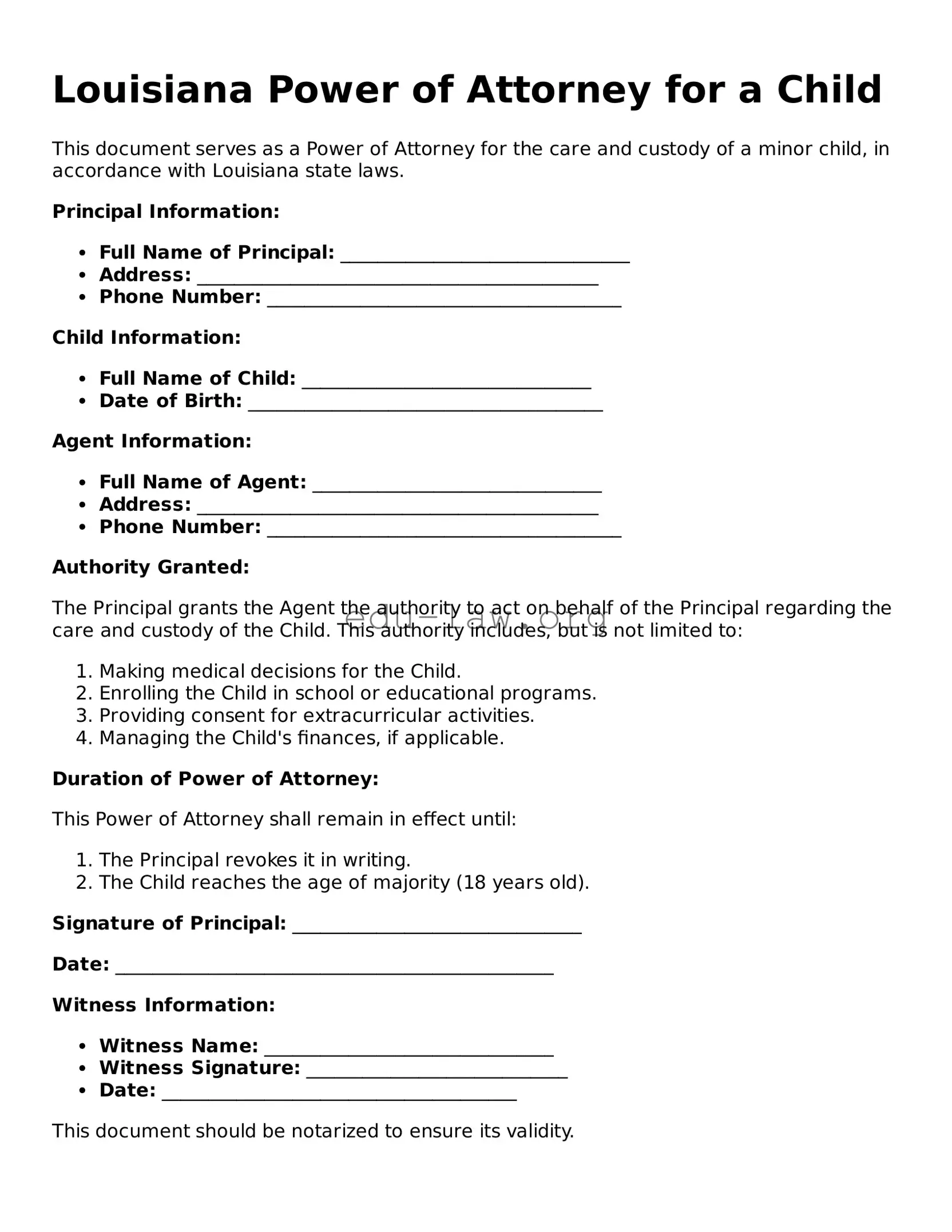
Louisiana Power of Attorney for a Child
This document serves as a Power of Attorney for the care and custody of a minor child, in accordance with Louisiana state laws.
Principal Information:
Child Information:
Agent Information:
Authority Granted:
The Principal grants the Agent the authority to act on behalf of the Principal regarding the care and custody of the Child. This authority includes, but is not limited to:
Duration of Power of Attorney:
This Power of Attorney shall remain in effect until:
Signature of Principal: _______________________________
Date: _______________________________________________
Witness Information:
This document should be notarized to ensure its validity.
| Fact Name | Description |
|---|---|
| Purpose | The Louisiana Power of Attorney for a Child form allows a parent or legal guardian to grant temporary authority to another adult to make decisions on behalf of their child. |
| Duration | This power of attorney can be effective for a specific period, typically not exceeding one year, unless otherwise specified. |
| Governing Law | The form is governed by Louisiana Civil Code Article 4401, which outlines the provisions for delegating parental authority. |
| Revocation | The power of attorney can be revoked at any time by the parent or legal guardian, provided that proper notice is given to the appointed individual. |
When preparing to fill out the Louisiana Power of Attorney for a Child form, it is essential to gather all necessary information beforehand. This will ensure a smooth process and minimize the chances of errors. The following steps outline how to accurately complete the form.
After completing the form, it is important to keep a copy for your records. The original should be given to the designated individual, who will then have the authority to act on behalf of the child as specified in the document.
What is a Louisiana Power of Attorney for a Child form?
The Louisiana Power of Attorney for a Child form is a legal document that allows a parent or legal guardian to designate another adult to make decisions on behalf of their child. This form is particularly useful in situations where the parent or guardian is temporarily unavailable, such as during travel or medical emergencies. The designated adult, often referred to as the agent, can make decisions regarding the child's education, health care, and general welfare.
Who can serve as an agent under this form?
Any responsible adult can serve as an agent under the Louisiana Power of Attorney for a Child form. This could be a relative, family friend, or trusted neighbor. It is important to choose someone who understands your values and can act in the best interests of your child. The agent should be someone you trust to handle various aspects of your child's life while you are unable to do so.
How long is the Power of Attorney valid?
The Power of Attorney for a Child in Louisiana remains valid until the specified expiration date, if one is included in the document. If no expiration date is provided, the authority granted continues until the parent or guardian revokes it. It's important to keep in mind that the form can be revoked at any time by the parent or guardian, as long as they are of sound mind and able to make decisions.
Is the Power of Attorney for a Child form required to be notarized?
While notarization is not strictly required for the Power of Attorney for a Child form to be effective, it is highly recommended. Having the document notarized adds an extra layer of authenticity and can help prevent disputes regarding its validity. Some institutions, like schools or medical facilities, may require a notarized document before they will accept it.
What decisions can the agent make on behalf of the child?
The agent designated in the Power of Attorney for a Child form can make a variety of decisions, including those related to education, health care, and general welfare. This may involve enrolling the child in school, consenting to medical treatment, or making decisions about the child's daily activities. However, the agent must always act in the best interests of the child and within the scope of authority granted in the document.
Can the Power of Attorney for a Child be revoked?
Yes, the Power of Attorney for a Child can be revoked at any time by the parent or legal guardian. To revoke the document, the parent should provide written notice to the agent and any relevant institutions, such as schools or medical providers. It is advisable to keep a record of the revocation for future reference.
What should I do if I have more questions about the form?
If you have additional questions about the Louisiana Power of Attorney for a Child form, it is wise to consult with a legal expert who specializes in family law. They can provide guidance tailored to your specific situation and help ensure that your child's needs are met. Additionally, local legal aid organizations may offer resources and support to assist you in understanding and completing the form.
Failing to clearly identify the child. It is essential to provide the child's full name, date of birth, and any other identifying information. Missing these details can lead to confusion.
Not specifying the powers granted. The form should clearly outline what decisions the agent can make on behalf of the child. Vague language can create misunderstandings later.
Neglecting to include the duration of the power of attorney. Indicating how long the authority lasts is crucial. Without this, the agent may have indefinite power, which could be problematic.
Overlooking the need for signatures. Both the parent granting the power and the agent must sign the form. Failing to do so renders the document invalid.
Not having the document notarized. In Louisiana, notarization is often required to ensure that the form is legally binding. Skipping this step can lead to complications.
Using outdated forms. Laws and requirements can change. Always ensure that the most current version of the Power of Attorney for a Child form is being used.
Ignoring local laws and regulations. Different parishes may have specific requirements or additional forms that must be completed. Familiarity with local guidelines is important.
Failing to communicate with the agent. It is vital that the person designated as the agent understands their responsibilities and has agreed to take on this role.
Not considering the child's best interests. The choice of agent should reflect someone who will prioritize the child's welfare. This decision should not be taken lightly.
Forgetting to keep copies of the document. After completing the form, retain copies for both the parent and the agent. This ensures that everyone has access to the necessary information.
When establishing a Power of Attorney for a Child in Louisiana, several other documents may be necessary to ensure that all legal and practical aspects are covered. These documents can help clarify responsibilities and rights, making it easier for the appointed agent to act on behalf of the child. Here are some commonly used forms that may accompany the Power of Attorney for a Child:
These documents work together to provide comprehensive support for the child’s well-being and ensure that the appointed agent can act effectively in various situations. It is crucial to prepare these forms correctly to avoid any complications in the future.
The Louisiana Power of Attorney for a Child form is similar to the General Power of Attorney. Both documents allow an individual to designate another person to act on their behalf. However, the General Power of Attorney is broader in scope, covering a wide range of financial and legal matters, while the Power of Attorney for a Child specifically focuses on the care and custody of a minor. This specificity ensures that the designated agent can make decisions regarding the child's welfare without being burdened by unrelated responsibilities.
Another similar document is the Medical Power of Attorney. This form grants someone the authority to make healthcare decisions for another person when they are unable to do so themselves. Like the Power of Attorney for a Child, it emphasizes the importance of having a trusted individual manage critical decisions. However, the Medical Power of Attorney is strictly for health-related matters, while the Power of Attorney for a Child encompasses broader responsibilities, including education and daily care.
The Child Custody Agreement also shares similarities with the Power of Attorney for a Child. Both documents address the care and upbringing of a minor. However, a Child Custody Agreement is typically a court-approved arrangement between parents or guardians regarding where a child will live and who will make decisions on their behalf. The Power of Attorney for a Child, on the other hand, can be established without court involvement, allowing for more flexibility in emergency situations.
The Guardianship Agreement is another relevant document. It is often used when a child cannot live with their parents, and a legal guardian is appointed. While the Power of Attorney for a Child grants temporary authority to make decisions, a Guardianship Agreement is a more permanent arrangement that requires court approval. This distinction is crucial for those seeking immediate solutions versus those needing long-term care plans.
The Adoption Agreement also has parallels with the Power of Attorney for a Child. Both documents involve the care of a child, but they serve different purposes. An Adoption Agreement permanently transfers parental rights from birth parents to adoptive parents. In contrast, the Power of Attorney for a Child is temporary and does not sever parental rights. It allows a designated individual to make decisions for a child without changing the legal relationship between the child and their parents.
Finally, the Standby Guardianship form is similar in that it allows for the appointment of a guardian for a child in anticipation of a parent's incapacity. This document provides a safety net for children in case of emergencies. However, the Power of Attorney for a Child can be enacted immediately, allowing for quick decision-making when needed. Standby Guardianship, in contrast, typically requires the parent to be unable to care for the child before the guardian assumes responsibility.
When filling out the Louisiana Power of Attorney for a Child form, it is essential to approach the process with care. Below is a list of six important dos and don'ts to consider.
Understanding the Louisiana Power of Attorney for a Child form is essential for parents and guardians. However, several misconceptions can lead to confusion. Below is a list of seven common misconceptions about this form, along with clarifications.
Clarifying these misconceptions helps ensure that parents and guardians understand the true nature and utility of the Louisiana Power of Attorney for a Child form.
Filling out and using the Louisiana Power of Attorney for a Child form can seem daunting, but understanding the key points can simplify the process. Here are some essential takeaways to keep in mind:
Understanding these key points can help ensure that the Power of Attorney for a Child is filled out correctly and used effectively. It’s a powerful tool for parents and guardians, offering peace of mind and flexibility in caring for their children.