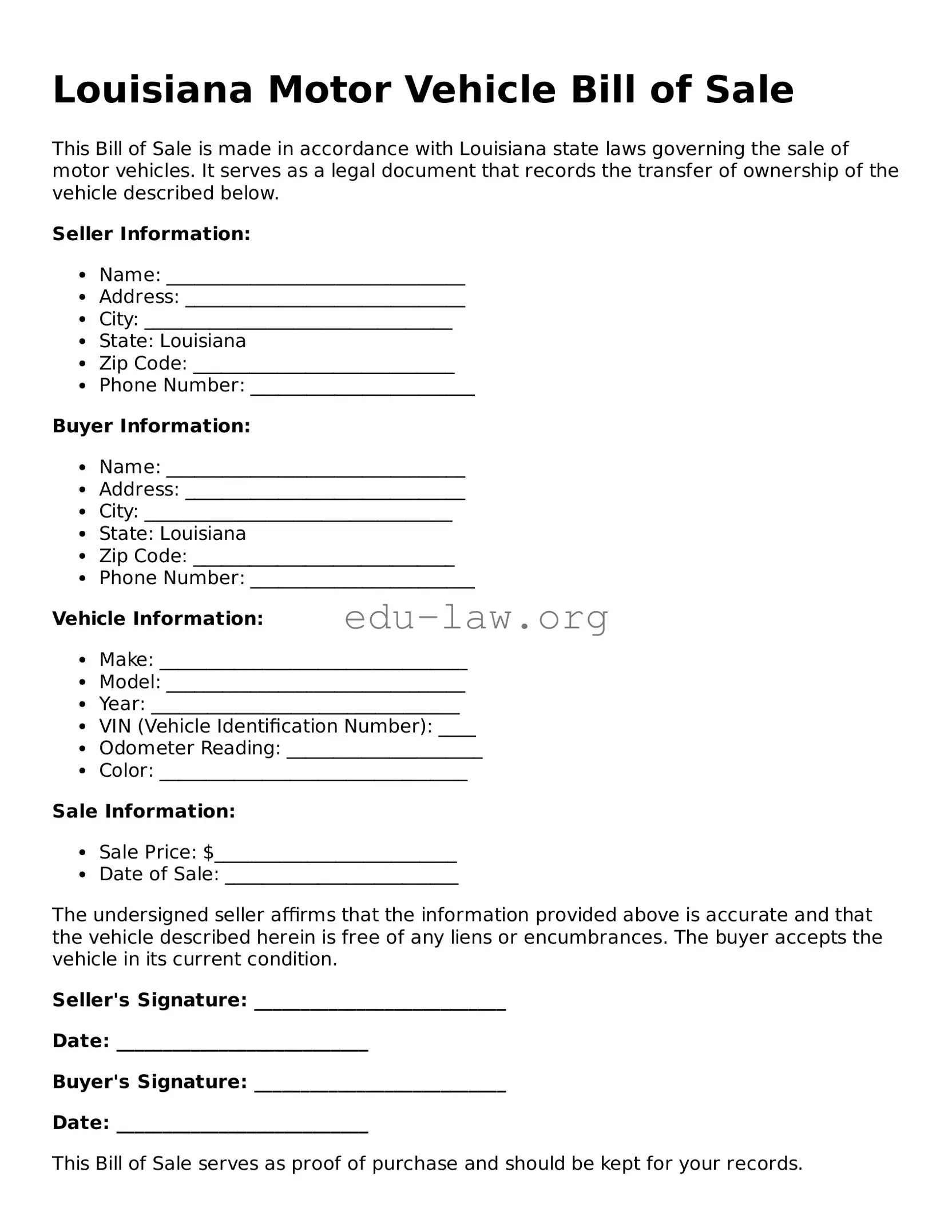
When buying or selling a vehicle in Louisiana, having the right documentation is crucial to ensure a smooth transaction. One of the key documents involved in this process is the Louisiana Motor Vehicle Bill of Sale form. This form serves as a written record of the sale, providing essential details about the vehicle and the parties involved. It typically includes information such as the vehicle's make, model, year, and VIN, along with the sale price and the names and addresses of both the buyer and seller. Additionally, the form may contain sections for odometer readings and any warranties or conditions of the sale. By completing this document, both parties can protect their interests and confirm the transfer of ownership. Understanding the importance of this form can help prevent future disputes and ensure compliance with state regulations.
Louisiana Motor Vehicle Bill of Sale
This Bill of Sale is made in accordance with Louisiana state laws governing the sale of motor vehicles. It serves as a legal document that records the transfer of ownership of the vehicle described below.
Seller Information:
Buyer Information:
Vehicle Information:
Sale Information:
The undersigned seller affirms that the information provided above is accurate and that the vehicle described herein is free of any liens or encumbrances. The buyer accepts the vehicle in its current condition.
Seller's Signature: ___________________________
Date: ___________________________
Buyer's Signature: ___________________________
Date: ___________________________
This Bill of Sale serves as proof of purchase and should be kept for your records.
| Fact Name | Description |
|---|---|
| Purpose | The Louisiana Motor Vehicle Bill of Sale form is used to document the sale of a vehicle between a buyer and a seller. |
| Governing Law | This form is governed by Louisiana Revised Statutes, specifically RS 32:707. |
| Required Information | It must include details such as the vehicle's make, model, year, VIN, and the sale price. |
| Signatures | Both the buyer and seller must sign the form to validate the transaction. |
| Notarization | While notarization is not required, it is recommended for added legal protection. |
| Use for Registration | The completed form can be used to register the vehicle in the buyer's name. |
| Transfer of Ownership | Signing the Bill of Sale transfers ownership from the seller to the buyer. |
| Record Keeping | Both parties should keep a copy of the Bill of Sale for their records. |
After obtaining the Louisiana Motor Vehicle Bill of Sale form, you will need to complete it accurately to ensure a smooth transfer of ownership. Gather all necessary information about the vehicle and the parties involved before you begin filling out the form.
Once the form is completed and signed, keep a copy for your records. The buyer will need this document for registration and title transfer at the local Department of Motor Vehicles.
What is a Louisiana Motor Vehicle Bill of Sale?
A Louisiana Motor Vehicle Bill of Sale is a legal document that serves as proof of the sale of a vehicle between a buyer and a seller. This form typically includes important details such as the vehicle's make, model, year, VIN (Vehicle Identification Number), and the sale price. It's essential for both parties to have a copy of this document for their records, as it can help resolve any future disputes regarding ownership or the terms of the sale.
Is a Bill of Sale required in Louisiana when selling a vehicle?
While a Bill of Sale is not strictly required by law in Louisiana, it is highly recommended. Having this document can protect both the buyer and the seller. For the seller, it provides proof that they have transferred ownership of the vehicle, which can be crucial if any issues arise later. For the buyer, it serves as evidence of the purchase, especially when registering the vehicle or applying for a title.
What information should be included in the Bill of Sale?
The Bill of Sale should include several key pieces of information to be effective. This includes the full names and addresses of both the buyer and the seller, a detailed description of the vehicle (make, model, year, color, and VIN), the purchase price, and the date of the transaction. It's also a good idea to include any disclosures about the vehicle's condition or any warranties, if applicable. Both parties should sign the document to confirm their agreement.
Can I create my own Bill of Sale, or do I need a specific form?
You can certainly create your own Bill of Sale in Louisiana, as long as it contains all the necessary information. However, using a standard form can simplify the process and ensure that you don’t miss any important details. Many online resources provide templates specifically designed for Louisiana. Just make sure to review the completed document carefully before signing to ensure everything is accurate and complete.
Failing to include the date of sale. It's crucial to specify when the transaction took place.
Not providing complete vehicle information. This includes the make, model, year, and VIN (Vehicle Identification Number).
Omitting the seller's and buyer's information. Both parties must include their full names and addresses.
Leaving out the purchase price. Clearly state the amount paid for the vehicle to avoid future disputes.
Neglecting to sign the form. Both the seller and buyer must sign to validate the transaction.
Not keeping a copy of the form. It's wise for both parties to retain a copy for their records.
Using incorrect or outdated forms. Always ensure you have the latest version of the Louisiana Motor Vehicle Bill of Sale.
Failing to check for additional requirements. Depending on the situation, there may be extra documents needed, such as a title transfer.
When transferring ownership of a motor vehicle in Louisiana, the Motor Vehicle Bill of Sale form is essential. However, several other documents complement this form, ensuring a smooth transaction and compliance with state regulations. Below is a list of commonly used forms and documents that may accompany the Bill of Sale.
Each of these documents plays a crucial role in the vehicle sale process. Properly completing and submitting them can help avoid potential issues down the line, ensuring a seamless transition of ownership.
The Louisiana Motor Vehicle Bill of Sale form shares similarities with the general Bill of Sale document. Both serve the purpose of documenting the transfer of ownership from one party to another. A Bill of Sale can be used for various types of personal property, not just vehicles. It typically includes details about the buyer and seller, the item being sold, and the sale price, providing a legal record of the transaction.
Another document that resembles the Louisiana Motor Vehicle Bill of Sale is the Vehicle Title. The Vehicle Title serves as proof of ownership and is often required for registration. While the Bill of Sale confirms the sale, the Title is the official document that establishes ownership. Both documents must be completed accurately to ensure a smooth transfer of ownership.
The Purchase Agreement is also similar to the Louisiana Motor Vehicle Bill of Sale. This document outlines the terms of the sale, including price, payment method, and any contingencies. While the Bill of Sale serves as a receipt for the transaction, the Purchase Agreement may include more detailed terms and conditions, making it a more comprehensive document in some cases.
The Affidavit of Heirship can be compared to the Louisiana Motor Vehicle Bill of Sale in situations involving inherited vehicles. This document establishes the rightful heir to a vehicle when the original owner has passed away. Like the Bill of Sale, it provides a means of transferring ownership, but it does so under different circumstances and legal frameworks.
The Odometer Disclosure Statement is another document similar to the Louisiana Motor Vehicle Bill of Sale. This form is required in many states when a vehicle is sold. It verifies the mileage on the vehicle at the time of sale, which is crucial for preventing fraud. While the Bill of Sale records the transaction itself, the Odometer Disclosure Statement focuses specifically on the vehicle's mileage.
The Sales Tax Receipt is related to the Louisiana Motor Vehicle Bill of Sale, as it may be issued during the transaction. This receipt confirms that the buyer has paid the necessary sales tax associated with the purchase. While the Bill of Sale documents the transfer of ownership, the Sales Tax Receipt serves as proof of tax compliance, which is essential for registration purposes.
The Vehicle Registration Application is also similar in that it is often completed following the Bill of Sale. This application is necessary for legally registering the vehicle in the buyer's name. While the Bill of Sale documents the sale, the Vehicle Registration Application ensures that the vehicle is properly recorded with the state, linking the new owner to the vehicle.
The Insurance Policy Declaration Page can be compared to the Louisiana Motor Vehicle Bill of Sale in the context of vehicle ownership. Once a vehicle is purchased, the new owner typically needs to obtain insurance. This declaration page outlines the coverage and terms of the insurance policy. While the Bill of Sale confirms ownership, the Insurance Policy Declaration Page ensures that the vehicle is protected against potential risks.
The Loan Agreement is another document that can be associated with the Louisiana Motor Vehicle Bill of Sale, particularly in financed purchases. When a buyer finances a vehicle, they enter into a Loan Agreement with a lender. This document outlines the terms of the loan, including payment schedules and interest rates. While the Bill of Sale confirms the sale, the Loan Agreement details the financial obligations of the buyer.
Finally, the Lease Agreement can also be seen as similar to the Louisiana Motor Vehicle Bill of Sale in the context of vehicle use. When a person leases a vehicle, they do not own it outright but have the right to use it for a specified period. The Lease Agreement details the terms of this arrangement, including payments and conditions. Both documents serve to clarify the relationship between parties, though one involves ownership and the other involves temporary use.
When filling out the Louisiana Motor Vehicle Bill of Sale form, it's essential to get it right. Here are some key dos and don'ts to keep in mind:
By following these guidelines, you can ensure a smooth transaction and avoid potential issues down the road.
When it comes to the Louisiana Motor Vehicle Bill of Sale form, there are several misconceptions that can lead to confusion for buyers and sellers alike. Let’s clear up some of these misunderstandings.
Many people believe that a Bill of Sale is optional. In reality, having a Bill of Sale is crucial as it serves as proof of the transaction. It protects both the buyer and the seller by documenting the details of the sale.
Some think that the Louisiana Bill of Sale must be notarized to be valid. While notarization can add an extra layer of security, it is not a requirement for the form to be legally binding in Louisiana.
It’s common to assume that only the seller’s signature is necessary. However, both the buyer and seller should sign the Bill of Sale. This ensures that both parties acknowledge the transaction.
Many people confuse the Bill of Sale with the vehicle title transfer. While the Bill of Sale documents the sale, the title transfer is the official process that changes ownership with the state. Both are important, but they serve different purposes.
When filling out and using the Louisiana Motor Vehicle Bill of Sale form, there are several important points to keep in mind. This document serves as proof of the transaction between the buyer and the seller. Here are some key takeaways:
Understanding these key points can help make the process of buying or selling a vehicle in Louisiana smoother and more straightforward.