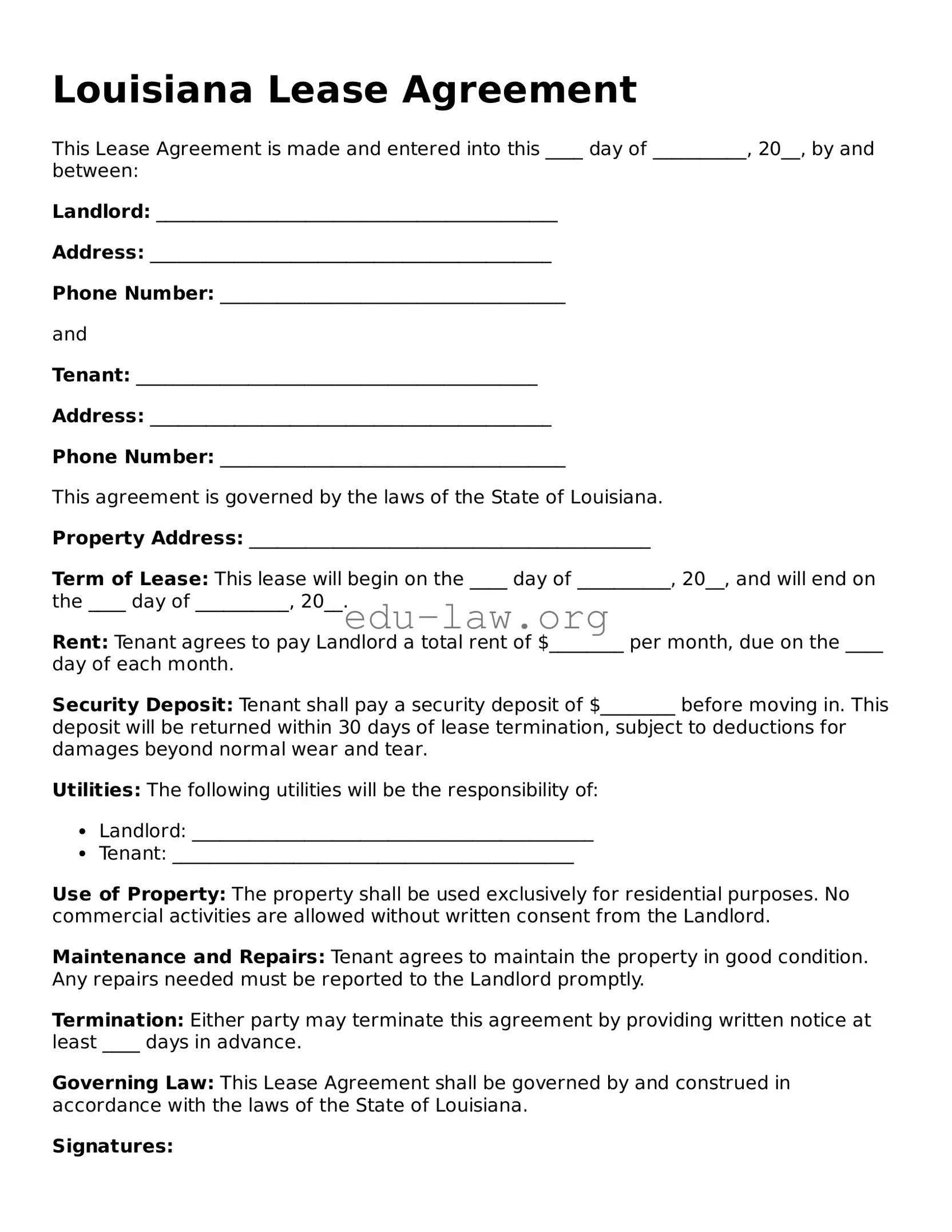
When engaging in a rental arrangement in Louisiana, understanding the Louisiana Lease Agreement form is essential for both landlords and tenants. This document serves as a foundational contract that outlines the rights and responsibilities of each party involved. Key elements typically included in the lease agreement are the duration of the lease, rental payment details, security deposit requirements, and maintenance responsibilities. Additionally, the form addresses issues such as late fees, property rules, and procedures for terminating the lease. By clearly defining these aspects, the lease agreement helps prevent misunderstandings and disputes, fostering a positive rental experience. Familiarity with this form not only aids in compliance with state laws but also empowers individuals to make informed decisions about their rental situations.
Louisiana Lease Agreement
This Lease Agreement is made and entered into this ____ day of __________, 20__, by and between:
Landlord: ___________________________________________
Address: ___________________________________________
Phone Number: _____________________________________
and
Tenant: ___________________________________________
Address: ___________________________________________
Phone Number: _____________________________________
This agreement is governed by the laws of the State of Louisiana.
Property Address: ___________________________________________
Term of Lease: This lease will begin on the ____ day of __________, 20__, and will end on the ____ day of __________, 20__.
Rent: Tenant agrees to pay Landlord a total rent of $________ per month, due on the ____ day of each month.
Security Deposit: Tenant shall pay a security deposit of $________ before moving in. This deposit will be returned within 30 days of lease termination, subject to deductions for damages beyond normal wear and tear.
Utilities: The following utilities will be the responsibility of:
Use of Property: The property shall be used exclusively for residential purposes. No commercial activities are allowed without written consent from the Landlord.
Maintenance and Repairs: Tenant agrees to maintain the property in good condition. Any repairs needed must be reported to the Landlord promptly.
Termination: Either party may terminate this agreement by providing written notice at least ____ days in advance.
Governing Law: This Lease Agreement shall be governed by and construed in accordance with the laws of the State of Louisiana.
Signatures:
Landlord Signature: ___________________________ Date: ___________
Tenant Signature: ___________________________ Date: ___________
By signing this agreement, both parties acknowledge that they have read, understood, and agree to the terms outlined herein.
| Fact Name | Description |
|---|---|
| Governing Law | The Louisiana Lease Agreement is governed by the Louisiana Civil Code, particularly Title 9, which addresses leases. |
| Parties Involved | The agreement must clearly identify the lessor (landlord) and lessee (tenant) with their full legal names. |
| Property Description | A detailed description of the rental property, including the address and any specific features, is required. |
| Lease Term | The lease must specify the duration, whether it is a fixed-term or month-to-month arrangement. |
| Rent Payment | Details regarding the rent amount, due date, and acceptable payment methods should be included. |
| Security Deposit | The agreement should outline the amount of the security deposit and the conditions for its return. |
| Maintenance Responsibilities | Both parties' responsibilities for property maintenance and repairs must be clearly defined. |
| Termination Conditions | Conditions under which the lease can be terminated by either party must be specified, including notice periods. |
Completing the Louisiana Lease Agreement form is an essential step in establishing a rental relationship. By following the outlined steps, you will ensure that all necessary information is accurately captured, paving the way for a smooth leasing process.
What is a Louisiana Lease Agreement?
A Louisiana Lease Agreement is a legally binding contract between a landlord and a tenant. It outlines the terms under which the tenant can occupy the landlord's property. This agreement includes details such as the rental amount, duration of the lease, and responsibilities of both parties. It serves to protect the rights of both the landlord and the tenant throughout the rental period.
What should be included in a Louisiana Lease Agreement?
A comprehensive Louisiana Lease Agreement should include the following key elements: the names of the landlord and tenant, property address, lease term, rental amount, payment due dates, security deposit details, maintenance responsibilities, and conditions for termination. It may also cover rules regarding pets, smoking, and any other specific conditions relevant to the property.
How long is a typical lease term in Louisiana?
Lease terms in Louisiana can vary widely. They typically range from six months to one year. However, month-to-month leases are also common. The duration should be clearly stated in the lease agreement to avoid any confusion. Both parties can agree to renew the lease or modify its terms as needed.
Can a landlord raise the rent during the lease term?
Generally, a landlord cannot raise the rent during the lease term unless the lease agreement specifically allows for it. If the lease is month-to-month, the landlord may increase the rent with proper notice, usually 30 days. It’s essential for tenants to review their lease terms regarding rent adjustments.
What happens if a tenant wants to break the lease early?
If a tenant needs to break the lease early, they may face penalties, such as losing their security deposit or being responsible for rent until a new tenant is found. However, there are certain legal protections in place, such as domestic violence situations or military deployment, which may allow for early termination without penalties. It’s crucial to review the lease agreement and communicate with the landlord.
Is a written lease agreement required in Louisiana?
What should a tenant do if there are issues with the rental property?
If a tenant encounters issues with the rental property, such as maintenance problems or safety concerns, they should first notify the landlord in writing. The landlord is typically responsible for addressing these issues in a timely manner. If the landlord fails to respond or resolve the problem, tenants may have legal recourse, including the option to withhold rent or seek repairs through the court. Documenting all communications is essential.
Not reading the entire document: Many individuals skip sections of the lease agreement, missing important terms and conditions that could affect their rights and responsibilities.
Incorrectly filling in dates: Some people overlook the importance of accurate dates. Missing or incorrect dates can lead to confusion about the lease term.
Failing to specify the rental amount: A common mistake is not clearly stating the rent amount. This can lead to disputes between landlords and tenants.
Neglecting to include all tenants: When multiple people will live in the rental property, all names should be listed. Omitting a tenant can create legal issues later.
Ignoring additional fees: Some lease agreements include extra charges, such as maintenance fees or utilities. It’s crucial to understand these costs before signing.
Not understanding the termination clause: Many individuals fail to read or comprehend the termination clause. This could result in unexpected penalties if the lease is broken.
When entering into a rental agreement in Louisiana, it's important to have all the necessary documents in place. Along with the Louisiana Lease Agreement, several other forms and documents can help clarify the terms of the rental arrangement and protect both the landlord's and tenant's rights. Here are some commonly used documents that you may encounter.
Having these documents prepared and understood can make the rental process smoother and help prevent misunderstandings. It’s always a good idea to consult with a legal professional if you have any questions about these forms or your rights and responsibilities as a landlord or tenant.
A Rental Agreement is similar to a Lease Agreement in that both documents outline the terms under which a tenant can occupy a property. However, a Rental Agreement is typically more flexible, often covering shorter time frames like month-to-month arrangements. This means that either party can end the agreement with proper notice, making it ideal for those who may not want a long-term commitment.
A Commercial Lease Agreement is another document that shares similarities with a standard Lease Agreement. This type of lease is specifically designed for businesses renting commercial spaces. It includes terms that cater to business needs, such as zoning laws and maintenance responsibilities, ensuring that both landlord and tenant understand their obligations in a commercial context.
A Sublease Agreement is also akin to a Lease Agreement. This document allows a tenant to rent out their leased property to another person, known as a subtenant. The original tenant remains responsible to the landlord, while the sublease outlines the terms between the original tenant and the subtenant. This arrangement can provide flexibility for tenants who need to move temporarily.
A Roommate Agreement can resemble a Lease Agreement when multiple people share a rental property. This document clarifies each roommate's responsibilities, such as rent payments and utility sharing. While it may not replace a Lease Agreement, it complements it by ensuring that everyone is on the same page regarding living arrangements.
A Tenancy Agreement is similar to a Lease Agreement but may be used in different jurisdictions. It lays out the rights and responsibilities of both the landlord and tenant, covering aspects like rent, duration, and property maintenance. The key difference often lies in local laws and how they govern landlord-tenant relationships.
A Lease Purchase Agreement combines elements of a Lease Agreement and a purchase contract. This document allows tenants to lease a property with the option to buy it later. It typically specifies the purchase price and the timeframe for the tenant to exercise their option, providing a pathway to homeownership while initially renting.
A Month-to-Month Lease Agreement is closely related to a standard Lease Agreement but offers more flexibility. It allows tenants to stay in a property without a long-term commitment, with the lease automatically renewing each month unless either party gives notice to terminate. This can be beneficial for those who prefer not to be tied down.
A Fixed-Term Lease Agreement is a specific type of Lease Agreement that establishes a set duration for the rental period, such as one year. This document provides stability for both the landlord and tenant, as it outlines the terms for that fixed period, including rent amount and conditions for renewal or termination.
A Landlord-Tenant Agreement is another document that shares similarities with a Lease Agreement. It covers the basic rights and responsibilities of both parties and can serve as a general guideline for rental relationships. While it may not have the detailed terms of a Lease Agreement, it still provides a framework for understanding expectations.
When filling out the Louisiana Lease Agreement form, it is important to follow certain guidelines to ensure accuracy and compliance. Here are some things you should and shouldn't do:
Understanding the Louisiana Lease Agreement form is crucial for both landlords and tenants. However, several misconceptions can lead to confusion. Here are seven common misunderstandings:
Many people believe that lease agreements are universally the same. In reality, each state has specific laws and requirements. The Louisiana Lease Agreement includes unique provisions that cater to state regulations.
Some think that a verbal agreement is enough to establish a lease. However, having a written lease agreement is essential. It provides clear terms and protects both parties in case of disputes.
Tenants often assume that the lease is primarily the landlord's concern. In truth, tenants should thoroughly understand their rights and responsibilities outlined in the lease to avoid future complications.
Many believe that security deposits are always non-refundable. However, in Louisiana, landlords must return the deposit within a specific timeframe unless there are valid deductions for damages or unpaid rent.
Some individuals think that lease terms can be altered whenever one party wishes. Changes to the lease must be agreed upon by both parties and documented in writing to be enforceable.
It is a common misconception that landlords can raise rent without informing tenants. In Louisiana, landlords must provide written notice of any rent increase, adhering to the terms specified in the lease.
While landlords are generally responsible for maintaining the property, tenants also have obligations. Tenants should report issues promptly and may be responsible for minor repairs or damages caused by their actions.
When filling out and using the Louisiana Lease Agreement form, it is important to understand several key aspects to ensure a smooth rental experience. Here are some essential takeaways: