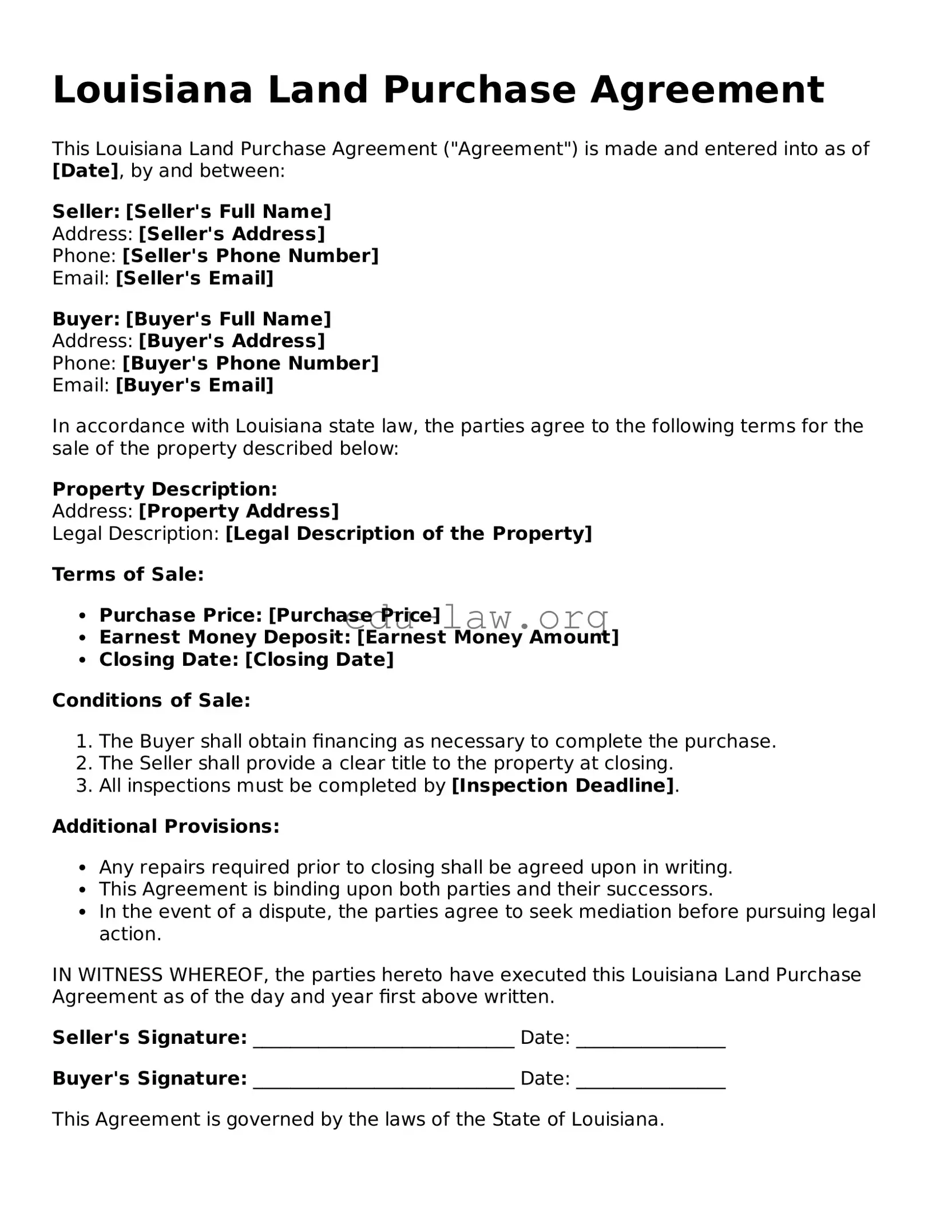
The Louisiana Land Purchase Agreement form is an essential document for anyone looking to buy or sell property in Louisiana. This form outlines the terms and conditions of the sale, ensuring that both the buyer and seller are on the same page throughout the transaction. Key aspects of the agreement include the purchase price, payment terms, and property description, which clearly identifies the land being sold. Additionally, the form addresses contingencies, such as inspections or financing, that must be met before the sale can be finalized. Important deadlines and responsibilities are also outlined, providing a clear timeline for both parties. By using this agreement, individuals can protect their interests and ensure a smooth transfer of property ownership, fostering a sense of security in what can often be a complex process.
Louisiana Land Purchase Agreement
This Louisiana Land Purchase Agreement ("Agreement") is made and entered into as of [Date], by and between:
Seller: [Seller's Full Name]
Address: [Seller's Address]
Phone: [Seller's Phone Number]
Email: [Seller's Email]
Buyer: [Buyer's Full Name]
Address: [Buyer's Address]
Phone: [Buyer's Phone Number]
Email: [Buyer's Email]
In accordance with Louisiana state law, the parties agree to the following terms for the sale of the property described below:
Property Description:
Address: [Property Address]
Legal Description: [Legal Description of the Property]
Terms of Sale:
Conditions of Sale:
Additional Provisions:
IN WITNESS WHEREOF, the parties hereto have executed this Louisiana Land Purchase Agreement as of the day and year first above written.
Seller's Signature: ____________________________ Date: ________________
Buyer's Signature: ____________________________ Date: ________________
This Agreement is governed by the laws of the State of Louisiana.
| Fact Name | Details |
|---|---|
| Origin | The Louisiana Land Purchase Agreement is rooted in the 1803 acquisition of territory from France. |
| Governing Law | The agreement is governed by Louisiana state law. |
| Purpose | This form is used to outline the terms of a land sale in Louisiana. |
| Parties Involved | The agreement typically involves a buyer and a seller. |
| Property Description | A detailed description of the property being sold is required. |
| Purchase Price | The total purchase price must be clearly stated in the agreement. |
| Earnest Money | The agreement may specify the amount of earnest money to be deposited. |
| Closing Date | A closing date for the transaction is typically included. |
| Contingencies | Common contingencies, such as financing or inspections, can be included. |
| Signatures | Both parties must sign the agreement for it to be legally binding. |
Filling out the Louisiana Land Purchase Agreement form is an important step in the process of buying property. Once you have completed the form, you will be ready to move forward with your purchase. Here are the steps to fill out the form accurately.
After completing these steps, review the form for accuracy. It’s crucial to ensure that all information is correct before submitting it. This will help avoid any delays in the purchasing process.
What is the Louisiana Land Purchase Agreement form?
The Louisiana Land Purchase Agreement form is a legal document used to outline the terms and conditions of a real estate transaction in Louisiana. This form serves as a contract between the buyer and seller, detailing the specifics of the sale, including the purchase price, property description, and any contingencies. It ensures both parties have a clear understanding of their rights and obligations throughout the transaction process.
What information is typically included in the agreement?
A standard Louisiana Land Purchase Agreement includes essential details such as the names and contact information of both the buyer and seller, a legal description of the property, the purchase price, and the payment terms. Additionally, it may outline contingencies, such as financing requirements or inspection results, and specify the closing date. This comprehensive information helps prevent misunderstandings and disputes later on.
Is it necessary to have a lawyer review the agreement?
What happens if one party does not fulfill their obligations?
If one party fails to meet their obligations as outlined in the Louisiana Land Purchase Agreement, the other party may have legal recourse. This could involve seeking damages or specific performance, which means asking the court to enforce the terms of the agreement. It's important to address any issues as soon as they arise to avoid prolonged disputes and additional costs.
Not including the full legal description of the property. This is crucial for identifying the land being purchased.
Failing to specify the purchase price clearly. Ensure that the amount is stated in both numbers and words to avoid confusion.
Overlooking the closing date. This date is important for both parties to know when the transaction will be finalized.
Not providing accurate contact information for both the buyer and seller. Clear communication is essential throughout the process.
Neglecting to include any contingencies that may affect the sale, such as financing or inspections. These can protect both parties.
Forgetting to sign the document. Both parties must sign to make the agreement legally binding.
Leaving out additional terms or conditions that were verbally agreed upon. Written agreements should reflect all aspects of the deal.
Not consulting a professional for assistance. It’s wise to seek help from a real estate agent or attorney to avoid costly mistakes.
The Louisiana Land Purchase Agreement is a vital document in real estate transactions, but it often works in conjunction with several other forms and documents. Each of these documents plays a specific role in ensuring that the transaction proceeds smoothly and legally. Here’s a list of commonly used forms that you might encounter alongside the Louisiana Land Purchase Agreement.
Understanding these documents can significantly enhance your experience in real estate transactions. Each one serves a purpose, ensuring that both buyers and sellers are protected and informed throughout the process. Being familiar with these forms can lead to a smoother transaction and a better overall experience.
The Louisiana Land Purchase Agreement form shares similarities with the Purchase and Sale Agreement, a common document in real estate transactions. Both agreements outline the terms and conditions under which a property is bought and sold. They typically include details about the property, the purchase price, and the responsibilities of both the buyer and the seller. Just like the Louisiana Land Purchase Agreement, the Purchase and Sale Agreement serves to protect the interests of both parties involved in the transaction.
Another document that parallels the Louisiana Land Purchase Agreement is the Lease Agreement. While the Louisiana Land Purchase Agreement focuses on the sale of property, a Lease Agreement governs the rental of property. Both documents specify the terms of use, duration, and payment obligations. They establish a clear understanding of what is expected from both the landlord and the tenant, ensuring a smooth relationship throughout the lease period.
The Option to Purchase Agreement also bears resemblance to the Louisiana Land Purchase Agreement. This document gives a buyer the right, but not the obligation, to purchase a property at a predetermined price within a specified timeframe. Like the Louisiana Land Purchase Agreement, it outlines critical terms such as the purchase price and conditions under which the option can be exercised. Both documents aim to provide clarity and security in property transactions.
Similarly, the Real Estate Purchase Agreement is akin to the Louisiana Land Purchase Agreement. This document serves as a legally binding contract between buyer and seller, detailing the terms of the sale. It includes essential elements such as the purchase price, financing arrangements, and any contingencies that must be met before the sale can proceed. Both agreements are fundamental in facilitating real estate transactions, ensuring that all parties are on the same page.
The Quitclaim Deed is another document that shares characteristics with the Louisiana Land Purchase Agreement. While it is primarily used to transfer ownership of property without warranties, it often accompanies a purchase agreement to finalize the sale. Both documents serve to clarify ownership and provide a record of the transaction. They ensure that the buyer receives clear title to the property being purchased.
The Title Commitment is also similar to the Louisiana Land Purchase Agreement in that it provides assurance to the buyer regarding the property's title. This document outlines any liens, encumbrances, or other issues that may affect ownership. Both the Title Commitment and the Louisiana Land Purchase Agreement work together to protect the buyer's interests and facilitate a smooth transfer of property ownership.
The Seller's Disclosure Statement is another relevant document. While it is not a purchase agreement per se, it complements the Louisiana Land Purchase Agreement by informing the buyer of any known issues with the property. This document helps ensure transparency in the transaction, allowing buyers to make informed decisions based on the condition of the property before finalizing the sale.
The Escrow Agreement is also similar in function to the Louisiana Land Purchase Agreement. This document outlines the terms under which a neutral third party holds funds and documents until the transaction is completed. Both agreements provide a level of security for both buyer and seller, ensuring that the transaction proceeds as agreed upon and that funds are only released when all conditions are met.
Lastly, the Closing Statement has a close relationship with the Louisiana Land Purchase Agreement. This document summarizes the financial aspects of the transaction, including the purchase price, closing costs, and any adjustments. Both documents are critical in finalizing the sale, providing a clear account of what each party is responsible for at the closing of the transaction.
When filling out the Louisiana Land Purchase Agreement form, it's important to keep certain guidelines in mind to ensure a smooth process. Here are six things you should and shouldn't do:
The Louisiana Land Purchase Agreement is a significant historical document, but many misconceptions surround it. Here are ten common misunderstandings about this agreement:
While the agreement focused on acquiring land, it also involved complex negotiations regarding trade, resources, and relations with Native American tribes.
Much of the land acquired was still inhabited by Native Americans and required further treaties and negotiations before it could be settled.
Though the total cost was about $15 million, this was a significant amount for the time, equating to roughly four cents per acre.
The process involved numerous discussions, political maneuvering, and considerations of international relations, particularly with France and Spain.
Not everyone supported the purchase; some politicians and citizens expressed concerns over the implications of expanding the United States.
France benefited from the sale by alleviating its financial burdens and gaining a stronger ally in the U.S. against British interests.
The negotiations spanned several months, reflecting the complexity and importance of the agreement.
In reality, the land was home to various Native American tribes, and their rights and claims were often overlooked in the agreement.
The purchase did not end land disputes; it merely shifted the focus of these disputes to new territories and populations.
The deal was influenced by various international factors, including France's need for funds and the geopolitical landscape of the time.
Understanding these misconceptions can provide a clearer picture of the Louisiana Land Purchase Agreement and its lasting impact on American history.
When filling out and using the Louisiana Land Purchase Agreement form, several key points should be considered to ensure a smooth transaction. Below are important takeaways:
By adhering to these takeaways, individuals can navigate the Louisiana Land Purchase Agreement process more effectively and reduce the likelihood of disputes.