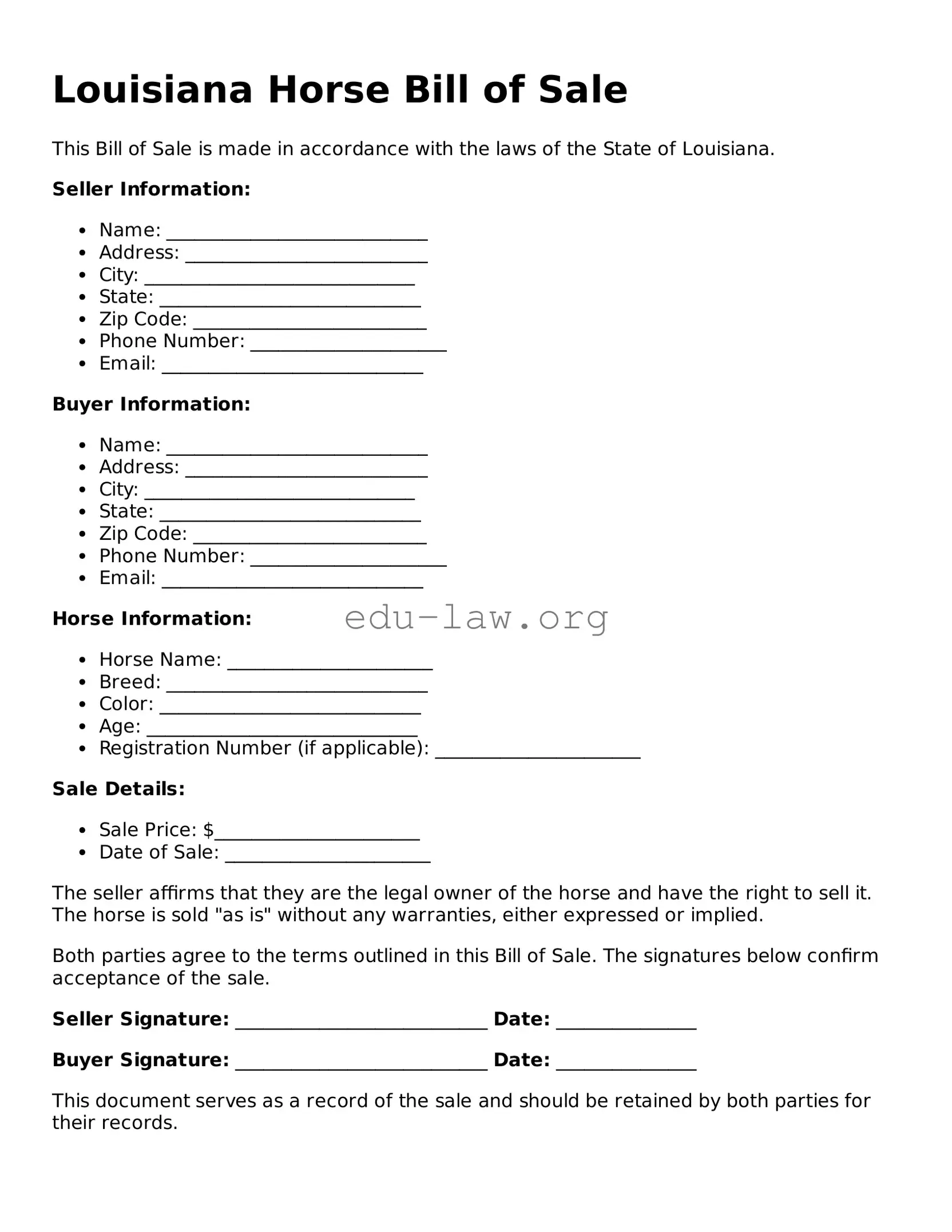
When engaging in the purchase or sale of a horse in Louisiana, having the appropriate documentation is essential to ensure a smooth transaction. The Louisiana Horse Bill of Sale form serves as a crucial legal document that outlines the details of the sale, including the identities of both the buyer and the seller, a description of the horse being sold, and the agreed-upon purchase price. This form not only protects the interests of both parties but also provides proof of ownership transfer. In addition to these basic elements, the form may include important disclosures regarding the horse's health, any existing liens, and warranties related to the animal's condition. By utilizing this form, individuals can help mitigate potential disputes and foster transparency throughout the transaction process. Understanding the significance of the Horse Bill of Sale is vital for anyone involved in the equine community, as it lays the groundwork for a trustworthy exchange and promotes responsible ownership.
Louisiana Horse Bill of Sale
This Bill of Sale is made in accordance with the laws of the State of Louisiana.
Seller Information:
Buyer Information:
Horse Information:
Sale Details:
The seller affirms that they are the legal owner of the horse and have the right to sell it. The horse is sold "as is" without any warranties, either expressed or implied.
Both parties agree to the terms outlined in this Bill of Sale. The signatures below confirm acceptance of the sale.
Seller Signature: ___________________________ Date: _______________
Buyer Signature: ___________________________ Date: _______________
This document serves as a record of the sale and should be retained by both parties for their records.
| Fact Name | Description |
|---|---|
| Purpose | The Louisiana Horse Bill of Sale form is used to document the sale and transfer of ownership of a horse. |
| Governing Law | This form is governed by Louisiana state law, specifically the Louisiana Civil Code. |
| Seller Information | The form requires the seller's name, address, and contact information to ensure proper identification. |
| Buyer Information | Buyer's name and contact details must also be included for record-keeping and accountability. |
| Horse Description | A detailed description of the horse, including breed, age, color, and any identifying marks, is necessary. |
| Purchase Price | The agreed purchase price must be clearly stated in the form to avoid any disputes later on. |
| Signatures | Both the seller and buyer must sign the document to validate the transaction and transfer of ownership. |
Once you have the Louisiana Horse Bill of Sale form in hand, it's time to begin filling it out. This document will require specific information about the horse being sold, as well as details about both the buyer and the seller. Make sure to have all necessary information at your fingertips to ensure a smooth process.
Once the form is completed and signed, both parties should keep a copy for their records. This will serve as proof of the transaction and can be important for future reference.
What is a Louisiana Horse Bill of Sale?
A Louisiana Horse Bill of Sale is a legal document that records the sale of a horse. It serves as proof of the transaction between the buyer and seller, detailing important information about the horse, such as its description, registration details, and the sale price. This document is essential for both parties to protect their rights and interests in the sale.
Why do I need a Horse Bill of Sale?
This document is crucial for establishing ownership. It can help prevent disputes over who owns the horse and provides a record of the transaction. Additionally, it can be useful for future sales, insurance purposes, or if you need to register the horse with an association.
What information should be included in the form?
The form should include the names and contact information of both the buyer and seller, a detailed description of the horse (including breed, age, color, and any identification numbers), the sale price, and the date of the transaction. It may also include any warranties or representations made by the seller regarding the horse’s health or behavior.
Is the Horse Bill of Sale required by law in Louisiana?
While a Horse Bill of Sale is not legally required in Louisiana, it is highly recommended. Having a written record of the sale protects both the buyer and seller and can help avoid potential legal issues in the future.
Can I create my own Horse Bill of Sale?
Yes, you can create your own Horse Bill of Sale. However, it’s important to ensure that all necessary information is included and that it complies with Louisiana laws. Using a template can help ensure that you cover all the essential details.
Do I need to have the document notarized?
Notarization is not required for a Horse Bill of Sale in Louisiana, but having it notarized can add an extra layer of authenticity and may be beneficial if disputes arise later on. It is always a good practice to have important documents notarized when possible.
What if the horse has a health issue or is sold “as is”?
If the horse has known health issues, it’s best to disclose this information in the Bill of Sale. If the horse is sold “as is,” it should be clearly stated in the document. This protects the seller from future claims regarding the horse’s condition after the sale.
Can I use the Horse Bill of Sale for other types of animals?
The Horse Bill of Sale is specifically designed for horses. While you can use a similar format for other animals, it’s best to use the appropriate documentation for each type of animal to ensure all legal requirements are met.
What should I do after completing the Bill of Sale?
After completing the Horse Bill of Sale, both the buyer and seller should keep a copy for their records. It’s also a good idea to transfer any registration papers or health records related to the horse at the time of sale. This helps ensure a smooth transition of ownership.
Where can I find a template for a Louisiana Horse Bill of Sale?
You can find templates for a Louisiana Horse Bill of Sale online, through legal document preparation services, or at local agricultural or equine associations. Make sure to choose a template that is specific to Louisiana to ensure compliance with state laws.
Incomplete Information: One common mistake is not providing all necessary details. Buyers and sellers should ensure they fill out every section of the form. Missing information can lead to disputes later on.
Incorrect Identification: Failing to accurately identify the horse can create issues. Include the horse's name, breed, age, and registration number if applicable. This helps prevent confusion and establishes clear ownership.
Not Including Payment Terms: It's essential to specify the payment method and amount. Omitting this information can lead to misunderstandings about the transaction. Clearly outline whether payment is made in full or through installments.
Neglecting Signatures: Both parties must sign the document for it to be valid. Forgetting to sign can render the bill of sale ineffective. Ensure that all necessary signatures are collected before finalizing the transaction.
When completing a transaction involving the sale or purchase of a horse in Louisiana, several other documents may be necessary to ensure everything is properly documented and legally binding. Below is a list of forms that are often used alongside the Louisiana Horse Bill of Sale form. Each document plays a crucial role in the overall process.
Having these documents ready can facilitate a smooth transaction and help protect both the buyer and the seller. Always ensure that all paperwork is completed accurately and retained for future reference.
The Louisiana Horse Bill of Sale form shares similarities with a Vehicle Bill of Sale. Both documents serve as proof of transfer of ownership from one party to another. They typically include details such as the buyer's and seller's names, addresses, and the specific description of the item being sold. Just like a Horse Bill of Sale, a Vehicle Bill of Sale is important for legal and registration purposes, ensuring that the new owner has clear title to the vehicle.
Another document akin to the Horse Bill of Sale is the Boat Bill of Sale. This form is utilized when transferring ownership of a boat, much like how the Horse Bill of Sale is used for horses. Both documents outline the transaction details, including the sale price and any warranties or guarantees. In both cases, having a properly executed bill of sale protects the rights of both the buyer and the seller, providing a record of the transaction.
The Pet Bill of Sale is also similar in function and purpose. This document is used when ownership of a pet is transferred, including details such as the breed, age, and health status of the animal. Just like the Horse Bill of Sale, it serves to confirm that the seller has the legal right to sell the pet and that the buyer is acquiring ownership. This helps prevent disputes and ensures that both parties are aware of their rights and responsibilities.
Additionally, the Equipment Bill of Sale resembles the Horse Bill of Sale in that it documents the sale of various types of equipment, such as farm machinery or tools. This document typically includes a description of the equipment, the sale price, and the names of both the buyer and seller. Similar to the Horse Bill of Sale, it acts as a legal record of the transaction, protecting the interests of both parties involved.
Lastly, the Real Estate Purchase Agreement is another document that shares similarities with the Horse Bill of Sale. While it pertains to real property rather than personal property, it also serves to formalize the transfer of ownership. Both documents include essential details about the transaction, such as the parties involved, the description of the property, and the agreed-upon price. They provide a clear record that can help prevent misunderstandings or disputes in the future.
When filling out the Louisiana Horse Bill of Sale form, it is important to follow certain guidelines to ensure accuracy and compliance. Here are some do's and don'ts to keep in mind:
The Louisiana Horse Bill of Sale form is an important document for anyone involved in buying or selling horses in the state. However, several misconceptions surround it. Here are eight common misunderstandings:
Understanding these misconceptions can help ensure that horse transactions in Louisiana are handled smoothly and legally.
When dealing with the Louisiana Horse Bill of Sale form, understanding the key aspects can help ensure a smooth transaction. Here are some important takeaways to keep in mind:
By following these guidelines, you can navigate the process of buying or selling a horse in Louisiana with confidence and clarity.