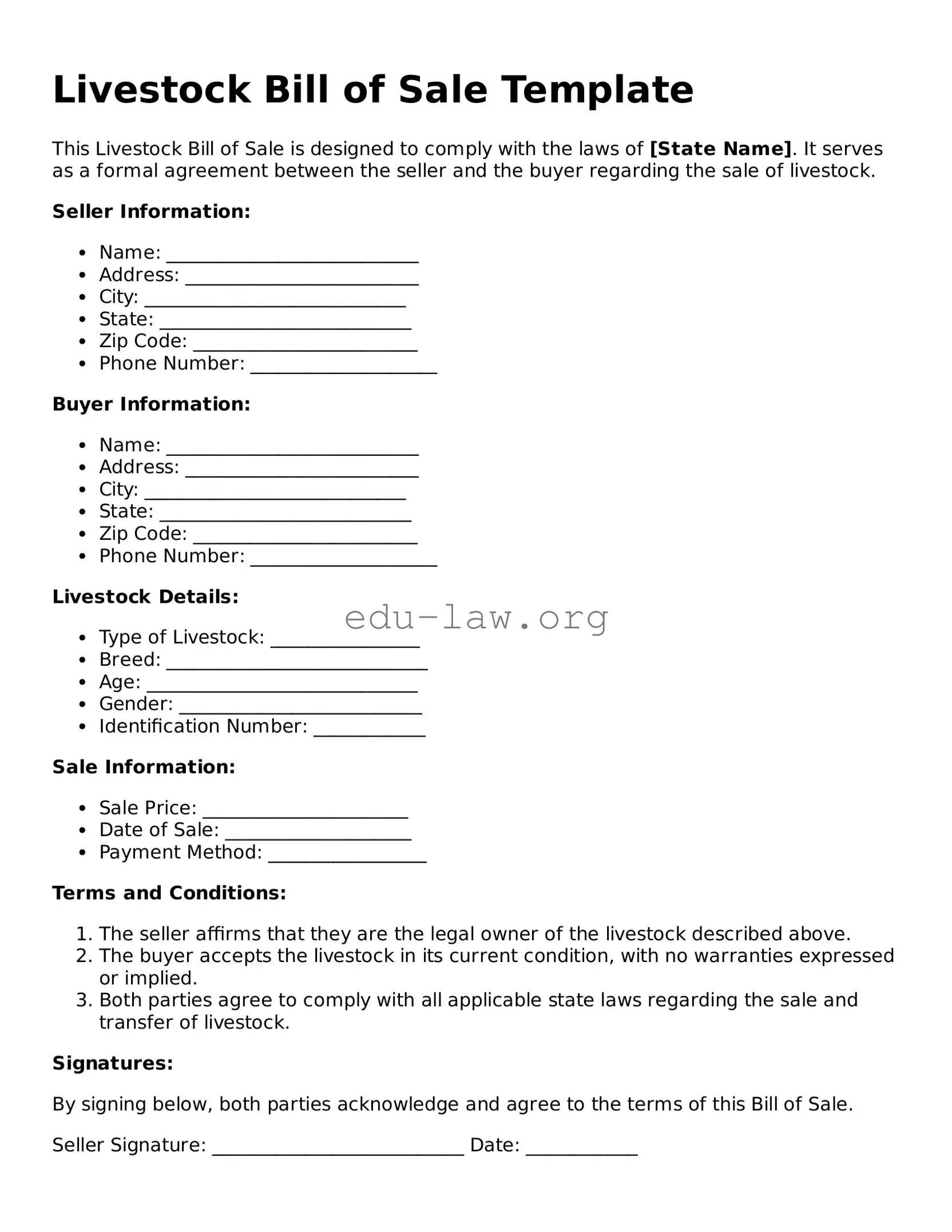
When engaging in the buying or selling of livestock, clarity and documentation are paramount. The Livestock Bill of Sale form serves as a crucial tool in these transactions, ensuring that both parties have a clear understanding of the terms involved. This form typically includes essential details such as the names and addresses of the buyer and seller, a description of the livestock being sold—including species, breed, age, and any identifying marks—along with the purchase price. Additionally, it may outline any warranties or guarantees related to the health and condition of the animals. By providing a written record, this form not only protects the interests of both parties but also facilitates a smoother transfer of ownership. Furthermore, it can serve as an important document for tax purposes or in the event of disputes. Understanding the components and significance of the Livestock Bill of Sale form is vital for anyone involved in the livestock industry.
Livestock Bill of Sale Template
This Livestock Bill of Sale is designed to comply with the laws of [State Name]. It serves as a formal agreement between the seller and the buyer regarding the sale of livestock.
Seller Information:
Buyer Information:
Livestock Details:
Sale Information:
Terms and Conditions:
Signatures:
By signing below, both parties acknowledge and agree to the terms of this Bill of Sale.
Seller Signature: ___________________________ Date: ____________
Buyer Signature: ___________________________ Date: ____________
| Fact Name | Description |
|---|---|
| Purpose | The Livestock Bill of Sale form serves as a legal document that records the transfer of ownership of livestock from one party to another. |
| Parties Involved | The form typically includes details about the seller (current owner) and the buyer (new owner) of the livestock. |
| Animal Description | A thorough description of the livestock being sold is essential. This includes breed, age, color, and any identifying marks. |
| Consideration | The form should specify the purchase price or other consideration exchanged for the livestock. |
| Governing Law | The laws governing the sale of livestock vary by state. For example, in Texas, the Texas Business and Commerce Code applies. |
| Signatures | Both the seller and buyer must sign the form to validate the transaction and confirm their agreement to the terms. |
| Record Keeping | It is advisable for both parties to retain a copy of the signed Bill of Sale for their records, as it may be required for future reference. |
Once you have the Livestock Bill of Sale form in hand, it's time to fill it out carefully. This form is essential for documenting the sale and transfer of livestock ownership. By following the steps below, you can ensure that all necessary information is included accurately.
After completing the form, ensure that both parties keep a copy for their records. This documentation will serve as proof of the transaction and can be useful for any future reference or disputes.
What is a Livestock Bill of Sale form?
A Livestock Bill of Sale form is a legal document used to record the sale of livestock. This form serves as proof of the transaction between the seller and the buyer, detailing important information about the animals being sold, the sale price, and the parties involved. It helps protect both parties by providing a clear record of the sale.
Why do I need a Livestock Bill of Sale?
Having a Livestock Bill of Sale is crucial for several reasons. It provides legal protection in case of disputes regarding ownership or the condition of the livestock. Additionally, it can be useful for tax purposes, as it documents the sale and may affect your financial reporting. For buyers, it ensures that they have proof of ownership and can help with future sales or transfers.
What information should be included in the form?
The form should include details such as the names and addresses of both the seller and the buyer, a description of the livestock (including breed, age, and identification numbers if applicable), the sale price, and the date of the transaction. It’s also a good idea to include any warranties or guarantees related to the livestock's health or condition.
Is the Livestock Bill of Sale form required by law?
While a Livestock Bill of Sale is not always legally required, it is highly recommended. Some states may have specific regulations regarding livestock sales, so it’s wise to check local laws. Having a bill of sale can prevent misunderstandings and provide clarity for both parties involved in the transaction.
Can I create my own Livestock Bill of Sale?
Yes, you can create your own Livestock Bill of Sale. Many templates are available online that you can customize to fit your needs. Just ensure that it includes all the necessary information and complies with any relevant state laws. Alternatively, using a professionally drafted form can provide peace of mind.
What happens if there are issues after the sale?
If issues arise after the sale, such as disputes over ownership or the health of the livestock, the Bill of Sale can serve as a key piece of evidence. It outlines the terms of the sale and can help resolve conflicts. Depending on the circumstances, you may need to consult a legal professional to address any serious disputes.
Do I need witnesses or notarization?
While not always required, having witnesses or notarization can add an extra layer of credibility to the Livestock Bill of Sale. This is particularly important for high-value transactions or if you anticipate potential disputes. Check your state’s requirements to see if notarization is necessary.
How long should I keep the Livestock Bill of Sale?
It’s advisable to keep the Livestock Bill of Sale for several years, especially for tax purposes and in case of any disputes. Retaining a copy protects your interests and provides documentation of the transaction. Consider storing it in a safe place, along with any related documents.
Can the form be used for different types of livestock?
Yes, the Livestock Bill of Sale can be adapted for various types of livestock, including cattle, sheep, goats, and pigs. Just make sure to accurately describe the specific type of livestock in the form. Adjustments may be needed depending on the type of animal, but the core information will remain the same.
Failing to include the date of the transaction. This can create confusion about when the sale took place.
Not providing accurate identification details for the livestock. This includes breed, age, and any identifying marks or tags.
Omitting the purchase price. This is crucial for both parties to understand the financial terms of the sale.
Leaving out the names and contact information of both the buyer and seller. This information is essential for future communication.
Not specifying the payment method. Whether it’s cash, check, or another form, clarity is key.
Using vague language in the description of the livestock. Specificity helps avoid disputes later on.
Failing to sign and date the form. Without signatures, the document lacks legal validity.
Not including any warranties or guarantees regarding the health of the livestock, which could protect both parties.
Neglecting to check local laws or regulations regarding livestock sales. Compliance is essential to avoid legal issues.
Forgetting to make copies of the completed form for both the buyer and seller. Keeping records is important for future reference.
When engaging in the sale or purchase of livestock, several key documents often accompany the Livestock Bill of Sale form. These documents serve various purposes, ensuring that both parties are protected and that the transaction is legally sound. Below is a list of commonly used forms and documents.
Understanding these documents can greatly enhance the livestock transaction process. Each form plays a vital role in ensuring clarity, legality, and protection for all parties involved. Be proactive in gathering these documents to facilitate a smooth and successful sale.
The Livestock Bill of Sale form is similar to the Vehicle Bill of Sale. Both documents serve as proof of ownership transfer. When you sell a vehicle, the seller provides a Bill of Sale to the buyer, detailing the vehicle's make, model, and VIN. Similarly, the Livestock Bill of Sale includes information about the animal, such as breed, age, and identification details. Both forms protect the interests of both parties and can be used for legal purposes if disputes arise.
Another document that shares similarities is the Equipment Bill of Sale. This form is used when transferring ownership of equipment, such as farming tools or machinery. Like the Livestock Bill of Sale, it includes descriptions of the equipment, purchase price, and the date of sale. Both documents help clarify the terms of the sale and can be important for warranty claims or tax purposes.
The Real Estate Bill of Sale is also comparable. While it primarily deals with property transactions, it can include personal property sold with the real estate. Just like the Livestock Bill of Sale, it provides a record of the transaction and details about the items involved. Both documents ensure that buyers have proof of ownership and sellers are protected against future claims.
The Boat Bill of Sale is another related document. When buying or selling a boat, this form outlines the details of the transaction, similar to the Livestock Bill of Sale. It includes specifics like the boat’s make, model, and hull identification number. Both documents serve as a legal record that can be referenced in case of disputes or for registration purposes.
The Firearm Bill of Sale is also akin to the Livestock Bill of Sale. This document is used when buying or selling firearms and includes detailed information about the weapon, including its make, model, and serial number. Both forms require the seller to affirm that they are legally allowed to sell the item, ensuring compliance with laws and regulations.
The Art Bill of Sale is similar in that it documents the transfer of ownership for artwork. This form typically includes the artist's name, the title of the piece, and any provenance details. Like the Livestock Bill of Sale, it serves as proof of ownership and can be essential for insurance or resale purposes.
The Business Asset Bill of Sale is another relevant document. When a business sells its assets, this form outlines what is being sold, including equipment, inventory, or intellectual property. Similar to the Livestock Bill of Sale, it provides a clear record of the transaction and protects both the buyer and seller by detailing the terms of the sale.
The Mobile Home Bill of Sale is comparable as well. This document is used when transferring ownership of a mobile home. It includes details about the home, such as its make, model, and identification number. Both forms serve to protect the rights of both parties and provide a clear record of the transaction.
Lastly, the Pet Bill of Sale is similar to the Livestock Bill of Sale in that it documents the sale of pets. This form typically includes information about the pet, such as breed, age, and health records. Both documents are important for ensuring that the buyer has proof of ownership and that the seller has fulfilled their legal obligations.
When filling out a Livestock Bill of Sale form, attention to detail is crucial. This document serves as a legal record of the transaction between the seller and the buyer. Here are ten important dos and don’ts to consider:
By following these guidelines, you can help ensure a smooth transaction and protect the interests of both parties involved.
Many people have misunderstandings about the Livestock Bill of Sale form. Here are some common misconceptions:
When filling out and using the Livestock Bill of Sale form, consider the following key takeaways: