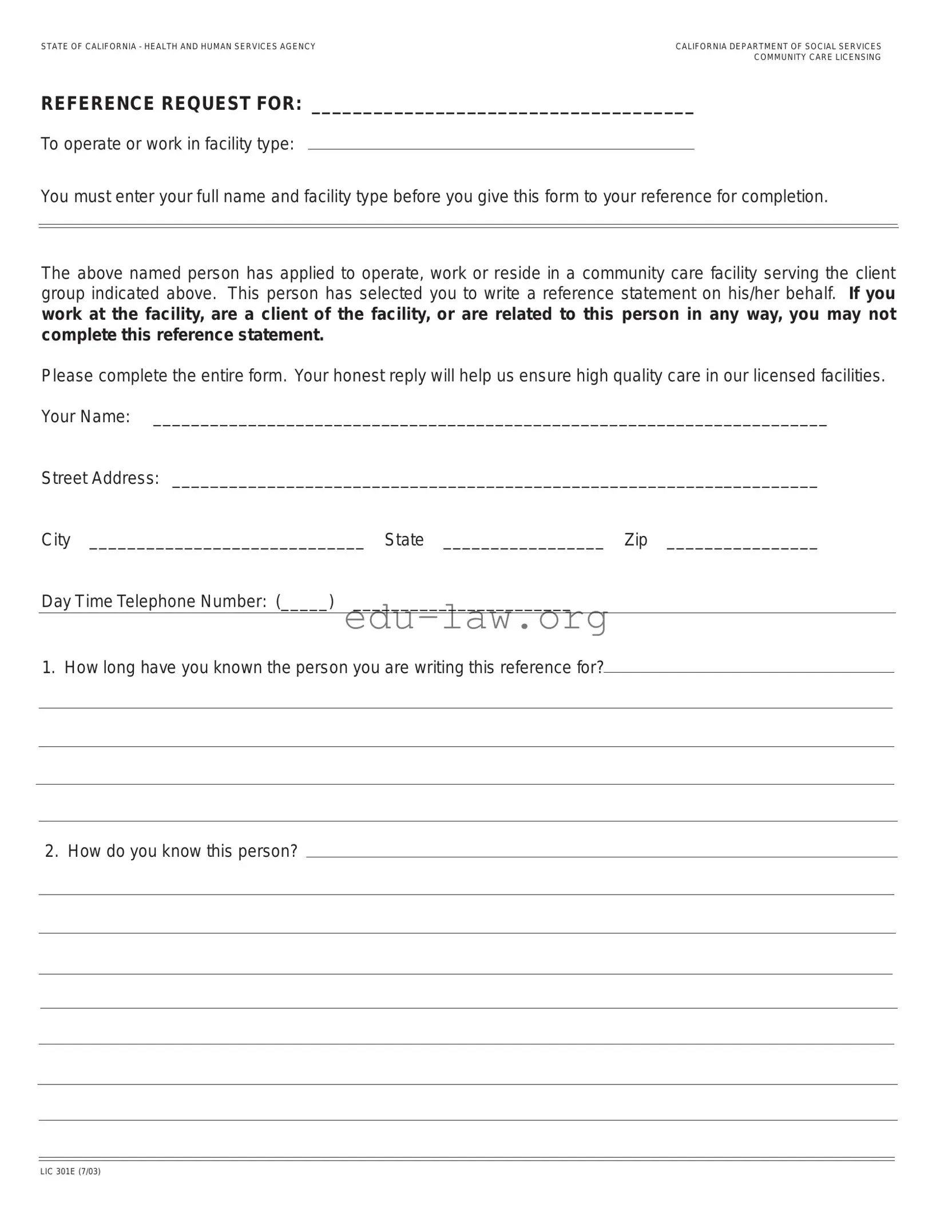
The Lic 301E form is an essential document in the process of vetting individuals who wish to operate or work in community care facilities in California. This form is specifically designed to gather reference information about a person applying for a position in a facility that serves vulnerable populations, such as children, the elderly, or individuals with disabilities. When a candidate submits this form, they must provide their full name and the type of facility where they intend to work. This allows the reference provider to understand the context of their assessment. The form requests the reference provider to answer several key questions, including how long they have known the applicant, their relationship to the applicant, and their opinion on the applicant's character. Additionally, the reference is asked to describe any observed interactions between the applicant and the client group they aim to serve. This information is crucial, as it helps the California Department of Social Services ensure that individuals working in community care settings are qualified and capable of providing high-quality care. Completing the Lic 301E form requires honesty and thoughtful consideration, as the insights provided will directly impact the applicant's ability to work in a sensitive and impactful role.

STATE OF CALIFORNIA - HEALTH AND HUMAN SERVICES AGENCY |
CALIFORNIA DEPARTMENT OF SOCIAL SERVICES |
|
COMMUNITY CARE LICENSING |
REFERENCE REQUEST FOR: _____________________________________
To operate or work in facility type:
You must enter your full name and facility type before you give this form to your reference for completion.
The above named person has applied to operate, work or reside in a community care facility serving the client group indicated above. This person has selected you to write a reference statement on his/her behalf. If you work at the facility, are a client of the facility, or are related to this person in any way, you may not complete this reference statement.
Please complete the entire form. Your honest reply will help us ensure high quality care in our licensed facilities. Your Name: _______________________________________________________________________
Street Address: ____________________________________________________________________
City _____________________________ State _________________ Zip ________________
Day Time Telephone Number: (_____) _______________________
1. How long have you known the person you are writing this reference for?
2. How do you know this person?
LIC 301E (7/03)

REFERENCE REQUEST FOR:
3. Please give your opinion of this person’s character.
4.Please describe any interaction you have observed between this person and the client group he/she is requesting to work with. For example: Clients may be children, developmentally disabled children or adults, mentally impaired adults, or elderly.
5.Please add any comments you feel are relevant about this person and his/her desire to work in a community care facility.
PRINT YOUR NAME
YOUR SIGNATURE
DATE
LIC 301E (7/03)
| Fact Name | Description |
|---|---|
| Form Title | The form is titled "LIC 301E" and is used for reference requests in California. |
| Governing Agency | This form is issued by the California Department of Social Services. |
| Purpose | The form serves to gather reference information for individuals applying to work in community care facilities. |
| Eligibility Criteria | References must not be related to the applicant or clients of the facility. |
| Required Information | References must provide their name, address, and contact information, along with their assessment of the applicant. |
| Interaction Observation | References are asked to describe any observed interactions between the applicant and the client group. |
| Character Assessment | References must provide their opinion on the character of the individual being referenced. |
| Submission Instructions | The completed form should be returned to the applicant for submission to the licensing authority. |
| Version Date | The form is dated "LIC 301E (7/03)," indicating its last revision in July 2003. |
| Client Groups | The form pertains to various client groups, including children, developmentally disabled individuals, and the elderly. |
Filling out the Lic 301E form is a straightforward process. This form is essential for individuals who want to operate or work in a community care facility in California. Completing it accurately ensures that the reference provided is useful and informative.
What is the purpose of the Lic 301E form?
The Lic 301E form is a reference request used in California for individuals applying to operate, work, or reside in community care facilities. It helps ensure that those who will be providing care have the necessary qualifications and character to do so. The form requires a reference to provide insights about the applicant's background, character, and interactions with the client group they intend to serve.
Who can complete the Lic 301E form?
Only individuals who are not related to the applicant, and who do not work at or are clients of the facility, may complete the Lic 301E form. This requirement is in place to ensure that the reference is unbiased and objective. It is crucial for the integrity of the evaluation process that the reference can provide an honest and independent assessment of the applicant.
What information is required from the reference?
The reference must provide their name, address, and contact information. Additionally, they need to answer several questions regarding their relationship with the applicant, including how long they have known the applicant and how they know them. The reference is also asked to share their opinion on the applicant's character and to describe any observed interactions between the applicant and the client group they wish to work with. This information is vital for assessing the applicant's suitability for the role.
What should the reference consider when completing the form?
When filling out the Lic 301E form, the reference should reflect on their personal experiences and observations regarding the applicant. It is important to provide honest and constructive feedback. The reference should consider the applicant's interpersonal skills, reliability, and ability to interact positively with the specific client group they intend to serve. Any relevant comments that could help assess the applicant's desire and capability to work in a community care facility should also be included.
Failing to enter the full name of the applicant in the designated section.
Not specifying the facility type where the applicant intends to operate or work.
Leaving the reference statement incomplete, which may lead to delays in processing.
Providing an inaccurate or outdated telephone number, making it difficult for the agency to follow up.
Not answering the questions regarding the applicant’s character and interactions with the client group.
Overlooking the requirement to sign and date the form before submission.
Failing to provide relevant comments that could assist in evaluating the applicant's suitability.
Ignoring the instruction that individuals related to the applicant cannot complete the reference statement.
Using unclear language or vague descriptions when providing opinions about the applicant.
Submitting the form without reviewing it for errors or omissions.
The Lic 301E form is a critical document in the process of obtaining approval to operate or work in a community care facility in California. Alongside this form, several other documents may be required to provide a comprehensive overview of the applicant's qualifications and background. Below is a list of commonly used forms and documents that complement the Lic 301E form.
Completing the Lic 301E form and the associated documents is vital for meeting regulatory requirements and ensuring the safety and well-being of clients in community care facilities. Each form serves a specific purpose and contributes to the overall assessment of the applicant's qualifications and the facility's readiness to provide care.
The Lic 301E form is similar to the Employment Reference Form, which is often used by employers to gather insights about a candidate's work history and character. Both documents require the reference provider to share their relationship with the individual and provide an assessment of their abilities and personality. The Employment Reference Form typically includes questions about the candidate's skills, work ethic, and suitability for the position, just as the Lic 301E focuses on the individual’s character and interactions with specific client groups.
Another document that shares similarities with the Lic 301E is the Volunteer Reference Form. This form is used by organizations to vet potential volunteers. Like the Lic 301E, it asks for the referee’s opinion about the candidate's character and suitability for working with vulnerable populations. Both forms emphasize the importance of honest feedback to ensure the safety and well-being of those served.
The Child Care Reference Form is also comparable to the Lic 301E. This form is specifically designed for individuals seeking employment in child care settings. It asks similar questions about the applicant's experience and interactions with children, mirroring the Lic 301E’s focus on the applicant's ability to work with specific client groups, such as children or developmentally disabled individuals.
The Personal Reference Form serves a similar purpose as the Lic 301E by allowing individuals to provide insights into someone's character. While it may not focus specifically on professional qualifications, it does ask for a description of the relationship and an evaluation of the individual’s character traits, which aligns closely with the requirements of the Lic 301E.
The Professional Reference Form is another document that resembles the Lic 301E. It is commonly used in job applications to gather opinions from colleagues or supervisors about a candidate’s professional conduct and capabilities. Like the Lic 301E, it seeks detailed information about the individual's character and their interactions in a professional setting, ensuring a comprehensive view of the applicant.
Similarly, the Background Check Authorization Form often includes sections where references can provide insights into the applicant’s character. This form is used to verify an individual’s history and suitability for a position. Both forms aim to ensure that individuals working in sensitive environments are trustworthy and capable of providing quality care.
The Recommendation Letter is another document that aligns with the Lic 301E. While it is typically more narrative in style, it serves the same purpose of providing a character assessment and insights into the individual’s abilities. Both documents rely on the referee's perspective to paint a picture of the applicant’s suitability for a specific role, particularly in community care settings.
The Mentor Reference Form is similar in that it seeks to evaluate an individual’s character and capabilities through the lens of a mentor-mentee relationship. This form often asks about the individual’s growth and interactions, akin to the questions posed in the Lic 301E regarding the applicant’s interactions with the client group they wish to serve.
The Client Reference Form, used in various service industries, also shares similarities with the Lic 301E. This form gathers feedback from clients about a service provider's character and effectiveness. Like the Lic 301E, it emphasizes the importance of understanding how the individual interacts with those they serve, ensuring that they meet the necessary standards of care.
Lastly, the Academic Reference Form is comparable to the Lic 301E, particularly for individuals applying to educational or child-focused roles. This form seeks evaluations of a student's character and potential from teachers or mentors. Both documents aim to assess the individual's suitability for working with specific populations, ensuring that they possess the necessary qualities to provide effective support.
When filling out the Lic 301E form, it is crucial to follow specific guidelines to ensure accuracy and compliance. Here are ten things to keep in mind:
The Lic 301E form is an important document used in California for reference requests related to community care facilities. However, there are several misconceptions about this form that can lead to confusion. Here are four common misunderstandings:
This is not true. Only individuals who have a professional or personal relationship with the applicant can complete the form. If you work at the facility, are a client of the facility, or are related to the applicant, you cannot provide a reference.
Actually, the Lic 301E form is a required part of the application process. It helps ensure that the applicant has the necessary character and qualifications to work in a community care facility.
While the responses are intended for the licensing agency, the information may be subject to review by the applicant. Therefore, honesty and transparency are crucial when filling out the form.
This is misleading. The Lic 301E form focuses on the applicant's character, interactions with clients, and overall suitability for working in a community care environment. It looks beyond just work experience to evaluate the individual's potential impact on the client group.
When filling out and using the Lic 301E form, there are several important points to keep in mind: