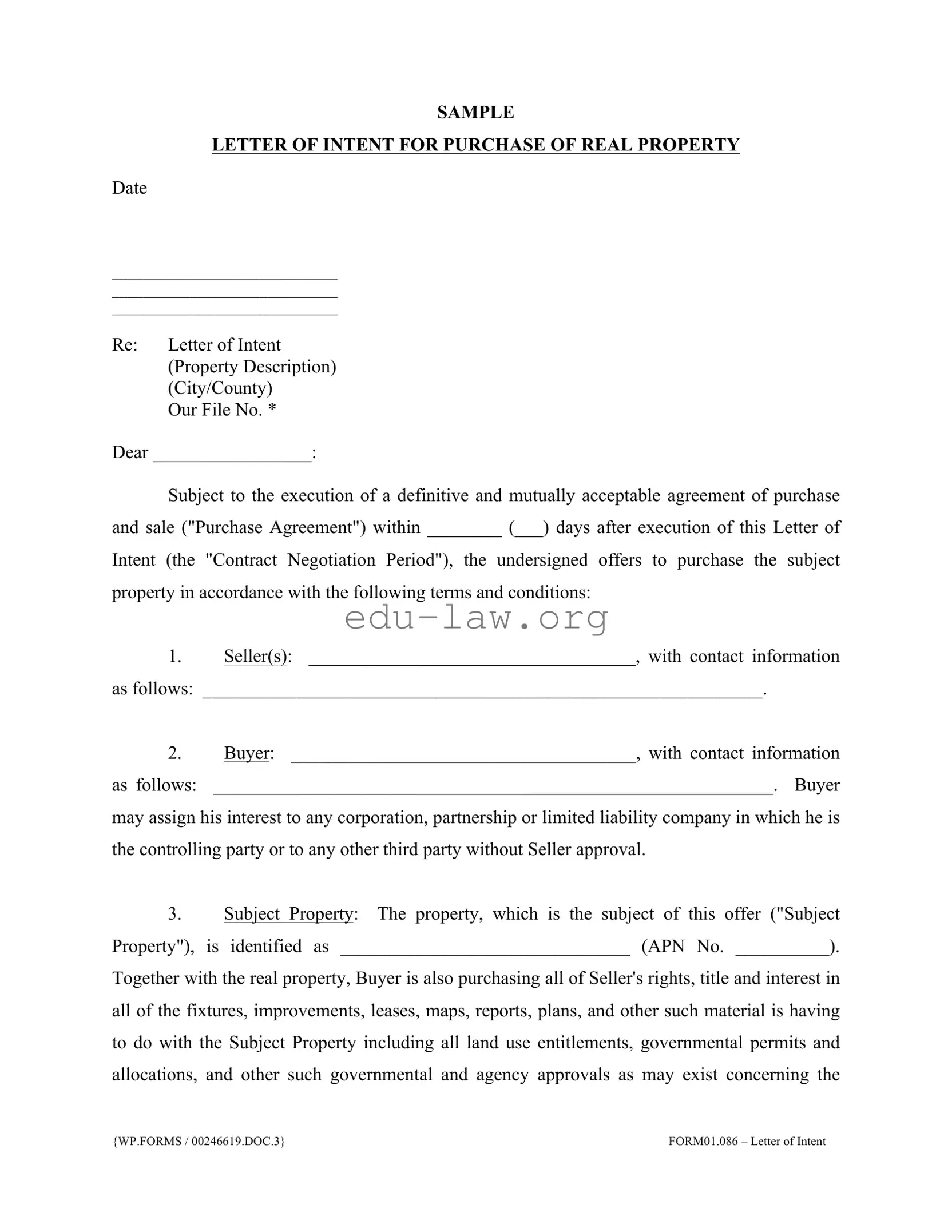
The Letter to Purchase Land form serves as a crucial initial step in the real estate transaction process, outlining the intentions of both the buyer and the seller regarding a specific property. This document typically begins with essential details such as the date and the parties involved, clearly identifying the seller and buyer, along with their contact information. It specifies the subject property, including its description and any relevant identification numbers. The form details the proposed purchase price and terms, establishing a framework for negotiations. Additionally, it sets a timeline for opening escrow and outlines the deposit requirements, including both an initial refundable deposit and a subsequent non-refundable deposit that may be released to the seller upon certain conditions. A feasibility period is included, allowing the buyer to conduct due diligence on the property, with provisions for termination if necessary. The obligations of both parties leading up to the closing of escrow are also addressed, ensuring that the buyer receives clear title to the property. Finally, the document emphasizes that it is not legally binding beyond the negotiation period, allowing for flexibility as the parties work towards a formal purchase agreement.
SAMPLE
LETTER OF INTENT FOR PURCHASE OF REAL PROPERTY
Date
_____________________________
_____________________________
_____________________________
Re: Letter of Intent (Property Description) (City/County)
Our File No. *
Dear _________________:
Subject to the execution of a definitive and mutually acceptable agreement of purchase and sale ("Purchase Agreement") within ________ (___) days after execution of this Letter of
Intent (the "Contract Negotiation Period"), the undersigned offers to purchase the subject property in accordance with the following terms and conditions:
1.Seller(s): ___________________________________, with contact information
as follows: ____________________________________________________________.
2.Buyer: _____________________________________, with contact information
as follows: ____________________________________________________________. Buyer may assign his interest to any corporation, partnership or limited liability company in which he is the controlling party or to any other third party without Seller approval.
3.Subject Property: The property, which is the subject of this offer ("Subject Property"), is identified as _______________________________ (APN No. __________). Together with the real property, Buyer is also purchasing all of Seller's rights, title and interest in all of the fixtures, improvements, leases, maps, reports, plans, and other such material is having to do with the Subject Property including all land use entitlements, governmental permits and allocations, and other such governmental and agency approvals as may exist concerning the
{WP.FORMS / 00246619.DOC.3} |
FORM01.086 – Letter of Intent |
_____________________
_____________________
Page 2
property. In addition, this offer to purchase includes the following specific items: ___________
____________________________________________.
4.Purchase Price: ___________________ ($________).
5.Terms of Purchase: ________________________________________________
___________________________________________________.
6.Opening of Escrow: Escrow ("the Purchase Escrow") shall be opened at
______________ Title Company within three (3) business days from execution of this Letter of Intent. The Purchase Agreement and Mutual Escrow Instructions shall be mutually prepared and executed by Buyer and Seller within ________ (___) days of execution by both parties of this Letter of Intent to purchase (the "Contract Negotiation Period").
7.Deposit Toward Purchase Price:
A.Initial Deposit: Concurrently with the opening of escrow, Buyer shall place therein the sum of ___________________________ Dollars ($____________) as a refundable deposit toward and applicable to the Purchase Price ("the Initial Deposit"). Escrow Holder shall deposit such sum in an
B.Second Deposit: An additional
__________________________ Dollars ($____________) shall be applicable to the Purchase Price and upon approval of the feasibility shall be released to Seller, inclusive of the Initial Deposit.
8.Feasibility Period: Buyer shall have until ________________ to perform all feasibility and due diligence for subject property. Seller shall fully cooperate with Buyer in
_____________________
_____________________
Page 3
providing any and all information available regarding the development potential of the property. Buyer may terminate this Letter of Intent and/or the Purchase Agreement at any time prior to the end of the Feasibility Period for any reason or no reason at all upon written notification to Seller and Escrow Holder of the termination. Upon notice of termination, Escrow Holder shall be instructed to immediately release the Initial Deposit made by Buyer and return to Buyer within five (5) business days of termination.
9.Buyer's Condition Precedent to Closing: Following the expiration of the Feasibility Period, Buyer's obligation to close escrow shall be subject only to the following conditions:
A.Title Company shall be in position to issue a policy of title insurance to Buyer in the full amount of the Purchase Price showing good and marketable title vested in Buyer subject only to such exceptions to title as have been approved by Buyer during the Feasibility Period.
B.The
C.Seller to provide Buyer title to property free and clear of liens except for
10.Close of Escrow: Close of escrow to be on _______________________.
_____________________
_____________________
Page 4
11.Other Provisions:
A.The Purchase Agreement may contain other provisions such as, but not limited to, a liquidated damages clause, attorney's fees, notices, mutual indemnifications, broker's commission, and the like.
B.Any and all documentation provided by Seller to Buyer shall be returned to Seller upon cancellation of this transaction.
12.Expiration of Offer: This Letter of Intent shall constitute an open offer until
____________, at which time it shall be automatically terminated if not executed by Seller.
If the above outline of terms and conditions are acceptable, please indicate by signing below. All parties to these transactions intend that this proposal be superseded by a the Purchase Agreement. In the meantime, all parties agree to proceed in accordance with terms and conditions outlined in this Letter of Intent. Seller understands the purpose of this Letter of Intent is to allow further investigation by both parties into the feasibility of entering into a formal agreement. This Letter of Intent is only binding on the parties during the Contract Negotiation period. If the Purchase Agreement is not mutually executed within the Contract Negotiation Period for any reason whatsoever or no reason at all, this Letter of Intent shall expire and no party shall have any further rights or duties hereunder. Seller shall not solicit other offers during the Contract Negotiation Period.
BUYER:
________________________________ |
Dated: _________________ |
SELLER:
________________________________ |
Dated: _________________ |
_____________________
_____________________
Page 5
| Fact Name | Description |
|---|---|
| Purpose | The Letter of Intent serves as a preliminary agreement outlining the terms for purchasing real property, allowing both parties to negotiate before a formal contract is executed. |
| Binding Nature | This document is only binding during the specified Contract Negotiation Period, which is a set timeframe for finalizing the Purchase Agreement. |
| Deposit Requirements | It specifies an Initial Deposit, which is refundable, and a Second Deposit, which is non-refundable, both of which are applied toward the Purchase Price. |
| Feasibility Period | The Buyer has a designated Feasibility Period to conduct due diligence on the property. They can terminate the agreement during this time for any reason. |
| Governing Law | The form is subject to state-specific laws, which may vary. For example, in California, it is governed by the California Civil Code. |
Completing the Letter to Purchase Land form is a straightforward process. After filling out the form, both parties will have a clear understanding of the terms and conditions related to the purchase of the property. Make sure to gather all necessary information before you begin.
What is a Letter To Purchase Land form?
A Letter To Purchase Land form is a preliminary document used to express a buyer's intent to purchase a specific piece of real estate. It outlines the basic terms of the potential sale, including the purchase price, property description, and timelines for negotiations. This letter serves as a starting point for further discussions and negotiations, paving the way for a formal Purchase Agreement if both parties agree on the terms.
What should I include in the Letter To Purchase Land?
When filling out the Letter To Purchase Land, include key details such as the names and contact information of both the buyer and seller, a description of the property, and the proposed purchase price. Additionally, specify any terms related to deposits, escrow arrangements, and the feasibility period for the buyer to conduct due diligence. Clear communication of these details helps both parties understand their obligations and expectations moving forward.
Is the Letter To Purchase Land legally binding?
The Letter To Purchase Land is not a legally binding contract. Instead, it serves as an expression of interest and outlines the terms for further negotiation. It is binding only during the specified Contract Negotiation Period, meaning that both parties agree not to pursue other offers during this time. If a formal Purchase Agreement is not executed within the agreed timeframe, the letter will expire, and neither party will have further obligations.
What happens after I send the Letter To Purchase Land?
After sending the Letter To Purchase Land, the seller will review the terms and may respond with acceptance, rejection, or a counteroffer. If both parties agree on the terms, they will move forward to draft and sign a formal Purchase Agreement. This agreement will detail all aspects of the sale, including any contingencies and conditions necessary for closing the transaction. It’s essential to remain in communication throughout this process to ensure a smooth transition from intent to formal agreement.
Incomplete Information: Failing to provide all necessary details, such as names, addresses, and property descriptions, can lead to confusion and delays.
Incorrect Property Identification: Not accurately identifying the property, including the APN number, may cause legal issues or disputes later on.
Missing Signatures: Omitting signatures from either the buyer or seller can render the letter invalid and unenforceable.
Unclear Terms of Purchase: Vague language regarding the purchase price or terms can lead to misunderstandings and disagreements.
Ignoring the Feasibility Period: Not specifying a feasibility period or failing to understand its importance can affect the buyer's ability to conduct due diligence.
Improper Deposit Amounts: Providing incorrect figures for initial or second deposits can complicate the escrow process.
Failure to Outline Conditions Precedent: Not clearly stating the conditions that must be met before closing can lead to complications during the transaction.
Neglecting to Include Expiration Date: Failing to set an expiration date for the offer can lead to uncertainty about the offer's validity.
Not Reviewing the Letter: Skipping a thorough review of the letter before submission can result in overlooked errors or omissions.
Assuming All Parties Understand Terms: Not ensuring that all parties fully comprehend the terms can lead to disputes and misunderstandings later on.
When considering the purchase of land, several important documents accompany the Letter to Purchase Land form. Each of these documents plays a crucial role in ensuring a smooth transaction and protecting the interests of both the buyer and the seller. Below is a list of commonly used forms and documents in this process.
Understanding these documents can greatly enhance the purchasing experience. Each plays a vital role in protecting the interests of the parties involved and ensuring that the transaction proceeds smoothly. Always consider consulting with a legal professional to navigate these documents effectively.
The Purchase Agreement is a formal contract that outlines the terms and conditions under which a buyer agrees to purchase a property from a seller. Unlike the Letter to Purchase Land, which serves as an initial expression of interest, the Purchase Agreement is legally binding once signed by both parties. It details the purchase price, closing date, and any contingencies that must be met before the sale can proceed. This document requires more comprehensive information about the property and the parties involved, making it a crucial step in the real estate transaction process.
The Offer to Purchase Real Estate is similar to the Letter to Purchase Land in that it expresses the buyer's intent to acquire a specific property. However, this document typically includes more detailed terms, such as financing arrangements and specific contingencies that must be satisfied before closing. The Offer to Purchase serves as a more formal proposal and can lead directly to a Purchase Agreement if accepted by the seller. It is often used in competitive real estate markets where multiple offers may be presented.
A Purchase and Sale Agreement is a document that formalizes the terms of a real estate transaction between the buyer and seller. It is similar to the Letter to Purchase Land in that it outlines the buyer's intention to purchase a property. However, the Purchase and Sale Agreement is more detailed and includes specific legal obligations for both parties. This document is essential for protecting the interests of both the buyer and seller, as it clearly defines their rights and responsibilities throughout the transaction.
The Real Estate Sales Contract is another document closely related to the Letter to Purchase Land. It serves as a binding agreement between the buyer and seller once both parties have agreed to the terms. This contract typically includes detailed information about the property, financing, and closing conditions. While the Letter to Purchase Land is often non-binding, the Real Estate Sales Contract is enforceable, making it a critical step in the property acquisition process.
A Letter of Intent (LOI) is often used in various business transactions, including real estate. Like the Letter to Purchase Land, an LOI outlines the preliminary terms and conditions of a potential agreement. However, an LOI is typically less formal and may not include all the specifics necessary for a real estate transaction. It serves as a starting point for negotiations and can help both parties clarify their intentions before moving forward with a more detailed agreement.
A Lease Agreement can also be similar to the Letter to Purchase Land in that it outlines terms related to the use of a property. While the Letter to Purchase Land focuses on purchasing, a Lease Agreement details the rental terms between a landlord and tenant. Both documents require clear communication of terms, such as duration, payment amounts, and responsibilities. However, a Lease Agreement is generally more focused on the temporary use of property rather than a transfer of ownership.
A Memorandum of Understanding (MOU) is another document that shares similarities with the Letter to Purchase Land. An MOU outlines the intentions of both parties to enter into a formal agreement, much like a Letter of Intent. While it is not legally binding, it helps clarify the main points of agreement and can serve as a foundation for a more detailed contract. This document is often used in various business contexts, including real estate, to ensure both parties are on the same page before proceeding.
A Due Diligence Agreement is a document that allows a buyer to investigate a property before finalizing a purchase. It is similar to the feasibility period outlined in the Letter to Purchase Land, where the buyer assesses the property's condition and potential for development. The Due Diligence Agreement typically specifies the timeframe for inspections and investigations, ensuring that the buyer can make an informed decision before committing to the purchase.
An Escrow Agreement is another important document in real estate transactions that relates to the Letter to Purchase Land. This agreement outlines the terms under which a neutral third party holds funds and documents until all conditions of the sale are met. While the Letter to Purchase Land mentions the opening of escrow, the Escrow Agreement provides the specific guidelines for how the escrow process will be managed, ensuring that both parties fulfill their obligations before the transaction is completed.
Finally, a Title Commitment is a document that outlines the terms under which a title insurance company will insure the title to a property. It is similar to the conditions set forth in the Letter to Purchase Land regarding the buyer's obligation to receive clear title. The Title Commitment provides important information about any liens or encumbrances on the property, ensuring that the buyer is aware of any issues that could affect their ownership rights. This document is essential for protecting the buyer's interests in the transaction.
When filling out the Letter To Purchase Land form, it’s important to be thorough and accurate. Here are some dos and don’ts to keep in mind:
This is not accurate. An LOI is typically non-binding and serves as a preliminary agreement outlining the terms for a future purchase agreement. It allows both parties to negotiate without legal obligations until a formal contract is signed.
This is misleading. The LOI merely expresses an intent to negotiate. The sale is contingent upon the execution of a definitive purchase agreement within the specified negotiation period.
This is incorrect. The LOI outlines an initial refundable deposit, which can be returned if the buyer decides not to proceed within the feasibility period.
This is false. The LOI typically includes a clause that prohibits the seller from soliciting other offers during the contract negotiation period, ensuring that the buyer has a fair chance to finalize the deal.
This is misleading. The duration of the feasibility period is negotiable and should be clearly defined in the LOI. Both parties can agree on a timeframe that suits their needs.
This is not true. The LOI must include specific details such as the property description, purchase price, and terms of purchase. These details are crucial for clarity and future negotiations.
When filling out and using the Letter To Purchase Land form, consider the following key takeaways:
Using this form correctly can help facilitate a smooth transaction process. Always keep a copy for your records.