When it comes to advancing in a career, a strong letter of recommendation can make a world of difference. For many professionals, having a colleague vouch for their skills, work ethic, and character can open doors to new opportunities. The Letter of Recommendation for Coworker form serves as a structured way to facilitate this process. It typically includes sections for the recommender to detail their relationship with the employee, highlight specific skills and accomplishments, and provide insights into the individual’s contributions to the team. Additionally, it often allows for personal anecdotes that showcase the coworker's strengths in real-world situations. By capturing these elements, the form not only helps the recommender organize their thoughts but also ensures that the letter is comprehensive and compelling. Whether you’re a manager, a peer, or even a subordinate, understanding how to effectively use this form can empower you to support your coworkers in their career journeys.
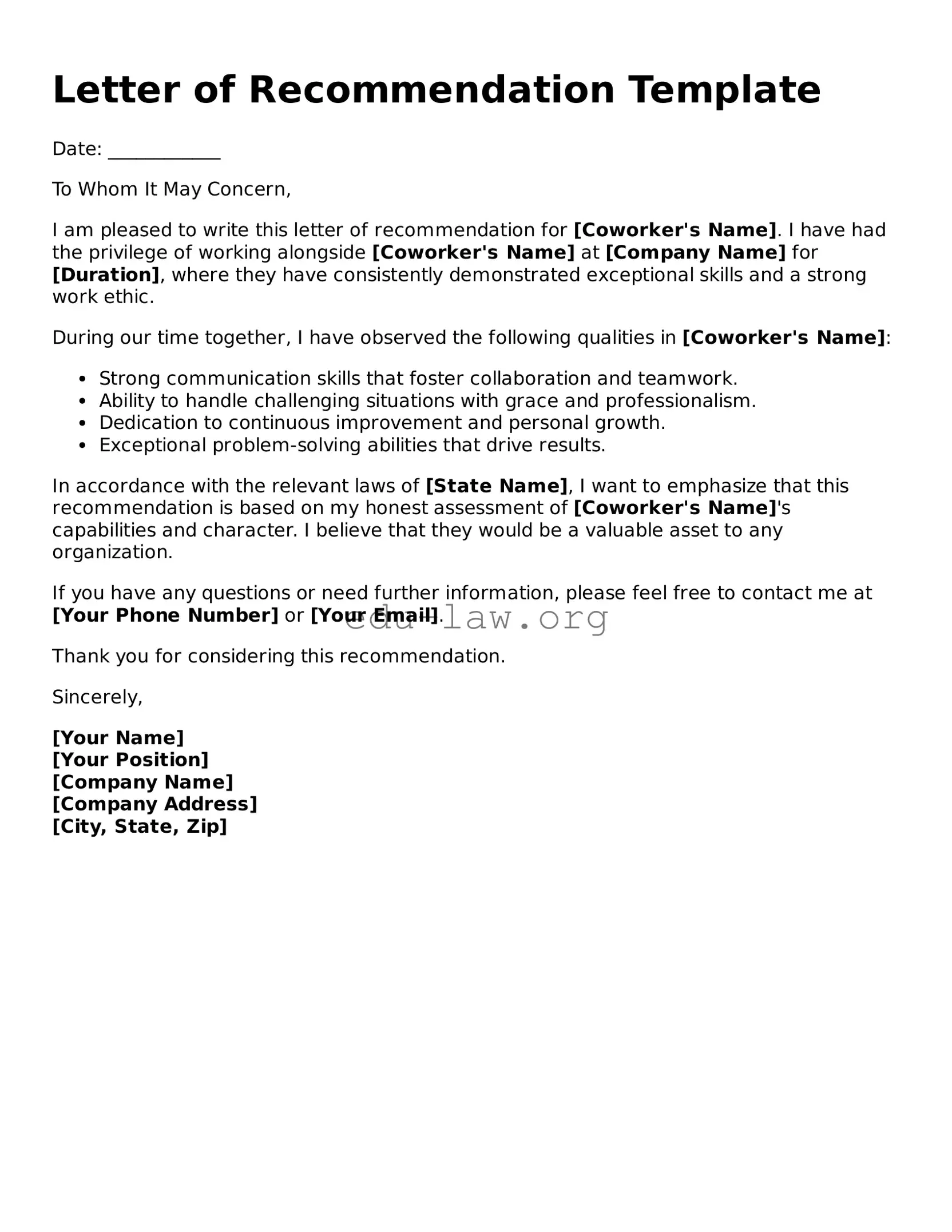
Letter of Recommendation Template
Date: ____________
To Whom It May Concern,
I am pleased to write this letter of recommendation for [Coworker's Name]. I have had the privilege of working alongside [Coworker's Name] at [Company Name] for [Duration], where they have consistently demonstrated exceptional skills and a strong work ethic.
During our time together, I have observed the following qualities in [Coworker's Name]:
In accordance with the relevant laws of [State Name], I want to emphasize that this recommendation is based on my honest assessment of [Coworker's Name]'s capabilities and character. I believe that they would be a valuable asset to any organization.
If you have any questions or need further information, please feel free to contact me at [Your Phone Number] or [Your Email].
Thank you for considering this recommendation.
Sincerely,
[Your Name]
[Your Position]
[Company Name]
[Company Address]
[City, State, Zip]
| Fact Name | Description |
|---|---|
| Purpose | A Letter of Recommendation for Coworker form is used to provide a professional endorsement for a colleague. |
| Content | The letter typically includes the coworker's skills, contributions, and character traits. |
| Format | The letter should be formatted formally, including the date, recipient's address, and a proper closing. |
| Length | A typical letter of recommendation is one page long, but it can vary based on the situation. |
| Confidentiality | It is important to maintain confidentiality regarding sensitive information about the coworker. |
| State-Specific Forms | Some states may have specific guidelines for letters of recommendation, governed by employment laws. |
| Signature | The letter should be signed by the person providing the recommendation to validate its authenticity. |
| Timing | It is best to provide the letter promptly, especially if the coworker is applying for a new position. |
| Personalization | The letter should be personalized to reflect the specific relationship and experiences shared with the coworker. |
| Impact | A well-written recommendation can significantly influence hiring decisions and professional opportunities. |
Completing the Letter of Recommendation for Coworker form is an important task that requires careful attention to detail. After filling out this form, it will be submitted to the appropriate party, who will then use it to evaluate the coworker's qualifications and character. It is essential to provide accurate and thoughtful responses, as this letter can significantly impact the coworker's future opportunities.
What is a Letter of Recommendation for Coworker form?
A Letter of Recommendation for Coworker form is a document used to formally endorse a colleague's skills, work ethic, and contributions to the workplace. It serves as a testament to their professional abilities and character, often assisting them in job applications or promotions. This letter typically highlights specific achievements and qualities that make the individual a valuable asset to any team.
Who should fill out the Letter of Recommendation for Coworker form?
The form should be filled out by someone who has worked closely with the coworker and can provide a genuine assessment of their performance. This could be a supervisor, manager, or even a peer who has collaborated with the individual on projects. The key is that the person writing the letter has firsthand knowledge of the coworker's skills and contributions.
What information is typically included in the Letter of Recommendation?
A well-crafted Letter of Recommendation generally includes several key elements. First, it should introduce the writer and explain their relationship to the coworker. Next, the letter should detail specific skills, accomplishments, and attributes of the coworker that make them stand out. Finally, it should conclude with a strong endorsement, encouraging the reader to consider the coworker for the position or opportunity they are pursuing.
How long should the Letter of Recommendation be?
While there is no strict rule regarding the length of a Letter of Recommendation, it is typically one page long. This length allows the writer to provide enough detail to support their claims while remaining concise. A focused and clear letter is more likely to be read in its entirety, making it more effective in supporting the coworker’s application.
Can I use a Letter of Recommendation for multiple job applications?
Yes, a Letter of Recommendation can often be used for multiple job applications, especially if it highlights general skills and qualities that are applicable across various positions. However, it is beneficial to tailor the letter to specific roles when possible. This can involve adding relevant details or adjusting the focus to align with the requirements of the job being applied for. Personalizing the letter can significantly enhance its impact.
Being Vague About Qualifications: Many individuals tend to provide general statements about a coworker’s abilities without specific examples. This lack of detail can make it difficult for the reader to understand the true extent of the coworker’s skills and contributions.
Using Clichés: Phrases like "hardworking" or "team player" are often overused. While these attributes may be true, they do not stand out. Instead, providing unique insights into the coworker's character and work ethic can create a more compelling recommendation.
Neglecting to Address the Audience: Not considering who will read the letter can lead to missed opportunities. Tailoring the recommendation to the specific organization or role shows that the recommender understands the expectations and can articulate how the coworker meets them.
Failing to Highlight Achievements: Omitting significant accomplishments is a common mistake. Including quantifiable results, such as sales figures or project completions, provides concrete evidence of the coworker’s capabilities.
Not Proofreading: Spelling and grammatical errors can undermine the credibility of the recommendation. Taking the time to review the letter ensures that it is polished and professional, reflecting well on both the recommender and the coworker.
When preparing a Letter of Recommendation for a coworker, several other forms and documents can enhance the process. These documents help provide a comprehensive view of the individual’s skills and contributions. Here’s a list of commonly used forms that accompany the recommendation letter:
These documents collectively create a well-rounded picture of the coworker, making the recommendation letter more impactful. By including various forms of evidence, the letter becomes a stronger endorsement of their abilities and potential.
A Letter of Recommendation for a Coworker is similar to a Letter of Recommendation for a Job Applicant. Both documents serve to endorse an individual's skills, work ethic, and character. They are typically written by someone who has worked closely with the individual, providing insights into their professional abilities. The primary difference lies in the context; one is aimed at supporting a coworker seeking a new position, while the other may be used for various purposes, such as academic applications or professional certifications.
A Letter of Recommendation for Graduate School is another document that shares similarities. Like the coworker recommendation, this letter highlights the candidate’s qualifications and personal attributes. However, it is often more focused on academic achievements and potential for success in a graduate program. The writer usually emphasizes research skills, intellectual curiosity, and the ability to contribute to a scholarly community.
A Character Reference Letter is also akin to the Letter of Recommendation for a Coworker. This document focuses more on personal qualities than professional skills. It is often used in legal situations, such as court proceedings, or for personal matters, such as rental applications. The emphasis here is on integrity, reliability, and the individual's character, rather than their job performance.
An Employment Verification Letter shares some similarities as well. While primarily a document confirming employment status, it often includes a brief overview of the employee’s role and responsibilities. This letter can support a recommendation by validating the individual's experience and contributions within the organization, thus enhancing the credibility of the recommendation.
A Reference Letter for a Volunteer Position is another related document. This type of letter highlights the individual's contributions and skills demonstrated in a volunteer capacity. Like the coworker recommendation, it speaks to the person's dedication and teamwork abilities. The focus here is on the impact made in the community or organization, rather than formal job responsibilities.
A Professional Endorsement Letter is similar in that it serves to vouch for someone's professional capabilities. This document is often used in networking situations or when applying for professional associations. It emphasizes the individual's expertise and accomplishments in their field, paralleling the coworker recommendation in its goal to support career advancement.
A Letter of Recommendation for a Scholarship also aligns with the coworker recommendation. This document is typically written to support a student's application for financial assistance. It focuses on academic performance, leadership qualities, and community involvement, much like a coworker recommendation emphasizes professional attributes and contributions.
A Performance Review, while different in format, serves a similar purpose in evaluating an individual's contributions. This document is typically more structured and formal, assessing an employee's performance over a specific period. It can provide valuable context when a coworker is seeking a recommendation, as it outlines their strengths and areas for improvement.
A Mentor Recommendation Letter is another document that shares similarities. This letter is written by a mentor who has guided the individual in their professional journey. It often highlights personal growth, skills acquired, and the individual’s potential. Like the coworker recommendation, it provides a personal perspective on the individual’s capabilities and character.
Finally, a Personal Statement can be compared to a Letter of Recommendation for a Coworker. While not a recommendation in the traditional sense, it often outlines an individual’s experiences, skills, and aspirations. This document allows the individual to present their case for opportunities, similar to how a recommendation letter advocates for them from another person's perspective.
When filling out a Letter of Recommendation for a coworker, it's essential to approach the task thoughtfully. Here are some guidelines to help you navigate this important responsibility.
By following these guidelines, you can create a meaningful and impactful letter that truly reflects your coworker's capabilities.
When it comes to the Letter of Recommendation for Coworker form, several misconceptions can lead to confusion. Understanding these misconceptions can help both the person writing the letter and the individual requesting it. Here’s a list of common misunderstandings:
By addressing these misconceptions, both writers and requesters can ensure that the Letter of Recommendation for Coworker form serves its purpose effectively.
Filling out a Letter of Recommendation for a coworker can be a meaningful task. It not only supports your colleague but also reflects your professional relationship. Here are key takeaways to consider:
These takeaways can help create a robust Letter of Recommendation that truly benefits your coworker.