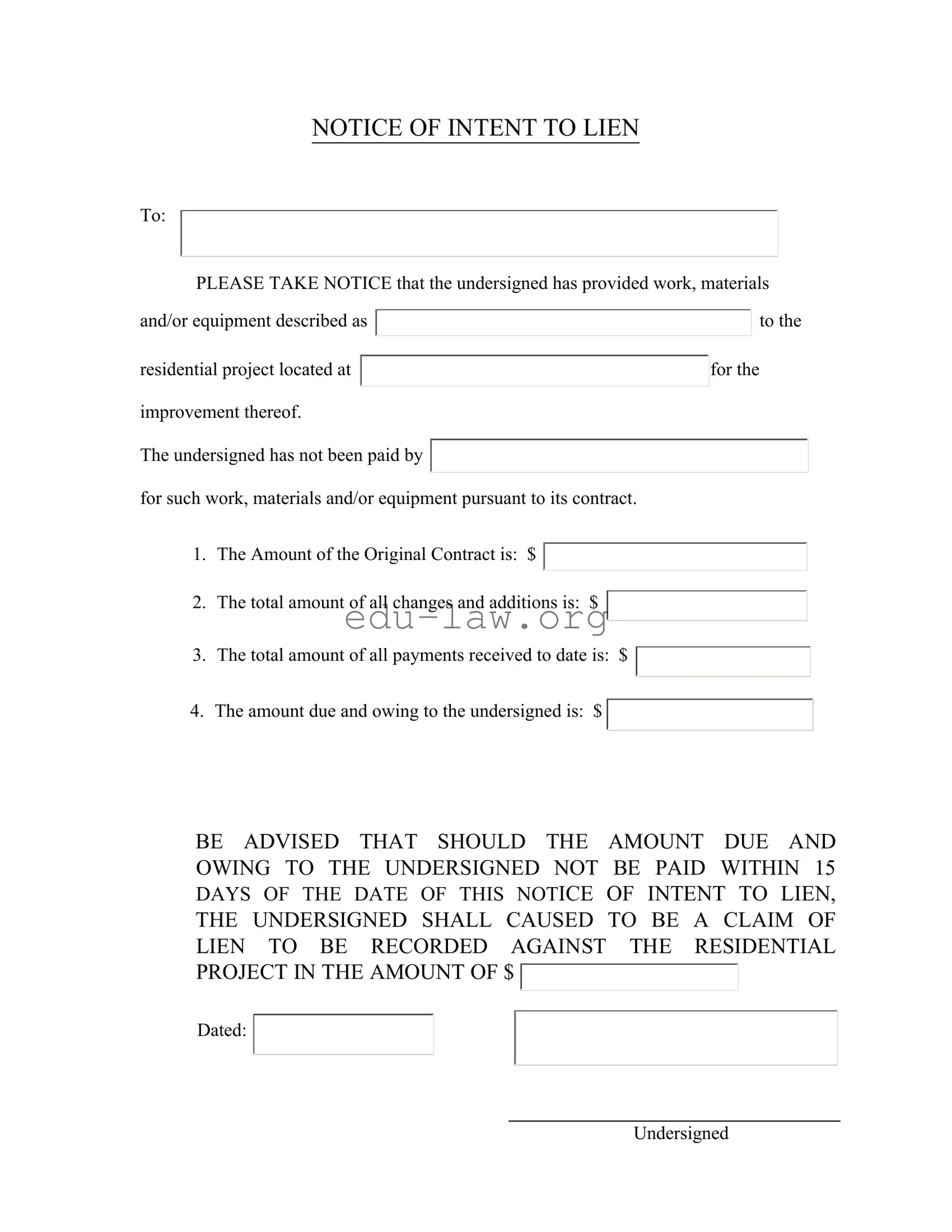
The Letter of Lien form serves as a crucial document in the realm of construction and property improvement. It acts as a formal notice to property owners, alerting them to unpaid debts for work, materials, or equipment provided by contractors or suppliers. This form typically outlines essential details, including the original contract amount, any changes or additions that may have occurred, and the total payments received to date. It also specifies the outstanding balance that remains due. Importantly, the Letter of Lien warns that if the owed amount is not settled within 15 days, the contractor or supplier may proceed to file a claim of lien against the property. This legal mechanism protects the rights of those who have contributed to a project by ensuring they have recourse in the event of non-payment. Understanding the components of this form is vital for both contractors and property owners to navigate their rights and responsibilities effectively.
NOTICE OF INTENT TO LIEN
To:
PLEASE TAKE NOTICE that the undersigned has provided work, materials
and/or equipment described as |
|
|
|
|
|
|
to the |
|
||
|
|
|
|
|
|
|
|
|
|
|
residential project located at |
|
|
|
|
|
|
for the |
|
||
|
|
|
|
|
|
|
|
|
||
improvement thereof. |
|
|
|
|||||||
|
|
|
|
|
|
|
|
|||
The undersigned has not been paid by |
|
|
|
|
|
|
|
|||
|
|
|
|
|
|
|
|
|||
for such work, materials and/or equipment pursuant to its contract. |
|
|
|
|||||||
|
|
|
|
|
|
|
|
|||
1. |
The Amount of the Original Contract is: $ |
|
|
|
|
|
|
|||
|
|
|
|
|
|
|
|
|||
|
|
|
|
|
|
|
||||
2. |
The total amount of all changes and additions is: $ |
|
|
|
|
|
||||
|
|
|
|
|
|
|
||||
|
|
|
|
|
|
|||||
3. |
The total amount of all payments received to date is: $ |
|
|
|
|
|||||
|
|
|
|
|
||||||
|
|
|
|
|||||||
4. The amount due and owing to the undersigned is: $ |
|
|
|
|
|
|||||
|
|
|
|
|
|
|
|
|
|
|
BE ADVISED THAT SHOULD THE AMOUNT DUE AND OWING TO THE UNDERSIGNED NOT BE PAID WITHIN 15 DAYS OF THE DATE OF THIS NOTICE OF INTENT TO LIEN, THE UNDERSIGNED SHALL CAUSED TO BE A CLAIM OF LIEN TO BE RECORDED AGAINST THE RESIDENTIAL PROJECT IN THE AMOUNT OF $
Dated:
Undersigned
| Fact Name | Details |
|---|---|
| Purpose | The Letter of Lien form notifies parties of unpaid work, materials, or equipment related to a residential project. |
| Contract Amount | It includes the original contract amount, which specifies the total agreed-upon price for the work. |
| Change Orders | The form accounts for any changes or additions to the original contract, detailing the total amount of these modifications. |
| Payments Received | It lists all payments received to date, providing a clear picture of the financial transactions. |
| Amount Due | The form specifies the amount due to the undersigned, highlighting what remains unpaid. |
| Notice Period | The undersigned must be paid within 15 days of the notice to avoid a lien being placed on the property. |
| State-Specific Laws | Each state has its own governing laws regarding liens. For example, in California, it is governed by the California Civil Code. |
| Recording a Lien | If payment is not received, a claim of lien can be recorded against the property, ensuring legal rights are protected. |
After completing the Letter of Lien form, the next step involves ensuring that it is delivered to the appropriate parties. This may include the property owner or general contractor involved in the project. Make sure to keep a copy for your records.
What is a Letter of Lien?
A Letter of Lien, often referred to as a Notice of Intent to Lien, is a formal document that notifies a property owner that a contractor or supplier has not received payment for work or materials provided. It serves as a warning that if payment is not made within a specified timeframe, the contractor may file a lien against the property. This lien can affect the property owner's ability to sell or refinance the property until the debt is settled.
Who can file a Letter of Lien?
Typically, contractors, subcontractors, and suppliers who have provided labor, materials, or equipment for a residential project can file a Letter of Lien. If you have a valid contract and have not been paid, you may be eligible to issue this notice.
What information is included in a Letter of Lien?
A Letter of Lien generally includes the following details: the name of the party issuing the lien, a description of the work or materials provided, the original contract amount, any changes or additions to the contract, the total payments received, and the amount still owed. This information helps clarify the basis for the lien and the amount in dispute.
What happens if I do not pay after receiving a Letter of Lien?
If payment is not made within the specified 15 days after receiving the Letter of Lien, the contractor may file a claim of lien against the property. This legal claim can complicate property transactions, as it creates a public record of the debt and can hinder your ability to sell or refinance the property until resolved.
How can I dispute a Letter of Lien?
If you believe the claim is unjustified or incorrect, you can dispute the Letter of Lien by communicating directly with the contractor or supplier. It’s advisable to document your communications and seek to resolve the matter amicably. If necessary, legal counsel can assist in disputing the lien formally through the appropriate legal channels.
Is there a time limit for filing a Letter of Lien?
Yes, there are time limits for filing a Letter of Lien, which can vary by state. Generally, a contractor must file the lien within a specific period after the last date of work or delivery of materials. Understanding your state’s laws is crucial to ensure that your rights are protected.
Can a Letter of Lien be withdrawn?
Yes, a Letter of Lien can be withdrawn or released if the debt is paid or if the parties reach a settlement. The contractor must file a release of lien with the appropriate authorities to remove the lien from public records, thus clearing the property’s title.
What should I do if I receive a Letter of Lien?
Upon receiving a Letter of Lien, review the details carefully. Verify the amounts owed and the legitimacy of the claim. If you believe the claim is valid, arrange for payment promptly to avoid further complications. If you dispute the claim, consider consulting with a legal professional to explore your options.
Can I still sell my property if there is a Letter of Lien against it?
While it is technically possible to sell a property with a Letter of Lien against it, doing so can be complicated. Most buyers will be hesitant to purchase a property with outstanding liens, as it may affect their ownership rights. It is advisable to resolve any liens before attempting to sell the property to ensure a smoother transaction.
Leaving Out Essential Information: Failing to include all necessary details, such as the name of the property owner or the specific project address, can render the form ineffective.
Incorrect Contract Amounts: Entering incorrect figures for the original contract amount or any changes can lead to disputes and complications down the line.
Not Documenting Payments: Omitting the total amount of payments received can create confusion about the outstanding balance.
Missing Signatures: Failing to sign the form can invalidate the lien and prevent it from being enforceable.
Improper Timing: Submitting the notice too late can jeopardize your ability to file a lien. Be aware of deadlines!
Inaccurate Description of Work: Not providing a clear description of the work, materials, or equipment used can weaken your claim.
Neglecting to Notify Proper Parties: Ensure that all relevant parties, including the property owner and any contractors, receive notice of the lien.
Failing to Follow State Laws: Different states have specific requirements for lien notices. Ignoring these can lead to legal issues.
Not Keeping Copies: Failing to keep a copy of the completed form for your records can be a costly mistake if disputes arise later.
Ignoring Follow-Up Actions: After filing, neglecting to follow up on the status of the lien can result in missed opportunities to enforce your claim.
When dealing with a Letter of Lien, several other documents often accompany it to ensure clarity and legality in the lien process. Each of these documents serves a specific purpose and helps protect the rights of those involved in a construction project. Here’s a brief overview of these commonly used forms.
Understanding these documents is crucial for anyone involved in construction projects. They not only help in maintaining clear communication but also protect the rights of all parties involved. Proper documentation can prevent disputes and ensure a smoother process from start to finish.
The Notice of Default serves as a formal communication to a borrower indicating that they have failed to meet the terms of their loan agreement. Similar to a Letter of Lien, this document outlines the specific reasons for the default, such as missed payments or violations of the loan terms. Both documents aim to inform the involved parties of potential legal actions that could follow if the issue is not resolved, thereby prompting timely action to remedy the situation.
A Demand for Payment is another document that shares similarities with the Letter of Lien. This notice is typically sent to a debtor to request payment of an outstanding debt. Like the Letter of Lien, it specifies the amount owed and provides a deadline for payment. The goal of both documents is to encourage the debtor to settle their obligations before further legal steps, such as filing a lien or pursuing litigation, are taken.
The Mechanic’s Lien is a legal claim against a property for unpaid work or materials provided. This document is closely related to the Letter of Lien, as both are used by contractors and suppliers to secure payment for their services. The Mechanic’s Lien must be filed with the appropriate government office, while the Letter of Lien serves as a precursor, notifying the property owner of the impending lien if payment is not received.
A Notice of Intent to Foreclose is issued when a lender intends to initiate foreclosure proceedings on a property due to non-payment. This document, like the Letter of Lien, serves as a warning to the property owner that they may lose their property if the debt is not settled. Both documents emphasize the urgency of resolving financial obligations to avoid more severe consequences.
A Release of Lien is a document that removes a lien from a property once the debt has been paid. It is similar to the Letter of Lien in that it involves the same parties and financial obligations. While the Letter of Lien serves to notify of an outstanding debt, the Release of Lien confirms that the debt has been satisfied, providing peace of mind to the property owner and clearing the title for future transactions.
The Promissory Note is a written promise to pay a specified sum of money at a certain time or on demand. This document is similar to the Letter of Lien because it outlines the financial obligation of the borrower. While the Letter of Lien is focused on securing payment through a claim against property, the Promissory Note is a direct agreement between the borrower and lender regarding repayment terms.
A Conditional Sales Agreement is a contract where the seller retains ownership of the goods until the buyer pays in full. This document resembles the Letter of Lien in that it protects the seller's interests in the event of non-payment. Both documents emphasize the importance of fulfilling financial obligations and outline the potential consequences of failing to do so.
An Invoice is a request for payment for goods or services rendered. It shares similarities with the Letter of Lien as both documents specify the amount owed and the services provided. While an invoice is typically an initial request for payment, the Letter of Lien serves as a more formal warning of potential legal action if the debt remains unpaid.
A Judgment is a court's formal decision regarding a legal case, which may include a monetary award to a plaintiff. This document is similar to the Letter of Lien in that it establishes a legal obligation to pay a specified amount. Both documents can lead to further legal actions, such as the enforcement of the judgment through liens or other collection methods.
Finally, a Security Agreement is a contract that grants a lender a security interest in collateral provided by the borrower. This document is akin to the Letter of Lien as both serve to protect the lender's interests in the event of default. The Security Agreement outlines the terms of the collateral, while the Letter of Lien indicates the potential for a claim against the property if debts are not settled.
When filling out the Letter of Lien form, it’s crucial to approach the task with care. Here are some dos and don’ts to keep in mind:
Misconceptions about the Letter of Lien form can lead to confusion and mismanagement in financial matters related to construction projects. Here are four common misconceptions:
When filling out and using the Letter Of Lien form, consider the following key takeaways: