When considering the purchase of commercial real estate, a Letter of Intent (LOI) serves as a crucial first step in the negotiation process. This document outlines the preliminary terms and conditions that both the buyer and seller agree upon before entering into a more formal purchase agreement. Typically, the LOI includes important details such as the purchase price, property description, and any contingencies that may apply. It also addresses timelines for due diligence, financing, and closing, ensuring that both parties have a clear understanding of the process ahead. Additionally, the LOI may cover aspects like earnest money deposits and any specific requirements for inspections or approvals. While this document is not legally binding in most cases, it sets the stage for a successful transaction by fostering clear communication and mutual understanding between the involved parties.
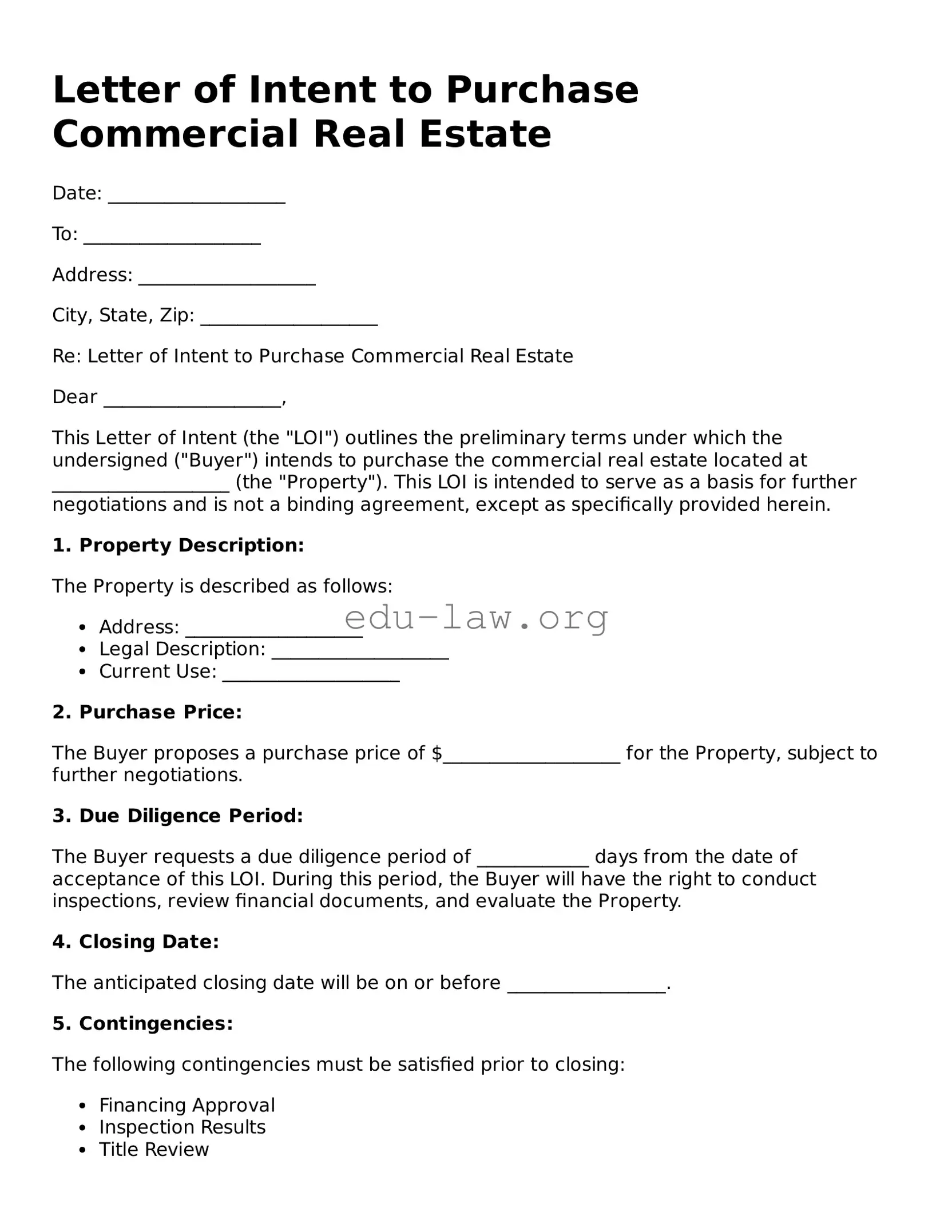
Letter of Intent to Purchase Commercial Real Estate
Date: ___________________
To: ___________________
Address: ___________________
City, State, Zip: ___________________
Re: Letter of Intent to Purchase Commercial Real Estate
Dear ___________________,
This Letter of Intent (the "LOI") outlines the preliminary terms under which the undersigned ("Buyer") intends to purchase the commercial real estate located at ___________________ (the "Property"). This LOI is intended to serve as a basis for further negotiations and is not a binding agreement, except as specifically provided herein.
1. Property Description:
The Property is described as follows:
2. Purchase Price:
The Buyer proposes a purchase price of $___________________ for the Property, subject to further negotiations.
3. Due Diligence Period:
The Buyer requests a due diligence period of ____________ days from the date of acceptance of this LOI. During this period, the Buyer will have the right to conduct inspections, review financial documents, and evaluate the Property.
4. Closing Date:
The anticipated closing date will be on or before _________________.
5. Contingencies:
The following contingencies must be satisfied prior to closing:
6. Confidentiality:
Both parties agree to keep the terms of this LOI confidential, except as required by law or necessary to fulfill obligations under this LOI.
This Letter of Intent is governed by the laws of the State of ___________________.
We look forward to your favorable response and to moving forward with this transaction.
Sincerely,
__________________________
[Buyer’s Name]
[Buyer’s Title]
[Buyer’s Company Name]
[Buyer’s Contact Information]
| Fact Name | Details |
|---|---|
| Definition | A Letter of Intent (LOI) outlines the preliminary terms of a potential real estate transaction. |
| Purpose | The LOI serves to express interest and initiate negotiations between the buyer and seller. |
| Non-Binding | Typically, an LOI is non-binding, meaning neither party is legally obligated to proceed. |
| Key Components | Common elements include purchase price, property description, and closing date. |
| Confidentiality | Many LOIs include clauses to protect sensitive information shared during negotiations. |
| State-Specific Forms | Each state may have its own version of the LOI. For example, California follows Civil Code § 1624. |
| Governing Law | The governing law will depend on the state where the property is located, affecting enforceability. |
| Expiration Date | LOIs often include an expiration date, after which the terms may no longer be valid. |
| Due Diligence | LOIs may specify a period for due diligence, allowing the buyer to investigate the property. |
| Negotiation Tool | Using an LOI can facilitate discussions and clarify expectations before formal agreements are made. |
Completing the Letter of Intent to Purchase Commercial Real Estate form is an important step in the process of acquiring a property. Once you have filled out the form, it will be submitted to the seller for consideration. This document outlines your intent to purchase and includes key details about the transaction.
Once you have completed the form, review it carefully for any errors or omissions. After confirming that all information is correct, submit the form to the seller or their representative. This will initiate the next steps in the purchasing process.
What is a Letter of Intent to Purchase Commercial Real Estate?
A Letter of Intent (LOI) to Purchase Commercial Real Estate is a preliminary document that outlines the terms and conditions under which a buyer intends to purchase a property. It serves as a starting point for negotiations between the buyer and seller. The LOI typically includes key details such as the purchase price, the property description, and any contingencies that may apply. While it is not a legally binding contract, it demonstrates the buyer's serious interest in the property and sets the stage for a formal purchase agreement.
Why is a Letter of Intent important in commercial real estate transactions?
The LOI is crucial because it clarifies the intentions of both parties before entering into a formal agreement. It helps to ensure that everyone is on the same page regarding the essential terms of the sale. By outlining these terms early in the process, the LOI can prevent misunderstandings and disputes later on. Additionally, it can provide the buyer with a period of exclusivity to conduct due diligence, which may include inspections, financing arrangements, and other evaluations of the property.
What key elements should be included in a Letter of Intent?
An effective LOI should include several important elements. First, it should clearly identify the parties involved in the transaction, including the buyer and seller. Next, it should specify the property being purchased, including its address and any relevant details. The proposed purchase price and payment terms must also be included. Additionally, the LOI should outline any contingencies, such as financing or inspections, and indicate the timeframe for completing the transaction. Finally, it should address any confidentiality requirements or exclusivity agreements that may be necessary during negotiations.
Is a Letter of Intent legally binding?
Incomplete Information: One common mistake is failing to provide all necessary details. This includes not only the buyer's and seller's names but also their contact information. Omitting critical details can delay the process or lead to misunderstandings.
Not Specifying Terms Clearly: Many people forget to clearly outline the terms of the purchase. This includes the price, payment structure, and any contingencies. Vague terms can create confusion and result in disputes later on.
Ignoring Deadlines: Some individuals overlook important deadlines related to the offer. Whether it’s the date for submitting the letter or the timeframe for acceptance, missing deadlines can jeopardize the entire transaction.
Failure to Include Contingencies: It’s crucial to consider potential issues that may arise during the purchasing process. Not including contingencies, such as financing or inspections, can lead to complications if unexpected problems occur.
When considering the purchase of commercial real estate, several additional forms and documents often accompany the Letter of Intent to Purchase. Each of these documents serves a specific purpose in the transaction process, ensuring that both parties are clear on terms and expectations.
Understanding these documents is essential for anyone involved in a commercial real estate transaction. Each plays a critical role in ensuring a smooth and transparent process, ultimately contributing to a successful purchase experience.
A Purchase Agreement is a formal document that outlines the terms and conditions of a real estate transaction. Like the Letter of Intent, it includes details about the property, the purchase price, and the responsibilities of both the buyer and seller. However, a Purchase Agreement is legally binding, while a Letter of Intent is typically a preliminary step that expresses interest without creating an obligation.
A Memorandum of Understanding (MOU) serves a similar purpose by outlining the intentions of the parties involved in a transaction. It can cover various aspects, such as pricing, timelines, and responsibilities. While an MOU may not be legally binding, it helps clarify expectations, much like a Letter of Intent does for commercial real estate purchases.
An Offer to Purchase is a document that a buyer submits to a seller to express interest in buying a property. This document specifies the offer price and any conditions the buyer wishes to include. Similar to a Letter of Intent, it initiates negotiations but is more formal and often includes terms that the seller can accept or reject.
A Term Sheet is a summary of the main points agreed upon by parties in a transaction. It outlines the key terms and conditions, serving as a foundation for a more detailed agreement later. Like a Letter of Intent, a Term Sheet is often non-binding and serves to facilitate discussions between the parties.
An Exclusivity Agreement grants one party exclusive rights to negotiate a deal for a specified period. This document is similar to a Letter of Intent in that it signals a serious interest in pursuing a transaction. However, it typically restricts the seller from negotiating with other potential buyers during the exclusivity period.
A Non-Disclosure Agreement (NDA) is used to protect confidential information exchanged during negotiations. While it does not directly relate to the purchase terms, it often accompanies a Letter of Intent to ensure that sensitive information remains private as the parties discuss the potential deal.
A Due Diligence Checklist is a tool used by buyers to assess a property before finalizing a purchase. This document outlines the necessary steps and information required for a thorough evaluation. While it is not a negotiation document, it is often referenced in a Letter of Intent to indicate that the buyer intends to conduct a detailed investigation of the property.
A Letter of Intent to Lease is similar in structure and purpose to a Letter of Intent to Purchase. It outlines the terms under which a tenant wishes to lease a property. Both documents express intent and serve as a basis for further negotiations, although one pertains to leasing and the other to purchasing.
A Sales Agreement is a more detailed document that follows a Letter of Intent when both parties agree to move forward with the sale. It includes specific terms, conditions, and obligations of both the buyer and seller. While the Letter of Intent indicates interest, the Sales Agreement formalizes the transaction.
A Closing Statement summarizes the financial aspects of a real estate transaction at the closing. While it is not similar in purpose to a Letter of Intent, it is a crucial document that follows the intent stage, detailing the final terms and costs associated with the sale.
When filling out the Letter of Intent to Purchase Commercial Real Estate form, there are several important considerations to keep in mind. Here’s a straightforward list of things you should and shouldn’t do.
Understanding the Letter of Intent (LOI) to Purchase Commercial Real Estate is crucial for anyone involved in a real estate transaction. However, several misconceptions can cloud judgment and lead to confusion. Here are six common misconceptions about the LOI:
Addressing these misconceptions can lead to a smoother transaction process. Understanding the true purpose and function of an LOI can empower both buyers and sellers in their negotiations.
When considering the Letter of Intent (LOI) to Purchase Commercial Real Estate, it's essential to understand its significance and the details involved. Here are some key takeaways to keep in mind:
Understanding these key points can streamline the process of purchasing commercial real estate and enhance communication between buyers and sellers.