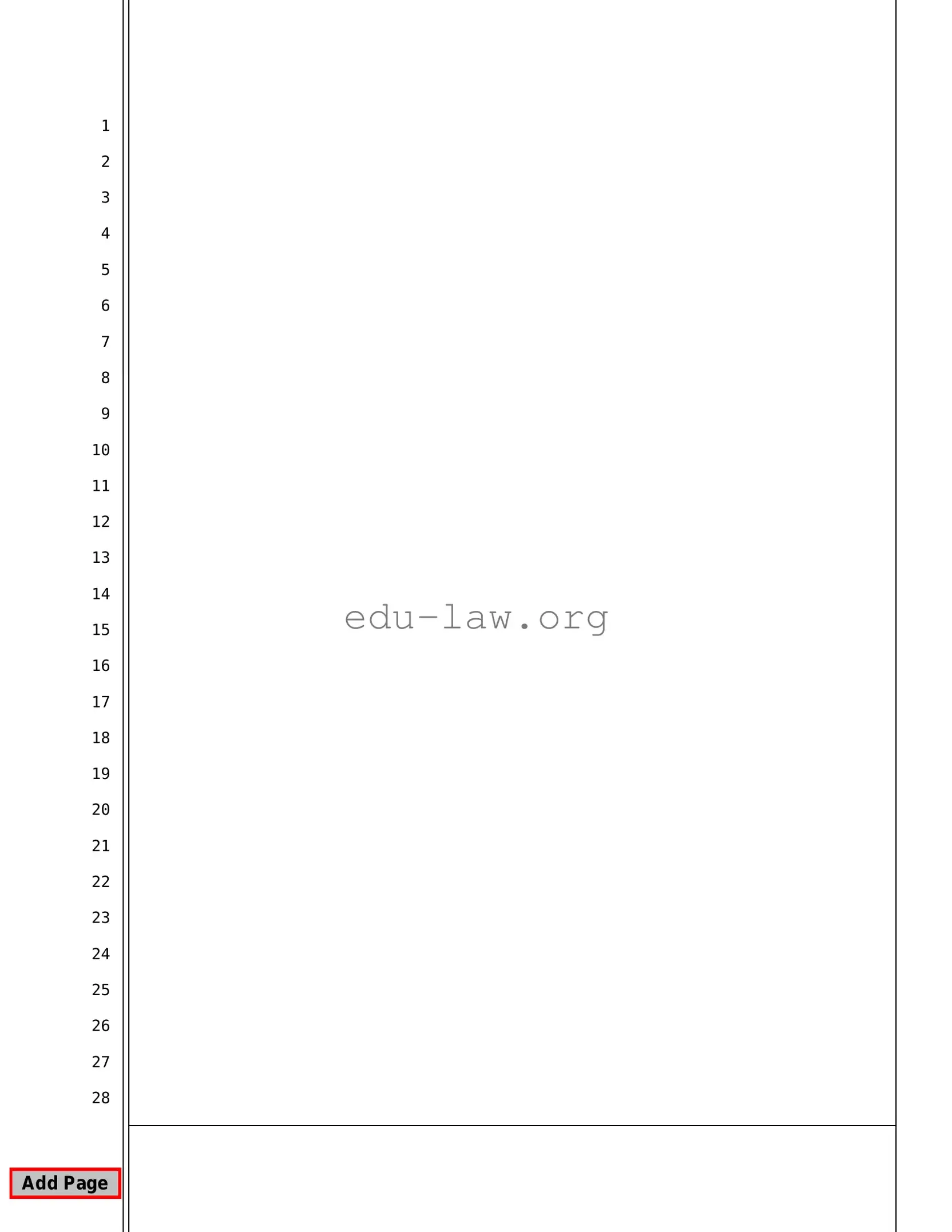
In the realm of legal proceedings, clarity and precision are paramount, and the Legal Pleading Template serves as a vital tool for attorneys and individuals navigating the court system. This template is specifically designed for court filings, ensuring that all submissions meet the necessary standards required by the judiciary. A distinctive feature of the template is its numbered lines along the left margin, which facilitate easy reference to specific sections during court discussions. This structured format adheres to the established conventions of legal documentation, making it ideal for drafting motions, pleadings, and various other legal submissions. By utilizing this template, users can ensure that their documents are organized and compliant with legal norms, thereby enhancing their effectiveness in the courtroom. The inclusion of an "Add Page" option further allows for flexibility, accommodating the needs of more extensive filings. Overall, the Legal Pleading Template is an essential resource that streamlines the process of legal documentation, contributing to the clarity and efficiency of legal proceedings.

1
2
3
4
5
6
7
8
9
10
11
12
13
14
15
16
17
18
19
20
21
22
23
24
25
26
27
28
Add Page
| Fact Name | Description | Governing Law |
|---|---|---|
| Common Usage | The Legal Pleading Template is frequently used for court filings. | Varies by state |
| Numbered Lines | The template features numbered lines along the left margin, aiding in referencing specific lines in court. | Standard legal practices |
| Document Standards | It adheres to legal document standards, making it appropriate for drafting motions and pleadings. | Uniform Commercial Code (UCC) |
| Versatility | The template is suitable for various legal submissions beyond just pleadings. | State-specific rules of civil procedure |
Completing the Legal Pleading form is an essential step in preparing your court filing. Following the instructions carefully will help ensure that your document meets the necessary standards for submission. The process involves filling out specific sections of the form accurately and clearly.
What is a Legal Pleading form?
A Legal Pleading form is a standardized document used in court filings. It helps organize legal arguments and information clearly. The form typically includes numbered lines along the left margin, which makes it easier for judges and lawyers to reference specific parts of the document during proceedings.
Why is the numbering on the left margin important?
The numbered lines serve a practical purpose. They allow anyone reading the document to quickly locate and reference specific sections. This is especially helpful in court, where precise communication is crucial. It ensures that everyone involved can follow along without confusion.
What types of documents can I create using this template?
You can use the Legal Pleading form to draft various legal documents, including motions, pleadings, and other submissions required by the court. The template's structure adheres to legal standards, making it suitable for most legal situations.
Is the Legal Pleading form customizable?
Yes, the form can be customized to fit your specific needs. While it follows a standard format, you can modify the content to reflect the details of your case. Just ensure that any changes still meet the court's requirements for legal documents.
How do I ensure my Legal Pleading is properly formatted?
To ensure proper formatting, follow the guidelines provided by your local court. This includes using the correct font size, margins, and line spacing. The Legal Pleading template is designed to meet these standards, so using it can help you avoid common formatting errors.
Can I use this form for electronic submissions?
Many courts now accept electronic submissions, and the Legal Pleading form is generally compatible with electronic filing systems. However, always check your court's specific rules regarding electronic submissions to ensure compliance.
What should I do if I have questions about filling out the form?
If you have questions, consider reaching out to a legal professional for guidance. You can also check your local court's website for resources and instructions on completing legal documents. Many courts provide helpful information to assist individuals in navigating the legal process.
Failing to include all necessary parties in the pleading. It is crucial to name everyone involved in the case to ensure that all relevant parties are aware of the proceedings.
Using inconsistent terminology throughout the document. Consistency helps avoid confusion and ensures that the court understands your arguments clearly.
Neglecting to number the paragraphs correctly. Proper numbering aids in referencing specific sections during discussions or hearings.
Omitting dates and signatures. Every legal document must be signed and dated to be considered valid.
Providing incomplete information about the case. Ensure that all relevant facts are included to give a full picture of the situation.
Using informal language or slang. Legal documents require a formal tone to maintain professionalism and clarity.
Failing to proofread the document for errors. Typos and grammatical mistakes can undermine the credibility of the pleading.
Not following the specific formatting requirements of the court. Each court may have its own rules regarding font size, margins, and layout.
Submitting the pleading after deadlines. Timeliness is critical in legal proceedings, and late submissions can negatively impact your case.
The Legal Pleading form is an essential document for anyone involved in a legal case. It serves as a foundation for presenting arguments and claims in court. Along with this form, several other documents are frequently used to support the legal process. Here are four important documents that often accompany the Legal Pleading form.
These documents work together to create a comprehensive legal strategy. Understanding each of their roles can significantly enhance the effectiveness of legal representation in court.
The Motion form shares similarities with the Legal Pleading Template in that both documents are essential for court proceedings. Like the Legal Pleading Template, a Motion form is structured to facilitate clear communication with the court. It often includes numbered paragraphs, which allow the judge and opposing counsel to easily reference specific points. This organization is crucial for presenting arguments or requests for the court's consideration, ensuring that all relevant information is accessible and well-structured.
The Complaint form is another document that resembles the Legal Pleading Template. Both documents serve as foundational elements in initiating a legal action. The Complaint outlines the plaintiff's claims and legal basis for the lawsuit, while the Legal Pleading Template may be used to respond to such claims. Each document adheres to specific formatting guidelines, including numbered lines and sections, which help maintain clarity and facilitate the legal process.
An Answer form is also similar to the Legal Pleading Template, as it is a response to a Complaint. Both documents must be filed with the court and follow a structured format. The Answer form addresses the allegations made in the Complaint, often admitting or denying each claim. The use of numbered lines in both documents aids in ensuring that each response corresponds directly to the claims made, promoting efficient communication between parties and the court.
Lastly, the Affidavit is similar to the Legal Pleading Template in that it is a sworn statement used in legal proceedings. Both documents require adherence to specific formatting rules and often include numbered paragraphs for clarity. An Affidavit provides factual information, which may support claims made in a Legal Pleading Template. The structured format helps ensure that the information presented is clear and can be easily referenced by the court and opposing parties.
When filling out the Legal Pleading form, consider the following guidelines to ensure accuracy and compliance.
Many people have misunderstandings about the Legal Pleading form. Here are five common misconceptions:
When filling out and using the Legal Pleading form, keep these key takeaways in mind: