When considering the path to homeownership, many individuals encounter the Lease-to-Own Agreement as a viable option. This arrangement allows tenants to rent a property with the intention of purchasing it in the future. Key elements of the agreement typically include the duration of the lease, the purchase price of the property, and the amount of rent that will be credited toward the eventual purchase. Additionally, the agreement outlines the responsibilities of both the tenant and the landlord, covering maintenance obligations and any potential penalties for early termination. Understanding these components is crucial for anyone contemplating this type of arrangement, as it can provide a unique opportunity to transition from renting to owning while offering flexibility and a chance to build equity over time. By clearly defining terms and expectations, the Lease-to-Own Agreement serves as a roadmap for both parties, ensuring that the journey toward homeownership is as smooth as possible.
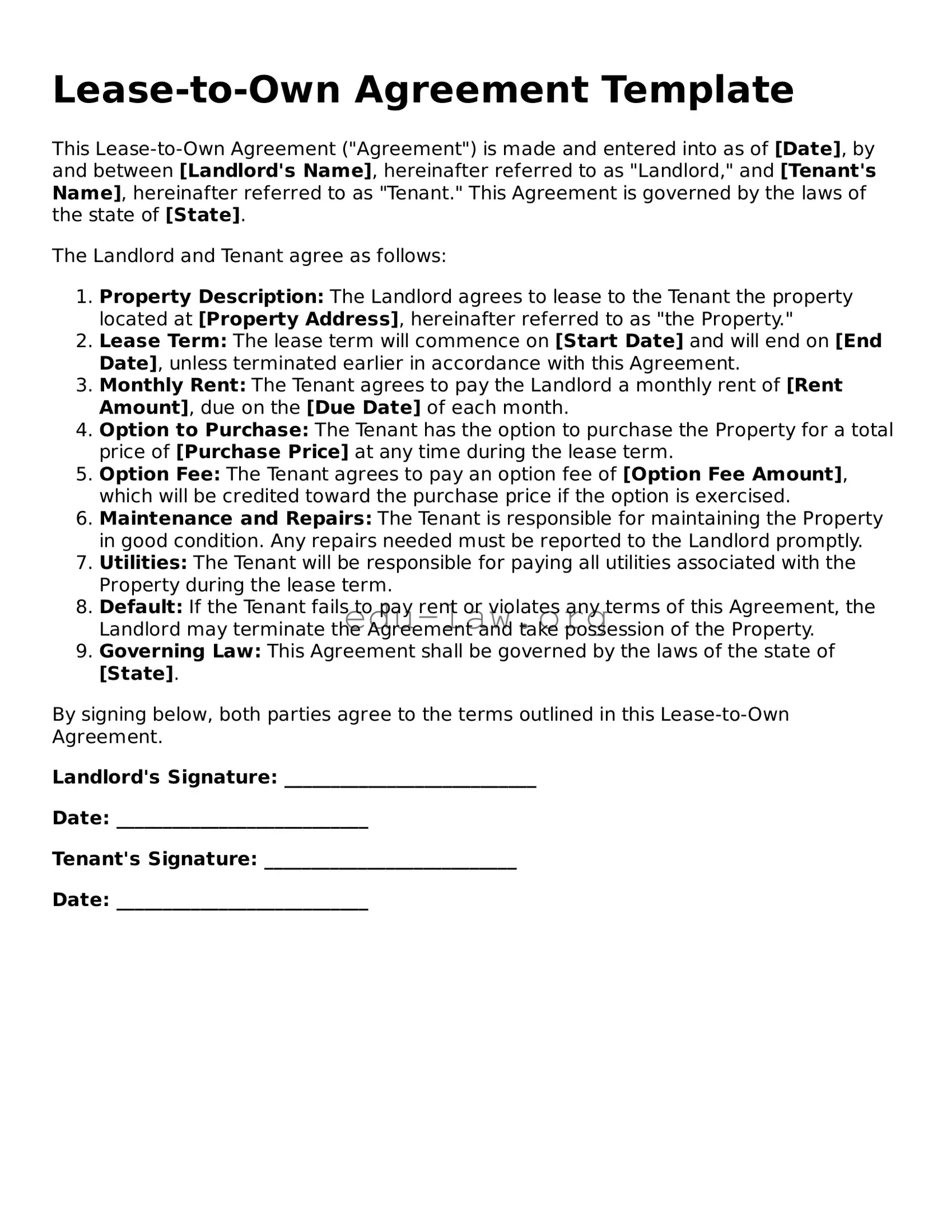
Lease-to-Own Agreement Template
This Lease-to-Own Agreement ("Agreement") is made and entered into as of [Date], by and between [Landlord's Name], hereinafter referred to as "Landlord," and [Tenant's Name], hereinafter referred to as "Tenant." This Agreement is governed by the laws of the state of [State].
The Landlord and Tenant agree as follows:
By signing below, both parties agree to the terms outlined in this Lease-to-Own Agreement.
Landlord's Signature: ___________________________
Date: ___________________________
Tenant's Signature: ___________________________
Date: ___________________________
| Fact Name | Description |
|---|---|
| Definition | A Lease-to-Own Agreement allows a tenant to rent a property with the option to purchase it later. |
| Payment Structure | Rent payments may contribute to the purchase price, often outlined in the agreement. |
| Duration | The lease term typically ranges from one to three years, but can vary. |
| Option Fee | Tenants usually pay an upfront option fee, which secures their right to purchase the property. |
| Property Maintenance | Tenants may be responsible for property maintenance during the lease period. |
| Legal Requirements | Each state has specific laws governing Lease-to-Own Agreements; it's important to comply with these. |
| Governing Law | In California, for example, the agreement is governed by the California Civil Code. |
| Disclosure Obligations | Landlords must disclose property condition and any known defects to potential tenants. |
| Default Terms | The agreement should specify what happens if either party defaults on their obligations. |
| Final Purchase | At the end of the lease, the tenant can choose to buy the property or let the option expire. |
After obtaining the Lease-to-Own Agreement form, you will need to provide specific information to complete it. This process involves filling out various sections accurately to ensure clarity and understanding between all parties involved. Follow the steps outlined below to successfully complete the form.
What is a Lease-to-Own Agreement?
A Lease-to-Own Agreement is a contract that allows a tenant to rent a property with the option to purchase it at a later date. This type of agreement combines elements of both leasing and purchasing. Typically, the tenant pays rent for a specified period, during which they may build equity in the property. At the end of the lease term, the tenant has the right to buy the property, often at a predetermined price. This arrangement can be beneficial for individuals who may not currently qualify for a mortgage but wish to work towards homeownership.
What are the benefits of a Lease-to-Own Agreement?
One of the primary benefits of a Lease-to-Own Agreement is that it provides a pathway to homeownership for individuals who may face financial barriers. Tenants can lock in a purchase price, which can protect them from market fluctuations. Additionally, a portion of the rent may be credited towards the purchase price, allowing tenants to accumulate savings while living in the property. This arrangement also gives tenants the opportunity to test the property and neighborhood before committing to a purchase.
What should I consider before entering into a Lease-to-Own Agreement?
Before entering into a Lease-to-Own Agreement, several factors should be carefully evaluated. First, review the terms of the lease, including the duration and the purchase price. It is essential to understand how much of the rent will be applied to the purchase and any additional fees involved. Additionally, consider your financial situation and whether you will be able to secure financing at the end of the lease term. Lastly, assess the condition of the property and any potential repairs that may be needed, as these can impact your decision.
Can I back out of a Lease-to-Own Agreement?
Backing out of a Lease-to-Own Agreement can be complicated. Generally, if you decide not to purchase the property at the end of the lease term, you may forfeit any rent credits you have accumulated. The specific terms regarding cancellation should be outlined in the agreement. It is crucial to read the contract carefully and understand the implications of withdrawing from the agreement. Consulting with a legal professional can provide clarity on your options and any potential consequences.
Incomplete Information: Many individuals forget to fill out all required fields. This can lead to delays or even rejection of the application. Ensure that every section is completed accurately.
Ignoring Terms and Conditions: Some people fail to read the fine print. Understanding the terms, including payment schedules and responsibilities, is crucial for a successful agreement.
Incorrect Dates: Mistakes in entering dates can create confusion. It is essential to double-check all dates related to the lease start, end, and payment due dates.
Neglecting Signatures: Forgetting to sign the document is a common oversight. Both parties must provide their signatures to validate the agreement.
Not Keeping a Copy: After submission, some individuals do not retain a copy of the signed agreement. Keeping a copy is important for future reference and to ensure both parties are held accountable.
A Lease-to-Own Agreement is a valuable tool for those looking to purchase property while renting. However, several other documents often accompany this agreement to ensure clarity and protection for both parties involved. Below is a list of related forms that may be useful in conjunction with a Lease-to-Own Agreement.
Utilizing these documents can streamline the process and protect the interests of both the buyer and seller. Being informed and prepared is key to a successful Lease-to-Own transaction.
The Lease Agreement is a foundational document in real estate that outlines the terms and conditions under which a tenant can occupy a property. Similar to a Lease-to-Own Agreement, it specifies the duration of the lease, rental payments, and responsibilities of both the landlord and tenant. However, a standard lease does not typically include an option for the tenant to purchase the property at the end of the lease term, which is a key feature of the Lease-to-Own Agreement.
The Purchase Agreement is another document that shares similarities with the Lease-to-Own Agreement. This document is used when a buyer agrees to purchase a property outright. Like the Lease-to-Own Agreement, it includes essential details such as the purchase price, financing arrangements, and contingencies. However, unlike a Lease-to-Own Agreement, the Purchase Agreement does not involve a rental period or lease payments prior to the sale.
A Rent-to-Own Agreement is closely related to the Lease-to-Own Agreement. Both documents allow a tenant to rent a property with the option to buy it later. The primary difference lies in the structure of payments. In a Rent-to-Own Agreement, a portion of the rent may be credited toward the purchase price, whereas a Lease-to-Own Agreement typically includes a set purchase price determined at the outset, regardless of rental payments made.
The Option to Purchase Agreement is another document that bears resemblance to the Lease-to-Own Agreement. This document grants the tenant the exclusive right to buy the property within a specified timeframe. While it can be part of a Lease-to-Own Agreement, it can also stand alone. The key similarity is the tenant's ability to secure an option to purchase, but the terms may differ significantly from those in a Lease-to-Own Agreement.
The Land Contract, also known as a Contract for Deed, is a financing arrangement where the buyer makes payments directly to the seller while living in the property. Similar to a Lease-to-Own Agreement, the buyer gains equitable title to the property during the payment period. However, the Land Contract typically does not involve a lease period, as the buyer is treated as the owner during the contract term.
The Installment Sale Agreement is another document that shares characteristics with the Lease-to-Own Agreement. This agreement allows a buyer to make payments over time while receiving possession of the property. Both documents facilitate a gradual transfer of ownership. However, the Installment Sale Agreement usually does not include a rental component, as it is designed for outright purchase over time.
The Rental Agreement with a Purchase Option is similar to a Lease-to-Own Agreement in that it allows a tenant to rent a property with the potential to buy it later. It typically outlines the rental terms and the conditions under which the tenant can exercise the purchase option. The main distinction is that this agreement may not specify a set purchase price at the outset, which can lead to uncertainty regarding the final sale terms.
Finally, the Real Estate Sales Agreement is a comprehensive document used when buying or selling property. It includes details about the property, purchase price, and closing conditions. While it is more straightforward than a Lease-to-Own Agreement, it is similar in that both documents require mutual agreement on terms and conditions for the transfer of property rights. However, the Sales Agreement does not involve a leasing period or rental payments, making it a distinct option for immediate property transactions.
When filling out a Lease-to-Own Agreement form, it's essential to approach the process with care. Here are some important dos and don’ts to keep in mind:
By following these guidelines, you can help ensure that your Lease-to-Own Agreement is filled out correctly and protects your interests.
Lease-to-own agreements can be a great option for many individuals looking to eventually purchase a home or other property. However, several misconceptions can cloud understanding of how these agreements work. Here are seven common myths surrounding lease-to-own agreements:
While both involve renting a property, lease-to-own agreements include an option to purchase the property at the end of the lease term. Traditional leases do not provide this option.
This is not the case. A lease-to-own agreement gives you the right to purchase the property, but you must still complete the purchase process, often including securing financing.
While some portion of the rent may be credited toward the purchase, not all of it is. The specifics depend on the terms outlined in the agreement.
This is a misconception. Many individuals with good credit opt for lease-to-own agreements as a way to secure a property while they prepare for a mortgage.
Like any financial commitment, lease-to-own agreements carry risks. If you decide not to purchase the property, you may lose any money credited toward the purchase.
While they can be more affordable in some cases, lease-to-own agreements can also come with higher overall costs, including rent premiums and purchase prices.
Changes to a lease-to-own agreement typically require mutual consent from both parties. Unilateral changes are not permissible.
Understanding these misconceptions can help individuals make informed decisions when considering a lease-to-own agreement. Always consult with a qualified professional before entering into any legal contract.
When filling out and using a Lease-to-Own Agreement form, there are several important points to keep in mind. These takeaways can help ensure a smoother process for all parties involved.