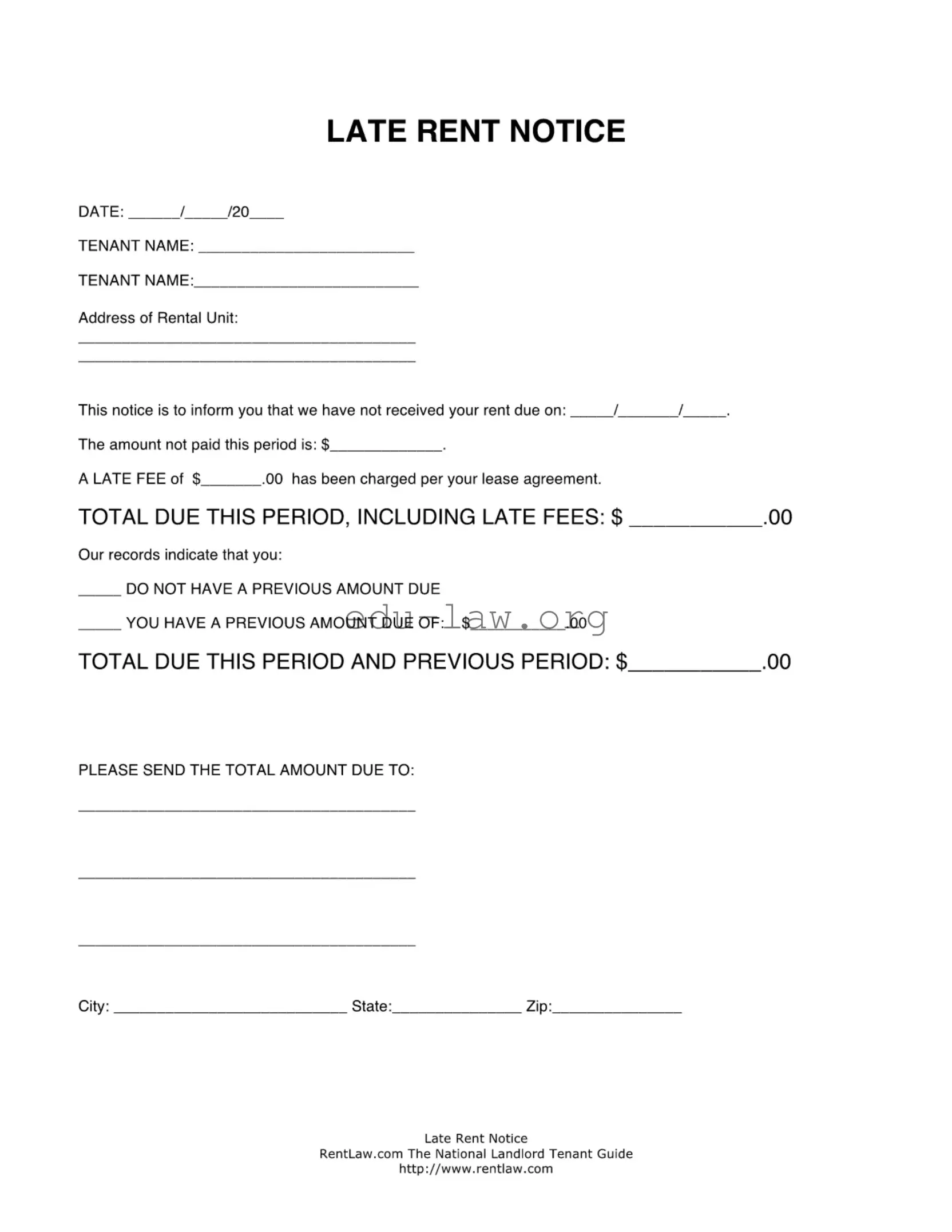
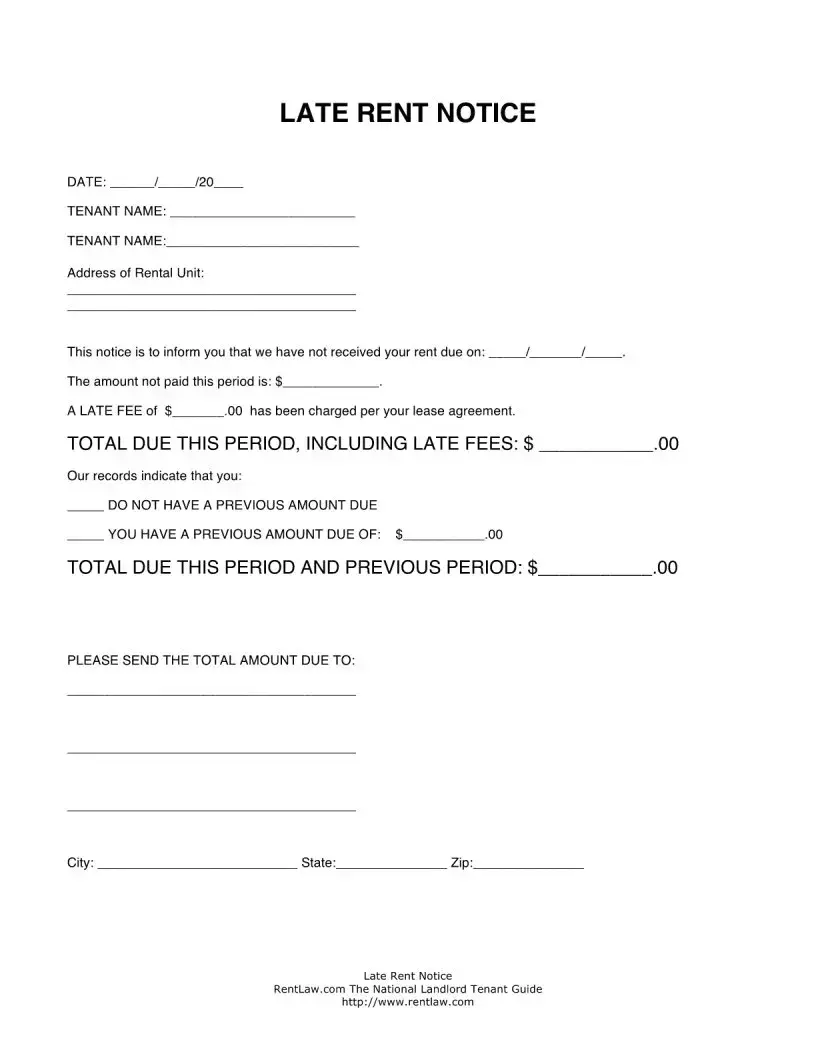
Managing rental properties involves various responsibilities, and one crucial aspect is ensuring timely rent payments. When tenants fall behind, a Late Rent Letter serves as an essential communication tool. This document not only reminds tenants of their overdue rent but also outlines the specifics of their payment obligations. The form includes key details such as the date of the notice, the tenant's name, and the address of the rental unit. It specifies the due date for the rent, the amount that remains unpaid, and any applicable late fees, as stipulated in the lease agreement. The total amount due, including late fees, is clearly stated to avoid any confusion. Furthermore, the letter provides a summary of the tenant's payment history, indicating whether there are any previous amounts due. By delivering this notice, landlords can maintain transparency and encourage timely payments while adhering to proper communication protocols.
| Fact Name | Description |
|---|---|
| Purpose of the Letter | The Late Rent Letter serves as a formal notification to tenants regarding overdue rent payments. |
| Date of Notice | The letter includes a date field to indicate when the notice is issued, ensuring clarity on the timeline of the payment due. |
| Tenant Information | It requires the tenant's name and address of the rental unit, facilitating direct communication. |
| Rent Due Date | The letter specifies the date on which the rent was due, providing a clear reference for the tenant. |
| Late Fee Specification | A late fee amount is included, as stipulated in the lease agreement, which informs tenants of any additional charges incurred. |
| Total Amount Due | The letter outlines the total amount due, including any late fees, making it easy for tenants to understand their financial obligations. |
| Previous Amount Due | It indicates whether there are any previous amounts due, helping to clarify the tenant's overall financial standing with the landlord. |
| Legal Considerations | In some states, specific laws govern the issuance of late rent notices, such as the requirement for a grace period or the maximum allowable late fee. |
After completing the Late Rent Letter form, the next step involves delivering the notice to the tenant. This action serves as a formal communication regarding the overdue rent and any associated fees. It is essential to ensure that the notice is clear and accurate to avoid any misunderstandings.
What is a Late Rent Letter?
A Late Rent Letter is a formal notification sent to tenants when their rent payment has not been received by the due date. This letter serves to remind tenants of their obligation to pay rent and outlines any late fees that may apply according to the lease agreement.
When should I send a Late Rent Letter?
It’s generally advisable to send a Late Rent Letter as soon as the rent due date has passed without payment. Many landlords choose to wait a few days to see if the payment arrives, but sending the letter promptly can help reinforce the importance of timely payments and establish clear communication.
What information should be included in the Late Rent Letter?
The letter should include the date, the tenant's name, the address of the rental unit, the due date of the rent, the amount that has not been paid, any late fees being charged, and the total amount due. It’s also helpful to note whether there are any previous amounts due to provide a complete picture of the tenant's financial obligations.
How do I calculate late fees?
Late fees are typically specified in the lease agreement. They may be a flat fee or a percentage of the unpaid rent. Ensure that the fee complies with local laws, as some jurisdictions have limits on how much a landlord can charge for late payments.
What should tenants do upon receiving a Late Rent Letter?
Tenants should review the letter carefully, confirm the amount due, and make arrangements to pay the outstanding rent as soon as possible. If they believe there is an error, they should contact the landlord immediately to discuss the situation.
Can I charge late fees if the tenant has a previous balance?
Yes, if the lease agreement allows for late fees, you can charge them even if there is a previous balance. However, it’s important to clearly outline the total amount due in the Late Rent Letter, including both the current late fees and any previous amounts owed.
What happens if the tenant does not pay after receiving the Late Rent Letter?
If the tenant does not respond or pay after receiving the letter, you may need to consider further actions. This could include sending additional reminders, negotiating a payment plan, or, in some cases, initiating eviction proceedings. Always check local laws before taking any action.
Is a Late Rent Letter legally required?
While a Late Rent Letter is not always legally required, it is a best practice for landlords. Sending this notice creates a record of communication and can help protect your rights in case of future disputes. It also demonstrates professionalism and a commitment to maintaining clear expectations with tenants.
Where should the tenant send their payment?
The Late Rent Letter should specify where the tenant should send their payment. This could be a mailing address or an online payment portal, depending on your preferences as a landlord. Make sure this information is clear to avoid any confusion.
Failing to Include the Date: It is essential to fill in the date at the top of the form. Without it, the notice may lack context.
Incorrect Tenant Name: Ensure that the tenant's name is spelled correctly. An error here can lead to confusion and delays.
Omitting the Rental Unit Address: The address of the rental unit must be included. This is crucial for identifying the property in question.
Not Specifying the Due Date: Clearly indicate the date when the rent was due. This helps establish a timeline for the tenant.
Leaving Out the Amount Due: Fill in the specific amount that has not been paid. This ensures the tenant knows exactly what they owe.
Ignoring the Late Fee: If a late fee applies, it must be clearly stated. This provides transparency regarding the total amount due.
Not Indicating Previous Amounts Due: If there is a previous balance, it should be mentioned. This gives the tenant a complete picture of their financial obligations.
Failing to Provide Payment Instructions: Always include where the payment should be sent. Clear instructions can help facilitate timely payment.
When managing rental properties, various forms and documents are essential for maintaining clear communication and ensuring compliance with agreements. Alongside the Late Rent Letter, several other documents can help streamline the process of addressing late payments and managing tenant relationships effectively.
Utilizing these documents effectively can help landlords manage their properties more efficiently and ensure a smoother relationship with tenants. Clear communication and proper documentation are key to resolving issues related to late rent payments.
The first document similar to a Late Rent Letter is a Payment Reminder. This document serves to gently remind tenants that their rent is due soon. It typically includes the amount due and the due date, similar to the Late Rent Letter. However, a Payment Reminder is issued before the rent is late, aiming to prompt timely payment rather than address a missed payment.
Another comparable document is the Eviction Notice. This notice is more serious and indicates that legal action may be taken if the rent remains unpaid. While the Late Rent Letter informs tenants of their overdue payment and any late fees, the Eviction Notice escalates the situation, outlining the potential consequences of continued non-payment.
A Rent Increase Notice is also similar, as it communicates important financial information to tenants. While it does not address overdue payments, it informs tenants of a change in their rental obligations. Both documents require clear communication and adherence to lease agreements, ensuring that tenants understand their financial responsibilities.
The Lease Agreement itself shares similarities with the Late Rent Letter. It outlines the terms of the rental arrangement, including payment schedules and late fees. Both documents emphasize the importance of meeting financial obligations and serve as references for what is expected from tenants.
A Notice to Cure is another related document. This notice is issued when a tenant violates a lease term, which could include late rent payments. Like the Late Rent Letter, it requires the tenant to take corrective action. However, the Notice to Cure focuses on remedying a breach of the lease rather than simply notifying about a late payment.
A Final Notice is akin to the Late Rent Letter in that it serves as a last warning before further action is taken. It typically follows previous notices and emphasizes the urgency of the situation. Both documents aim to prompt tenants to address their financial obligations promptly, though the Final Notice carries a more serious tone.
The Security Deposit Return Letter also bears similarities. While it deals with the return of funds rather than overdue payments, both documents involve financial transactions between landlords and tenants. They require clear communication about amounts owed or returned, ensuring that both parties understand their financial rights and responsibilities.
Lastly, a Move-Out Notice can be compared to the Late Rent Letter. When tenants decide to leave a rental unit, they must inform the landlord of their intentions. Both documents involve important timelines and financial considerations. The Move-Out Notice may address final payments or deposits, similar to how the Late Rent Letter discusses overdue rent and fees.
When filling out the Late Rent Letter form, it's important to be thorough and accurate. Here are ten things to keep in mind:
Understanding the Late Rent Letter form is essential for both landlords and tenants. However, several misconceptions can lead to confusion. Here are four common misunderstandings:
By clarifying these misconceptions, both landlords and tenants can navigate late rent situations more effectively.
When using the Late Rent Letter form, consider the following key takeaways:
By following these guidelines, you can effectively communicate the late rent situation to the tenant and ensure that all necessary information is conveyed clearly.