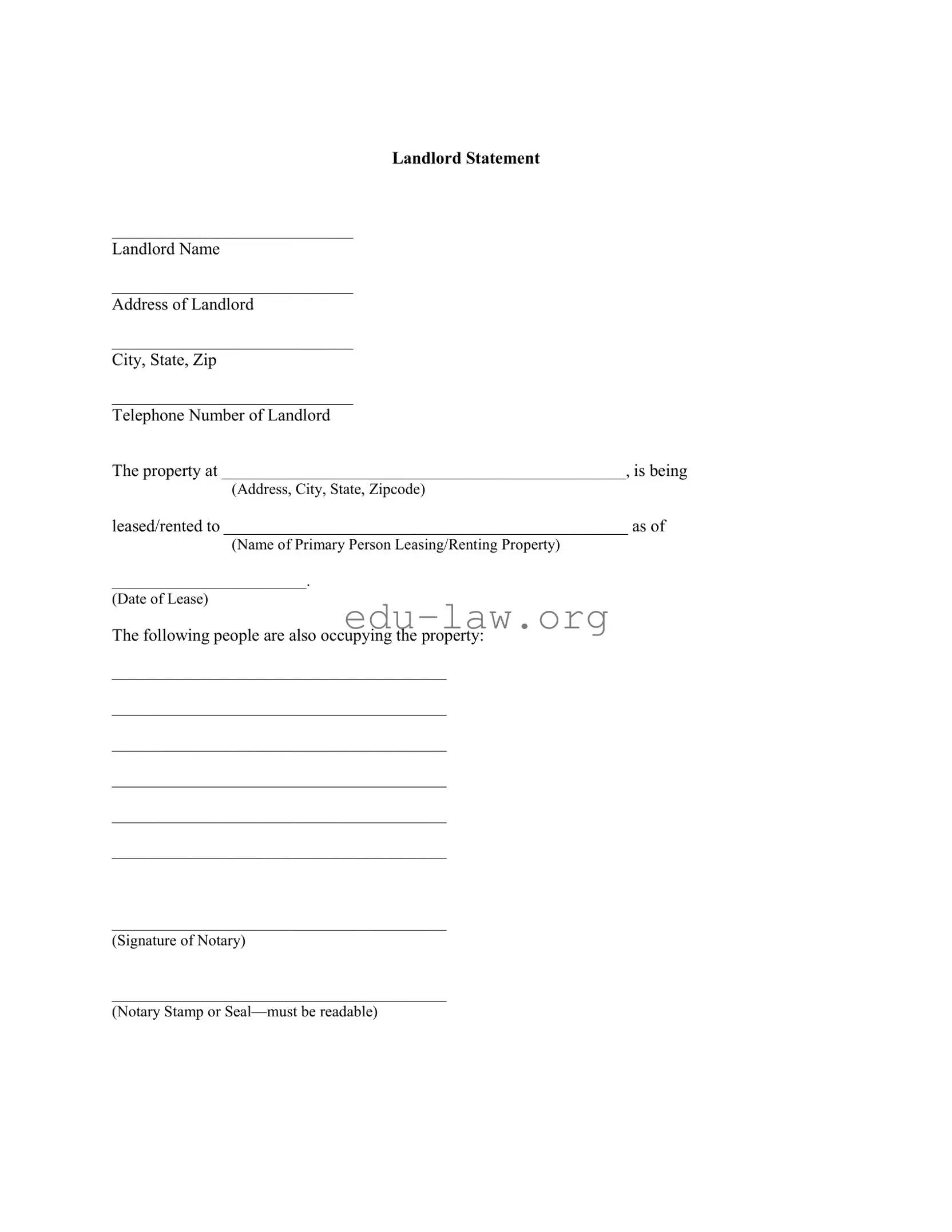
The Landlord Statement form serves as a crucial document in the rental process, providing essential information about the landlord and the leased property. It begins with the landlord's name and contact details, ensuring that tenants can easily reach out with any concerns or inquiries. The form requires the address of the property being leased, which includes the complete address, city, state, and zip code. This clarity helps avoid any confusion regarding the location of the rental unit. Furthermore, it identifies the primary tenant by name and specifies the date the lease commences. The form also allows for the listing of additional occupants, ensuring that all individuals residing in the property are documented. Lastly, the inclusion of a notary's signature and stamp adds a layer of authenticity, confirming the legitimacy of the information provided. Together, these components create a comprehensive overview of the rental arrangement, protecting the rights of both landlords and tenants.
LANDLORD STATEMENT
_______________________________
Landlord Name
_______________________________
Address of Landlord
_______________________________
City, State, Zip
_______________________________
Telephone Number of Landlord
The property at ____________________________________________________, is being
(Address, City, State, Zipcode)
leased/rented to ____________________________________________________ as of
(Name of Primary Person Leasing/Renting Property)
_________________________.
(Date of Lease)
The following people are also occupying the property:
___________________________________________
___________________________________________
___________________________________________
___________________________________________
___________________________________________
___________________________________________
___________________________________________
(Signature of Notary)
___________________________________________
(Notary Stamp or
| Fact Name | Description |
|---|---|
| Purpose | The Landlord Statement form serves to document the details of a rental agreement between a landlord and tenant. |
| Landlord Information | The form requires the landlord's name, address, and telephone number for identification and communication purposes. |
| Property Address | The specific address of the rental property must be included, ensuring clarity on the location being leased. |
| Tenant Information | The name of the primary person leasing or renting the property must be clearly stated on the form. |
| Lease Date | The date when the lease agreement becomes effective is required to establish the timeline of the rental arrangement. |
| Occupants | Additional occupants of the property must be listed, providing a comprehensive view of who resides in the rental unit. |
| Notary Requirement | The form must be signed by a notary public, ensuring the authenticity of the document and the identities of the parties involved. |
| State-Specific Forms | Different states may have specific variations of the Landlord Statement form, governed by local landlord-tenant laws. |
| Legal Compliance | Using this form helps landlords comply with legal requirements regarding rental agreements and tenant documentation. |
| Accessibility | The form should be easily accessible to landlords and tenants, promoting transparency and understanding in rental agreements. |
Completing the Landlord Statement form is a straightforward process. After filling out the form, it will need to be signed by a notary to ensure its validity. Below are the steps to help you accurately complete the form.
What is a Landlord Statement form?
A Landlord Statement form is a document used to provide essential information about a rental property and its occupants. It includes details such as the landlord's name, contact information, and the primary tenant's name, along with the address of the leased property. This form is often required for legal or administrative purposes.
Who needs to fill out the Landlord Statement form?
The landlord or property owner is responsible for completing the Landlord Statement form. This individual must provide accurate information about themselves, the property, and the tenants occupying the premises. It may also be necessary for a notary to witness the signing of the document.
What information is required on the form?
The form requires the landlord's name, address, telephone number, and the address of the rental property. Additionally, it asks for the name of the primary tenant, the lease date, and the names of any other occupants. A notary's signature and stamp are also needed to validate the document.
Is the Landlord Statement form legally binding?
While the Landlord Statement form itself is not a lease agreement, it serves as a formal declaration of the rental arrangement. It may be used in legal contexts to verify occupancy and landlord-tenant relationships. Therefore, accuracy and completeness are crucial.
When should the Landlord Statement form be submitted?
The form should be submitted when required by a court, housing authority, or other relevant entity. It is also advisable to complete it when there is a change in tenants or when a lease is initiated. Keeping this document up to date can help avoid disputes later.
Can the Landlord Statement form be modified?
While the form can be customized to meet specific needs, it is important to retain the essential elements required for legal validity. Any modifications should be made carefully to ensure compliance with local laws and regulations.
What happens if the information on the form is incorrect?
Providing incorrect information can lead to legal complications. It is essential to double-check all entries before submission. If errors are discovered after submission, they should be corrected immediately to prevent misunderstandings or disputes.
Do I need a notary for the Landlord Statement form?
Yes, a notary is required to validate the Landlord Statement form. The notary's signature and seal confirm that the document was signed in their presence, adding an extra layer of authenticity. This step is crucial for the form to be considered valid in legal contexts.
Where can I obtain a Landlord Statement form?
You can typically obtain a Landlord Statement form from local government offices, real estate agencies, or online legal document services. Ensure that the version you use complies with your state’s requirements for accuracy and completeness.
Incomplete Information: Failing to fill in all required fields can lead to delays or rejections. Ensure that every section, including the landlord's name, address, and contact information, is fully completed.
Incorrect Property Address: Providing an inaccurate address for the property can cause confusion. Double-check that the address, including city and zip code, is correct.
Missing Tenant Details: Omitting the name of the primary person leasing the property is a common oversight. Be sure to include this information clearly, along with the date of the lease.
Neglecting Additional Occupants: Not listing all individuals occupying the property can lead to issues later. Include every person who will reside there to avoid complications.
Signature and Notary Requirements: Forgetting to sign the form or have it notarized can invalidate the document. Ensure that both the landlord's signature and the notary's stamp or seal are present and legible.
Failing to Review the Form: Skimming through the form without a thorough review can result in mistakes. Take the time to read through all entries before submission to catch any errors.
When renting a property, several important documents accompany the Landlord Statement form. These documents help clarify the terms of the lease and protect the rights of both landlords and tenants. Here are some commonly used forms:
Each of these documents plays a crucial role in the rental process. They help establish clear expectations and protect the interests of everyone involved. Understanding these forms can lead to a smoother renting experience.
The Tenant Agreement form serves a similar purpose to the Landlord Statement form by documenting the terms and conditions of a rental arrangement. It includes essential details such as the names of the landlord and tenant, the property address, and the duration of the lease. Both forms require signatures to validate the agreement and often necessitate notarization, ensuring that all parties involved are in agreement and that the document holds legal weight.
The Rental Application form is another document that aligns closely with the Landlord Statement form. This application collects information from potential tenants, including personal details, employment history, and references. While the Landlord Statement confirms the leasing arrangement, the Rental Application serves as a preliminary step in the tenant selection process, allowing landlords to evaluate applicants before finalizing any lease agreements.
The Lease Agreement is a formal contract that outlines the rights and responsibilities of both landlords and tenants. Similar to the Landlord Statement, it specifies the property address, the parties involved, and the terms of occupancy. Unlike the Landlord Statement, which may be used for various purposes, the Lease Agreement is specifically focused on the legal obligations of both parties during the rental period.
The Move-In Inspection Checklist is comparable to the Landlord Statement in that it documents the condition of a rental property before a tenant takes possession. This checklist helps to protect both the landlord and tenant by providing a detailed account of the property's condition. It can serve as a reference point for any disputes regarding damages or maintenance issues that may arise during the tenancy.
The Eviction Notice is another relevant document that shares similarities with the Landlord Statement. While the Landlord Statement establishes the rental relationship, the Eviction Notice formally communicates the landlord's intention to terminate that relationship under specific circumstances. Both documents require clear identification of the parties involved and the property address, emphasizing the legal nature of the landlord-tenant relationship.
The Security Deposit Agreement outlines the terms regarding the deposit collected from tenants to cover potential damages or unpaid rent. Similar to the Landlord Statement, it includes details about the property and the parties involved. This agreement specifies the conditions under which the deposit may be withheld, providing clarity and protection for both landlords and tenants regarding financial responsibilities.
When filling out the Landlord Statement form, it's important to follow specific guidelines to ensure accuracy and compliance. Here’s a list of things you should and shouldn't do:
There are several misconceptions about the Landlord Statement form that can lead to confusion. Here are five of the most common ones:
Filling out the Landlord Statement form accurately is essential for both landlords and tenants. Here are some key takeaways to consider when completing and using this form: