When seeking a new rental property, prospective tenants often need to provide evidence of their reliability and responsibility. One essential tool in this process is the Landlord Recommendation Letter form. This document serves as a formal endorsement from a previous landlord, highlighting a tenant's positive attributes and rental history. Typically, the form includes key information such as the tenant's name, the duration of their tenancy, and any notable behaviors that demonstrate their reliability, such as timely rent payments and good communication. Additionally, it may touch upon the tenant's adherence to lease terms and the condition in which they maintained the property. A well-crafted recommendation can significantly enhance a tenant's application, providing landlords with peace of mind and assurance that they are making a sound decision. Understanding the components of this form can empower tenants to present themselves in the best light possible while navigating the competitive rental market.
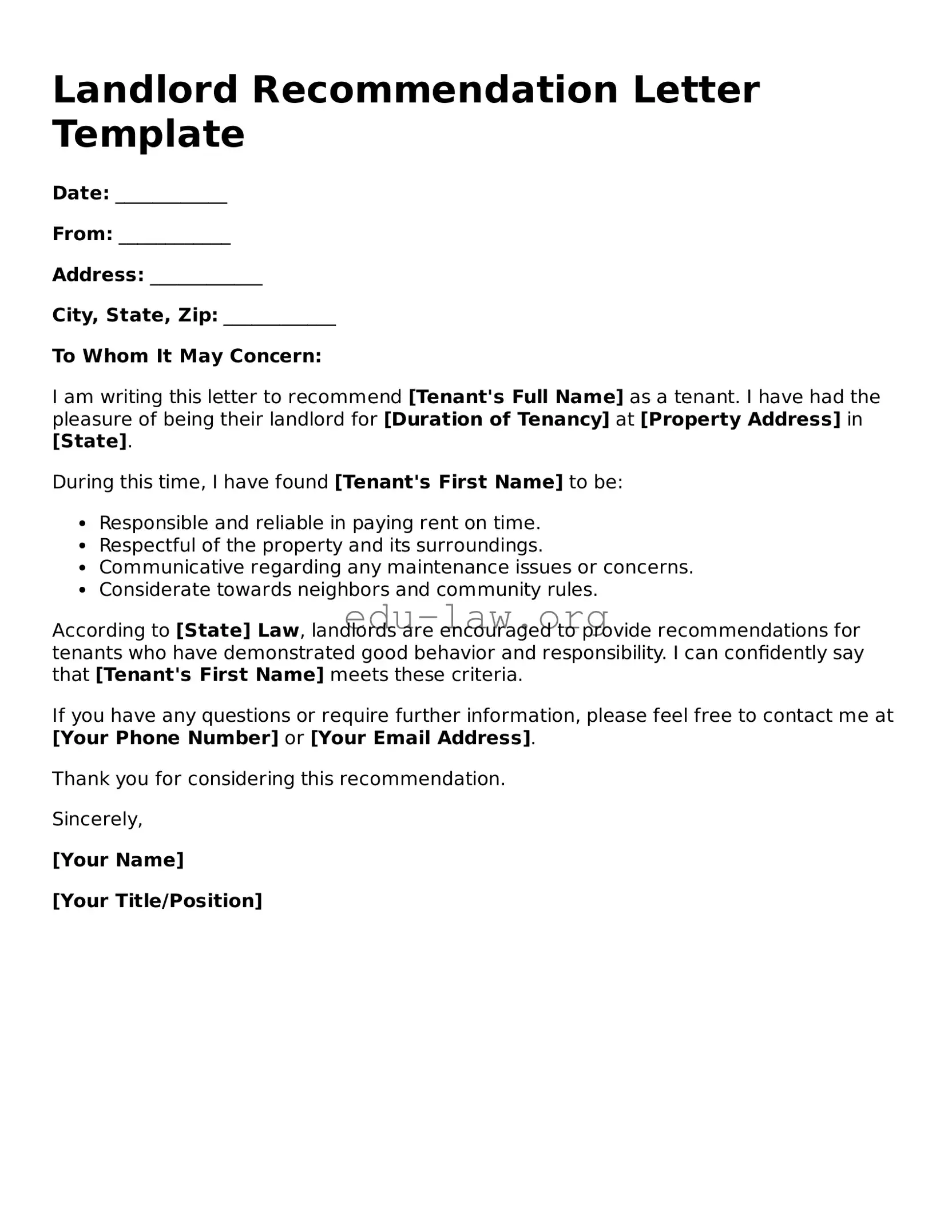
Landlord Recommendation Letter Template
Date: ____________
From: ____________
Address: ____________
City, State, Zip: ____________
To Whom It May Concern:
I am writing this letter to recommend [Tenant's Full Name] as a tenant. I have had the pleasure of being their landlord for [Duration of Tenancy] at [Property Address] in [State].
During this time, I have found [Tenant's First Name] to be:
According to [State] Law, landlords are encouraged to provide recommendations for tenants who have demonstrated good behavior and responsibility. I can confidently say that [Tenant's First Name] meets these criteria.
If you have any questions or require further information, please feel free to contact me at [Your Phone Number] or [Your Email Address].
Thank you for considering this recommendation.
Sincerely,
[Your Name]
[Your Title/Position]
| Fact Name | Description |
|---|---|
| Purpose | The Landlord Recommendation Letter serves to provide a reference for a tenant's rental history and behavior. |
| Usage | This form is commonly used by landlords when a tenant applies for a new rental property. |
| State-Specific Forms | Each state may have its own version of the form, tailored to local laws and regulations. |
| Governing Laws | In many states, landlord-tenant relationships are governed by statutes such as the Uniform Residential Landlord and Tenant Act. |
| Confidentiality | Information provided in the letter should respect tenant privacy and comply with applicable data protection laws. |
After obtaining the Landlord Recommendation Letter form, you will need to complete it with the necessary information. Follow the steps below to ensure that all required details are accurately filled out.
What is a Landlord Recommendation Letter?
A Landlord Recommendation Letter is a document that provides a reference for a tenant from their previous landlord. It highlights the tenant's reliability, responsibility, and overall behavior during their tenancy. This letter can be crucial for prospective landlords when deciding whether to rent to a new tenant.
Why do I need a Landlord Recommendation Letter?
This letter serves as a testament to your character as a tenant. It can help you stand out in a competitive rental market. A strong recommendation can reassure potential landlords about your ability to pay rent on time and maintain the property.
Who should write the recommendation letter?
The letter should be written by your previous landlord or property manager. They can provide an unbiased view of your rental history. If you had multiple landlords, choose the one who knows you best and can speak positively about your tenancy.
What should be included in the letter?
The letter should include the landlord's contact information, the duration of your tenancy, your rental payment history, and any positive attributes, such as how well you maintained the property. It may also mention your behavior towards neighbors and any other relevant details that showcase you as a responsible tenant.
How long should the letter be?
A Landlord Recommendation Letter should be concise, ideally one page long. It should cover all necessary points without being overly detailed. A clear, straightforward letter is often more effective than a lengthy one.
Is there a specific format for the letter?
While there is no strict format, the letter should be typed and professionally presented. It should start with the landlord's address and date, followed by a greeting. The body of the letter should contain the recommendation, and it should conclude with the landlord's signature and contact information.
Can I request a letter if I had issues with my previous landlord?
If you had a difficult relationship with your previous landlord, it may be challenging to obtain a positive recommendation. However, if you believe they can still provide a fair assessment of your tenancy, it’s worth asking. Be prepared to discuss any issues openly and honestly.
How do I ask my landlord for a recommendation letter?
Approach your landlord politely, either in person or through a written request. Explain why you need the letter and provide any specific points you would like them to address. Giving them context can help them write a more tailored recommendation.
How can I use the Landlord Recommendation Letter?
You can include the letter with your rental application when applying for a new place. It adds credibility to your application and provides landlords with a third-party perspective on your reliability as a tenant.
Can I use the same letter for multiple applications?
Yes, you can use the same Landlord Recommendation Letter for multiple rental applications. However, ensure that the letter is general enough to fit different landlords and rental situations. If possible, have your landlord sign multiple copies to streamline the process.
Incomplete Information: Many individuals forget to fill out all required fields. Leaving sections blank can lead to delays or rejections.
Incorrect Dates: Some people mistakenly enter the wrong dates for the tenant’s lease. This can create confusion about the tenant's rental history.
Vague Descriptions: Providing unclear or overly general descriptions of the tenant can weaken the recommendation. Specific examples of positive behavior are more persuasive.
Failure to Sign: Neglecting to sign the form is a common oversight. A signature is often necessary to validate the recommendation.
A Landlord Recommendation Letter is a helpful document for tenants seeking to secure a new rental property. Alongside this letter, there are several other forms and documents that can support the rental application process. Here’s a list of commonly used documents:
These documents work together to create a clear picture of the applicant's suitability for tenancy. Having them prepared can streamline the application process and improve the chances of securing a rental property.
The Tenant Reference Letter serves a similar purpose to the Landlord Recommendation Letter. It provides a written account of a tenant's behavior and reliability from a previous landlord or property manager. This document typically highlights the tenant's payment history, adherence to lease terms, and overall conduct during their tenancy. Both letters aim to reassure prospective landlords of the tenant's suitability for renting a new property.
The Rental History Verification form is another document that shares similarities with the Landlord Recommendation Letter. This form is often used by landlords to confirm a tenant's past rental experiences. It includes details about the duration of the tenancy, payment history, and any issues that may have arisen. Like the recommendation letter, it serves to provide insight into the tenant's reliability and behavior in previous rental situations.
The Employment Verification Letter can also be compared to the Landlord Recommendation Letter. While it focuses on a tenant's job stability and income, it similarly aims to establish trustworthiness. This document is typically issued by an employer and confirms the employee's position, salary, and length of employment. Both documents work together to paint a complete picture of the tenant's ability to meet rental obligations.
The Character Reference Letter is akin to the Landlord Recommendation Letter in that it provides a personal endorsement of the tenant's character. This letter is usually written by a friend or colleague who can attest to the tenant's reliability and integrity. While it may not focus on rental history, it offers a perspective on the tenant's overall trustworthiness, which can be valuable for landlords assessing potential renters.
The Credit Report is another relevant document, though it takes a different approach. It provides a comprehensive overview of a tenant's financial history, including credit score, outstanding debts, and payment history. While the Landlord Recommendation Letter offers subjective insights into a tenant's behavior, the credit report presents objective data that landlords can use to evaluate a tenant's financial responsibility.
The Lease Agreement is also similar in that it outlines the terms and conditions of a rental arrangement. While it does not serve as a recommendation, it sets the framework for the tenant's obligations and the landlord's expectations. Understanding the terms of previous lease agreements can help landlords gauge a tenant's past behavior and compliance with rental rules.
The Rental Application is another document that parallels the Landlord Recommendation Letter. This application collects detailed information about the tenant, including personal details, rental history, and employment information. Both documents are used by landlords to assess the suitability of a potential tenant, with the recommendation letter providing additional context to the information presented in the application.
Finally, the Eviction Record is a document that, while not a recommendation, can significantly influence a landlord's decision. It details any previous evictions a tenant may have faced. Understanding a tenant's history with evictions can provide valuable insights into their rental behavior. In contrast to the positive endorsements found in a recommendation letter, this record serves as a cautionary note for landlords considering a tenant.
When filling out a Landlord Recommendation Letter form, it’s important to approach the task with care and attention to detail. Here are some guidelines to help ensure that you provide a clear and effective recommendation.
Following these guidelines can help create a strong recommendation that accurately reflects the tenant's qualities and experiences. Your thoughtful input can make a significant difference in their future housing opportunities.
When it comes to the Landlord Recommendation Letter form, many people hold misconceptions that can lead to confusion and misunderstandings. Here are seven common misconceptions explained:
Many tenants believe that they must provide a landlord recommendation letter to secure a rental property. In reality, while such letters can strengthen an application, they are not a legal requirement.
Some tenants assume that every landlord will be willing to write a recommendation letter. However, this is not always the case. Landlords may have different policies or may not feel comfortable providing a recommendation.
There is a belief that these letters need to follow a strict formal format. In truth, a personal touch can be beneficial. A letter that conveys genuine experiences and interactions can be just as effective.
While it is common for former landlords to provide recommendations, other individuals can also write them. For example, a property manager or even a neighbor can offer valuable insights about a tenant's reliability and character.
Some believe that only first-time renters need recommendation letters. In reality, anyone looking to rent a new property can benefit from a recommendation, regardless of their rental history.
Tenants may think that landlords must write positive letters. However, landlords are entitled to express their honest opinions. If a tenant had issues, the landlord may choose to highlight those in the letter.
Finally, many tenants assume that all landlords will accept recommendation letters as part of the application process. However, some landlords may have their own criteria and may not place much weight on these letters.
Understanding these misconceptions can help tenants navigate the rental process more effectively and set realistic expectations when seeking landlord recommendations.
When filling out and using the Landlord Recommendation Letter form, several important considerations emerge. Understanding these can help ensure that the process is smooth and effective.