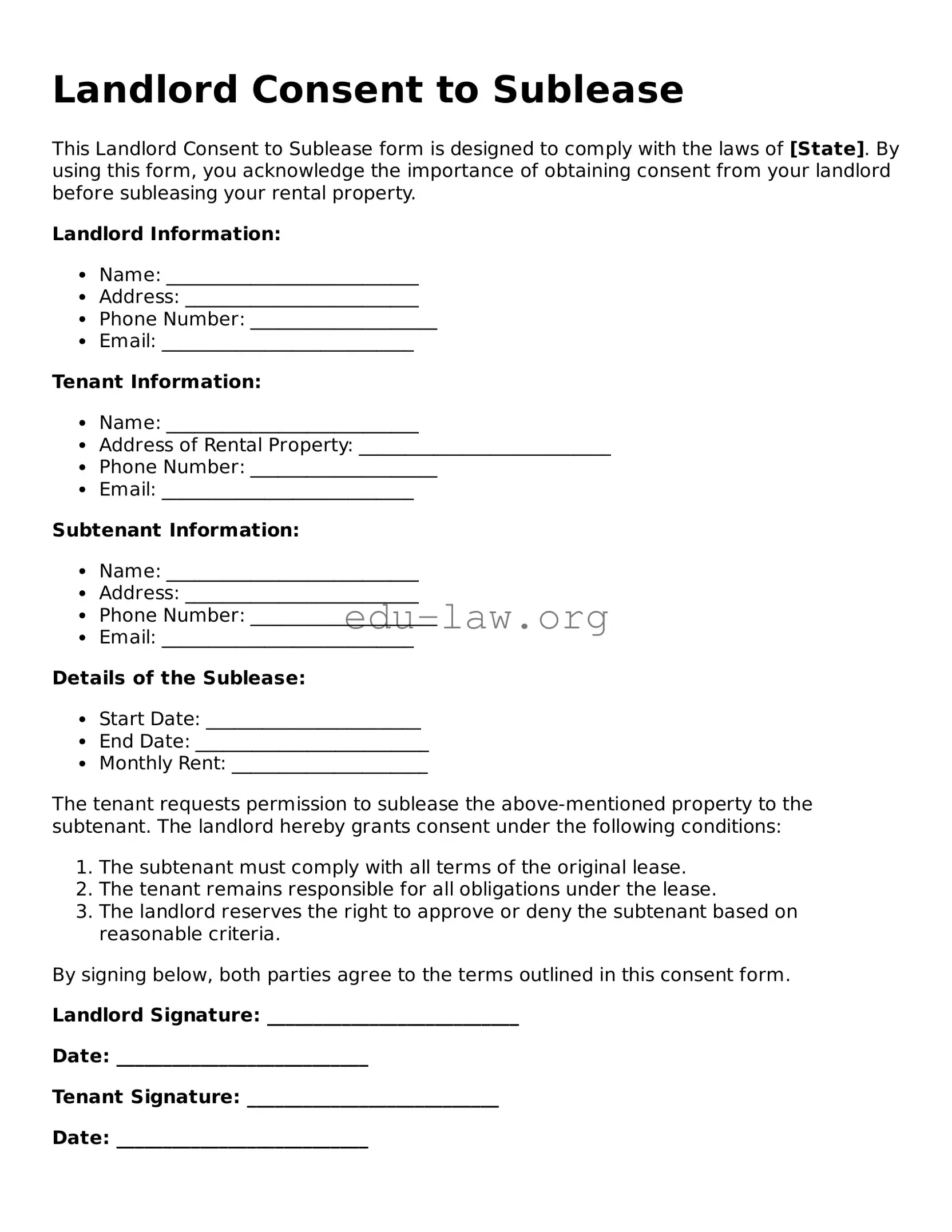
The Landlord Consent to Sublease form plays a crucial role in the rental process, particularly when a tenant wishes to sublease their apartment or rental unit. This document serves as a formal agreement between the landlord and the tenant, outlining the conditions under which a sublease may occur. It typically requires the tenant to provide details about the prospective subtenant, including their name and contact information, as well as the duration of the sublease. The form often includes a section where the landlord can specify any conditions or restrictions related to the sublease, ensuring that the original rental agreement remains intact. Additionally, it may address issues such as the payment of rent, responsibilities for maintenance, and the return of the security deposit. By obtaining written consent, both parties protect their interests and clarify their rights and obligations, ultimately fostering a smoother transition for all involved. Understanding this form is essential for tenants considering subleasing, as well as for landlords who want to maintain control over their property while accommodating their tenants' needs.
Landlord Consent to Sublease
This Landlord Consent to Sublease form is designed to comply with the laws of [State]. By using this form, you acknowledge the importance of obtaining consent from your landlord before subleasing your rental property.
Landlord Information:
Tenant Information:
Subtenant Information:
Details of the Sublease:
The tenant requests permission to sublease the above-mentioned property to the subtenant. The landlord hereby grants consent under the following conditions:
By signing below, both parties agree to the terms outlined in this consent form.
Landlord Signature: ___________________________
Date: ___________________________
Tenant Signature: ___________________________
Date: ___________________________
Subtenant Signature: ___________________________
Date: ___________________________
Make sure to keep a copy of this consent for your records.
| Fact Name | Description |
|---|---|
| Purpose | The Landlord Consent to Sublease form is used to obtain the landlord's approval for a tenant to sublease their rental property to another party. |
| Importance of Consent | Obtaining consent is crucial as subleasing without the landlord's approval can lead to lease violations and potential eviction. |
| State-Specific Variations | Each state may have its own specific requirements and forms for landlord consent, reflecting local laws and regulations. |
| Governing Laws | In California, for instance, the governing law is the California Civil Code Section 1995.010, which outlines the rights and obligations related to subleasing. |
| Details Required | The form typically requires information about the proposed subtenant, the duration of the sublease, and any conditions set by the landlord. |
| Legal Protection | Using the form provides legal protection for both the tenant and the landlord, ensuring that all parties are aware of their rights and responsibilities. |
Filling out the Landlord Consent to Sublease form is an important step in the subleasing process. After completing this form, you will submit it to your landlord for approval. Ensure that all information is accurate and complete to facilitate a smooth review process.
What is a Landlord Consent to Sublease form?
This form is a legal document that allows a tenant to sublease their rental unit to another individual. It requires the landlord's approval and outlines the conditions under which the sublease can occur. The form helps protect both the landlord's and tenant's rights during the subleasing process.
Why do I need a Landlord Consent to Sublease form?
What information is typically included in the form?
Is the landlord required to consent to a sublease?
How does a tenant request consent to sublease?
What happens if the landlord denies the request?
If the landlord denies the sublease request, the tenant must abide by that decision. They may choose to discuss the reasons for denial with the landlord or look for alternative solutions. It’s important to respect the terms of the original lease agreement to avoid potential legal issues.
Can a tenant sublease without the landlord's consent?
What are the risks of subleasing?
Can the landlord impose conditions on the sublease?
What should I do if I have further questions about the subleasing process?
Incomplete Information: Many individuals fail to provide all necessary details. This includes missing names, addresses, or dates. Each section must be filled out completely to avoid delays.
Incorrect Tenant Information: Some people mistakenly list the wrong tenant or subtenant information. Ensure that the names match the lease agreement and that any changes are clearly documented.
Failure to Attach Required Documents: Often, individuals forget to include supporting documents. This may include the original lease or proof of income from the subtenant. Always check the requirements before submission.
Not Understanding Lease Terms: A lack of understanding of the original lease terms can lead to issues. Review the lease to ensure that subleasing is permitted and that all conditions are met.
Ignoring Signature Requirements: Some individuals overlook the need for signatures. Ensure that both the landlord and the subtenant sign the form. An unsigned form may be deemed invalid.
When navigating the process of subleasing a rental property, having the right forms and documents is essential. The Landlord Consent to Sublease form is just one piece of the puzzle. Below is a list of other important documents that are often used in conjunction with this form, each serving a specific purpose to ensure clarity and legal compliance.
Having these documents in place not only helps facilitate a smooth subleasing process but also protects the interests of all parties involved. Always ensure that all necessary forms are completed accurately and retained for future reference.
The Lease Agreement is a foundational document in the landlord-tenant relationship. This contract outlines the terms and conditions under which a tenant may occupy a rental property. Similar to the Landlord Consent to Sublease form, the Lease Agreement requires the landlord's approval for any significant changes, including the subleasing of the property. Both documents aim to protect the landlord's interests while ensuring that tenants adhere to the established guidelines of occupancy.
The Rental Application is another document that shares similarities with the Landlord Consent to Sublease form. It is typically completed by potential tenants seeking to lease a property. Like the sublease consent form, the Rental Application requires the landlord's review and approval, allowing them to assess the suitability of the tenant. Both documents serve as a means for landlords to maintain control over who occupies their property.
The Tenant's Notice to Vacate is a formal communication from a tenant to a landlord indicating their intention to leave the rental property. This document is similar to the Landlord Consent to Sublease form in that it requires the tenant to follow specific procedures and timelines. Both documents emphasize the importance of communication and adherence to the terms set forth in the original lease agreement.
The Move-In/Move-Out Checklist is another relevant document. This checklist is used to record the condition of the property at the beginning and end of a tenancy. Like the Landlord Consent to Sublease form, it helps to protect the interests of both the landlord and tenant by documenting the state of the property. This ensures clarity regarding any potential damages or disputes that may arise during or after the subleasing process.
The Security Deposit Agreement outlines the terms regarding the security deposit collected from the tenant. This document is similar to the Landlord Consent to Sublease form as it also requires the landlord's acknowledgment and agreement. Both documents aim to ensure that the financial aspects of the rental relationship are clearly defined and understood by all parties involved.
The Maintenance Request Form allows tenants to formally request repairs or maintenance within the rental property. This document parallels the Landlord Consent to Sublease form in that it facilitates communication between the tenant and landlord. Both forms are essential for maintaining the property and ensuring that the terms of the lease are upheld.
The Pet Agreement is a document that outlines the terms under which a tenant may keep pets in a rental property. Similar to the Landlord Consent to Sublease form, this agreement requires the landlord's consent and outlines specific conditions that must be met. Both documents are crucial for managing expectations and responsibilities related to property use.
The Rent Payment Agreement specifies the terms and conditions surrounding the payment of rent. This document shares similarities with the Landlord Consent to Sublease form as it also requires clarity and mutual agreement between the landlord and tenant. Both forms are designed to ensure that financial obligations are met in a timely manner, fostering a healthy landlord-tenant relationship.
The Eviction Notice is a formal document that informs a tenant of the landlord's intent to terminate the lease agreement due to violations of its terms. This document is similar to the Landlord Consent to Sublease form because it reflects the landlord's authority to enforce lease terms. Both documents are critical in maintaining the integrity of the rental agreement and protecting the landlord's rights.
Lastly, the Tenant Agreement Addendum is a supplementary document that modifies or adds to the original lease terms. This addendum can address specific situations, such as subleasing, and requires the landlord's consent. Like the Landlord Consent to Sublease form, it ensures that all parties are on the same page regarding any changes to the rental agreement.
When filling out the Landlord Consent to Sublease form, it is important to approach the task with care. Here are some guidelines to follow:
When it comes to subleasing, misunderstandings can create unnecessary complications. Here are four common misconceptions about the Landlord Consent to Sublease form that many people hold:
Many tenants believe that landlords have no choice but to allow a sublease. However, landlords have the right to approve or deny a sublease request based on the terms of the lease agreement. If the lease specifies that consent is required, the landlord's decision can be influenced by various factors, including the potential subtenant's background and financial stability.
Some tenants think that once a landlord consents to a sublease, that decision is final. In reality, if the subtenant violates the lease terms or causes issues, the landlord retains the right to intervene. This means that the original tenant could still be held responsible for any problems that arise.
There is a belief that the terms of a sublease must mirror the original lease exactly. While the sublease should align with the overall conditions of the original lease, it can include different terms that address the specific arrangement between the original tenant and the subtenant. It's important to ensure that any changes comply with the landlord's requirements.
Many tenants assume that simply submitting the Landlord Consent to Sublease form guarantees that their request will be approved. However, landlords are not obligated to grant consent. They may have valid reasons for denial, and tenants should be prepared for this possibility.
Understanding these misconceptions can help tenants navigate the subleasing process more effectively and foster better communication with their landlords.
When filling out and using the Landlord Consent to Sublease form, consider the following key takeaways:
By following these guidelines, you can navigate the subleasing process more smoothly and ensure compliance with your lease terms.