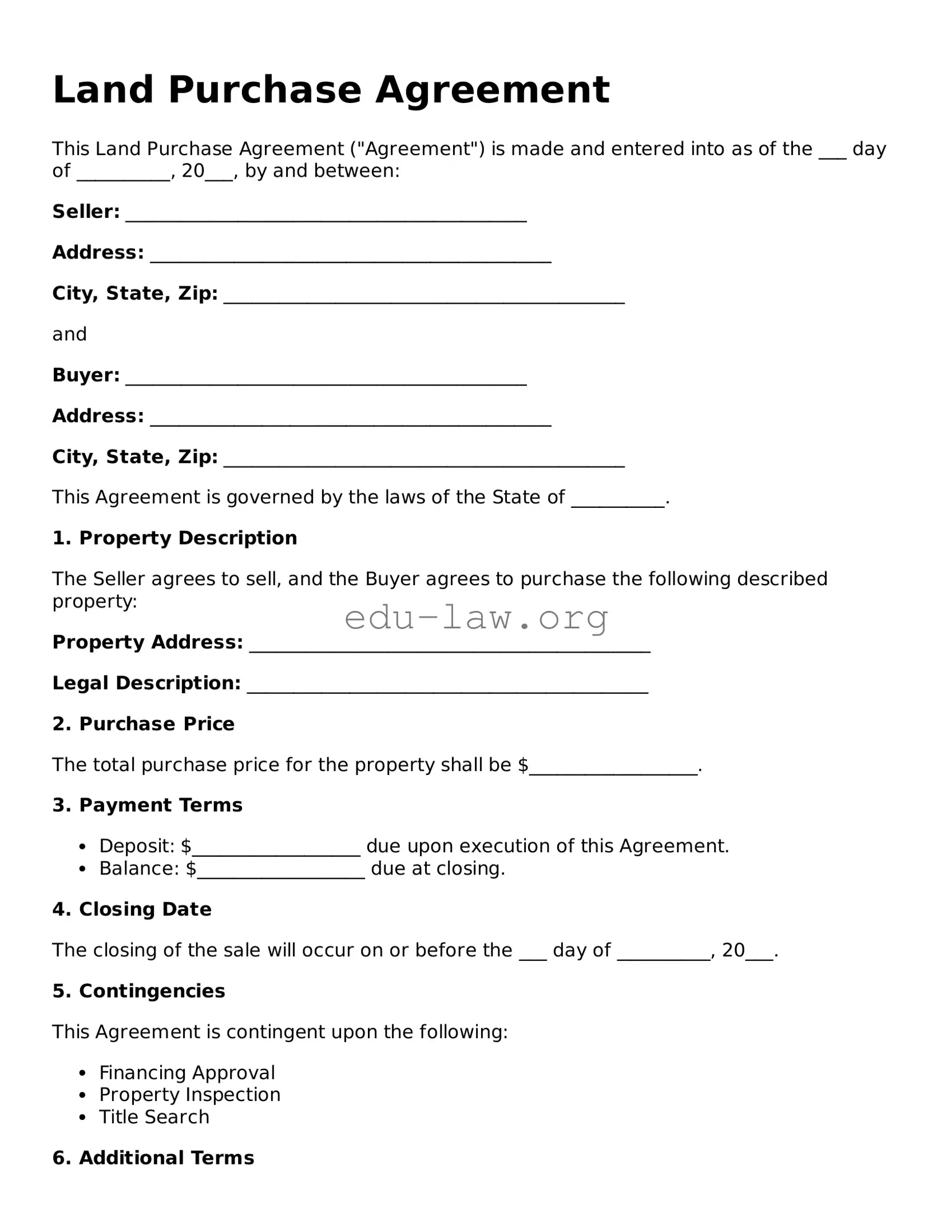
A Land Purchase Agreement is a crucial document in real estate transactions, outlining the terms and conditions under which a piece of land is bought and sold. This agreement typically includes essential details such as the purchase price, the description of the property, and the responsibilities of both the buyer and the seller. Additionally, it often specifies the timeline for the transaction, including important dates like the closing date and any contingencies that must be met before the sale can proceed. Buyers and sellers may also address issues like financing, inspections, and any applicable zoning laws within this document. By clearly defining the rights and obligations of each party, the Land Purchase Agreement helps to minimize misunderstandings and disputes, ensuring a smoother transaction process. Understanding the components of this agreement is vital for anyone involved in a land purchase, as it serves as a foundational element in the real estate buying and selling process.
Land Purchase Agreement
This Land Purchase Agreement ("Agreement") is made and entered into as of the ___ day of __________, 20___, by and between:
Seller: ___________________________________________
Address: ___________________________________________
City, State, Zip: ___________________________________________
and
Buyer: ___________________________________________
Address: ___________________________________________
City, State, Zip: ___________________________________________
This Agreement is governed by the laws of the State of __________.
1. Property Description
The Seller agrees to sell, and the Buyer agrees to purchase the following described property:
Property Address: ___________________________________________
Legal Description: ___________________________________________
2. Purchase Price
The total purchase price for the property shall be $__________________.
3. Payment Terms
4. Closing Date
The closing of the sale will occur on or before the ___ day of __________, 20___.
5. Contingencies
This Agreement is contingent upon the following:
6. Additional Terms
Any additional terms or conditions may be included here:
_____________________________________________________________________
_____________________________________________________________________
7. Signatures
By signing below, both parties agree to the terms and conditions outlined in this Agreement.
Seller Signature: ___________________________ Date: ____________
Buyer Signature: ___________________________ Date: ____________
This Agreement constitutes the entire understanding between the parties and supersedes all prior negotiations and agreements.
| Fact Name | Description |
|---|---|
| Purpose | The Land Purchase Agreement form is used to outline the terms and conditions under which a buyer agrees to purchase a piece of land from a seller. |
| Key Components | This form typically includes details such as purchase price, property description, contingencies, and closing date. |
| State-Specific Forms | Each state may have its own version of the Land Purchase Agreement, tailored to comply with local laws and regulations. |
| Governing Laws | The governing laws for Land Purchase Agreements vary by state, ensuring that all transactions adhere to local real estate laws. |
| Importance of Legal Review | It is advisable for both parties to have the agreement reviewed by a legal professional to ensure all terms are clear and enforceable. |
Filling out the Land Purchase Agreement form is an essential step in the process of acquiring property. Once you complete this form, it will serve as a binding agreement between you and the seller, outlining the terms of the purchase. Here’s how to fill it out correctly.
After completing these steps, review the entire form for accuracy. Once everything is in order, you can proceed with the next steps in the property acquisition process.
What is a Land Purchase Agreement?
A Land Purchase Agreement is a legal document that outlines the terms and conditions under which a piece of land is bought and sold. This agreement serves as a binding contract between the buyer and the seller, detailing important aspects such as the purchase price, payment terms, and any contingencies. It ensures both parties understand their rights and responsibilities throughout the transaction.
What should be included in a Land Purchase Agreement?
When drafting a Land Purchase Agreement, several key elements should be included. First, the legal description of the property is essential. This identifies the exact location and boundaries of the land being sold. Next, the purchase price and payment method should be clearly stated. Additionally, any contingencies, such as financing or inspections, should be outlined. Finally, both parties' signatures and the date of the agreement are crucial for its validity.
Do I need a lawyer to create a Land Purchase Agreement?
While it is not legally required to have a lawyer draft a Land Purchase Agreement, it is highly recommended. A legal professional can ensure that the document complies with local laws and protects your interests. They can also help you understand any complex terms and conditions that may arise during the transaction. If you choose to create the agreement yourself, be sure to research the relevant laws in your state.
What happens if one party does not fulfill their obligations under the agreement?
If one party fails to meet their obligations as outlined in the Land Purchase Agreement, the other party may have legal recourse. This could include seeking damages or specific performance, which means requiring the defaulting party to fulfill their part of the agreement. It's important to include a clause in the agreement that addresses how disputes will be handled, whether through mediation, arbitration, or litigation.
Can a Land Purchase Agreement be modified after it is signed?
Yes, a Land Purchase Agreement can be modified after it is signed, but both parties must agree to the changes. Any modifications should be documented in writing and signed by both the buyer and the seller. This helps avoid misunderstandings and ensures that all parties are aware of the new terms. Always keep a copy of the modified agreement for your records.
Failing to include all parties' names. Ensure that every individual or entity involved in the transaction is listed correctly.
Not providing accurate property details. Double-check the legal description of the property, including address and parcel number.
Omitting the purchase price. Clearly state the agreed-upon price to avoid confusion later.
Ignoring contingencies. Specify any conditions that must be met before the sale is finalized, such as inspections or financing.
Failing to sign and date the agreement. Both parties must sign and date the document to make it legally binding.
Not including earnest money details. Outline the amount of earnest money and how it will be handled during the transaction.
Neglecting to specify closing dates. Clearly indicate when the closing will take place to ensure both parties are aligned.
Leaving out disclosures. Include any necessary disclosures about the property, such as known defects or zoning issues.
Using vague language. Be specific and clear in all terms to prevent misunderstandings.
When entering into a land purchase agreement, several other documents often accompany the main contract to ensure that all aspects of the transaction are clearly defined and legally binding. These documents help protect the interests of both the buyer and the seller, providing clarity and structure to the process.
In summary, these documents play a crucial role in the land purchase process. They provide essential information and protections for both parties involved. Understanding each of these forms can help ensure a smooth transaction and prevent potential disputes in the future.
The Purchase and Sale Agreement is a document that outlines the terms and conditions under which a property will be sold. Like the Land Purchase Agreement, it details the price, closing date, and contingencies. Both documents serve to protect the interests of the buyer and seller, ensuring that all parties are clear on their obligations and rights throughout the transaction process.
The Lease Agreement is another document that shares similarities with the Land Purchase Agreement. While the Lease Agreement focuses on the rental of a property rather than a sale, it still establishes the terms of occupancy, including duration, rent amount, and responsibilities for maintenance. Both agreements require the parties to agree on specific terms to avoid disputes later on.
The Option to Purchase Agreement allows a buyer to secure the right to purchase a property at a later date. Similar to the Land Purchase Agreement, it includes the purchase price and conditions under which the buyer can exercise their option. This document provides flexibility for buyers while ensuring that sellers have a committed buyer in the future.
The Joint Venture Agreement is relevant when two or more parties come together to purchase land or property. Like the Land Purchase Agreement, it outlines the roles, contributions, and profit-sharing arrangements among the parties. This document is essential for clarifying each party's responsibilities and expectations, just as the Land Purchase Agreement does for individual buyers and sellers.
The Real Estate Purchase Agreement is often used interchangeably with the Land Purchase Agreement, especially in residential transactions. It encompasses similar elements such as the purchase price, closing details, and any contingencies. Both documents aim to ensure a smooth transfer of ownership and protect the rights of both parties involved.
The Seller Disclosure Statement is important in real estate transactions, including land purchases. It requires sellers to disclose known issues with the property, similar to how a Land Purchase Agreement may include contingencies based on inspections. This document ensures transparency and helps buyers make informed decisions.
The Title Deed is a crucial document that signifies ownership of a property. While it is not an agreement like the Land Purchase Agreement, it is the final outcome of the purchase process. Both documents work together to transfer ownership rights from the seller to the buyer, ensuring that the buyer has clear title to the property.
The Financing Agreement outlines the terms of any loans taken out to purchase property. Similar to the Land Purchase Agreement, it specifies payment terms, interest rates, and obligations of both the lender and borrower. Both documents are vital in ensuring that financial aspects of the purchase are clearly defined and agreed upon.
The Closing Statement summarizes the financial details of the transaction at closing. It includes the purchase price, fees, and other costs associated with the sale. Like the Land Purchase Agreement, it serves as a final confirmation of the terms agreed upon by both parties, ensuring that everyone is on the same page before the transaction is completed.
When filling out a Land Purchase Agreement form, attention to detail is crucial. Here are eight important dos and don'ts to consider:
When it comes to Land Purchase Agreements, many people hold misconceptions that can lead to confusion or even legal troubles. Understanding the truth behind these misunderstandings is crucial for anyone involved in a real estate transaction. Here’s a list of ten common misconceptions:
By dispelling these misconceptions, individuals can approach real estate transactions with greater confidence and awareness. Knowledge is power, especially in the complex world of real estate.
When it comes to filling out and using a Land Purchase Agreement form, there are several important points to keep in mind. Here are four key takeaways to ensure a smooth process:
By keeping these takeaways in mind, you can navigate the process of buying land with greater confidence and clarity.